
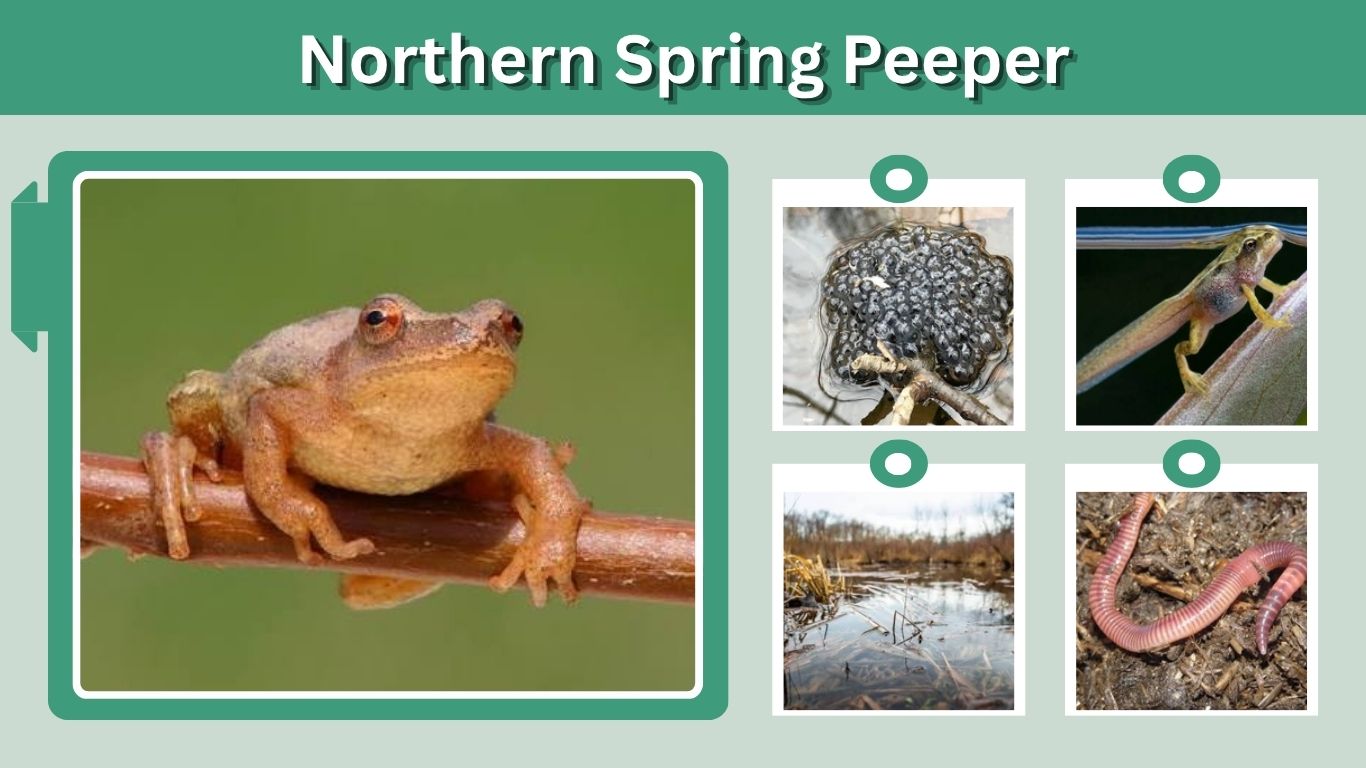
The northern spring peeper is a tiny North American frog famous for the sharp, high-pitched calls that fill wetlands during early spring. Today, it is generally classified simply as the spring peeper (Pseudacris crucifer) because the former northern and southern subspecies are no longer recognized as distinct. Despite its small size, this frog survives cold winters, breeds in temporary wetlands, and plays an important role as both predator and prey. Its X-shaped back marking also makes identification surprisingly easy.
Northern Spring Peeper Identification
Spring peepers belong to the treefrog family Hylidae but are frequently found close to the forest floor rather than high in trees. Their excellent camouflage and nocturnal behavior mean people are much more likely to hear them than actually see them.
Size and Appearance
Northern spring peepers are extremely small frogs, generally measuring about 0.75–1.25 inches (1.9–3.2 cm) in length. Their coloration ranges from tan and light brown to darker brown, helping them blend into leaves and forest debris.
Typical characteristics include:
- Small, slender body
- Tan, grayish, or brown coloration
- Distinctive dark X-shaped marking on the back
- Dark bands across the legs
- Rounded toe pads for climbing
- Large eyes
- Darker throat in breeding males
The scientific name crucifer relates to the cross-like marking on the frog’s back.
Northern Spring Peeper Scientific Name
The accepted scientific name is Pseudacris crucifer. The name northern spring peeper was historically associated with Pseudacris crucifer crucifer, while a southern form was called P. c. bartramiana. Modern taxonomic work does not recognize those two forms as separate subspecies, so spring peeper is now the standard species-level name.
Northern Spring Peeper Call and Sound
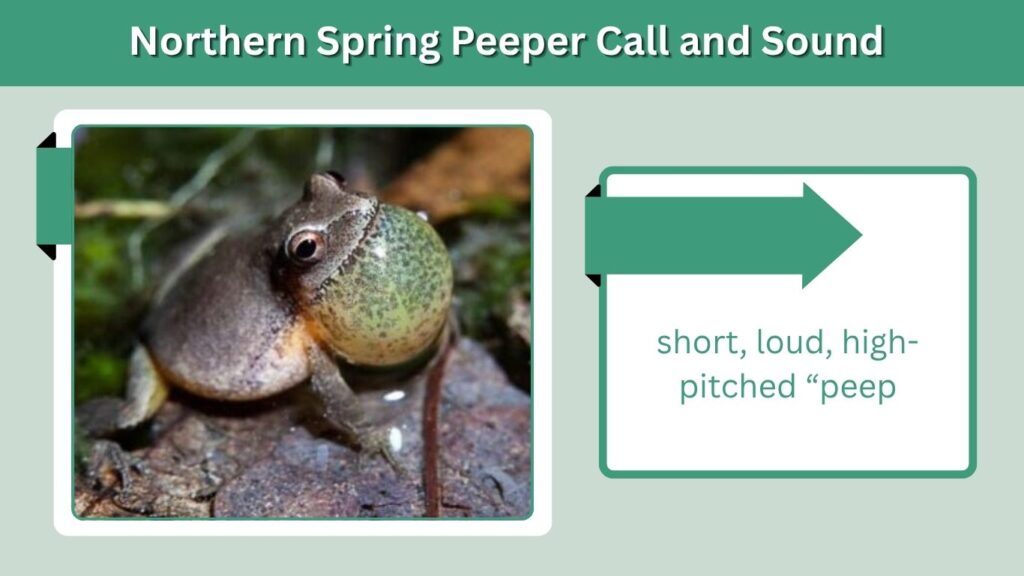
The sound of spring peepers is one of the most recognizable signs that winter is ending in eastern North America. Male frogs gather around breeding wetlands and call repeatedly to attract females.
What Does a Northern Spring Peeper Sound Like?
A northern spring peeper call is a short, loud, high-pitched “peep.” A single frog produces individual notes, but hundreds calling together can create an intense chorus sometimes compared with jingling sleigh bells.
Male spring peepers inflate a vocal sac in the throat to amplify their calls. Calling is especially common around dusk and through the evening during the spring breeding period. Dense groups may also produce different aggressive calls when males compete closely with one another.
Why Do Spring Peepers Call?
Calling is primarily connected with reproduction. Males advertise their presence to females and compete acoustically with nearby males.
The chorus may begin remarkably early in the year when temperatures rise enough to stimulate breeding activity. The exact timing varies geographically because populations across the species’ extensive range experience different climates.
Northern Spring Peeper Habitat and Range
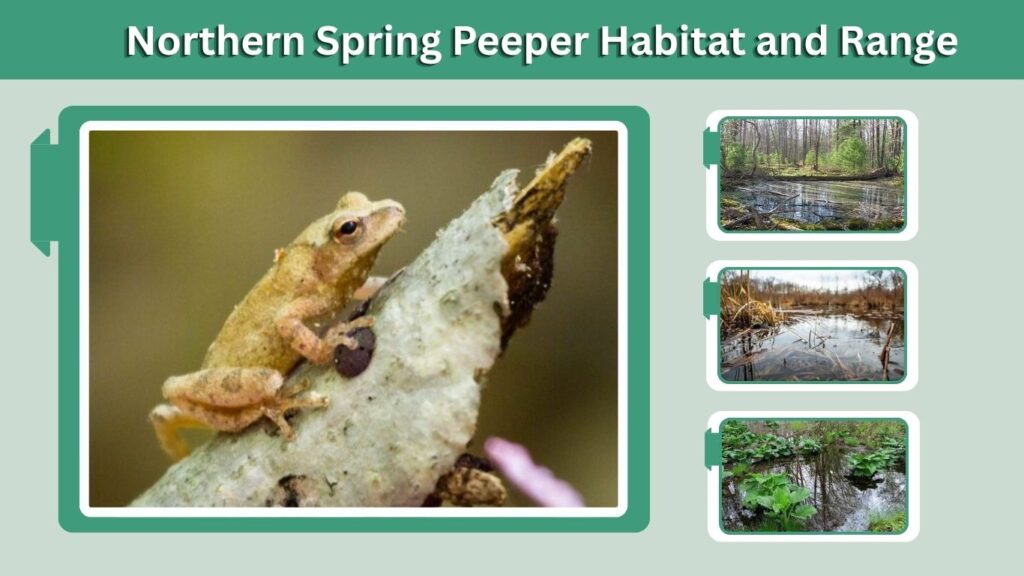
Northern spring peepers depend on both terrestrial forest habitat and aquatic breeding areas. Temporary wetlands are particularly valuable because they often contain fewer fish that would otherwise eat frog eggs and tadpoles.
Where Do Northern Spring Peepers Live?
Spring peepers occur across a broad portion of eastern North America, extending through much of the eastern United States and into southeastern Canada. Their range includes places such as Ohio, Michigan, Minnesota, New England, and numerous eastern and southeastern states.
Typical habitats include:
- Forested wetlands
- Swamps
- Marshy woodlands
- Vernal pools
- Temporary ponds
- Brushy forest floors
- Low grassy areas near wetlands
- Leaf litter near ponds and streams
Adults generally spend much of the nonbreeding season in vegetation, leaf litter, and forest-floor cover near suitable wetlands.
Adaptations to Cold Weather
One of the most impressive northern spring peeper adaptations is its ability to tolerate partial freezing during winter. Peepers overwinter terrestrially beneath leaf litter, logs, loose bark, and similar shelters. Their physiology allows some body fluids to freeze while protective compounds help prevent lethal damage to cells and organs.
This adaptation allows spring peepers to survive northern winters and become active very early in spring.
Northern Spring Peeper Diet
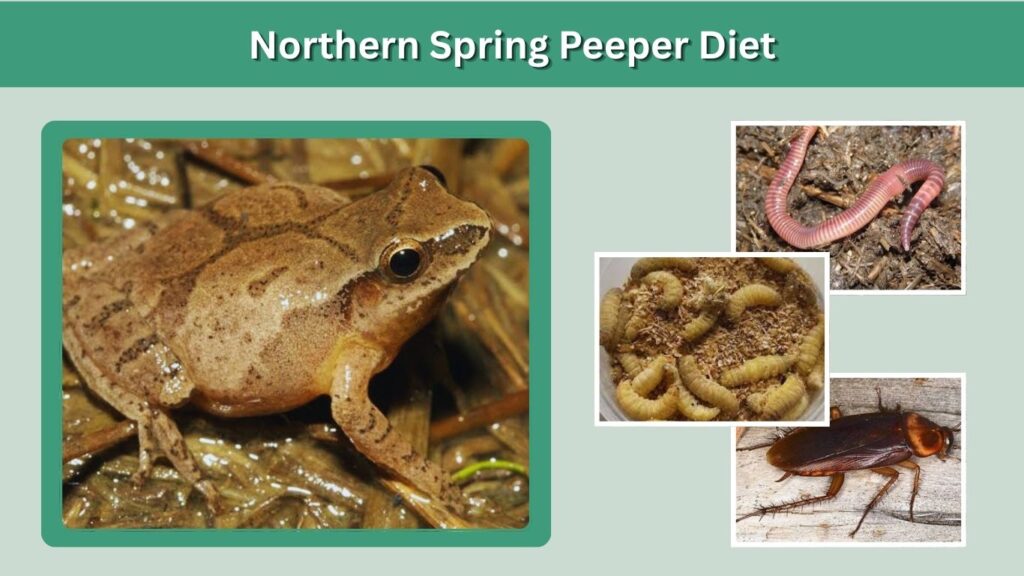
Adult spring peepers are small predators that help control populations of tiny terrestrial invertebrates. Their diet changes dramatically during development because tadpoles feed differently from adult frogs.
What Do Northern Spring Peepers Eat?
Adults mainly consume small invertebrates they can capture and swallow.
Common prey includes:
- Small insects
- Flies
- Ants
- Beetles
- Small spiders
- Other tiny arthropods
Adults commonly forage during the late afternoon, evening, and night. Their small body size limits them to relatively small prey.
Spring peeper tadpoles have a different diet. They primarily graze on algae, organic debris, and microorganisms while developing in ponds and temporary wetlands.
How Does a Spring Peeper Drink?
Spring peepers do not drink water through their mouths the way mammals do. Like other frogs, they absorb much of the water they need directly through their permeable skin.
This highly permeable skin is useful for water absorption and respiration but also makes amphibians sensitive to pollutants and environmental changes.
Eggs, Tadpoles, and Life Cycle
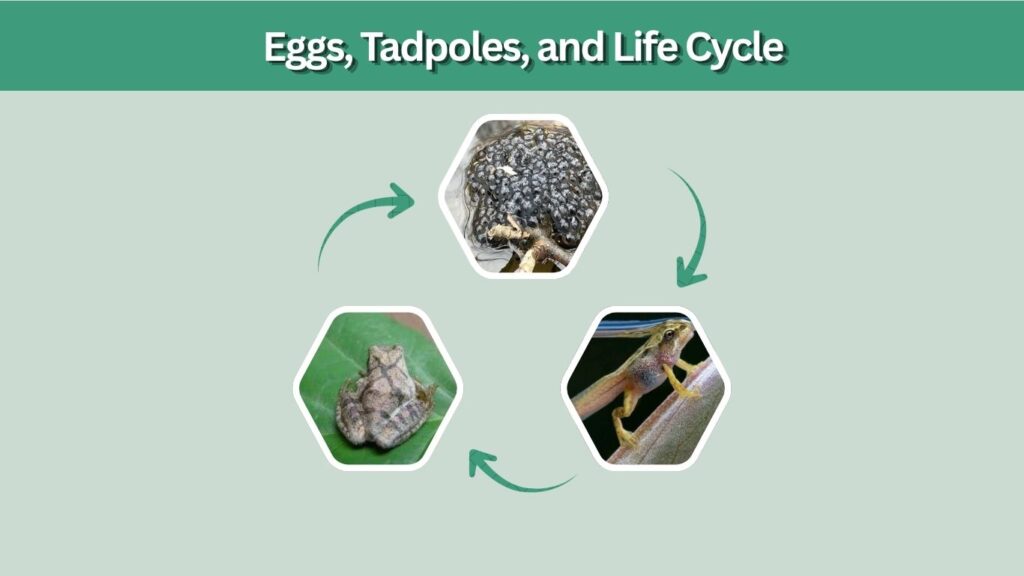
Spring peepers return to shallow wetlands during the breeding season. Temporary fishless pools are particularly valuable nursery habitats because they reduce predation pressure from many fish species.
Mating and Eggs
Breeding generally occurs in spring, although timing varies by latitude and weather. A female can produce roughly 800–1,000 eggs, usually placing them individually or in very small groups attached to underwater vegetation or debris.
Under suitable conditions, the eggs can hatch within only a few days.
Northern Spring Peeper Tadpoles
After hatching, tadpoles remain aquatic while growing and developing legs. Metamorphosis can occur in approximately eight weeks, although environmental conditions can influence development. The tail gradually disappears while lungs and limbs develop, allowing young frogs to leave the water.
Spring peepers can reach reproductive maturity relatively quickly, with Minnesota DNR reporting maturity within about one year.
Predators and Defense
Despite their abundance in many areas, spring peepers face heavy predation during every stage of life. Eggs and tadpoles are especially vulnerable in aquatic habitats.
Northern Spring Peeper Predators
Known predators can include:
- Snakes
- Birds and owls
- Larger frogs and salamanders
- Fish
- Turtles
- Spiders
- Dragonfly larvae
- Predatory aquatic beetles
- Leeches
- Small mammals
Many aquatic predators consume eggs and tadpoles before they complete metamorphosis. Adults rely heavily on camouflage, small size, nighttime activity, and vegetation cover to reduce their chances of being detected.
Are Northern Spring Peepers Poisonous?
Spring peepers are not considered dangerously poisonous to humans. However, wild amphibians are best observed without unnecessary handling because their delicate skin can be affected by substances such as lotions, oils, chemicals, and contaminants on human hands.
Keeping native spring peepers as pets may also be regulated locally, making captive-bred species a better option when someone wants a pet frog.
Interesting Northern Spring Peeper Facts
Spring peepers may be tiny, but they have several remarkable adaptations.
- Their dark back marking resembles an X.
- Males produce surprisingly loud calls for such small frogs.
- They can tolerate partial freezing during winter.
- Adults absorb water through their skin.
- Temporary fishless wetlands are important breeding areas.
- Tadpoles mainly consume algae and microorganisms.
- Adults mainly eat small insects and other invertebrates.
- They are often heard long before they are seen.
FAQs
How Big Does a Northern Spring Peeper Get?
A spring peeper typically reaches about 0.75–1.25 inches long, making it one of the smaller frogs found across eastern North America. Its X-shaped dorsal marking and high-pitched breeding call are useful identification features.
Where Does the Northern Spring Peeper Live?
Spring peepers inhabit eastern North America, especially forested areas containing ponds, marshes, swamps, and temporary wetlands. Adults spend much of the year on land but return to shallow aquatic habitats for reproduction.
What Does a Northern Spring Peeper Eat?
Adults eat small insects, spiders, and other tiny invertebrates. Tadpoles have a different diet and mainly graze on algae, microorganisms, and organic material in the water.
What Does a Northern Spring Peeper Sound Like?
Its characteristic call is a short, sharp, high-pitched peep. When many males call simultaneously around a breeding wetland, the combined chorus can become extremely loud and has been compared with the sound of jingling bells.
Can Northern Spring Peepers Survive Being Frozen?
They can survive partial freezing during winter. Spring peepers overwinter beneath terrestrial cover, and physiological adaptations allow them to tolerate freezing of some body fluids until warmer spring temperatures return.
