
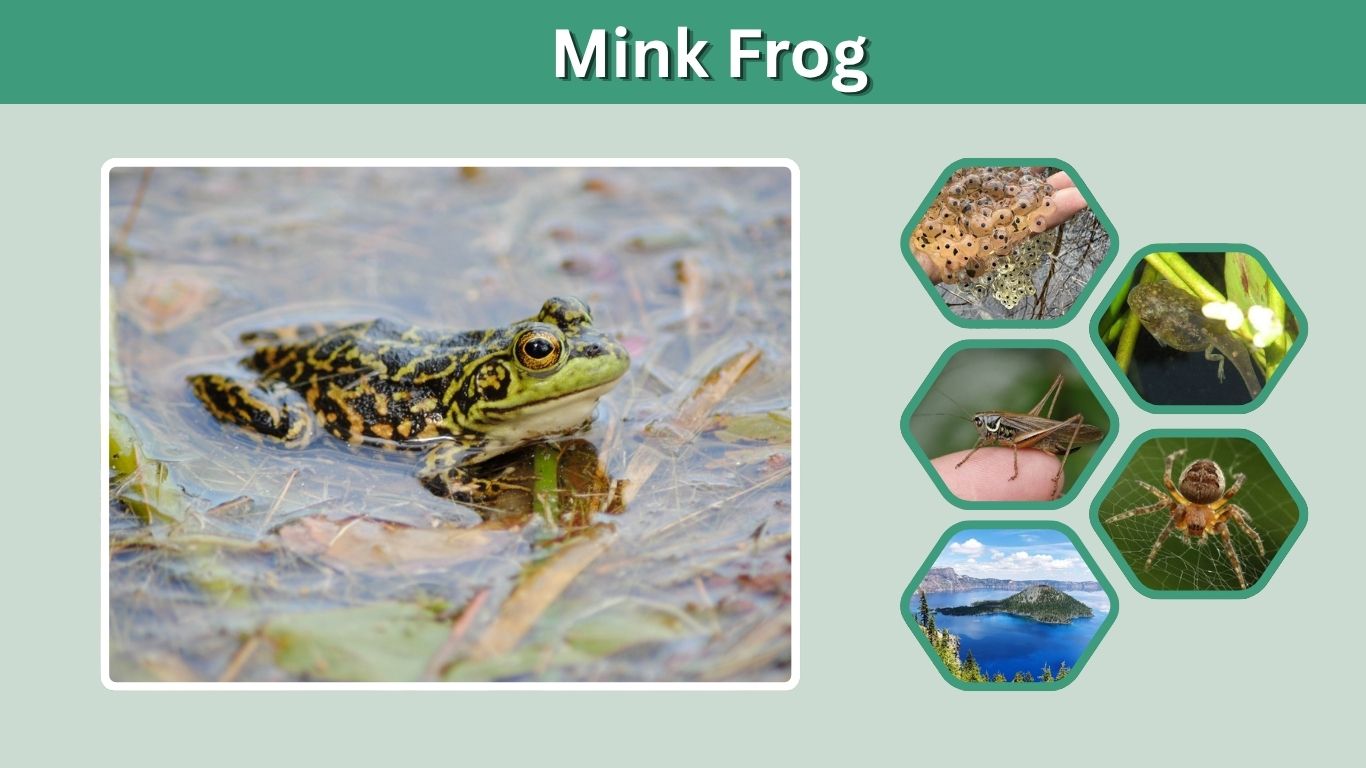
The mink frog (Lithobates septentrionalis) is a medium-sized aquatic frog found mainly across the northern parts of North America. It gets its unusual name from the musky, mink-like odor it may release when handled or disturbed. Mink frogs spend much of their lives around cool lakes, ponds, marshes, and slow-moving waterways. Their mottled green-brown appearance can make them difficult to distinguish from green frogs, but their call, skin pattern, habitat, and behavior provide useful identification clues.
Mink Frog Identification and Description
Mink frogs are strongly associated with water and usually remain close to shorelines and aquatic vegetation. Their coloring provides excellent camouflage among floating plants, algae, rocks, and muddy lake edges. Although they can resemble green frogs, mink frogs generally have more irregular markings and a different arrangement of skin folds.
Size and Physical Appearance
Adult mink frogs are usually medium-sized compared with other North American frogs. Identification features include:
- Body length: Usually about 4.5–7.5 cm (1.8–3 inches)
- Color: Green, olive, brownish-green, or dark brown
- Markings: Irregular dark spots or blotches across the back and legs
- Belly: Whitish to yellowish, sometimes with darker mottling
- Skin: Smooth to slightly granular
- Legs: Strong hind legs with dark crossbands
- Feet: Well-developed webbing adapted for swimming
- Eyes: Prominent eyes positioned toward the top of the head
One distinctive characteristic is the frog’s musky odor, which some people compare to the smell of a mink or rotten onions.
Male vs Female Mink Frog
Male and female mink frogs are similar in general appearance, but there are a few useful differences.
Males typically have enlarged thumbs during the breeding season, which help them grip females during mating. The male’s tympanum, or visible eardrum behind the eye, may also be larger relative to the eye.
Females are often slightly larger because their bodies must accommodate developing eggs.
Mink Frog Habitat and Range
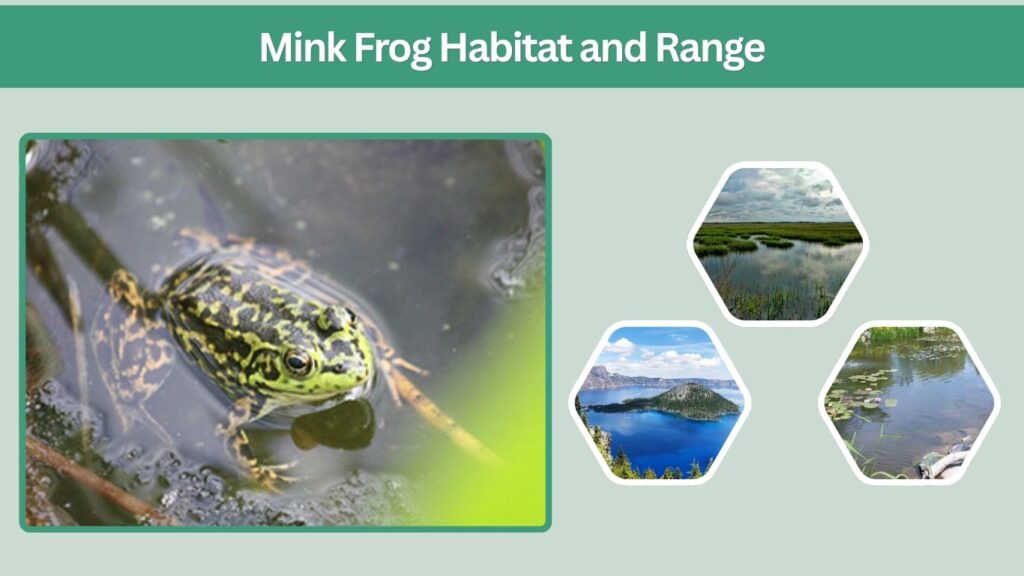
Mink frogs are among the more aquatic members of the true frog family. Unlike species that frequently travel far from water, mink frogs generally stay in or immediately beside permanent aquatic habitats. Cool, clean water and abundant vegetation are particularly important because these environments provide food, shelter, breeding areas, and protection from predators.
Preferred Mink Frog Habitat
Typical mink frog habitats include:
- Cool freshwater lakes
- Ponds
- Marshes
- Slow-moving rivers
- Quiet streams
- Beaver ponds
- Wetland edges
- Lily-pad beds
- Areas with floating aquatic vegetation
Mink frogs are often seen sitting on lily pads or among shoreline vegetation. When disturbed, they quickly jump into the water and hide beneath plants or submerged debris.
Mink Frog Range and Distribution
The mink frog is primarily a northern North American species. Its range extends through much of Canada and parts of the northern United States.
Populations occur in areas including Ontario, Quebec, Manitoba, Minnesota, Wisconsin, Michigan, Maine, Vermont, New Hampshire, and New York.
Mink frogs are especially common around suitable lakes and wetlands in southern Canada and the Great Lakes region. Their distribution becomes much more limited farther south because they generally prefer cooler environments.
Mink Frog Call and Sound
The mink frog’s call is one of the easiest ways to identify it during breeding season. Males call from shallow water, floating vegetation, and shoreline areas to attract females. Because mink frogs may share wetlands with green frogs and bullfrogs, learning their distinctive sound can help observers identify the species without seeing it clearly.
What Does a Mink Frog Sound Like?
The mink frog call is frequently described as sounding like a series of metallic knocks or taps.
People sometimes compare it to:
- Tapping metal
- Knocking pieces of wood together
- A rapid series of low metallic notes
- Someone lightly striking a hammer
The call is generally less deep and booming than the sound produced by an American bullfrog.
When Do Mink Frogs Start Calling?
Mink frogs usually begin calling during late spring or early summer as water temperatures become warmer.
Breeding activity may continue through much of the summer in northern areas. Males frequently call during evenings and nighttime, although calling can also occur during warm daytime conditions.
Calling intensity is influenced by water temperature, weather, location, and seasonal conditions.
Mink Frog Diet, Predators, and Food Chain
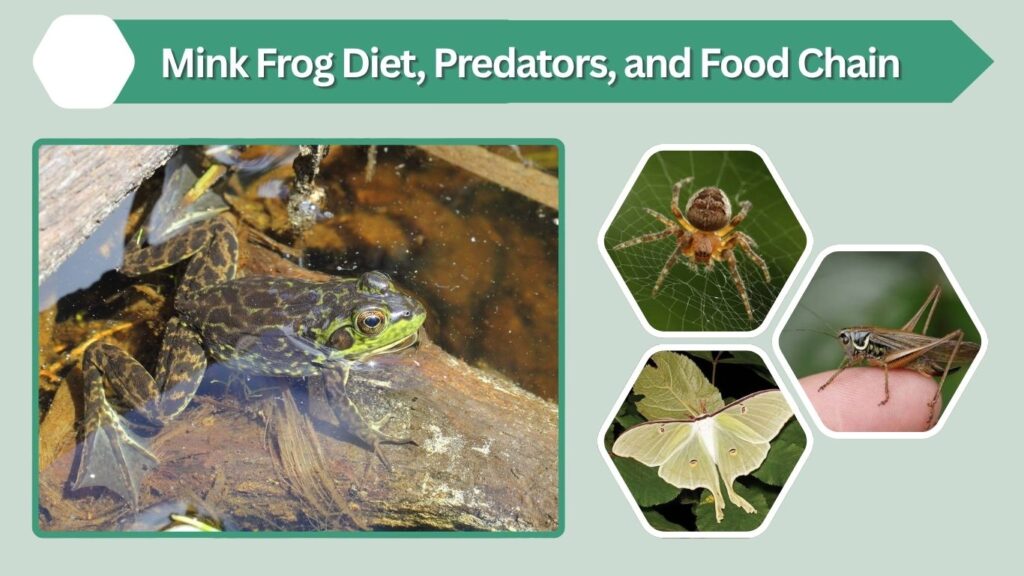
Mink frogs are opportunistic carnivores that feed primarily on small animals they can capture around water. They often remain motionless while watching for prey before quickly striking with their sticky tongue. Both aquatic and terrestrial invertebrates can become part of their diet depending on availability.
What Do Mink Frogs Eat?
Common foods include:
- Beetles
- Flies
- Mosquitoes
- Moths
- Spiders
- Crickets
- Grasshoppers
- Aquatic insects
- Small snails
- Worms
- Other small invertebrates
Large individuals may occasionally consume very small vertebrates when the opportunity occurs.
Tadpoles have a different diet. Mink frog tadpoles primarily graze on algae, microorganisms, and decomposing organic material in the water.
Mink Frog Predators
Mink frogs occupy an important middle position in wetland food webs. Common predators can include:
- Large fish
- Water snakes
- Herons and other wading birds
- Turtles
- Raccoons
- Minks
- Larger frogs
Their mottled coloring helps them blend into vegetation, while their strong hind legs allow them to escape rapidly into deeper water.
Is the Mink Frog a Secondary Consumer?
Adult mink frogs can generally be considered secondary consumers because much of their diet consists of insects and other animals that feed on plants or lower levels of the food chain.
However, their exact trophic position varies according to what they eat. Mink frog tadpoles usually occupy a lower trophic level because algae and plant-associated material make up much of their diet.
Mink Frog Reproduction, Eggs, and Tadpoles
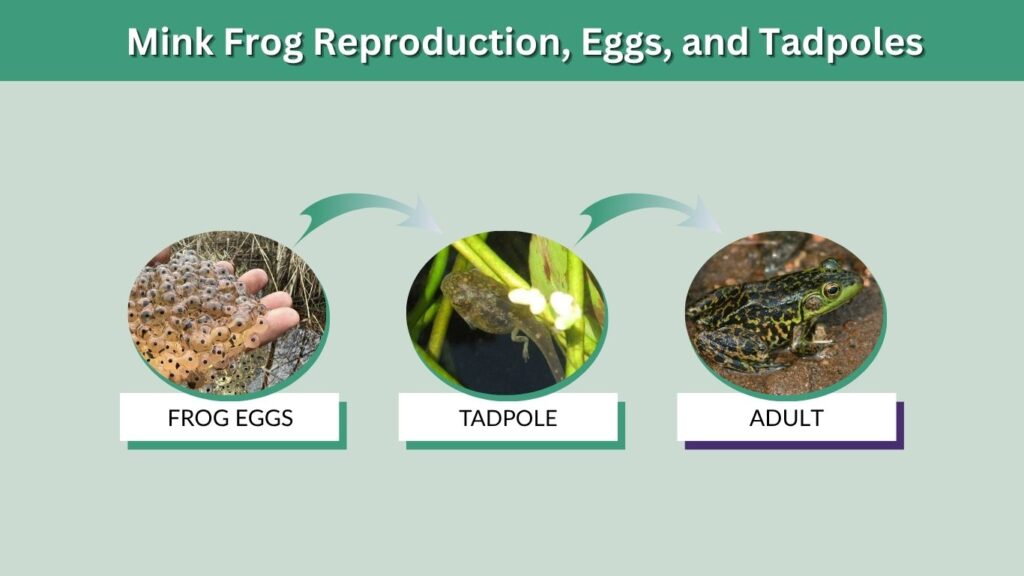
Mink frogs reproduce in permanent bodies of water during warmer months. Because their development takes place in relatively cool northern environments, their tadpole stage can be longer than that of many frogs living in warmer climates. Aquatic vegetation plays an important role by providing protection for both eggs and developing tadpoles.
Mink Frog Eggs
Females deposit clusters of eggs in shallow water, usually among aquatic vegetation.
Important reproductive characteristics include:
- Eggs are laid in gelatinous masses.
- Egg masses are normally attached to or surrounded by aquatic vegetation.
- Females can produce hundreds or sometimes thousands of eggs.
- Breeding generally takes place during late spring and summer.
The exact number of eggs depends on the female’s size and environmental conditions.
Mink Frog Tadpoles
Mink frog tadpoles are aquatic and may remain in the tadpole stage for an extended period.
In colder northern environments, some tadpoles may overwinter in the water before completing metamorphosis the following season. They feed mainly on algae and organic material while growing.
Once metamorphosis is complete, young frogs remain strongly associated with aquatic habitats.
Green Frog vs Mink Frog
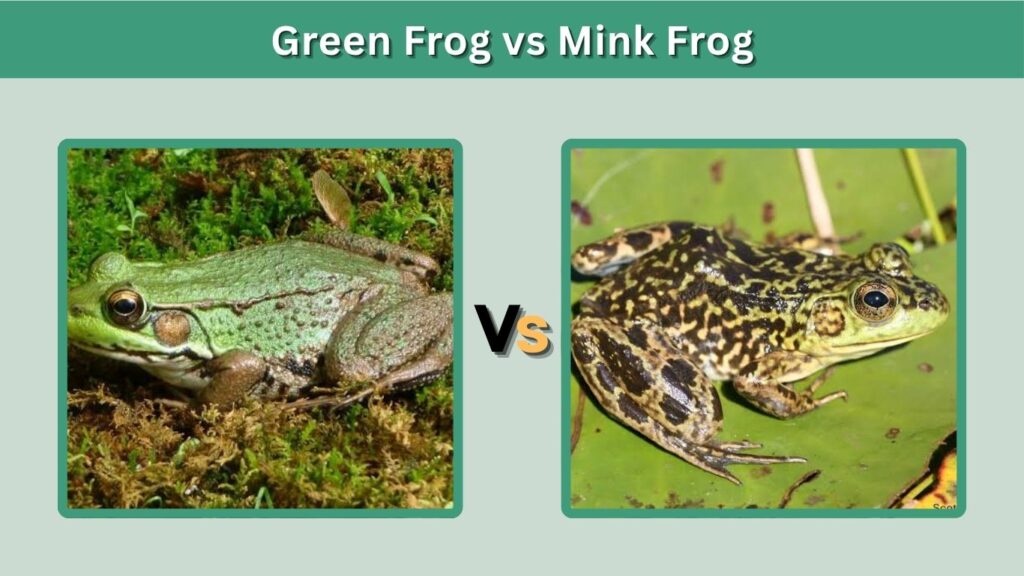
Green frogs and mink frogs can look very similar because both are medium-sized aquatic frogs with green or brown coloration. However, several physical and behavioral differences can help distinguish them. Examining the back, markings, habitat, and call is usually more reliable than using color alone.
How to Tell Them Apart
Mink Frog
- Often has irregular dark mottling
- Usually lacks long, complete dorsolateral ridges
- Strongly associated with cool northern waters
- May produce a distinctive musky odor
- Call resembles metallic tapping or knocking
Green Frog
- Usually has clearer dorsolateral ridges running down the back
- Often has a brighter green head
- Occurs across a broader range of habitats
- Call commonly resembles the plucking of a loose banjo string
Because individual colors vary, skin folds and calls are usually better identification features.
Interesting Mink Frog Facts
Mink frogs have several adaptations that make them well suited to northern freshwater ecosystems. Their preference for cool water, aquatic lifestyle, camouflage, and unusual smell separate them from many similar frogs.
Quick Facts About Mink Frogs
- Scientific name: Lithobates septentrionalis
- Family: Ranidae
- Common name: Mink frog
- Type: Amphibian
- Habitat: Lakes, ponds, marshes, and slow waterways
- Diet: Mainly insects and other small invertebrates
- Activity: Mostly aquatic
- Breeding season: Late spring through summer
- Defense: Camouflage, rapid swimming, and musky secretions
- Range: Northern United States and Canada
The mink-like odor responsible for the frog’s common name is believed to function partly as a defensive secretion when the animal is stressed.
FAQs
1. Why is it called a mink frog?
The mink frog gets its name from the strong musky odor it can release when disturbed or handled. Some people compare the scent to mink, onions, or other strong organic smells.
2. How long does a mink frog live?
Exact lifespan varies in the wild, but mink frogs may live for several years when they avoid predators, disease, and major habitat disturbances.
3. Where do mink frogs live?
Mink frogs inhabit cool freshwater lakes, ponds, marshes, slow rivers, and wetlands across Canada and portions of the northern United States.
4. What does a mink frog call sound like?
The mink frog’s call sounds like a series of short metallic taps or knocks. It is very different from the deeper call of a bullfrog and the banjo-like note of a green frog.
5. Are mink frogs poisonous?
Mink frogs are not considered dangerously poisonous to humans. However, their skin can produce strong-smelling defensive secretions. Wild frogs should be handled as little as possible because substances on human hands can also damage their sensitive skin.
