
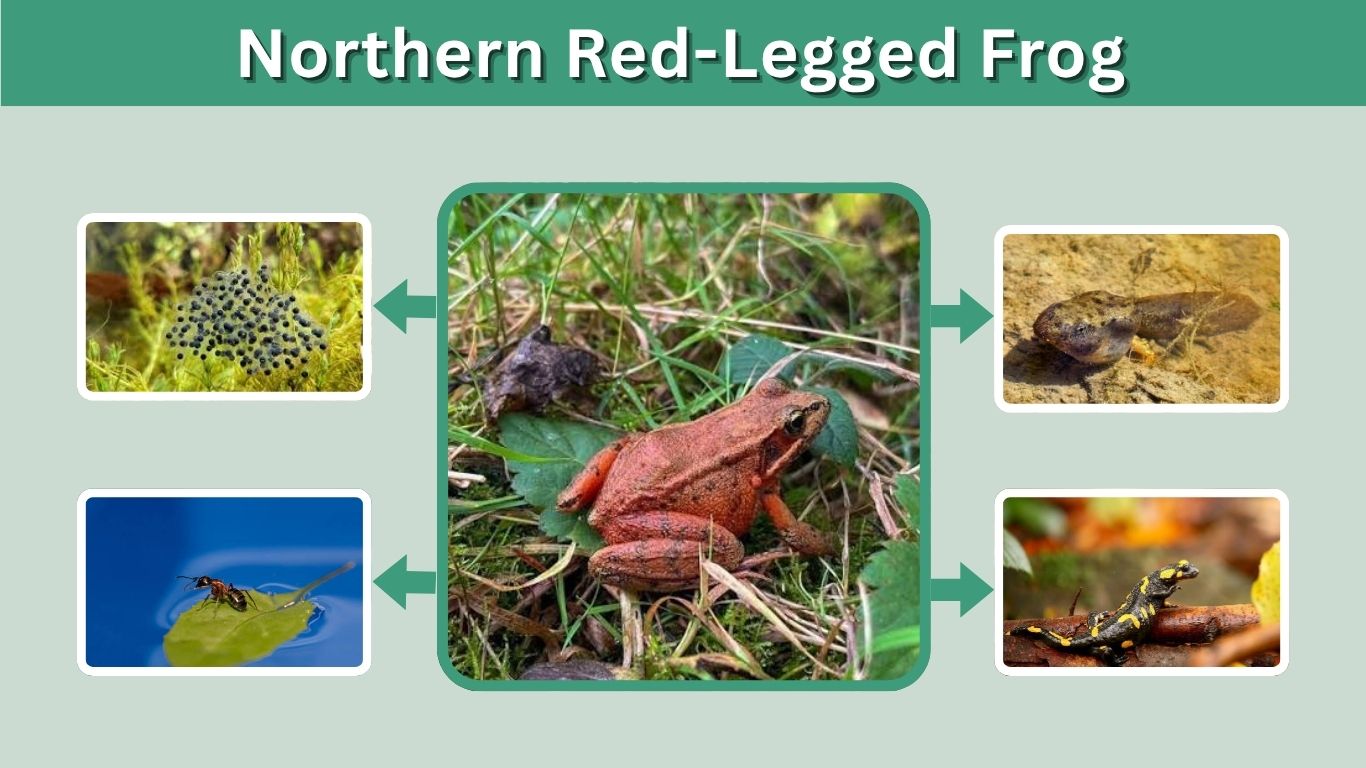
The northern red-legged frog is a native amphibian of the Pacific Northwest, recognized by the reddish coloring on the underside of its legs and lower body. Scientifically known as Rana aurora, this frog usually lives in moist forests, wetlands, ponds, and slow-moving waterways. It depends heavily on freshwater habitats for breeding but may spend considerable time on land outside the breeding season. This guide covers northern red-legged frog identification, range, habitat, diet, tadpoles, eggs, calls, predators, and other useful facts.
Northern Red-Legged Frog Identification
Northern red-legged frogs can be difficult to identify because their upper body may resemble several other brown or olive frogs. The reddish legs are an important clue, but body shape, facial markings, skin texture, and habitat should also be considered. Adults are generally medium-sized frogs with long legs adapted for jumping and swimming.
Size and Appearance
Common identification features include:
- Scientific name: Rana aurora
- Adult size: Usually around 2 to 4 inches long
- Body color: Brown, grayish-brown, reddish-brown, or olive
- Hind legs: Pink to reddish coloration underneath
- Skin: Relatively smooth to slightly rough
- Back: Often covered with dark spots or irregular markings
- Dorsolateral folds: Visible folds extend along the back
- Face: A dark mask-like stripe may appear near the eyes
Females are generally larger than males, especially during the breeding season.
Northern vs. California Red-Legged Frog
The northern red-legged frog and California red-legged frog are closely related but have different geographic distributions. Northern red-legged frogs occur farther north, while California red-legged frogs are primarily associated with California.
Their coloration and body shape may look similar, making geographic location one of the most useful clues when distinguishing the two species.
Are Northern Red-Legged Frogs Poisonous?
Northern red-legged frogs are not considered poisonous to humans. They do not possess the dangerous toxins associated with poison dart frogs.
However, handling wild frogs should be avoided whenever possible. Amphibians have highly sensitive skin that can absorb chemicals, oils, soap, sunscreen, and other substances from human hands.
Northern Red-Legged Frog Habitat and Range
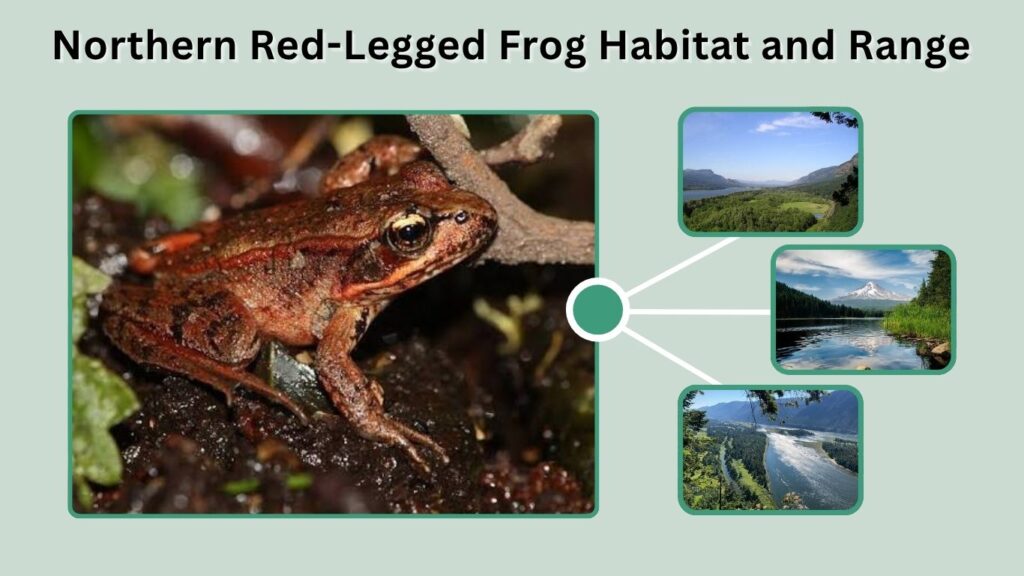
The northern red-legged frog is strongly associated with the moist environments of western North America. It needs aquatic habitat for breeding but may spend much of the year in nearby forests, wetlands, and vegetated areas. Cool temperatures, moisture, protective ground cover, and suitable breeding ponds are particularly important for maintaining healthy populations.
Northern Red-Legged Frog Range
Northern red-legged frogs occur along parts of the Pacific coast of North America.
Their range includes areas of:
- British Columbia
- Washington
- Oregon
- Northern California
- Pacific Northwest coastal regions
They are particularly associated with moist western landscapes rather than dry inland environments.
Preferred Habitat
Common habitats include:
- Forest ponds
- Marshes
- Wetlands
- Slow-moving streams
- Seasonal pools
- Lakeshores
- Forested swamps
- Moist woodland floors
- Riparian areas
Adults frequently use terrestrial habitats away from open water, especially when moisture levels are high.
Do They Live in Salt Water or Estuaries?
Northern red-legged frogs are freshwater amphibians and are not adapted to live permanently in salt water.
They may occasionally occur around coastal wetlands or environments influenced by estuaries, but they depend on freshwater or very low-salinity habitats for successful reproduction. Their eggs and tadpoles require suitable aquatic conditions and cannot develop normally in seawater.
Northern Red-Legged Frog Diet
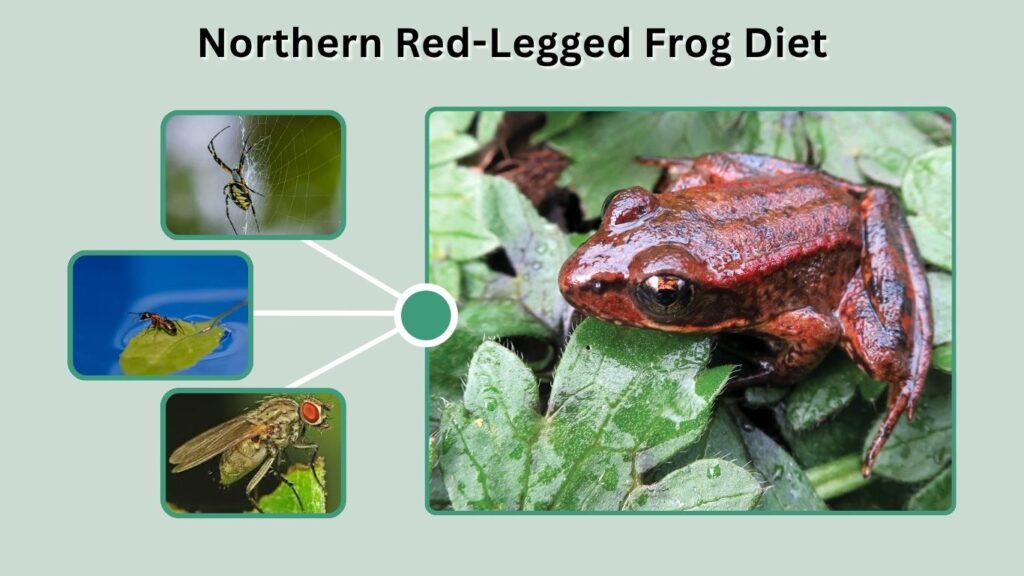
Northern red-legged frogs are carnivorous as adults and primarily feed on small invertebrates. Their diet varies according to body size, location, season, and prey availability. They often remain hidden in vegetation or leaf litter and capture prey that moves within striking distance rather than actively chasing animals over long distances.
What Do Northern Red-Legged Frogs Eat?
Their diet may include:
- Beetles
- Flies
- Moths
- Spiders
- Ants
- Crickets
- Small grasshoppers
- Worms
- Slugs
- Other small invertebrates
Larger frogs may occasionally consume relatively large prey when it is available.
How Do They Catch Food?
Northern red-legged frogs are opportunistic hunters. They often remain motionless while watching for prey and then strike quickly when an insect or other small animal moves nearby.
Their sticky tongue and fast mouth movements allow them to capture prey efficiently while remaining concealed among plants, leaf litter, and wetland vegetation.
Tadpole Diet
Northern red-legged frog tadpoles feed differently from adults. They generally consume algae, microorganisms, decaying plant matter, and organic material found on submerged surfaces.
This diet provides nutrients needed for growth until they undergo metamorphosis and begin hunting small animals.
Northern Red-Legged Frog Eggs, Tadpoles & Life Cycle
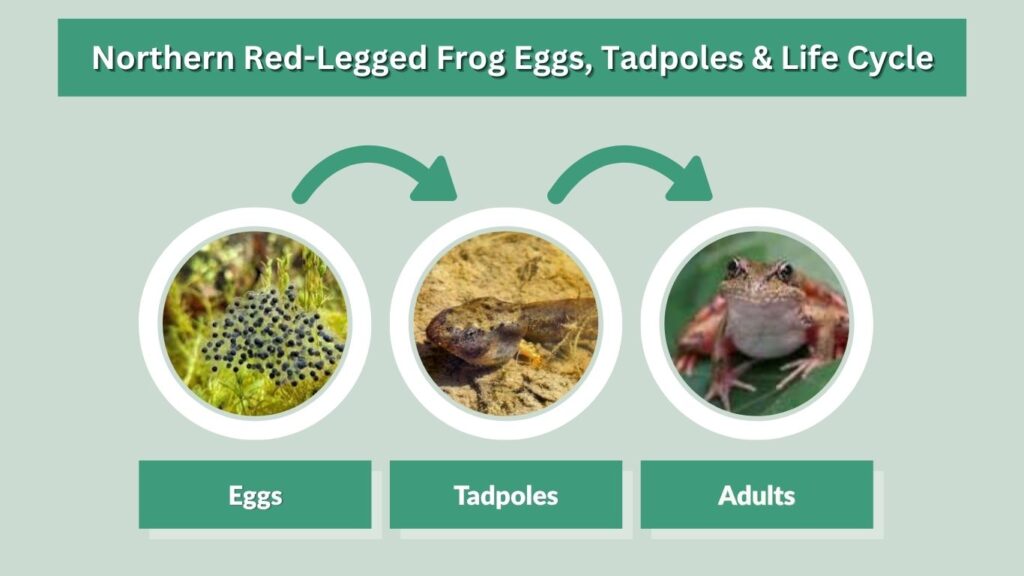
The northern red-legged frog depends on aquatic habitats during the earliest stages of its life. Breeding generally takes place in ponds, wetlands, or other calm bodies of water. Eggs hatch into tadpoles, which remain completely aquatic before gradually developing legs and transforming into small juvenile frogs capable of living on land.
Northern Red-Legged Frog Eggs
Females deposit egg masses in quiet water, often attaching them to submerged vegetation.
Typical characteristics include:
- Large jelly-like clusters
- Hundreds of individual eggs
- Attachment to aquatic plants
- Placement below the water surface
- Development during cool seasonal conditions
Egg masses gradually swell after being deposited as the protective gelatinous material absorbs water.
Northern Red-Legged Frog Tadpole Identification
Tadpoles generally have rounded bodies and long tails adapted for swimming. Their coloration can range from brown to olive or dark gray depending on age and environmental conditions.
Identification can be challenging because tadpoles of several frog species look similar. Geographic location, pond habitat, body proportions, and developmental stage can all help with identification.
Metamorphosis
As tadpoles mature, the hind legs begin developing first. Front legs later emerge, while the tail gradually shrinks as nutrients within it are absorbed.
The young frog eventually leaves the water with a body designed for breathing air and hunting terrestrial insects.
Breeding Behavior and Northern Red-Legged Frog Call
Northern red-legged frogs become especially active around breeding habitats during the cooler and wetter portion of the year. Males use vocalizations to attract females, although their calls may be less obvious than the loud choruses produced by some treefrogs. Successful reproduction depends heavily on suitable water conditions and relatively undisturbed aquatic habitat.
Northern Red-Legged Frog Call
Male northern red-legged frogs produce relatively quiet breeding calls, sometimes while positioned underwater or near aquatic vegetation.
Because their calls can be soft and difficult to hear from a distance, people may encounter these frogs without ever noticing a large or obvious breeding chorus.
Breeding Behavior
Males gather around suitable aquatic breeding sites and attempt to attract females. After mating, females deposit their eggs in protected locations containing calm water and vegetation.
Breeding timing can vary with elevation, temperature, rainfall, and local climate conditions.
Seasonal Activity
Outside the breeding season, adults may move away from ponds into forests and other damp terrestrial habitats.
They often remain hidden under vegetation, fallen logs, leaf litter, or other moist cover during dry or unfavorable conditions.
Predators and Ecological Role
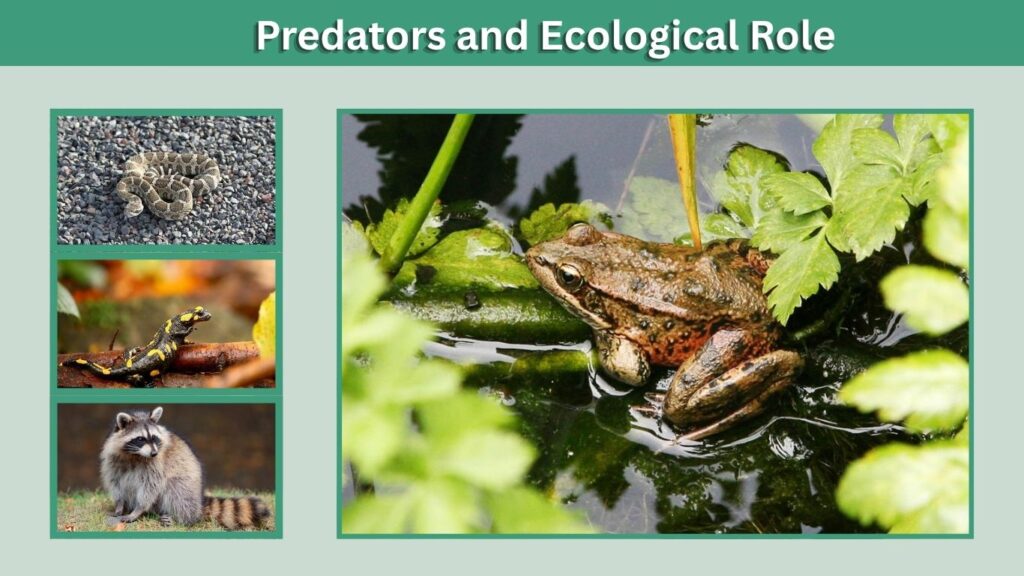
Northern red-legged frogs occupy an important position in Pacific Northwest food webs. They consume insects and other invertebrates while also serving as prey for many larger animals. Eggs, tadpoles, juveniles, and adults face different predators, meaning the species contributes to both aquatic and terrestrial ecosystems throughout its life cycle.
Common Predators
Potential predators include:
- Herons and other birds
- Snakes
- Raccoons
- Fish
- Aquatic insects
- Salamanders
- Mammals
- Larger frogs
Tadpoles and eggs are particularly vulnerable because they cannot easily escape aquatic predators.
Ecological Importance
By eating insects and other small invertebrates, adult frogs help transfer energy through forest and wetland food webs. Tadpoles also interact with algae, microorganisms, and organic matter in freshwater environments.
In turn, northern red-legged frogs provide food for birds, reptiles, mammals, fish, and other predators.
Threats to Populations
Habitat destruction, wetland drainage, pollution, introduced predators, road mortality, disease, and changes in water availability can negatively affect local populations.
Because adults use both aquatic and terrestrial environments, protecting only breeding ponds may not be enough. Surrounding forest habitat and movement corridors are also important.
Northern Red-Legged Frog Facts
Northern red-legged frogs are well adapted to the cool, moist environments of western North America. Although they are closely connected to wetlands, adults can spend substantial periods away from open water. Their secretive behavior often makes them difficult to observe outside the breeding season, even where healthy populations are present.
Quick Facts
- The scientific name is Rana aurora.
- It is native to the Pacific Northwest.
- Adults commonly have reddish coloring beneath their hind legs.
- They breed in freshwater ponds and wetlands.
- Adults mainly eat insects and other invertebrates.
- Tadpoles feed largely on algae and organic material.
- They may travel into forests away from breeding water.
- Their breeding calls can be relatively quiet.
- They do not normally live in salt water.
- Maintaining wetland and forest habitat helps support their populations.
FAQs
1. Are northern red-legged frogs poisonous?
No. Northern red-legged frogs are not considered poisonous to humans. They should still be handled as little as possible because amphibian skin is extremely sensitive.
2. Where do northern red-legged frogs live?
They occur mainly in the Pacific Northwest, including parts of British Columbia, Washington, Oregon, and northern California. They prefer moist forests, ponds, wetlands, marshes, and slow-moving waterways.
3. What do northern red-legged frogs eat?
Adults primarily eat insects, spiders, worms, slugs, and other small invertebrates. Tadpoles mainly consume algae, microorganisms, and organic material.
4. How big does a northern red-legged frog get?
Most adults measure roughly 2 to 4 inches in body length. Females generally grow larger than males.
5. How can you identify a northern red-legged frog?
Look for a medium-sized brown or olive frog with dark markings, dorsolateral folds along the back, a dark facial stripe, and distinctive pink or reddish coloring beneath the hind legs.
