
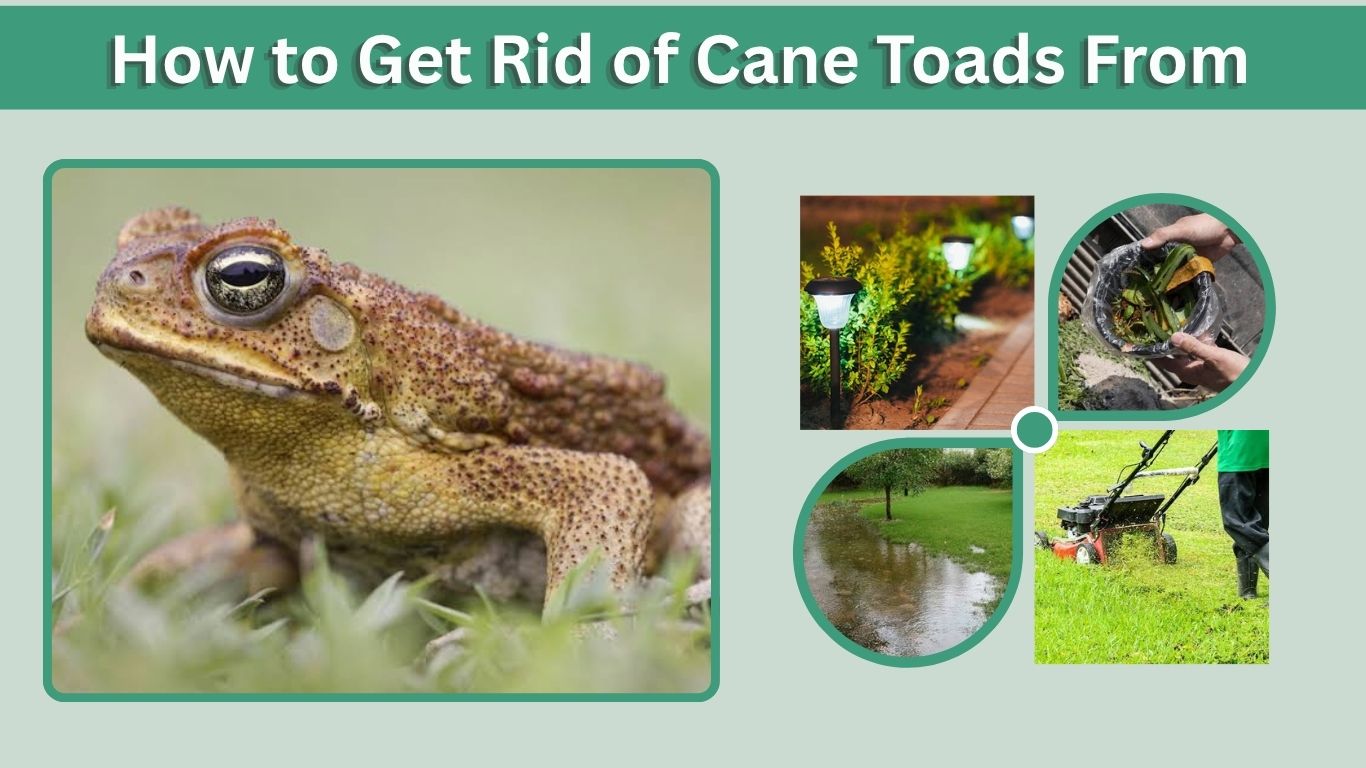
Cane toads can become a frustrating backyard problem, especially in warm regions such as Florida, Hawaii, and parts of Australia. They often appear around lawns, gardens, ponds, pet bowls, and outdoor lights after dark. Because cane toads produce toxins that can seriously harm dogs and other animals, removing them from areas used by pets is especially important. The best way to get rid of cane toads is to combine habitat changes, physical barriers, careful removal, and prevention of breeding rather than relying on dangerous household chemicals.
Why Are Cane Toads in Your Yard?
Cane toads usually enter yards because they can find three things they need: food, water, and shelter.
They are most active at night and commonly feed on insects attracted to outdoor lights.
What Attracts Cane Toads?
Common attractants include:
- Pet food left outdoors
- Pet water bowls
- Standing water
- Ponds and drains
- Outdoor lights attracting insects
- Compost
- Fallen fruit
- Thick vegetation
- Wood piles
- Debris
- Gaps beneath fences
Removing these attractants is one of the most effective long-term control methods.
How to Get Rid of Cane Toads in Your Yard
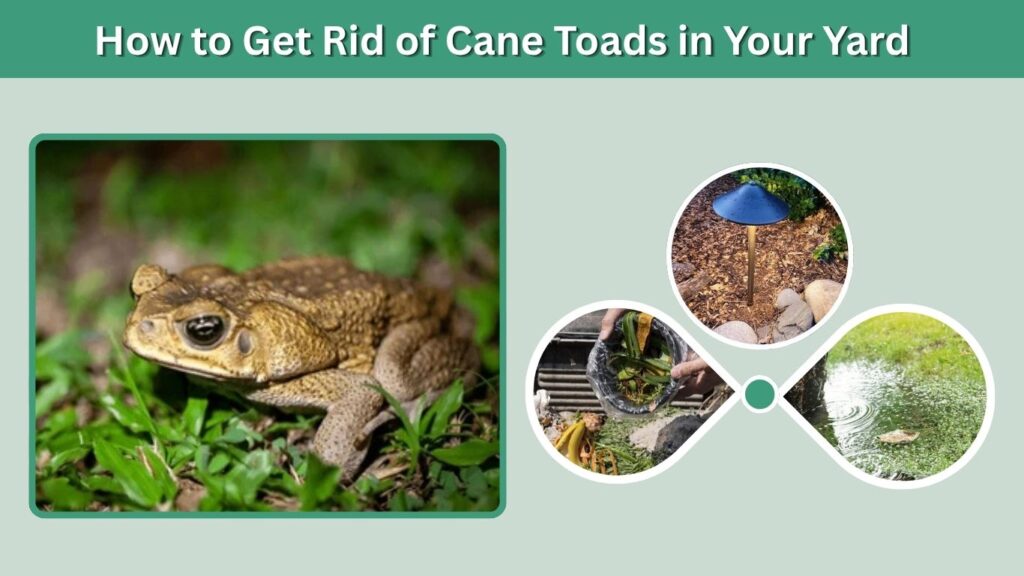
Removing individual toads may provide temporary relief, but more will arrive if your property continues providing food, water, and shelter.
For the best results, combine several control methods.
1. Remove Outdoor Food Sources
Never leave pet food outside overnight.
Cane toads may eat:
- Pet food
- Insects around food bowls
- Food scraps
- Fallen fruit
- Other small animals
Bring dog and cat food indoors before evening and clean spilled food immediately.
Keep garbage containers tightly closed.
2. Remove Standing Water
Cane toads need water for breeding and are attracted to moist environments.
Check your property for:
- Buckets
- Plant saucers
- Old tires
- Children’s pools
- Clogged drains
- Leaking faucets
- Open containers
- Low areas that collect rainwater
Empty unnecessary standing water regularly.
Do not remove established ponds without considering native wildlife, but preventing cane toads from accessing artificial water sources can significantly reduce their numbers.
3. Reduce Outdoor Lighting
Outdoor lights attract moths, beetles, and other insects, effectively creating feeding areas for cane toads.
Turn off unnecessary lights at night or position lights away from doors, patios, and pet areas.
This reduces both insect concentrations and cane-toad activity.
How to Keep Cane Toads Out of Your Backyard
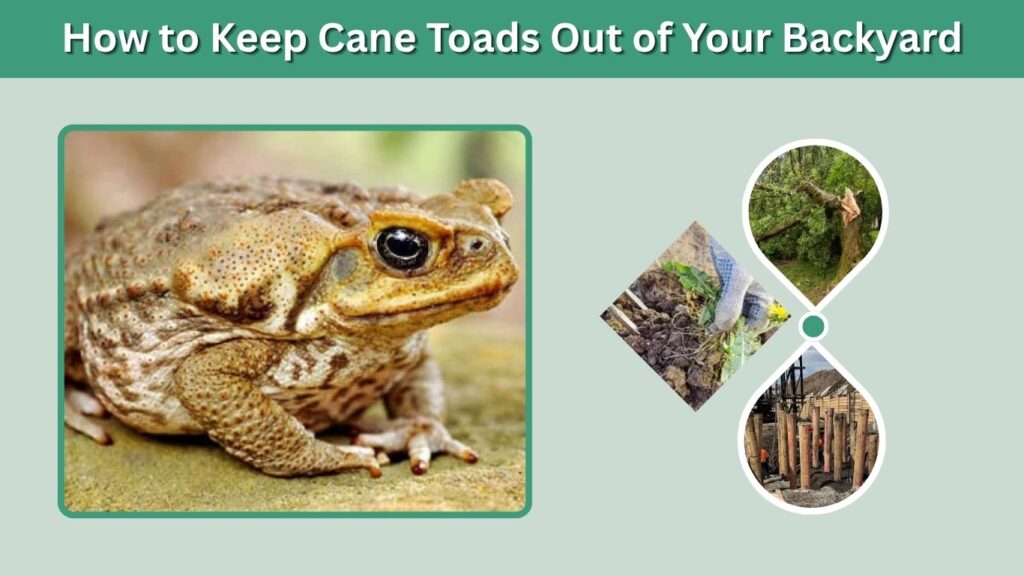
Physical exclusion can be particularly effective if cane toads repeatedly enter the same enclosed yard.
Install a Toad-Proof Barrier
Cane toads can squeeze through surprisingly small spaces.
A barrier should:
- Have small openings
- Extend completely around vulnerable areas
- Sit firmly against the ground
- Have no gaps beneath gates
- Be tall enough to prevent easy entry
Fine mesh or smooth solid fencing around pet runs can reduce encounters significantly.
Inspect fences regularly because gaps can develop after heavy rain or yard work.
Remove Cane Toad Hiding Places
Cane toads hide during hot daylight hours and emerge after dark.
Removing shelters makes your yard less suitable.
Clean Up These Areas
Reduce:
- Piles of timber
- Fallen branches
- Dense weeds
- Stored garden materials
- Loose bricks
- Boards lying on the ground
- Thick piles of leaves
- Unused pots and containers
Keep grass reasonably short and trim vegetation near patios and pet areas.
You do not need to eliminate all landscaping. Concentrate on areas immediately around your home and places used by pets.
How to Remove a Cane Toad Safely
If you find an individual cane toad, avoid touching it with bare hands.
The large glands behind its eyes produce defensive toxins that can irritate the eyes, mouth, and other sensitive tissues.
Safe Removal
When moving a cane toad:
- Wear disposable or waterproof gloves.
- Keep children and pets away.
- Use a container to collect it.
- Avoid squeezing the animal.
- Do not touch your face while handling it.
- Wash your hands afterward.
If humane euthanasia is required because cane toads are invasive where you live, follow the method specifically recommended by your local wildlife authority or use a professional wildlife-control service.
Do not relocate invasive cane toads to another neighborhood or natural area.
How to Get Rid of Cane Toads in Florida
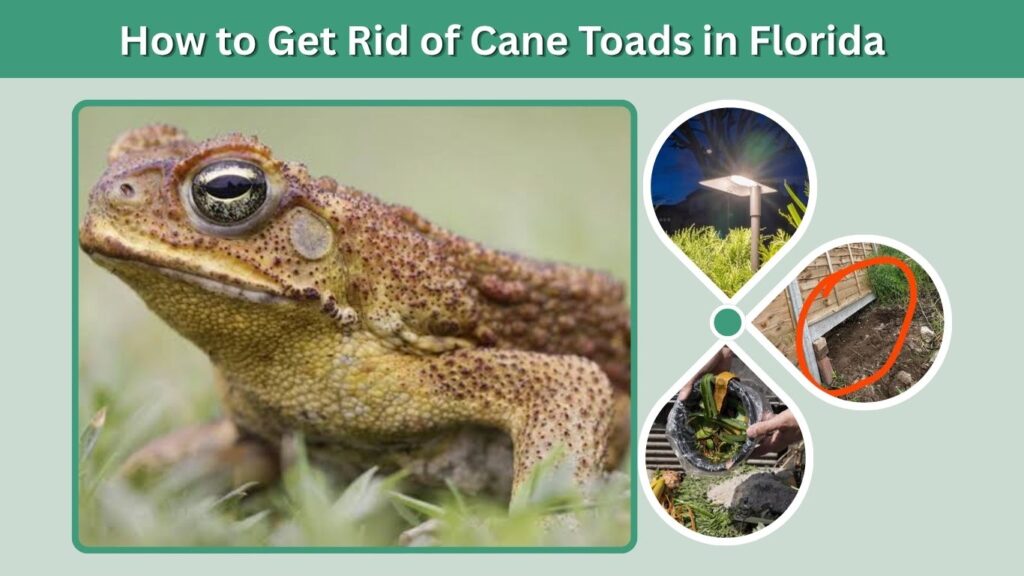
Cane toads are established in parts of Florida, particularly southern and central areas.
Florida homeowners should concentrate on preventing encounters with pets and reducing backyard habitat.
Florida Cane Toad Control
Useful measures include:
- Remove pet food every evening.
- Supervise dogs after dark.
- Remove standing water.
- Reduce insect-attracting lights.
- Fill gaps beneath fences.
- Clear dense vegetation around the house.
- Remove confirmed cane toads from the property.
Be particularly careful when identifying toads because Florida also has native amphibians that should not be harmed.
How to Get Rid of Cane Toads in Australia
Cane toads are invasive across large areas of northern and eastern Australia.
Community control efforts often concentrate on removing adults, identifying breeding areas, and reducing the number of tadpoles that reach adulthood.
Backyard Prevention in Australia
Homeowners can:
- Remove accessible pet food.
- Check yards after rain.
- Remove unnecessary containers of water.
- Install barriers.
- Supervise pets at night.
- Participate in approved community cane-toad programs.
Because animal-welfare rules and recommended euthanasia practices can differ between Australian states and territories, follow current local government guidance rather than experimenting with household chemicals.
How to Get Rid of Cane Toad Tadpoles
Stopping cane toads during the breeding stage can help reduce future populations.
Females may produce large numbers of eggs, so a successful breeding site can eventually create many young toads.
Identify Them Carefully
Cane toad eggs are typically laid in long gelatinous strings in water.
Their tadpoles are generally small and dark.
However, many native frogs also breed in ponds and temporary water sources.
Never remove eggs or tadpoles unless you can identify them confidently.
If you discover a major breeding site, local wildlife or invasive-species authorities may be able to recommend an approved control method.
How to Get Rid of Baby Cane Toads
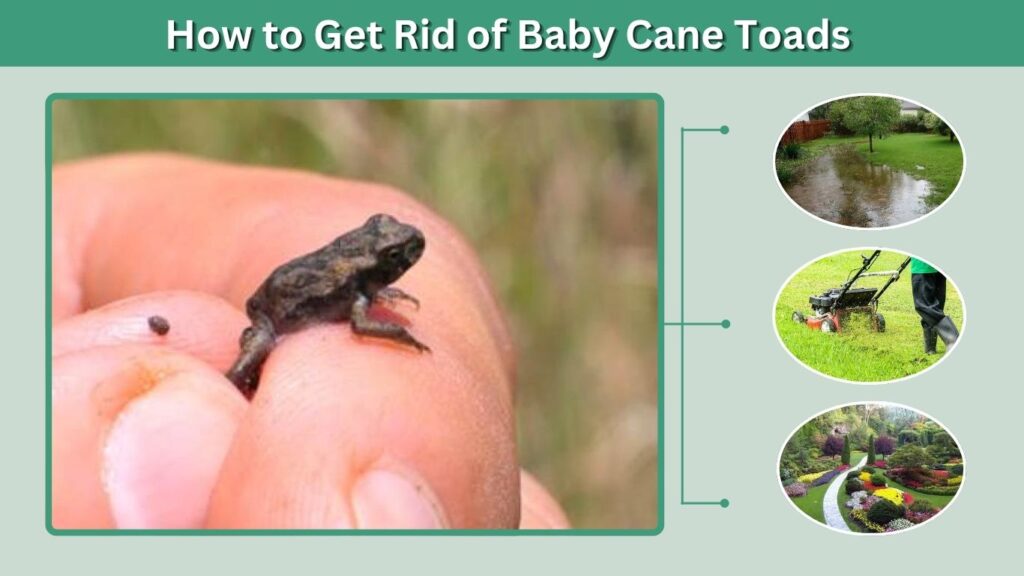
Young cane toads sometimes appear in large numbers after breeding.
They may gather around:
- Pond margins
- Wet lawns
- Ditches
- Gardens
- Drainage areas
Reducing water access and eliminating moist hiding places can make the property less attractive.
Wear gloves when collecting young cane toads because toxins are present even in immature animals.
What Not to Use on Cane Toads
Several household substances are frequently suggested online for killing or repelling cane toads.
Avoid applying substances directly to them simply because they are readily available.
Do not use:
- Bleach
- Salt
- Vinegar
- Ammonia
- Detergent
- Petrol
- Wasp spray
- Household insecticides
- Disinfectants
These methods may cause prolonged suffering, harm plants and soil, contaminate water, or injure native wildlife.
Approved wildlife-control methods are a better choice.
Can You Repel Cane Toads Naturally?
There is no single natural scent that reliably keeps every cane toad out of a yard.
Habitat modification is considerably more practical.
Natural Prevention Methods
Focus on:
- Eliminating standing water
- Removing pet food
- Keeping vegetation tidy
- Reducing nighttime insects
- Blocking fence gaps
- Removing hiding places
- Keeping patios clean
These changes make the yard less appealing without introducing potentially harmful chemicals.
Protect Dogs From Cane Toads
Dogs are one of the biggest reasons homeowners need to control cane toads.
A curious dog may lick, bite, or pick up a toad, exposing its mouth to toxin.
Keep Dogs Safe
- Supervise dogs outside at night.
- Use a leash in areas with many toads.
- Inspect the yard before letting dogs out.
- Bring food and water bowls indoors.
- Teach a reliable “leave it” command.
- Install barriers around dog runs.
Signs of poisoning can include excessive drooling, foaming, very red gums, vomiting, tremors, seizures, weakness, or collapse.
Contact a veterinarian immediately if your dog bites or mouths a cane toad and develops symptoms.
Best Long-Term Cane Toad Control
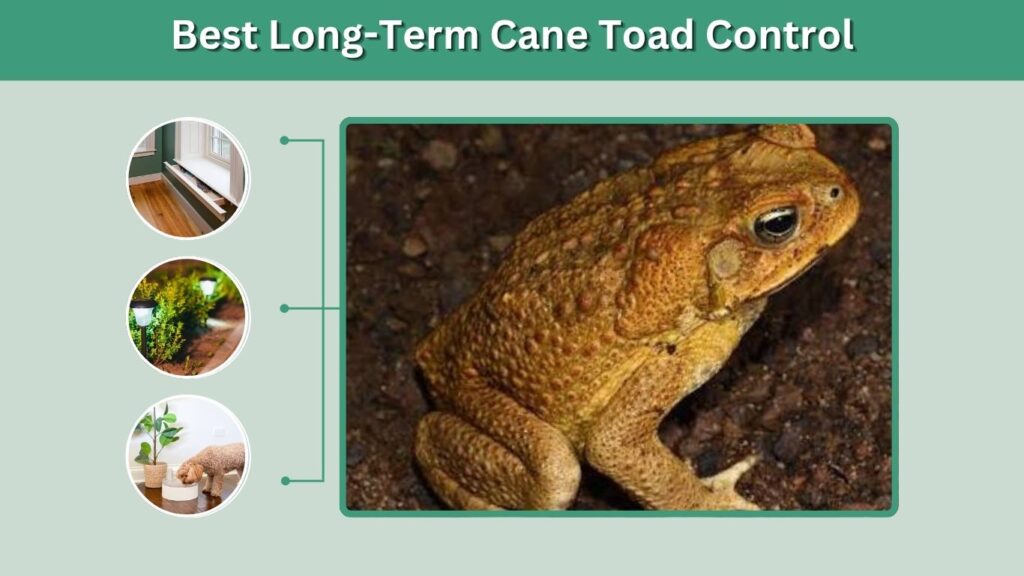
The most effective approach is not simply removing one toad whenever you see it.
Combine several strategies:
- Remove pet food every night.
- Eliminate unnecessary standing water.
- Reduce outdoor lighting.
- Clear hiding places.
- Seal gaps beneath fences.
- Supervise pets after dark.
- Remove confirmed cane toads safely.
- Monitor ponds and drainage areas for breeding.
Repeating these steps can gradually make your property much less attractive to cane toads.
FAQs
What is the easiest way to get rid of cane toads?
Remove food, standing water, hiding places, and insect-attracting lights while blocking common entry points. Safely remove individual cane toads when they appear.
How do I keep cane toads out of my yard permanently?
Complete prevention may not be possible in heavily infested regions, but solid or fine-mesh barriers combined with habitat management can greatly reduce visits.
What smell keeps cane toads away?
No household scent has been proven to reliably solve a cane-toad problem. Removing food, water, insects, and shelter is generally more effective.
Should I relocate a cane toad?
Do not move an invasive cane toad to another property or natural area. Follow local invasive-species guidance for appropriate removal.
Why do cane toads keep coming back?
Your property may still provide insects, water, pet food, shelter, or easy entry points. Long-term control requires removing these attractants rather than only removing individual toads.
