
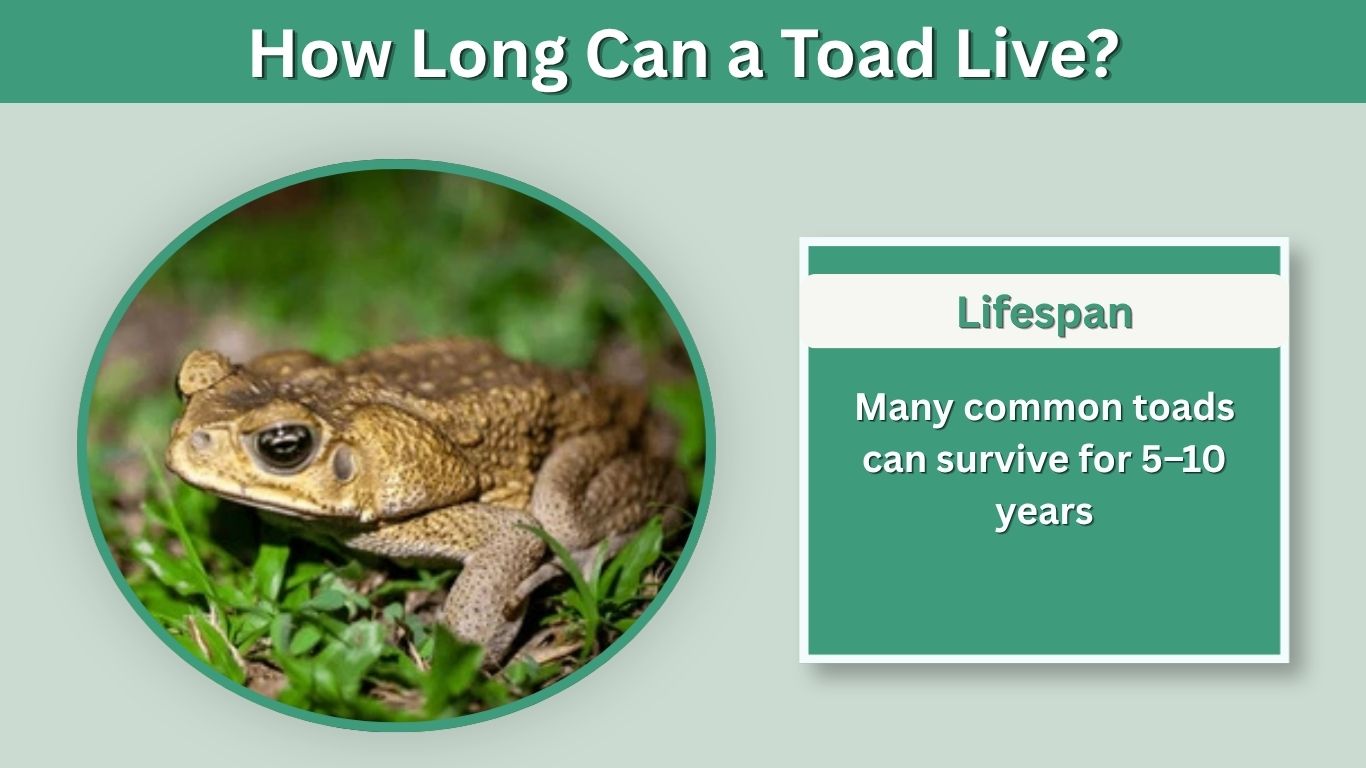
How long can a toad live? The answer depends heavily on the species and whether the animal lives in the wild or captivity. Many common toads can survive for 5–10 years, while some species can live considerably longer under protected conditions. American toads have been documented living beyond 10 years in the wild, with an exceptional captive individual reaching 36 years. Temperature, predators, disease, food availability, moisture, and habitat quality all influence how long an individual toad actually survives.
Average Toad Lifespan
Toads often have the potential to live much longer than people expect. However, there is a major difference between their biological potential and their average survival in nature.
Young tadpoles and newly metamorphosed toadlets experience very high mortality. Once a toad reaches adulthood, its chances of surviving for several years increase substantially.
Typical Lifespans
Approximate lifespans for several familiar types include:
- American toad: Can exceed 10 years in the wild
- Fowler’s toad: Around 5 years
- Cane toad: Up to around 10 years
- Oriental fire-bellied toad: Frequently 12–15 years and potentially 20 years in human care
Fowler’s toads typically live around five years, showing that lifespan varies considerably even among familiar North American species.
How Long Can American Toads Live?
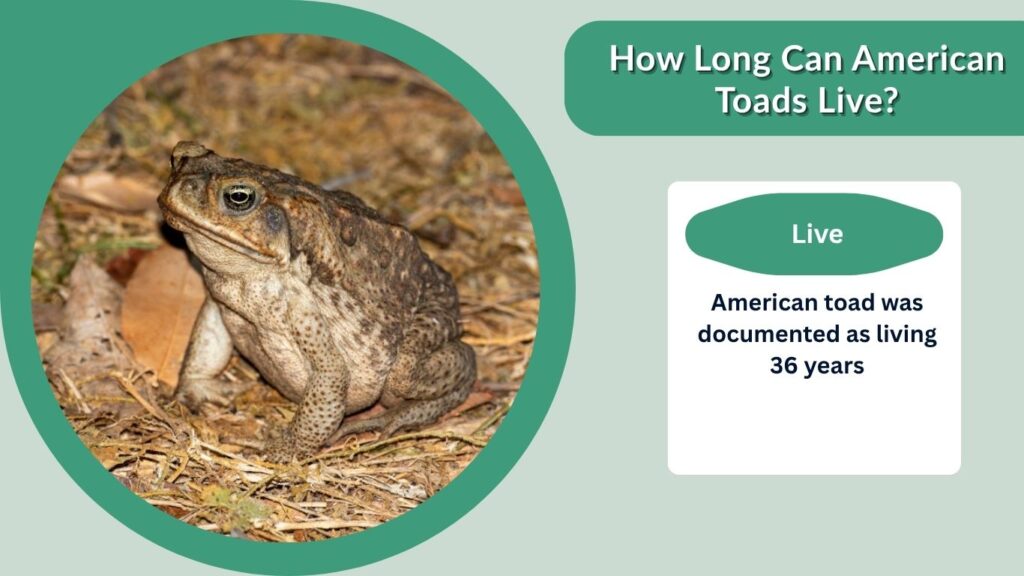
The American toad (Anaxyrus americanus) has surprisingly impressive longevity.
Most individuals never reach old age because mortality is extremely high during the egg, tadpole, and young-toad stages. Those that survive these vulnerable periods can potentially live for many years.
American Toad Lifespan
American toads can:
- Live more than 10 years in the wild
- Reach maturity at roughly 2–3 years
- Survive considerably longer under exceptional captive conditions
An extraordinary captive American toad was documented as living 36 years, although this should be viewed as an exceptional record rather than a normal lifespan.
How Long Do Cane Toads Live?
Cane toads (Rhinella marina) are large, hardy amphibians found naturally in parts of Central and South America and introduced to regions including Australia and Florida.
They are comparatively long-lived animals.
Cane Toad Lifespan
Cane toads can reach approximately 10 years in the wild, while captive lifespan varies according to husbandry and individual health.
Their ability to survive challenging environments contributes to their success as an invasive species in some regions.
How Long Do Fire-Bellied Toads Live?
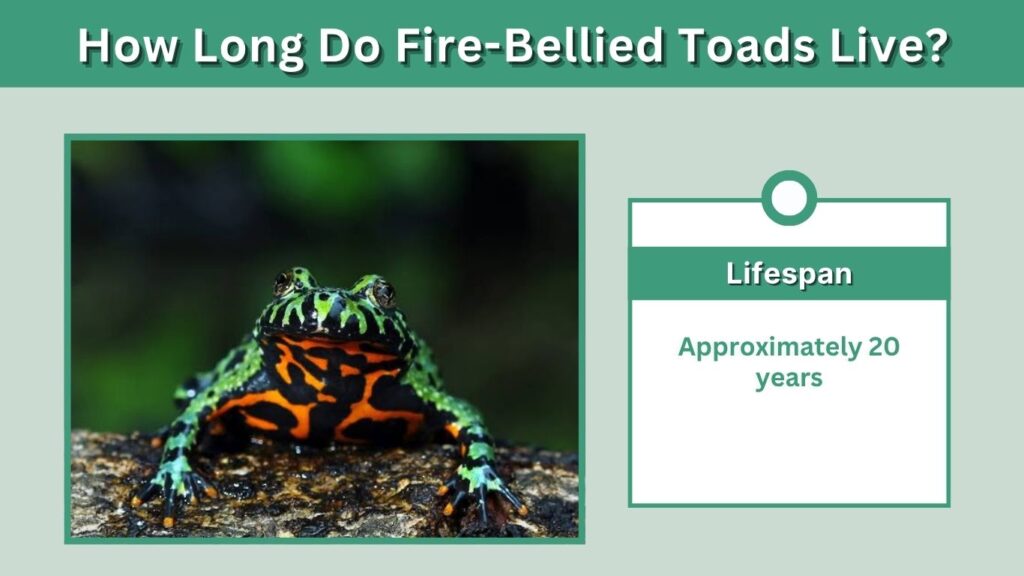
Despite their name, fire-bellied toads belong to the genus Bombina and differ from typical true toads.
They are particularly well known for their longevity in captivity.
Fire-Bellied Toad Lifespan
Oriental fire-bellied toads commonly live about 12–15 years, and Smithsonian reports that individuals in human care can reach approximately 20 years.
Good water quality, suitable temperatures, proper nutrition, and clean housing are important for reaching their full lifespan.
How Long Can a Toad Go Without Eating?
There is no single number that applies to every toad.
A healthy adult toad may sometimes go for days or even weeks without eating, particularly when temperatures are low and its metabolism slows. During seasonal dormancy, some species can remain inactive for much longer without feeding.
However, deliberately withholding food from a captive toad is unsafe.
Factors Affecting Food Survival
How long a toad can go without food depends on:
- Age
- Species
- Body condition
- Temperature
- Metabolic rate
- Season
- Hydration
- Health
- Activity level
Baby toads generally need food more frequently because they have fewer energy reserves and are actively growing.
Adult toads can tolerate longer gaps.
How Do Toads Survive Hibernation Without Food?
Toads living in colder climates often enter a period of seasonal dormancy called brumation.
During this period, their metabolism decreases dramatically.
American toads may burrow deeply into soil during winter, remaining protected below the frost line until warmer conditions return.
During Brumation
A toad’s body:
- Uses energy much more slowly
- Becomes largely inactive
- Requires little or no food
- Relies on stored energy reserves
- Remains sheltered from extreme temperatures
This is very different from an active captive toad simply being denied food.
How Long Can Baby Toads Go Without Food?
Young toads should not be expected to tolerate prolonged food shortages.
After metamorphosis, baby toads are actively growing and typically consume tiny insects and other small invertebrates.
Baby Toad Feeding
Suitable prey may include:
- Fruit flies
- Tiny crickets
- Springtails
- Small flies
- Other appropriately sized insects
A baby toad that repeatedly refuses food may be stressed, too cold, dehydrated, or ill.
How Long Can a Toad Live Without Water?
Toads spend much more time on land than many frogs, but they are still amphibians and depend heavily on moisture.
They do not normally drink water through their mouths like mammals. Instead, amphibians absorb much of the water they need through specialized areas of their skin.
Toads Need Moisture to Survive
A toad’s ability to survive away from open water depends on:
- Humidity
- Temperature
- Soil moisture
- Species
- Body size
- Availability of shaded shelter
A toad in a cool, humid burrow can remain away from a pond for a long time because it still has access to environmental moisture.
A toad trapped in hot, dry conditions can become dehydrated much more rapidly.
For this reason, there is no reliable answer such as “three days without water” that applies to every toad.
Can Toads Live Out of Water?
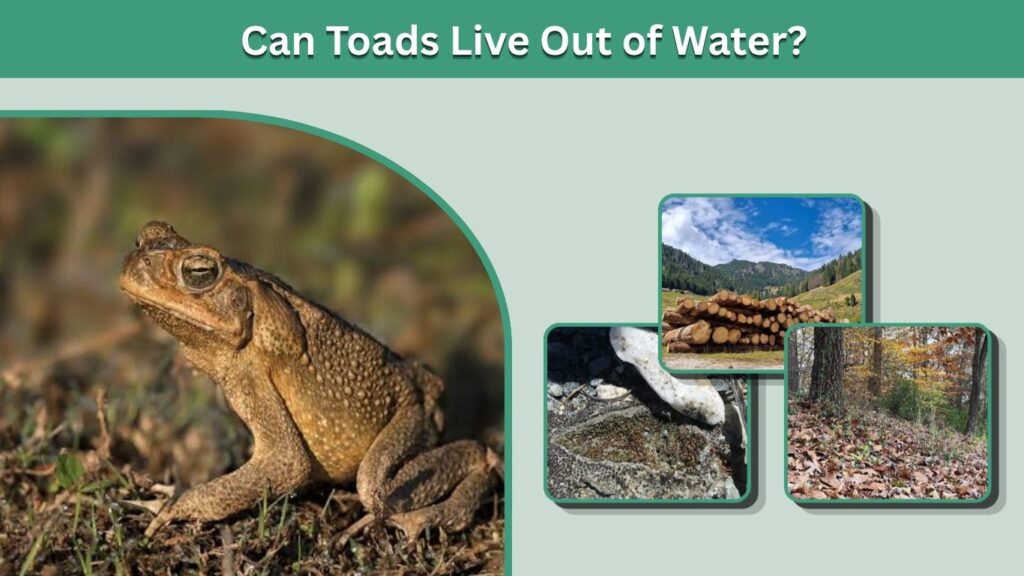
Yes. Most true toads spend the majority of their adult lives on land.
They generally return to water mainly for reproduction.
During the day, terrestrial toads often shelter:
- Underground
- Beneath logs
- Under rocks
- Beneath leaf litter
- Inside vegetation
- In damp crevices
These locations protect them from dehydration.
How Long Can Toads Stay Underwater?
Adult terrestrial toads can swim and temporarily remain underwater, but they are not designed to live permanently submerged.
They breathe primarily with lungs while also exchanging gases through their skin.
Can Toads Breathe Underwater?
Toads can obtain some oxygen through their moist skin, particularly while inactive. However, this does not mean that an adult terrestrial toad can remain underwater indefinitely.
How long it can remain submerged depends on water temperature, activity, oxygen levels, species, and physiological condition.
A toad should always have an easy way to leave deep water.
Can Toads Drown?
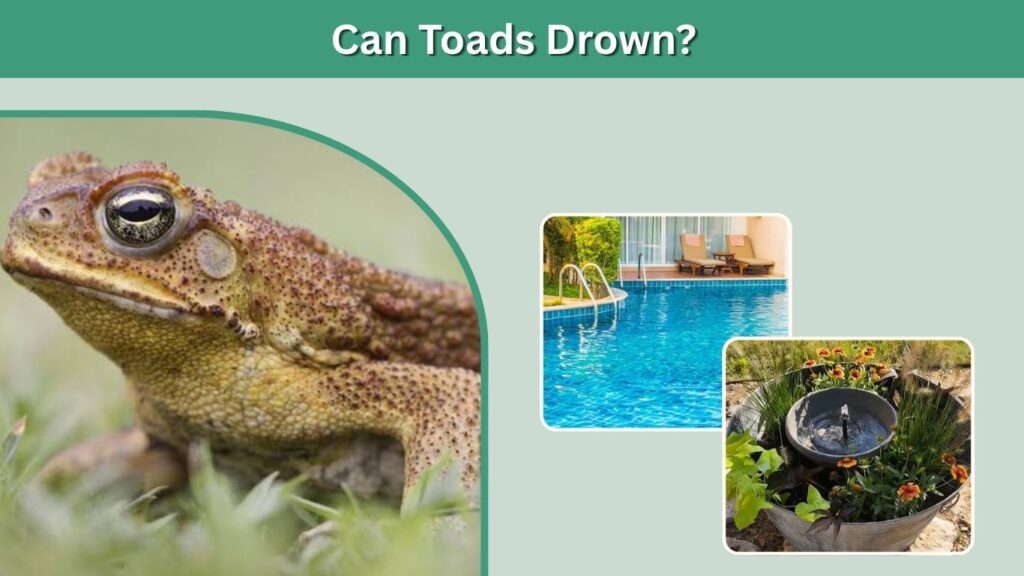
Yes.
Even though toads are amphibians and are capable swimmers, adult terrestrial toads can drown if trapped in water and unable to reach the surface or escape.
Potential hazards include:
- Swimming pools
- Deep buckets
- Steep-sided ponds
- Water tanks
- Open containers
Adding wildlife escape ramps to pools and ponds can help trapped amphibians get out safely.
How Long Can Toads Live Underground?
Many terrestrial toads spend substantial amounts of time underground.
Burrowing protects them against predators, drought, excessive heat, and freezing temperatures.
Why Toads Go Underground
They may burrow to:
- Hibernate during winter
- Escape extreme heat
- Avoid dry weather
- Maintain body moisture
- Hide from predators
- Rest during daylight
In cold climates, some species can remain underground throughout much of winter before emerging in spring.
What Determines How Long a Toad Lives?
Lifespan is influenced by much more than species alone.
Major Lifespan Factors
Predators: Snakes, birds, mammals, and other animals can kill toads.
Disease: Fungal infections, parasites, and other diseases can shorten their lives.
Habitat: Access to clean water, moist shelter, and breeding sites improves survival.
Food: Healthy populations of insects and other invertebrates provide necessary nutrition.
Climate: Severe drought, extreme temperatures, or habitat changes can reduce survival.
Human activity: Vehicles, pesticides, habitat destruction, and swimming pools are common hazards.
Captive toads may live longer because many of these threats are removed, provided they receive proper husbandry.
A Note About Horned Toads
Searches for “how long can a horned toad live” can cause confusion.
The North American horned toad or horny toad is actually a lizard, usually belonging to the genus Phrynosoma. It is not a true toad or amphibian.
Its lifespan, food requirements, and ability to survive without water are therefore very different from those of actual toads.
FAQs
How long can a normal toad live?
Many common toads have the potential to live around 5–10 years, although lifespan varies considerably among species.
How long can a toad go without food?
Healthy adults may tolerate days or sometimes longer periods without eating, especially during cold weather or dormancy. There is no universal safe maximum, and captive toads should receive regular appropriate food.
How long can a toad live without water?
There is no fixed time. Toads require environmental moisture and can dehydrate rapidly in hot, dry conditions even though most adult toads live primarily on land.
How long do cane toads live?
Cane toads can reach approximately 10 years in the wild.
Can toads live for 20 years?
Yes. Some species can. Oriental fire-bellied toads, for example, can reach around 20 years in human care, while exceptional individuals of other species have lived even longer.
