
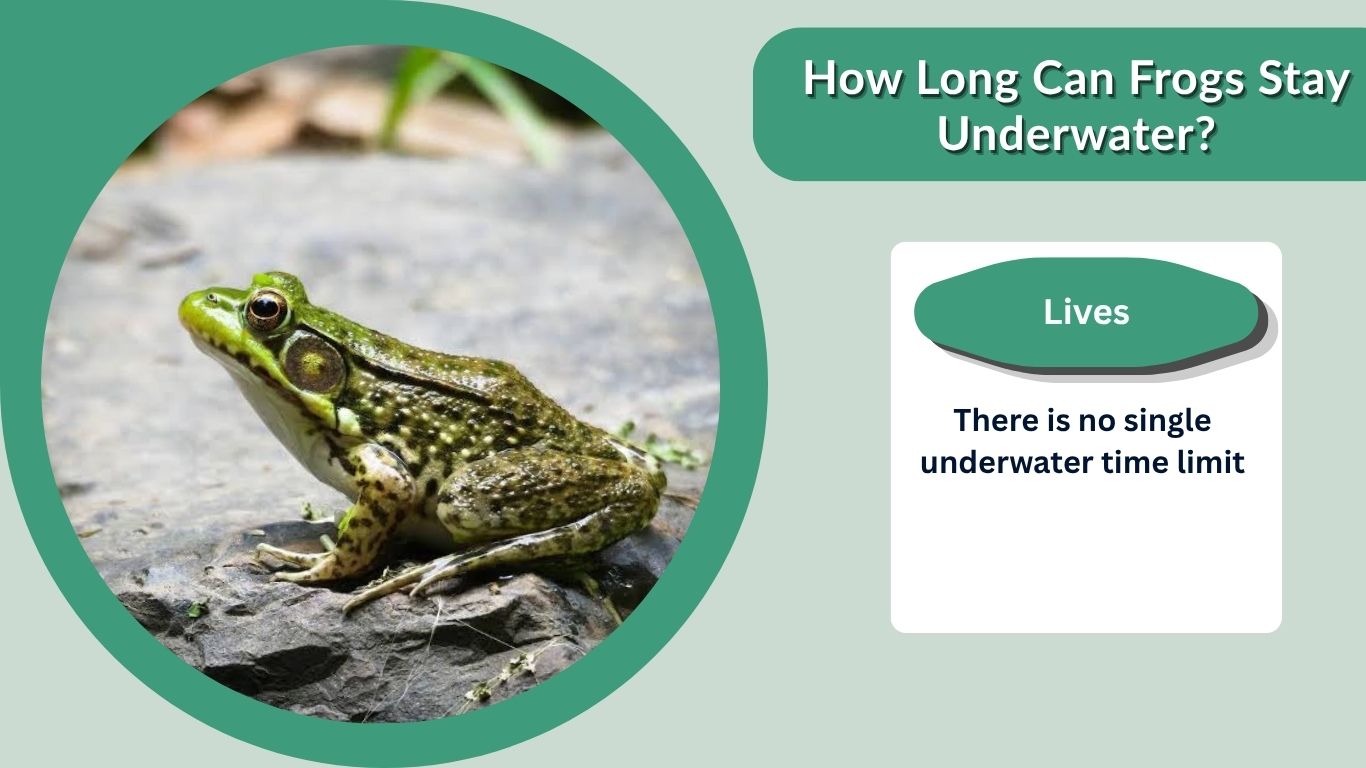
Frogs spend much of their lives around water, swimming, hunting, and hiding from predators. But how long can frogs stay underwater without coming up for air? The answer depends on the species, water temperature, oxygen availability, and the frog’s activity level.
Many frogs can remain underwater for extended periods because they absorb oxygen through their skin. Some aquatic frogs must regularly surface to breathe, while certain species can remain submerged for several months during winter dormancy.
Understanding how frogs breathe underwater helps explain why some species survive beneath frozen ponds while others cannot tolerate prolonged submersion.
How Long Can a Frog Stay Underwater?
There is no single underwater time limit that applies to every frog species.
During normal activity, many frogs surface periodically to breathe air through their lungs. However, they can also absorb dissolved oxygen directly from the surrounding water through their skin.
This ability allows certain frogs to stay underwater much longer than animals that depend entirely on lungs.
The time a frog can remain submerged depends on whether it is swimming actively, resting, or spending the winter in a dormant state.
Underwater Survival Time by Frog Species
| Frog Species | Underwater Ability |
| Common Frog | Can remain submerged for months during suitable winter conditions |
| American Bullfrog | Can spend extended periods underwater, including winter dormancy |
| Green Frog | Can overwinter underwater in oxygen-rich ponds |
| Leopard Frog | Can remain underwater during winter dormancy |
| Tree Frog | Generally prefers land and requires access to air |
| African Dwarf Frog | Fully aquatic but regularly surfaces to breathe |
| African Clawed Frog | Aquatic throughout adulthood but surfaces for air |
These descriptions reflect general biological abilities rather than exact breath-holding records.
How Do Frogs Breathe Underwater?
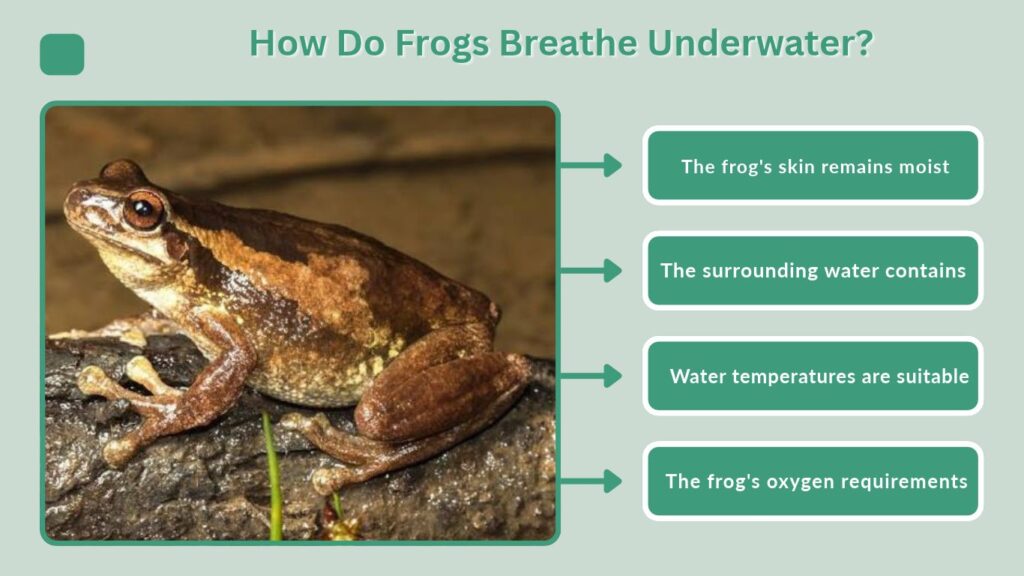
Frogs have a remarkable respiratory system that allows them to obtain oxygen in different ways.
Adult frogs generally use their lungs, moist skin, and the lining of their mouth to exchange respiratory gases.
Breathing Through Their Skin
Frogs can absorb oxygen directly through their skin in a process called cutaneous respiration.
Their skin contains many tiny blood vessels that allow oxygen to move from the surrounding water into the bloodstream.
At the same time, carbon dioxide passes out of the body.
This process works particularly well when:
- The frog’s skin remains moist.
- The surrounding water contains sufficient dissolved oxygen.
- Water temperatures are suitable.
- The frog’s oxygen requirements are relatively low.
Skin respiration is especially important for frogs spending winter underwater.
Breathing With Their Lungs
Most adult frogs have lungs that allow them to breathe air above the water’s surface.
When they need additional oxygen, they move toward the surface and take in air.
Active frogs generally require more oxygen than resting frogs, which can influence how frequently they surface.
Do Frogs Have Gills?
Most adult frogs do not have gills.
Instead, tadpoles typically begin life with gills that allow them to obtain oxygen from water.
During metamorphosis, many species develop functional lungs as they transform into adult frogs.
Adult frogs then rely on their lungs and skin for respiration.
How Long Can Different Frogs Stay Underwater?
Underwater survival varies considerably among frog species because their natural habitats and respiratory requirements are different.
How Long Can a Common Frog Stay Underwater?
Common frogs (Rana temporaria) are found throughout much of Europe, including the United Kingdom.
During warmer months, they frequently move between water and land.
However, some common frogs spend winter underwater.
When temperatures are low and the water contains sufficient oxygen, common frogs can remain submerged for several months.
Their metabolic activity decreases during winter dormancy, reducing the amount of oxygen their bodies need.
Not every common frog spends winter in a pond. Many choose sheltered locations on land.
How Long Can a Bullfrog Stay Underwater?
American bullfrogs (Lithobates catesbeianus) are strongly associated with freshwater habitats, including ponds, lakes, and wetlands.
They are powerful swimmers and frequently dive underwater to avoid predators.
During normal activity, bullfrogs periodically return to the surface for air.
However, they can also spend winter underwater when suitable conditions allow them to obtain oxygen through their skin.
Their underwater survival depends heavily on water temperature, oxygen availability, and activity level.
How Long Can Green Frogs Stay Underwater?
Green frogs (Lithobates clamitans) spend considerable time in and around freshwater habitats.
They often dive beneath the surface when disturbed.
During winter, green frogs may remain submerged in ponds or other suitable water bodies.
Cold temperatures reduce their metabolic requirements, allowing oxygen absorbed through the skin to support their reduced activity.
However, severely oxygen-depleted water can be dangerous.
How Long Can Tree Frogs Stay Underwater?
Tree frogs are generally adapted for climbing and living among vegetation rather than spending extended periods underwater.
Their specialized toe pads help them cling to branches, leaves, and other surfaces.
Although tree frogs can swim and may enter water for reproduction, most are not adapted to remaining submerged continuously.
They absorb oxygen through their skin but also depend on breathing air.
For this reason, tree frogs should have access to appropriate land surfaces and shallow water rather than being kept entirely underwater.
How Long Can African Dwarf Frogs Stay Underwater?
African dwarf frogs are fully aquatic amphibians that spend nearly their entire lives in freshwater.
However, they still have lungs.
These small frogs regularly swim to the surface to breathe atmospheric air before returning underwater.
Their exact diving intervals vary according to activity, temperature, and individual condition.
An African dwarf frog that cannot reach the surface may drown.
Therefore, aquariums must allow these frogs to reach air easily.
How Long Can African Clawed Frogs Stay Underwater?
African clawed frogs (Xenopus laevis) are another aquatic species.
They have streamlined bodies and powerful hind legs that help them move through water.
Although they spend nearly their entire adult lives underwater, they must surface periodically to breathe air.
They also obtain some oxygen through their skin.
Their underwater endurance depends on environmental conditions and metabolic activity.
What Factors Affect How Long Frogs Stay Underwater?
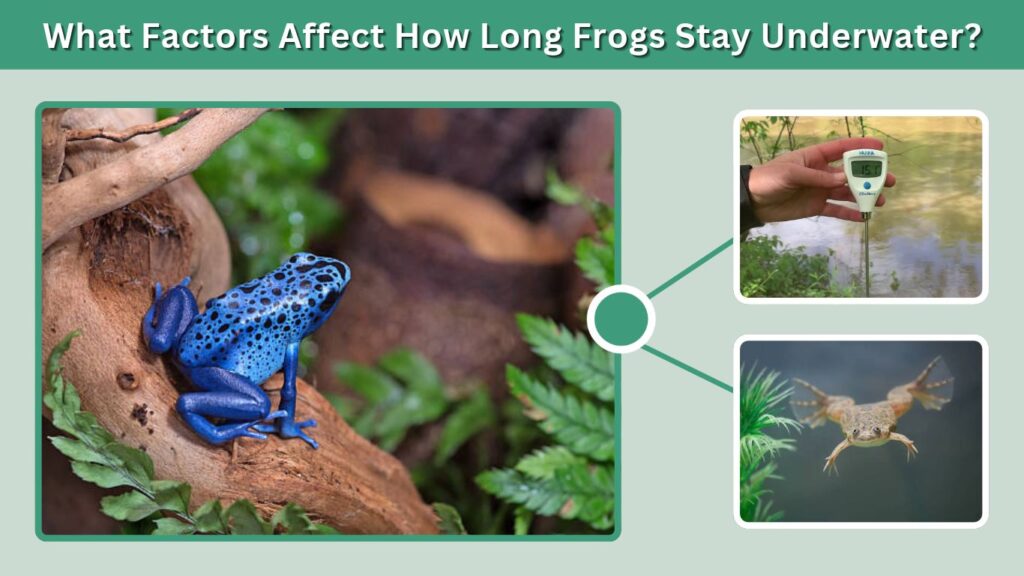
Several environmental and biological factors determine how long a frog can remain submerged.
1. Water Temperature
Cold water can help certain frog species remain underwater longer.
As temperatures decrease, frogs generally become less active and require less oxygen.
This explains why some species can remain submerged throughout winter dormancy.
2. Dissolved Oxygen
Frogs need oxygen even when they are underwater.
Water containing adequate dissolved oxygen supports respiration through their skin.
If oxygen levels become too low, frogs may need to surface or move to a better location.
3. Physical Activity
An actively swimming frog generally consumes more oxygen than a resting frog.
Consequently, frogs escaping predators or hunting underwater may need to surface sooner.
4. Species and Body Condition
Different species have different respiratory abilities.
Age, body size, health, and physical condition can also influence underwater survival.
5. Water Quality
Pollution and poor water quality may interfere with a frog’s health and respiratory functions.
Because amphibian skin is highly permeable, frogs are particularly sensitive to environmental contaminants.
Can Frogs Stay Underwater All Winter?
Yes. Certain frog species can remain underwater for several months during winter.
This behavior is associated with a period of reduced activity called brumation.
During brumation, a frog’s metabolism slows significantly.
Its heart rate, movement, and oxygen requirements decrease.
Frogs spending winter underwater absorb dissolved oxygen through their skin.
Common frogs, green frogs, and bullfrogs are among the species capable of underwater overwintering.
However, survival depends on sufficiently oxygenated water.
A frog trapped in water with inadequate oxygen may die even when temperatures are low.
Can Frogs Drown Underwater?
Yes, frogs can drown.
Although many frogs can absorb oxygen through their skin, this process does not guarantee unlimited underwater survival.
Drowning may occur when:
- The water contains insufficient dissolved oxygen.
- A frog cannot reach the surface when it needs air.
- The frog becomes trapped or exhausted.
- Environmental conditions interfere with normal respiration.
Fully aquatic frogs, including African dwarf frogs, still need access to the water’s surface.
Terrestrial and tree frogs may also drown if trapped in deep water without a safe way to escape.
How to Keep Aquatic Frogs Safe Underwater
Pet frogs require environments designed around their specific respiratory and habitat needs.
For aquatic species, proper aquarium conditions are particularly important.
Essential considerations include:
- Provide access to the surface: Frogs that breathe air must be able to reach it easily.
- Maintain suitable water depth: Choose a depth appropriate for the species and its swimming ability.
- Keep water clean: Use appropriate filtration and water treatment.
- Maintain stable temperatures: Avoid sudden temperature changes.
- Provide resting areas: Plants and suitable decorations can provide support near the surface.
- Monitor behavior: Unusual swimming, weakness, or difficulty reaching the surface may indicate a problem.
Aquatic frogs should never be forced to remain submerged to test their breathing abilities.
FAQs
1. Can Frogs Breathe Underwater?
Yes. Many frogs can absorb dissolved oxygen through their moist skin. This process is called cutaneous respiration. However, most adult frogs also have lungs, and some species must regularly surface to breathe air.
2. Can Frogs Stay Underwater for 24 Hours?
Some frogs can remain submerged for 24 hours or longer under suitable conditions. Certain species may stay underwater for months during winter dormancy. However, many active frogs need to surface much more frequently.
3. Do Frogs Sleep Underwater?
Some aquatic frogs rest underwater, and certain species spend winter in a dormant state beneath the surface. However, normal sleep and winter dormancy are different biological conditions.
4. Can Tree Frogs Drown in Water?
Yes. Tree frogs can drown if they cannot obtain enough oxygen or reach a suitable surface. Although they can swim, most tree frogs need accessible land areas and should not be kept in fully aquatic enclosures.
5. Why Do African Dwarf Frogs Come to the Surface?
African dwarf frogs come to the surface because they have lungs and need to breathe atmospheric air. Even though they live entirely in water, they cannot depend exclusively on underwater respiration for all their oxygen requirements.
