
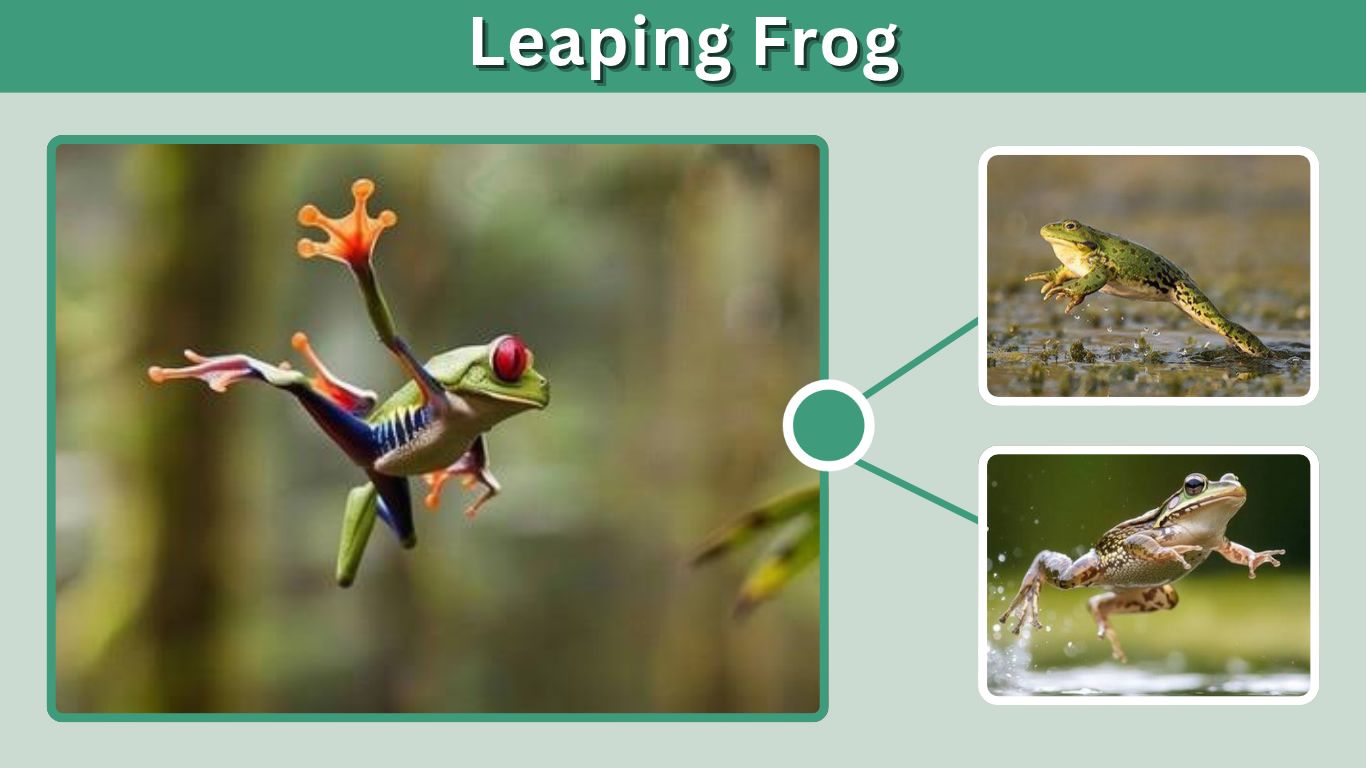
A leaping frog is one of nature’s most impressive examples of movement and adaptation. Frogs have powerful hind legs, flexible joints, and specialized muscles that allow them to launch themselves into the air. Whether escaping predators, catching insects, or moving between habitats, frogs rely on jumping as an important part of their survival.
Some frogs can leap several times their body length, while exceptional jumpers can travel much farther. Their jumping ability varies according to species, body size, habitat, and physical condition. Understanding how a frog leaps reveals fascinating details about its anatomy, behavior, and life in the wild.
What Is a Leaping Frog?
A leaping frog is simply a frog performing a powerful jump using its hind legs. The term does not refer to one particular frog species. Instead, it describes a movement used by many frogs throughout the world.
Leaping allows frogs to move quickly across land, escape immediate danger, and travel between different areas of their habitat.
Frogs belonging to different species have different jumping abilities. Some are excellent long-distance jumpers, while others are better suited for climbing, swimming, walking, or making short hops.
For example, many terrestrial frogs rely heavily on jumping to move through grasslands and woodland environments. Tree frogs often combine leaping with climbing to move between branches and leaves.
The ability to leap is closely connected to the frog’s body structure, particularly its long hind limbs and specialized skeletal system.
How Does a Frog Leap?
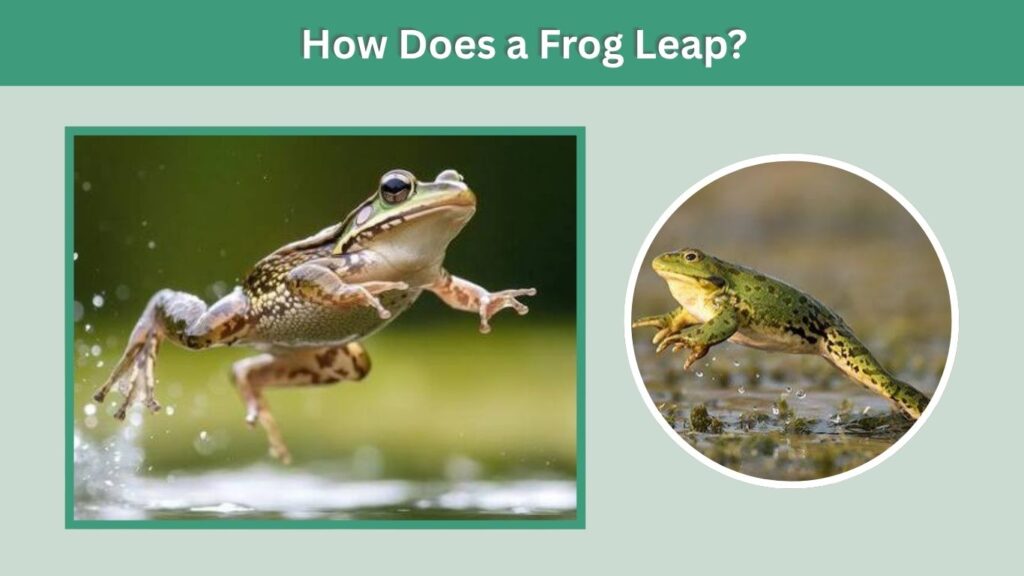
A frog leaping into the air performs a coordinated series of movements involving its muscles, bones, tendons, and joints.
1. Preparing for the Jump
Before jumping, a frog usually lowers its body into a crouched position.
Its hind legs bend underneath its body, bringing the feet closer to the torso. This position prepares the muscles and joints to generate the force needed for takeoff.
The frog may also adjust its body orientation toward its intended destination.
2. Pushing Off the Ground
When the frog begins jumping, its powerful hind limbs extend rapidly.
The hip, knee, and ankle joints work together to push against the ground. Muscles generate force, while elastic tendons can store and release additional energy.
This coordinated movement launches the frog forward or upward.
3. Moving Through the Air
Once airborne, the frog follows a curved path determined by its takeoff speed, direction, and gravity.
Its hind legs may move backward or fold toward the body, while the front limbs adjust in preparation for landing.
The exact body position varies between frog species.
4. Landing Safely
During landing, many frogs extend their front legs to help absorb the impact.
Their forelimbs and body work together to reduce the force of contact with the ground. Tree frogs may also use their adhesive toe pads to grip branches and other surfaces.
This landing mechanism helps frogs complete repeated jumps while controlling their movements. Research on frog locomotion demonstrates the important roles of hindlimb propulsion and forelimb landing.
pubmed.ncbi.nlm.nih.gov+1
How Far Can a Leaping Frog Jump?
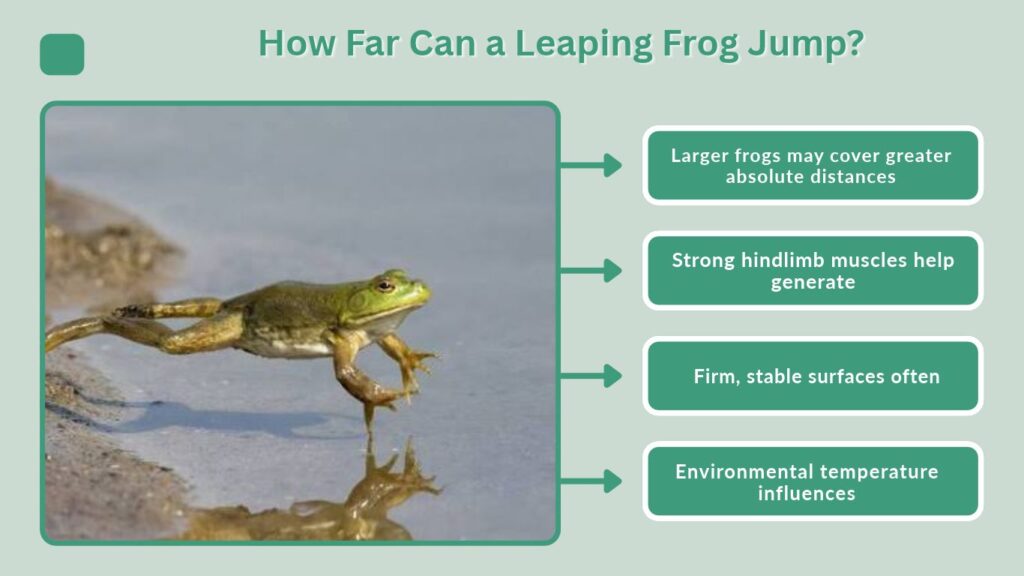
The distance a frog can leap depends on its species, size, strength, and surroundings.
Some frogs jump only short distances, while strong jumpers can cover many times their body length in a single movement.
Scientific research has documented exceptional frog jumps exceeding approximately 30 times the animal’s body length. However, this performance should not be considered typical of every species.
Several factors influence jumping distance:
- Body size: Larger frogs may cover greater absolute distances, although smaller species can be impressive relative to their size.
- Leg strength: Strong hindlimb muscles help generate greater jumping force.
- Surface conditions: Firm, stable surfaces often provide better support for takeoff.
- Temperature: Environmental temperature influences muscle performance and activity.
- Physical condition: Healthy, active frogs generally perform better than exhausted or injured individuals.
- Species adaptations: Some frogs have body structures particularly suited to powerful jumping.
A frog’s longest possible leap is not necessarily the distance it travels during ordinary daily activity.
Why Do Frogs Leap?
Frogs leap for several important reasons related to survival, feeding, and movement.
Escaping Predators
One of the most important reasons frogs jump is to avoid predators.
Birds, snakes, mammals, and other animals may hunt frogs. A sudden leap can help a frog escape an approaching threat.
Some frogs jump directly into nearby water, while others move toward vegetation, rocks, or other shelter.
Catching Food
Frogs are primarily carnivorous animals that commonly feed on insects and other small invertebrates.
Although many frogs capture prey using their sticky tongues, some also make short jumps or lunges to reach moving insects.
Their quick movements can help them catch crickets, grasshoppers, flies, and other suitable prey.
Moving Between Habitats
Jumping also helps frogs move through their surroundings.
A frog may leap across grass, muddy ground, fallen branches, or small obstacles while searching for food, water, shelter, or breeding locations.
During wet weather, some frogs become particularly active and move between suitable habitats.
Which Frogs Are Good at Leaping?
Different frogs have evolved different methods of movement according to their natural environments.
| Frog type | Typical movement |
| Tree frogs | Leaping and climbing |
| Leopard frogs | Strong jumping on land and near water |
| Bullfrogs | Powerful jumps and swimming |
| Grass frogs | Hopping and jumping through vegetation |
| Aquatic frogs | Swimming, with varying ability to jump on land |
Tree Frogs
Tree frogs are known for combining jumping ability with excellent climbing skills.
Many species have specialized toe pads that help them cling to vegetation. Their flexible limbs allow them to leap between nearby branches and leaves.
A leaping tree frog must also control its landing carefully because its destination may be narrow or elevated.
Leopard Frogs
Leopard frogs are generally strong jumpers frequently found around ponds, wetlands, grasslands, and other moist environments.
Their long hind legs allow them to make sudden leaps when disturbed.
They may jump toward water when escaping potential predators.
Bullfrogs
Bullfrogs have muscular bodies and strong hind limbs.
They can make powerful leaps, particularly when moving away from threats near the edges of ponds and lakes.
Their jumping ability works alongside their excellent swimming capabilities.
Leaping Frog vs. Hopping Frog
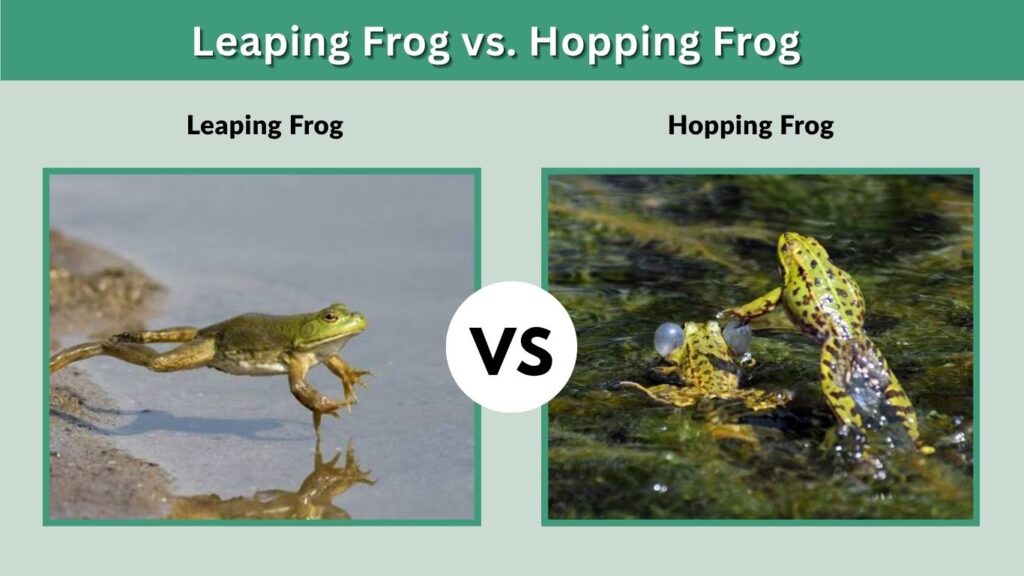
People sometimes use the words leaping and hopping interchangeably, but the terms can describe slightly different movements.
| Feature | Leaping | Hopping |
| Distance | Often longer | Usually shorter |
| Movement | Strong forward or upward launch | Shorter repeated jumps |
| Leg action | Powerful hindlimb extension | Hindlimb extension with less travel |
| Common purpose | Escape or crossing obstacles | Routine movement |
Both movements use similar basic mechanics. The distinction is descriptive rather than a strict scientific classification.
Where Do Leaping Frogs Live?
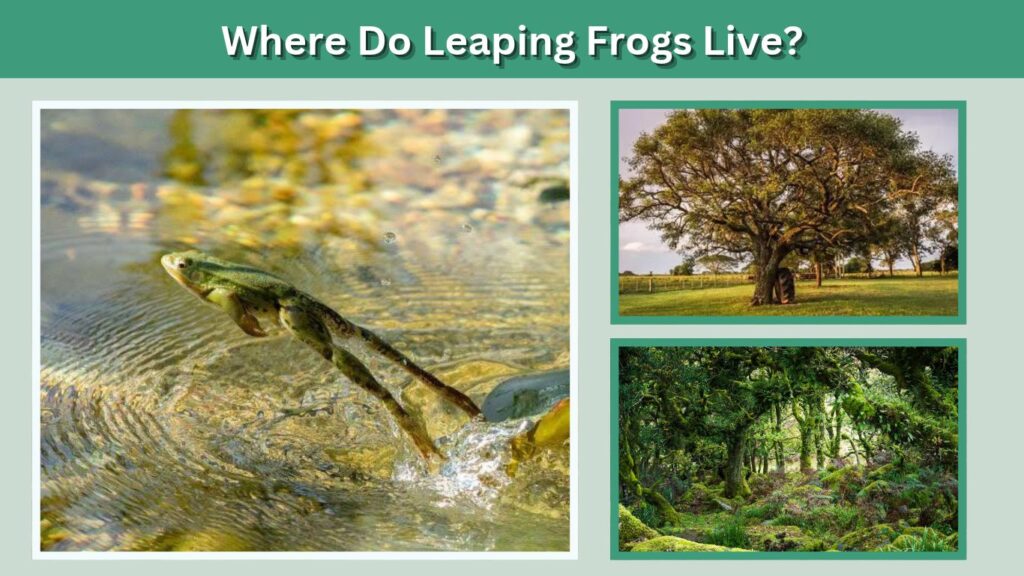
Frogs capable of leaping live in many different environments, including tropical forests, freshwater wetlands, grasslands, gardens, and woodlands.
Their preferred habitats depend on the species.
Frogs generally need access to suitable moisture because their skin plays an important role in water balance and, in many species, gas exchange.
Common environments where people may observe frogs leaping include:
- Ponds and lakes: Frogs jump between surrounding vegetation and shallow water.
- Wetlands: Moist soil and dense plants provide shelter.
- Forests: Frogs move through leaf litter, logs, and vegetation.
- Gardens: Some species visit gardens with insects, moisture, and hiding places.
- Trees and shrubs: Arboreal species leap between branches and leaves.
Many frogs become more active after rainfall, when environmental conditions are favorable.
Can All Frogs Leap?
Most frogs have the anatomical ability to jump, but not every species is equally adapted to leaping.
Some frogs have relatively short legs and spend considerable time walking or making small hops.
Aquatic species may rely more heavily on swimming, while climbing species use specialized toes and limbs to move across vegetation.
Their differences reflect adaptations to specific habitats and lifestyles.
Even within a species, younger, older, injured, or physically exhausted individuals may show different jumping performances.
Interesting Facts About Leaping Frogs
- Frogs use their powerful hind legs to generate most of the force needed for jumping.
- Some exceptional frogs can leap more than 30 times their body length.
- Elastic tendons can contribute to the energy released during takeoff.
- Many frogs extend their front legs to absorb landing forces.
- Tree frogs combine jumping with climbing and surface-gripping abilities.
- Frogs often leap to escape danger rather than to travel the maximum possible distance.
- Environmental conditions can affect their jumping performance.
FAQs
1. What does leaping frog mean?
A leaping frog is a frog that jumps through the air using its powerful hind limbs. It describes a natural movement rather than one specific frog species.
2. How high can a frog leap?
Jumping height varies considerably between species. Some frogs can jump several times their own body height, depending on their physical abilities and environmental conditions.
3. Why do frogs have long back legs?
Many frogs have long hind legs because they provide leverage and help generate the force required for jumping and swimming. Leg proportions differ according to species and habitat.
4. Do tree frogs leap from tree to tree?
Yes. Many tree frogs can jump between branches, leaves, and other nearby surfaces. Their toe pads help them grip suitable landing surfaces.
5. What is the difference between a leaping frog and an origami leaping frog?
A real leaping frog is a living amphibian that jumps using muscles and tendons. An origami leaping frog is a folded paper craft designed to spring forward when pressed and released.
