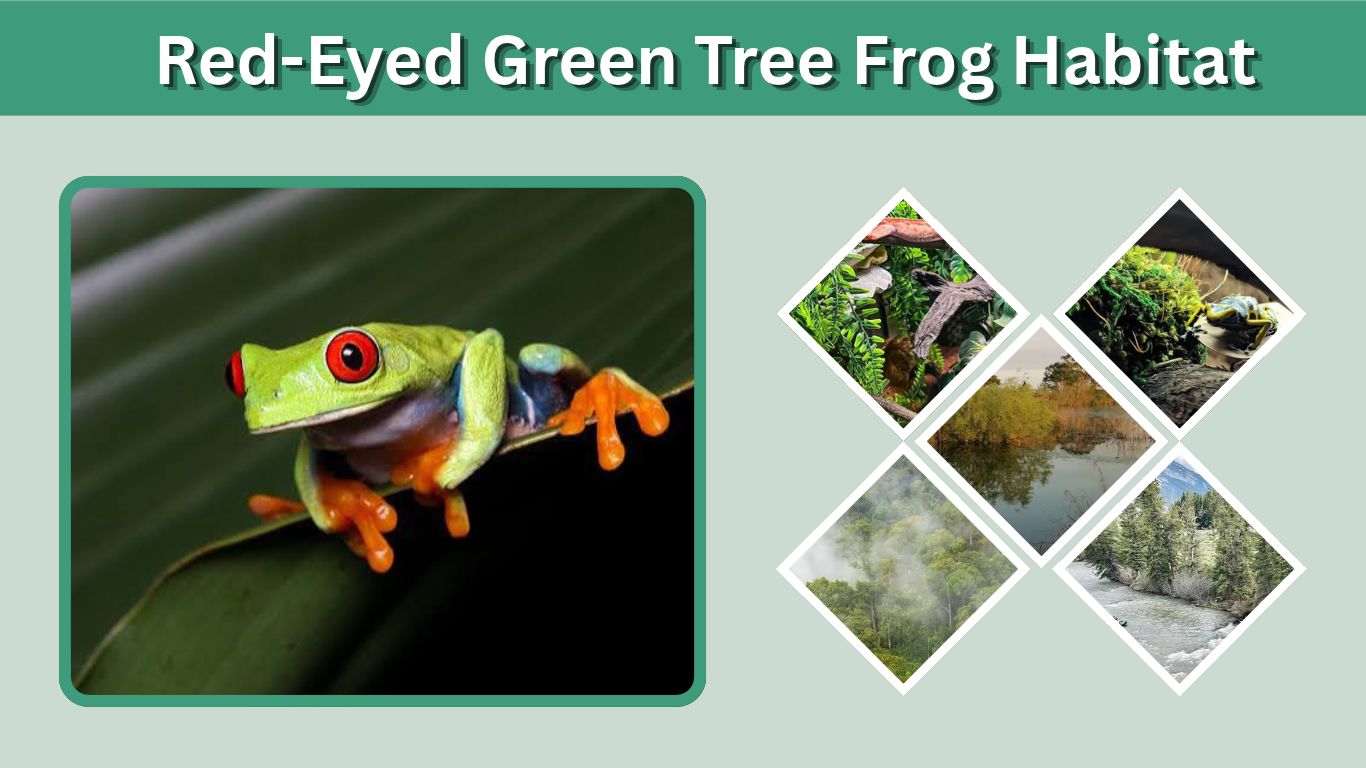
The red-eyed green tree frog (Agalychnis callidryas) is a colorful amphibian known for its bright green body, striking red eyes, and orange feet. Native to tropical regions of Central America and nearby parts of South America, this frog depends on warm temperatures, high humidity, dense vegetation, and access to freshwater.
The natural red-eyed green tree frog habitat includes tropical rainforests, forest edges, and vegetation surrounding ponds and other freshwater environments. These frogs spend much of their time resting on leaves during the day and become active at night to search for food. Understanding their habitat helps explain their behavior, breeding habits, and survival in the wild.
Where Do Red-Eyed Green Tree Frogs Live?
Red-eyed green tree frogs naturally inhabit tropical areas of Central America and parts of northern South America. Their distribution includes humid forests where temperatures remain relatively warm and moisture is usually abundant.
They are especially associated with lowland tropical rainforests and areas containing freshwater breeding sites.
Geographic Distribution
Red-eyed green tree frogs occur across parts of the following countries:
- Mexico: Tropical forests in southern regions.
- Belize: Red-eyed tree frogs have historically been recorded in humid forests, although some northern populations are now classified separately.
- Guatemala: Moist tropical forests within the broader red-eyed tree frog species complex.
- Honduras: Humid forests and suitable lowland habitats.
- Nicaragua: Tropical forests and vegetation near freshwater.
- Costa Rica: Rainforests, forest edges, and suitable breeding habitats.
- Panama: Humid forests containing ponds and dense vegetation.
- Colombia: Suitable tropical habitats in northern and western regions.
Their exact distribution depends partly on taxonomic classification, because some populations formerly grouped under Agalychnis callidryas have been recognized as separate species.
Costa Rica and Panama are particularly well-known locations for observing these colorful frogs.
Preferred Elevation
Red-eyed tree frogs are most commonly associated with tropical lowlands and lower foothill forests.
They occur from near sea level to elevations exceeding 1,000 meters in suitable parts of their range.
Higher elevations may be cooler, making local temperature, vegetation, and moisture conditions important in determining where populations can survive.
What Is the Natural Habitat of a Red-Eyed Green Tree Frog?
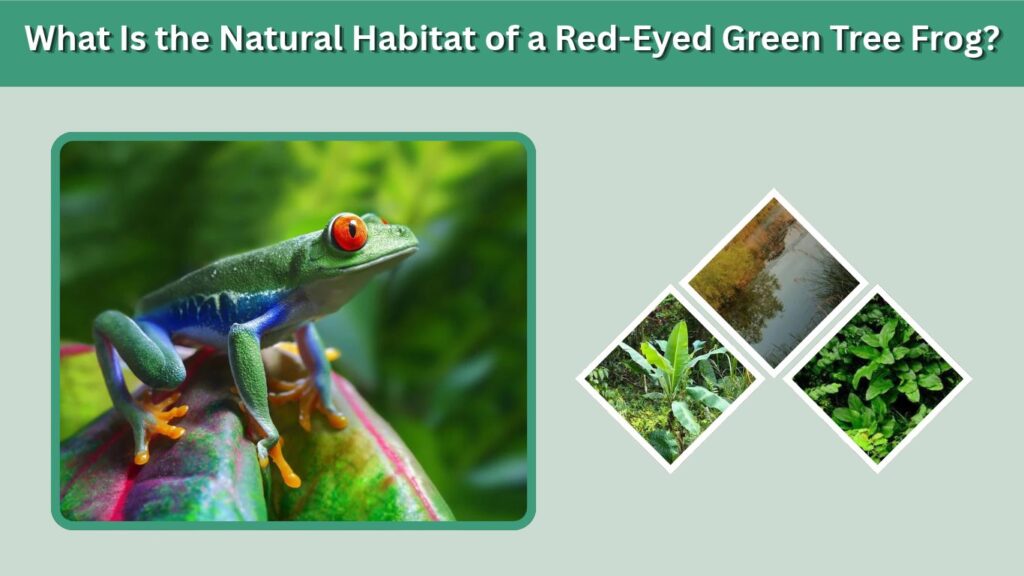
The natural habitat of a red-eyed green tree frog consists primarily of moist tropical forests with trees, shrubs, broad leaves, and nearby freshwater.
These environments provide shelter, food, protection, and breeding opportunities.
Tropical Rainforests
Tropical rainforests are among the most important habitats for red-eyed green tree frogs.
These forests typically contain:
- Dense vegetation and broad leaves
- High atmospheric humidity
- Warm temperatures
- Abundant insects
- Shaded resting areas
- Ponds and other freshwater sources
The combination of vegetation and moisture allows these frogs to spend much of their lives above the ground.
Their green coloration helps them blend into surrounding foliage while resting.
Forest Edges and Secondary Forests
Although strongly associated with rainforests, red-eyed tree frogs can also occupy secondary forests and some disturbed habitats.
Secondary forests are areas where vegetation has regrown following earlier disturbance.
These environments may provide suitable conditions when trees, shelter, moisture, and breeding sites remain available.
However, extensive habitat destruction can isolate populations and reduce the resources they need.
Areas Near Freshwater
Freshwater is especially important during reproduction.
Red-eyed tree frogs commonly use vegetation surrounding ponds, temporary pools, and other relatively calm freshwater habitats.
These locations allow females to lay eggs on leaves positioned above water, where newly hatched tadpoles can develop.
Where Do Red-Eyed Tree Frogs Hide During the Day?
Red-eyed tree frogs are primarily nocturnal, meaning they are most active after sunset.
During daylight hours, they often rest on the undersides of broad leaves or among dense vegetation.
Their resting locations help protect them from direct sunlight, excessive heat, and potential predators.
Common daytime hiding places include:
- Undersides of large rainforest leaves
- Dense shrubs and climbing vegetation
- Shaded tree branches
- Moist vegetation near forest pools
- Sheltered areas in the understory
When resting, these frogs typically keep their eyes closed and tuck their brightly colored limbs close to their bodies.
Their green backs resemble the surrounding leaves, making them less noticeable.
This camouflage is especially useful because birds, snakes, and other animals may hunt frogs during the day.
Research and field observations also indicate that red-eyed tree frogs may seek lower, more sheltered vegetation during particularly hot or dry conditions.
Temperature and Humidity in Their Natural Habitat
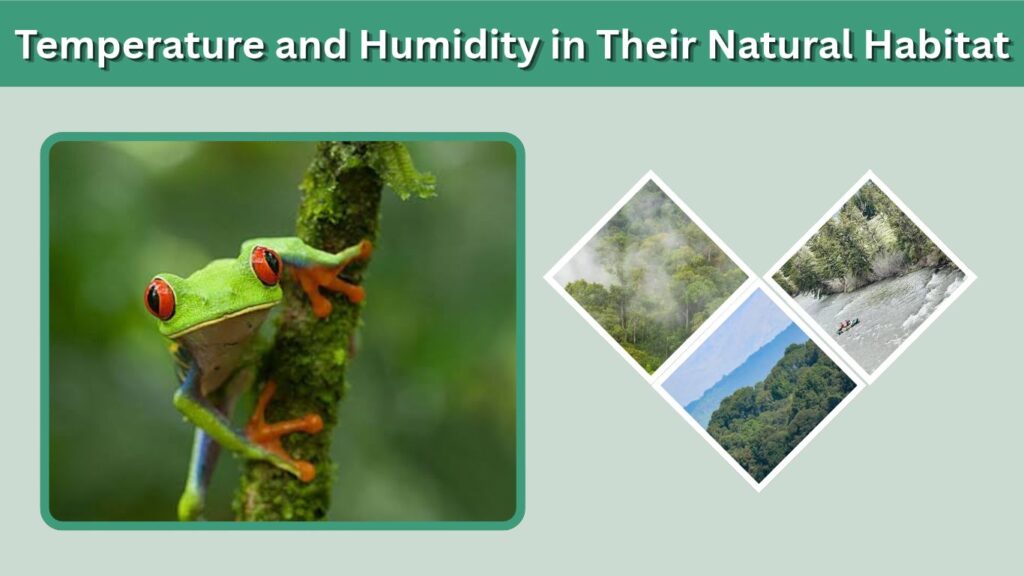
Temperature and humidity play major roles in determining whether an environment is suitable for red-eyed green tree frogs.
Like other amphibians, these frogs depend on environmental conditions to regulate body temperature and maintain proper moisture balance.
Temperature
Red-eyed green tree frogs live in warm tropical climates.
Temperatures in their natural habitats vary with season, elevation, rainfall, time of day, and the amount of shade.
Their forest environment offers cooler and warmer microhabitats, allowing frogs to select suitable resting places.
Dense vegetation helps moderate temperature changes by reducing direct sunlight exposure.
Excessive heat can be particularly dangerous when accompanied by dry conditions.
Humidity
High humidity helps these frogs avoid excessive water loss.
Their skin is permeable, allowing moisture and certain gases to move across its surface.
Tropical forests provide humid conditions through frequent rainfall, plant transpiration, and moisture retained beneath vegetation.
During dry periods, frogs may shelter in protected areas where humidity remains higher than in exposed surroundings.
Rainfall
Rainfall supports the forest plants and freshwater habitats on which these frogs depend.
It also influences breeding activity by filling temporary ponds and increasing moisture levels.
In many areas, reproductive activity becomes especially noticeable during the rainy season.
Why Is Water Important to Red-Eyed Tree Frogs?
Water is essential to the red-eyed tree frog’s life cycle, even though adults spend much of their time in vegetation.
Unlike frogs that deposit their eggs directly into water, red-eyed tree frogs usually lay eggs on leaves hanging over suitable freshwater.
Egg-Laying Habitat
During breeding, males gather near water and produce calls to attract females.
Females select suitable vegetation above ponds or pools, where they deposit clusters of gelatinous eggs.
The leaf provides a position above the water while the surrounding humid environment helps prevent the eggs from drying out.
Suitable breeding sites require both vegetation and water beneath or close to the egg-laying surface.
Tadpole Development
After developing inside their eggs, tadpoles hatch and drop into the water below.
They remain aquatic during the tadpole stage, feeding and growing until they undergo metamorphosis.
Eventually, their legs develop, their tails are absorbed, and they transition into young frogs.
Scientific observations have also shown that embryos can respond to environmental danger by hatching earlier than usual.
pmc.ncbi.nlm.nih.gov+1
This reproductive strategy makes the relationship between trees, leaves, and freshwater particularly important.
How Do Red-Eyed Tree Frogs Adapt to Their Habitat?
Red-eyed tree frogs possess several physical and behavioral adaptations that help them survive in tropical forests.
Sticky Toe Pads
Their expanded toe pads allow them to grip leaves, branches, and other suitable surfaces.
This adaptation helps them climb through vegetation and remain attached to leaves while resting.
Green Body Color
Their bright green coloration provides camouflage among rainforest plants.
When resting with their limbs tucked underneath their bodies, much of their blue and orange coloring becomes hidden.
Red Eyes
Their bright red eyes are one of their most recognizable features.
Sudden exposure of their eyes and contrasting body colors may briefly startle or confuse a predator, allowing the frog an opportunity to escape.
Nocturnal Behavior
Becoming active at night helps these frogs avoid some daytime predators and reduces exposure to direct sunlight.
They commonly hunt insects among leaves and branches after dark.
What Do Red-Eyed Tree Frogs Eat in Their Habitat?
Red-eyed green tree frogs are carnivorous amphibians that feed primarily on small invertebrates.
Their tropical forest habitat supports a wide variety of insects and other arthropods.
Common prey includes:
- Crickets
- Moths
- Flies
- Grasshoppers
- Small beetles
- Other appropriately sized insects
These frogs use their vision to detect movement and capture suitable prey with their tongues.
The abundance of insects in healthy tropical forests provides an important source of nutrition.
Their feeding activity may increase during favorable nighttime conditions, particularly when humidity is high.
How to Create a Red-Eyed Green Tree Frog Habitat at Home

A captive red-eyed green tree frog habitat should provide conditions resembling the animal’s natural tropical environment.
A vertically oriented terrarium is generally preferable because these frogs spend much of their time climbing.
| Habitat requirement | Recommended setup |
| Enclosure | Tall, secure, well-ventilated terrarium |
| Temperature | Approximately 24–29°C during the day |
| Humidity | Generally humid, with a natural daily cycle |
| Vegetation | Broad-leaved plants and dense foliage |
| Climbing areas | Branches, vines, and sturdy perches |
| Water | Shallow dish with clean, dechlorinated water |
| Lighting | Consistent day-and-night cycle |
| Substrate | Moisture-retaining material with good drainage |
Captive temperature and humidity recommendations vary between veterinary care guides. Conditions should be monitored with accurate instruments, and the enclosure should provide ventilation without becoming excessively dry or waterlogged.
Plants and Climbing Areas
Live or artificial plants provide resting areas and visual shelter.
Branches and vines allow frogs to move vertically and select different positions.
Broad leaves are particularly valuable because they create suitable daytime hiding places.
Water and Moisture
Provide clean, dechlorinated water and maintain appropriate humidity through careful misting and enclosure management.
Avoid stagnant, continuously saturated conditions that encourage mold or bacterial growth.
Regular cleaning and observation help maintain a healthy environment.
Threats to the Red-Eyed Green Tree Frog Habitat
Although red-eyed tree frogs remain relatively widespread, their natural habitats face several environmental pressures.
Major threats include:
- Deforestation: Removes trees used for shelter and breeding.
- Agricultural expansion: Converts tropical forests into farmland.
- Water pollution: Can affect breeding pools and developing tadpoles.
- Climate change: May alter rainfall patterns, temperatures, and moisture availability.
- Habitat fragmentation: Separates populations and reduces habitat connectivity.
- Amphibian diseases: Can create additional stress for vulnerable populations.
Protecting tropical forests, freshwater breeding sites, and surrounding vegetation helps maintain suitable conditions for these frogs.
FAQs
1. Where is the red-eyed green tree frog’s natural habitat?
The red-eyed green tree frog primarily inhabits humid tropical forests in Central America and parts of northern South America. It commonly lives among trees and vegetation near freshwater.
2. Do red-eyed tree frogs live in the rainforest canopy?
Yes. Red-eyed tree frogs are arboreal and frequently occupy vegetation above the ground. However, they also use understory plants and lower vegetation, especially near breeding sites.
3. Do red-eyed green tree frogs need water to survive?
Yes. They need moisture to maintain healthy skin, and freshwater is essential for tadpole development. Adults spend considerable time outside water but generally remain associated with humid environments.
4. What temperature do red-eyed tree frogs prefer?
They naturally inhabit warm tropical environments. In captivity, care guidelines commonly recommend daytime temperatures around 24–29°C, with cooler nighttime conditions and careful monitoring to prevent overheating.
5. Are red-eyed green tree frogs found in Australia?
The Central American red-eyed tree frog (Agalychnis callidryas) is not native to Australia. However, Australia has a different species also called the red-eyed green tree frog, currently classified as Chlorohyla chloris and formerly known as Litoria chloris.
