
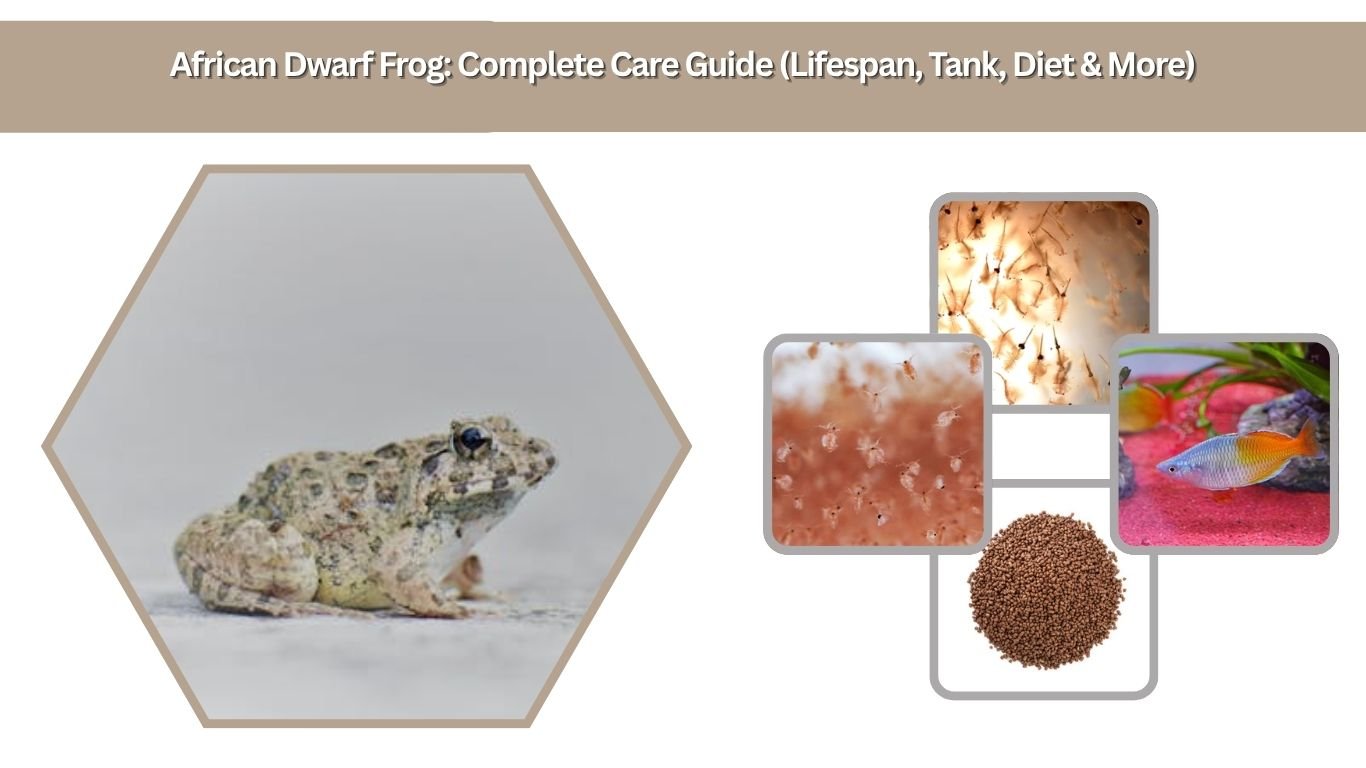
African dwarf frogs are small, fully aquatic amphibians that have become very popular as beginner pets. They are easy to care for, require minimal space, and have interesting behaviors that make them fun to watch.
If you’re searching for african dwarf frog care or want to understand their lifespan, tank setup, and diet, this guide will cover everything you need to know.
What Is an African Dwarf Frog
The African dwarf frog is a small aquatic frog native to parts of Africa. Unlike many other frogs, it lives entirely in water and rarely leaves it.
These frogs are known for their peaceful nature and are often kept in small aquariums. They have webbed feet, smooth skin, and a compact body that allows them to swim easily.
They are a great choice for beginners because they are low-maintenance and adapt well to home aquariums.
African Dwarf Frog Lifespan
African dwarf frogs typically live 5 to 8 years in captivity. With proper care, some may even live longer.
Their lifespan depends on several factors, including water quality, diet, and overall tank conditions. Poor care can shorten their lifespan significantly, while a clean and stable environment helps them thrive.
African Dwarf Frog Size
African dwarf frogs are small compared to other pet frogs. They usually grow to about 1.5 to 2.5 inches in length.
Females are often slightly larger and rounder than males, especially when carrying eggs. Their small size makes them ideal for compact aquariums, but they still need enough space to move comfortably.
African Dwarf Frog Tank Setup

Tank Size Requirements
A proper tank is essential for keeping African dwarf frogs healthy.
- Minimum tank size: 5 gallons for 1–2 frogs
- For groups: 10 gallons or more
- More space helps maintain stable water conditions
Providing enough space reduces stress and improves overall health.
Tank Setup Essentials
Setting up the tank correctly is very important for their well-being.
- Use smooth gravel or sand as substrate
- Add plants (live or artificial) for hiding
- Include decorations like caves or driftwood
- Keep water depth manageable for easy surfacing
These elements help create a natural and comfortable environment.
Water Conditions

African dwarf frogs are sensitive to water quality, so maintaining proper conditions is crucial.
- Temperature: 72–78°F (22–26°C)
- pH level: 6.5–7.5
- Use a gentle filter to keep water clean
- Avoid strong currents
Regular water changes are necessary to prevent buildup of harmful substances.
African Dwarf Frog Tank Mates

Suitable Tank Mates
African dwarf frogs are peaceful and can live with certain tank mates.
- Small, calm fish (like tetras)
- Snails
- Other African dwarf frogs
These companions are generally safe and won’t compete aggressively for food.
Tank Mates to Avoid
Not all tank mates are suitable for these frogs.
- Aggressive or territorial fish
- Large fish that may eat or harm them
- Fast feeders that outcompete them for food
Choosing the right tank mates is important to avoid stress and injury.
African Dwarf Frog Diet & Food

What Do African Dwarf Frogs Eat
African dwarf frogs are carnivores and require a protein-rich diet.
- Bloodworms
- Brine shrimp
- Daphnia
- Sinking frog pellets
A varied diet helps ensure they get all the nutrients they need.
Feeding Schedule
Feeding should be done carefully to avoid overfeeding or underfeeding.
- Feed once daily or every other day
- Provide small portions
- Remove uneaten food to keep water clean
Because they are slow eaters, it’s important to make sure they get enough food without competition.
African Dwarf Frog Care Guide
Daily Care
Caring for African dwarf frogs daily is simple but important for their health.
- Feed them properly based on schedule
- Observe behavior for signs of stress or illness
- Ensure they can easily reach the surface for air
Regular observation helps detect problems early and keeps your frog healthy.
Weekly Maintenance
Maintaining a clean tank is essential for long-term survival.
- Perform partial water changes (20–30%)
- Clean debris and leftover food
- Check filter and water quality
Consistent maintenance prevents disease and improves lifespan.
Handling Tips
African dwarf frogs should not be handled often.
- Avoid direct handling
- Use a net if needed
- Keep stress levels low
Their skin is delicate, and excessive handling can harm them.
African Dwarf Frog Eggs & Breeding
Breeding Behavior
African dwarf frogs breed in water and show noticeable mating behavior.
Males often make humming or buzzing sounds to attract females. They may also hold onto the female in a behavior known as amplexus.
Egg Laying
After mating, females lay eggs in the water.
- Eggs float or attach to surfaces
- A single female can lay dozens of eggs
- Eggs hatch within a few days
These eggs are very delicate and require stable water conditions.
Raising Tadpoles
Tadpoles need special care to survive.
- Separate them from adult frogs
- Provide clean water and proper food
- Monitor growth closely
Raising tadpoles can be challenging but rewarding.
African Dwarf Frog Tank Setup (Step-by-Step)
Setting up the tank correctly ensures a healthy environment.
- Choose the right tank size (5–10 gallons minimum)
- Add substrate (smooth gravel or sand)
- Install a gentle filter and heater
- Add plants and hiding spots
- Fill with dechlorinated water
- Let the tank cycle before adding frogs
A proper setup reduces stress and helps frogs live longer.
African Dwarf Frog for Sale
Where to Buy
You can find African dwarf frogs from several sources:
- Local pet stores
- Online aquarium shops
- Reputable breeders
Always choose a reliable source to ensure healthy frogs.
What to Look For
Before buying, check for signs of a healthy frog.
- Active movement
- Clear eyes and smooth skin
- No visible injuries or discoloration
Avoid frogs that appear weak or inactive.
Common Problems & Health Issues
African dwarf frogs can face health problems if not cared for properly.
- Poor water quality leading to illness
- Overfeeding causing obesity
- Lethargy due to stress or poor conditions
- Skin infections or fungal issues
Monitoring their environment helps prevent most of these problems.
Tips to Keep African Dwarf Frogs Healthy
Keeping your frog healthy requires consistent care.
- Maintain clean and stable water
- Feed a balanced diet
- Avoid overcrowding
- Monitor behavior regularly
Good care habits can significantly extend their lifespan.
Common Mistakes to Avoid
Many beginners make simple mistakes that can harm their frogs.
- Using rough or sharp substrate
- Keeping them with aggressive fish
- Skipping water changes
- Overfeeding or underfeeding
Avoiding these mistakes will help your frog thrive.
FAQs
How long do african dwarf frogs live
African dwarf frogs usually live between 5 and 8 years in captivity. With proper care, clean water, and a balanced diet, some individuals may live even longer in a well-maintained environment.
What do african dwarf frogs eat
They eat protein-rich foods such as bloodworms, brine shrimp, and sinking pellets. A varied diet helps maintain their health and ensures they receive all essential nutrients.
What tank size do african dwarf frogs need
They need at least a 5–10 gallon tank. Larger tanks are recommended for multiple frogs because they provide more stable water conditions and reduce stress.
Can african dwarf frogs live with fish
Yes, they can live with small, peaceful fish. However, avoid aggressive or fast-moving fish that may harm them or compete for food.
How do african dwarf frogs breed
They breed in water, where females lay eggs that float or stick to surfaces. The eggs hatch into tadpoles that require separate care and a controlled environment to survive.
