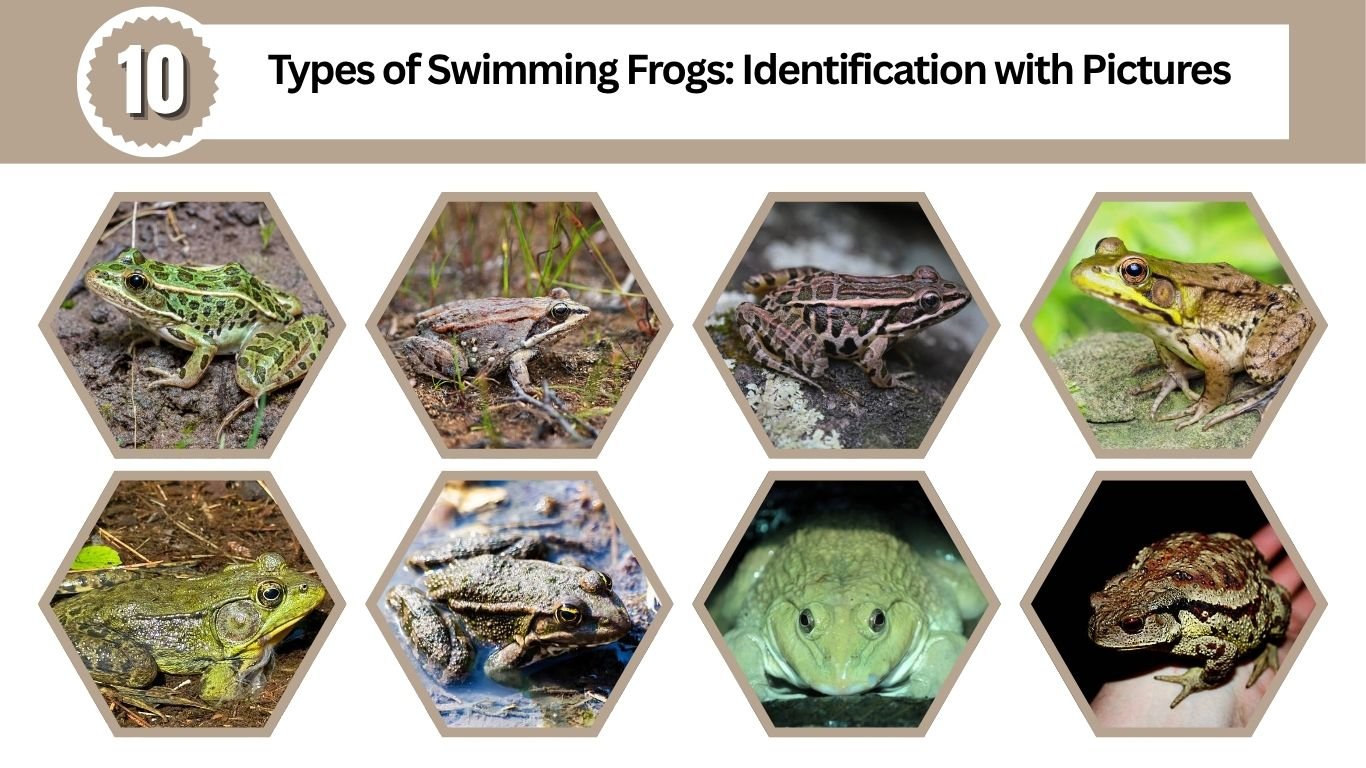
Swimming frogs are fascinating amphibians that spend most or all of their lives in water. They have specially adapted bodies, such as webbed feet and strong hind legs, that make them excellent swimmers. From small aquarium species to large wild predators, these frogs can be found in various freshwater habitats around the world. This list highlights ten notable types of swimming frogs, each with unique characteristics and behaviors.
1. African Dwarf Frog

The African Dwarf Frog is a small, fully aquatic frog commonly found in slow-moving freshwater environments. It is popular in aquariums due to its peaceful nature and unique swimming behavior.
Identification
- Small size, usually 4–5 cm in length
- Olive to brown coloration with darker spots
- Fully webbed feet on all four limbs
- Flat body with a slightly pointed snout
Habitat
African Dwarf Frogs live entirely in water, preferring calm, warm freshwater habitats such as ponds, swamps, and slow streams. In captivity, they thrive in well-maintained aquariums with gentle filtration and plenty of hiding spaces.
Behavior
These frogs are active swimmers and spend most of their time underwater, coming to the surface occasionally to breathe air. They are social creatures and often do best when kept in small groups.
Diet
They are carnivorous and feed on small aquatic organisms. Their diet typically includes bloodworms, brine shrimp, and other tiny invertebrates, which they locate using their sense of smell rather than sight.
2. African Clawed Frog

The African Clawed Frog is a medium-sized aquatic frog known for its strong swimming ability and distinctive clawed hind feet. It is widely studied in scientific research and can adapt well to different water conditions.
Identification
- Medium size, typically 8–12 cm long
- Smooth, slippery skin with gray or olive coloration
- Strong hind legs with visible black claws
- Eyes positioned on top of the head
Habitat
This frog lives in a variety of freshwater habitats, including ponds, lakes, and slow-moving rivers. It can tolerate low oxygen levels and is often found in murky or stagnant water.
Behavior
African Clawed Frogs are active and powerful swimmers. They are mostly nocturnal and spend much of their time searching for food along the bottom. Unlike many frogs, they rarely leave the water.
Diet
They are opportunistic carnivores, feeding on insects, small fish, tadpoles, and even other frogs. In captivity, they accept a wide range of foods, including pellets and frozen meat-based items.
3. Surinam Toad

The Surinam Toad is a unique aquatic amphibian known for its flat body and unusual reproductive behavior. It is perfectly adapted for life in water and blends easily into muddy environments.
Identification
- Flat, leaf-like body shape
- Brown to dark gray coloration
- Small eyes with no visible tongue
- Star-shaped fingertips for sensing food
Habitat
Surinam Toads are found in slow-moving freshwater habitats such as swamps, ponds, and flooded forests. They prefer warm, muddy waters where they can remain camouflaged.
Behavior
These toads are fully aquatic and rarely leave the water. They move slowly and rely on stealth to catch prey. Their most notable behavior is carrying eggs embedded in the skin on their back.
Diet
They are carnivorous and feed on small fish, insects, and aquatic invertebrates. They use their sensitive fingers to detect movement and quickly suck prey into their mouths.
4. Budgett’s Frog

Budgett’s Frog is a stout, aquatic frog known for its wide mouth and aggressive feeding behavior. It is often kept by amphibian enthusiasts due to its unique appearance.
Identification
- Short, round body with a large head
- Greenish-gray coloration with dark markings
- Extremely wide mouth
- Strong hind legs but limited jumping ability
Habitat
This frog lives in temporary pools, ponds, and slow-moving waters in warm regions. It prefers shallow water with soft, muddy bottoms where it can rest.
Behavior
Budgett’s Frogs are mostly sedentary but become very active during feeding. They are known for their defensive behavior and may lunge or bite when threatened.
Diet
They are voracious carnivores, eating insects, fish, and even other small animals. Their large mouth allows them to consume prey nearly their own size.
5. Daruma Pond Frog

The Daruma Pond Frog is a semi-aquatic species commonly found in East Asia. It is well known for its strong swimming ability and loud croaking during the breeding season.
Identification
- Medium-sized frog with a robust body
- Brown or green coloration with dark spots
- Smooth skin with visible folds along the back
- Long, powerful hind legs
Habitat
This frog inhabits ponds, rice fields, marshes, and slow-moving streams. It prefers shallow freshwater environments with plenty of vegetation for shelter and breeding.
Behavior
Daruma Pond Frogs are active both in water and on land. They are strong swimmers and often leap into water when disturbed. During mating season, males produce loud calls to attract females.
Diet
They feed mainly on insects, small invertebrates, and occasionally tiny aquatic animals. Their diet depends on availability in their wetland habitats.
6. American Bullfrog

The American Bullfrog is one of the largest frogs in North America and is known for its powerful swimming and deep, resonant call.
Identification
- Large size, often up to 20 cm long
- Green or olive coloration with a lighter underside
- Prominent eardrum (tympanum) behind the eyes
- Strong hind legs adapted for swimming
Habitat
They live in permanent freshwater bodies such as lakes, ponds, and slow rivers. They prefer warm waters with abundant vegetation along the edges.
Behavior
American Bullfrogs are mostly aquatic and spend much of their time floating or partially submerged. They are territorial and can be aggressive, especially during breeding season.
Diet
They are opportunistic predators, feeding on insects, fish, small mammals, birds, and even other frogs. Their large size allows them to consume a wide variety of prey.
7. Green Frog

The Green Frog is a common aquatic frog found in North America, known for its strong swimming skills and distinctive “plunk” sound when jumping into water.
Identification
- Medium-sized body, usually 5–10 cm long
- Green to brown coloration with dark spots
- Prominent ridge running from eye down the back
- Smooth, moist skin
Habitat
Green Frogs live in ponds, lakes, marshes, and slow streams. They prefer areas with abundant vegetation and shallow edges where they can easily hide and hunt.
Behavior
They are excellent swimmers and spend most of their time near water. When threatened, they quickly leap into the water with a splash to escape predators.
Diet
Their diet mainly includes insects, spiders, and small aquatic creatures. They use their quick reflexes and sticky tongue to capture prey.
8. Pickerel Frog

The Pickerel Frog is a semi-aquatic species recognized for its patterned body and preference for cool, clean water habitats.
Identification
- Medium size with a slender body
- Light brown color with two rows of dark square spots
- Smooth skin with a pale underside
- Long hind legs for swimming and jumping
Habitat
Pickerel Frogs are commonly found in cool streams, ponds, and wetlands. They prefer clean water with grassy or rocky surroundings.
Behavior
These frogs are good swimmers and often stay close to water. When disturbed, they quickly jump into water and swim away to safety.
Diet
They feed on insects, spiders, and small invertebrates. Their hunting strategy relies on quick movements and ambush techniques.
9. Leopard Frog

The Leopard Frog is a well-known aquatic frog recognized for its spotted pattern and agile swimming ability. It is commonly found in freshwater habitats across North America.
Identification
- Medium-sized body, typically 5–11 cm long
- Green or brown color with dark, round spots
- Light-colored underside
- Long, powerful hind legs
Habitat
Leopard Frogs inhabit ponds, marshes, lakes, and slow-moving streams. They prefer clean water with grassy edges and plenty of vegetation for shelter.
Behavior
They are active both in water and on land. When threatened, they make quick, long jumps into water and swim rapidly to escape predators.
Diet
Their diet mainly consists of insects, worms, and small invertebrates. They are opportunistic feeders and hunt using quick strikes with their sticky tongue.
10. Wood Frog

The Wood Frog is a hardy amphibian known for its ability to survive cold climates and its strong swimming skills during breeding season.
Identification
- Small to medium size, around 4–7 cm long
- Brown or tan coloration with a dark mask across the eyes
- Smooth skin with a light underside
- Moderately long hind legs
Habitat
Wood Frogs are found in forests, wetlands, and temporary ponds. They often breed in shallow water bodies formed by melting snow or rain.
Behavior
They are more terrestrial than many frogs but become active swimmers during breeding. They are known for their unique ability to tolerate freezing temperatures in winter.
Diet
They feed on insects, spiders, and other small invertebrates. Their diet varies depending on availability in their forest and wetland environments.
FAQs
What makes a frog good at swimming?
Frogs that are good swimmers usually have fully webbed feet, strong hind legs, and streamlined bodies. These features help them move efficiently through water, escape predators, and catch prey with speed and precision.
Are all frogs able to swim?
Most frogs can swim, but not all are equally skilled. Some species are fully aquatic and depend on water for survival, while others are more terrestrial and only enter water during breeding or to escape danger.
Can swimming frogs live outside water?
Many swimming frogs can survive outside water for short periods, but fully aquatic species like the African Dwarf Frog must stay in water. Semi-aquatic frogs divide their time between land and water depending on their needs.
What do swimming frogs eat?
Swimming frogs are usually carnivorous. They feed on insects, worms, small fish, and other aquatic organisms. Larger species may even eat small animals, depending on their size and habitat.
Where are swimming frogs commonly found?
Swimming frogs are found worldwide in freshwater habitats such as ponds, lakes, marshes, and slow-moving streams. They prefer areas with vegetation, which provides shelter, breeding grounds, and abundant food sources.
