
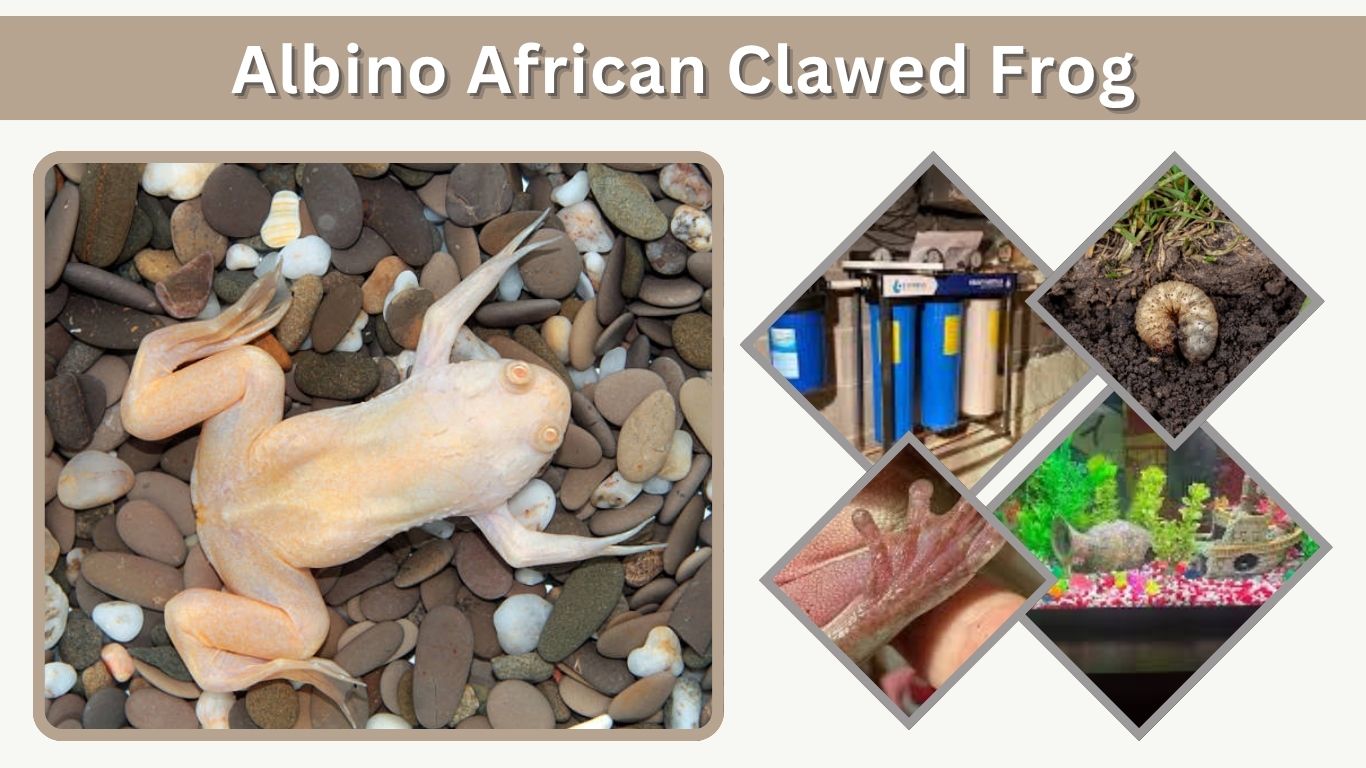
The albino African clawed frog (Xenopus laevis) is a striking aquatic amphibian known for its pale body, red or pink eyes, and hardy nature. Popular in home aquariums and scientific research, this frog is fully aquatic and relatively easy to care for. Its adaptability and long lifespan make it appealing to beginners, while its unique behavior attracts experienced keepers. Understanding its care, diet, and environment is essential to keeping this fascinating amphibian healthy and thriving in captivity.
What Is an Albino African Clawed Frog?
The albino African clawed frog is a genetic variation of the standard African clawed frog. It shares the same species classification but differs in coloration due to a lack of pigmentation. This gives it a pale or white appearance with visible internal features such as veins.
Albino vs Normal African Clawed Frog
- Albino frogs have pale white or pinkish bodies
- Eyes appear red or pink due to lack of pigment
- Normal frogs are brown, gray, or olive
- Both have identical care requirements
Common Names and Variants
- Albino African claw frog
- White African clawed frog
- Albino water frog
- Reticulated or mixed albino types
Albino African Clawed Frog Facts

This frog is widely known for its durability and unusual biological traits. It has been used in scientific studies and is valued for its ability to adapt to different environments. Despite its delicate appearance, it is a resilient species.
- Fully aquatic and cannot survive long out of water
- Lifespan ranges from 10 to 20 years
- Grows up to 4–5 inches when fully mature
- Uses front limbs instead of a tongue to eat
- Sensitive skin shows veins more clearly
Albino African Clawed Frog Size, Growth, and Lifespan
Albino African clawed frogs grow steadily when provided with proper care. Their size and lifespan depend on factors such as diet, water quality, and tank conditions. Females generally grow larger than males, especially during breeding periods.
Full Size
- Adults reach about 4–5 inches in length
- Females are larger and rounder than males
- Growth depends on feeding and tank space
Lifespan
- Typically live 10–20 years in captivity
- Clean water and proper diet extend lifespan
- Stress and poor conditions shorten life expectancy
Albino African Clawed Frog Care Guide

Proper care is essential for keeping these frogs healthy and active. They are hardy but still require a stable and clean environment. Setting up the right tank and maintaining water quality will ensure long-term success.
Tank Setup
- Minimum tank size of 10–20 gallons
- Secure lid to prevent escape
- Smooth surfaces to avoid injury
- Provide hiding spots for comfort
Water Conditions
- Use dechlorinated water only
- Maintain temperature between 18–24°C
- Install gentle filtration system
- Perform regular water changes
Albino African Clawed Frog Diet and Feeding

Feeding an albino African clawed frog correctly is key to its health. These frogs are carnivorous and rely on protein-rich foods. A balanced feeding routine helps maintain proper growth and prevents common health issues.
What Do Albino African Clawed Frogs Eat?
- Earthworms, bloodworms, and insect larvae
- Commercial amphibian pellets
- Frozen or live food options
Feeding Tips
- Feed 2–3 times per week
- Avoid overfeeding to prevent obesity
- Remove leftover food to keep water clean
- Use feeding routines like tapping the tank
Behavior and Activity
Albino African clawed frogs are active and curious aquatic animals that spend most of their time swimming and exploring their environment. They frequently rise to the surface to breathe and may rest near warmer areas of the tank. While they can recognize feeding patterns, they are not interactive pets and do not enjoy handling. Their behavior is best observed, making them ideal for those who appreciate low-maintenance aquatic pets rather than hands-on interaction.
Albino African Clawed Frog Male vs Female Identification
Identifying the gender of an albino African clawed frog can be useful, especially for breeding purposes. There are subtle physical and behavioral differences that can help distinguish males from females.
Male Characteristics
- Smaller and slimmer body
- May produce soft vocal sounds
- More active during breeding
Female Characteristics
- Larger and rounder body shape
- More noticeable when carrying eggs
- Generally less vocal than males
Albino African Clawed Frog Breeding, Eggs, and Tadpoles
Breeding albino African clawed frogs can occur in captivity when conditions are right. These frogs reproduce in water, and the process is often triggered by changes in temperature or environment. Understanding their breeding cycle helps owners manage eggs and tadpoles effectively while maintaining a healthy tank.
Mating Behavior
- Male grasps female in amplexus position
- Can last several hours or overnight
- Triggered by water and temperature changes
Eggs and Tadpoles
- Females lay hundreds of eggs
- Eggs hatch within a few days
- Tadpoles develop into frogs over weeks
Albino African Clawed Frog Tank Mates and Compatibility
Choosing the right tank environment is important because albino African clawed frogs are not social with other species. Their feeding habits and behavior make them unsuitable for most community aquariums. Keeping them alone reduces stress and prevents harm to other aquatic animals.
Compatibility Guidelines
- Best kept in a species-only tank
- Will eat smaller fish and creatures
- May injure or stress larger tank mates
- Avoid housing with dwarf frogs
Common Health Problems

Albino African clawed frogs can develop health issues if their environment or diet is not properly managed. Many problems are linked to water quality, infections, or stress. Early detection and consistent care are key to preventing serious illness and maintaining long-term health.
Bloating and Dropsy
- Swollen or puffed-up body
- Often caused by infection or poor water
- Requires immediate attention
Red Leg Disease
- Redness or irritation in legs
- Bacterial infection
- Needs prompt treatment
Other Common Issues
- Refusing to eat
- Shedding skin frequently
- Staying near the top of the tank
- Visible veins becoming more pronounced
Price and Availability
Albino African clawed frogs are widely available and generally affordable. Their popularity in the pet trade means they can be found in many pet stores and online marketplaces. Prices vary depending on size, age, and location, but they are typically considered budget-friendly pets.
Where to Buy
- Local pet stores
- Online aquarium retailers
- Breeders and hobbyists
Average Price Range
- Usually low-cost compared to other pets
- Price increases for rare variations
- Shipping costs may apply for online orders
Why Is My Albino African Clawed Frog Acting Strange?
Behavior changes can indicate stress, illness, or environmental issues. A frog staying near the heater, floating unusually, or refusing food may be reacting to poor water conditions or sudden temperature changes. Monitoring behavior daily and maintaining stable tank conditions are essential. Small adjustments, such as improving water quality or adjusting feeding routines, can often resolve minor issues before they become serious health concerns.
FAQs
How long do albino African clawed frogs live?
Albino African clawed frogs can live between 10 and 20 years when kept in proper conditions. A clean tank, balanced diet, and stable temperature all contribute to a longer lifespan, making them a long-term commitment for pet owners.
What do albino African clawed frogs eat?
They eat a carnivorous diet that includes worms, insect larvae, and amphibian pellets. Both live and frozen foods are suitable. Feeding a few times per week is enough to maintain their health and prevent overfeeding.
How big do albino African clawed frogs get?
These frogs typically grow to around 4–5 inches in length. Females are usually larger than males, especially when they are mature or carrying eggs.
Can albino African clawed frogs live with fish?
No, they are not suitable for community tanks. They may eat smaller fish or injure other tank mates. Keeping them alone is the safest and most recommended option.
Why is my albino African clawed frog bloated?
Bloating may be caused by infection, poor water quality, or digestive issues. It is a serious condition that requires immediate attention, including improving tank conditions and possibly seeking expert advice.
