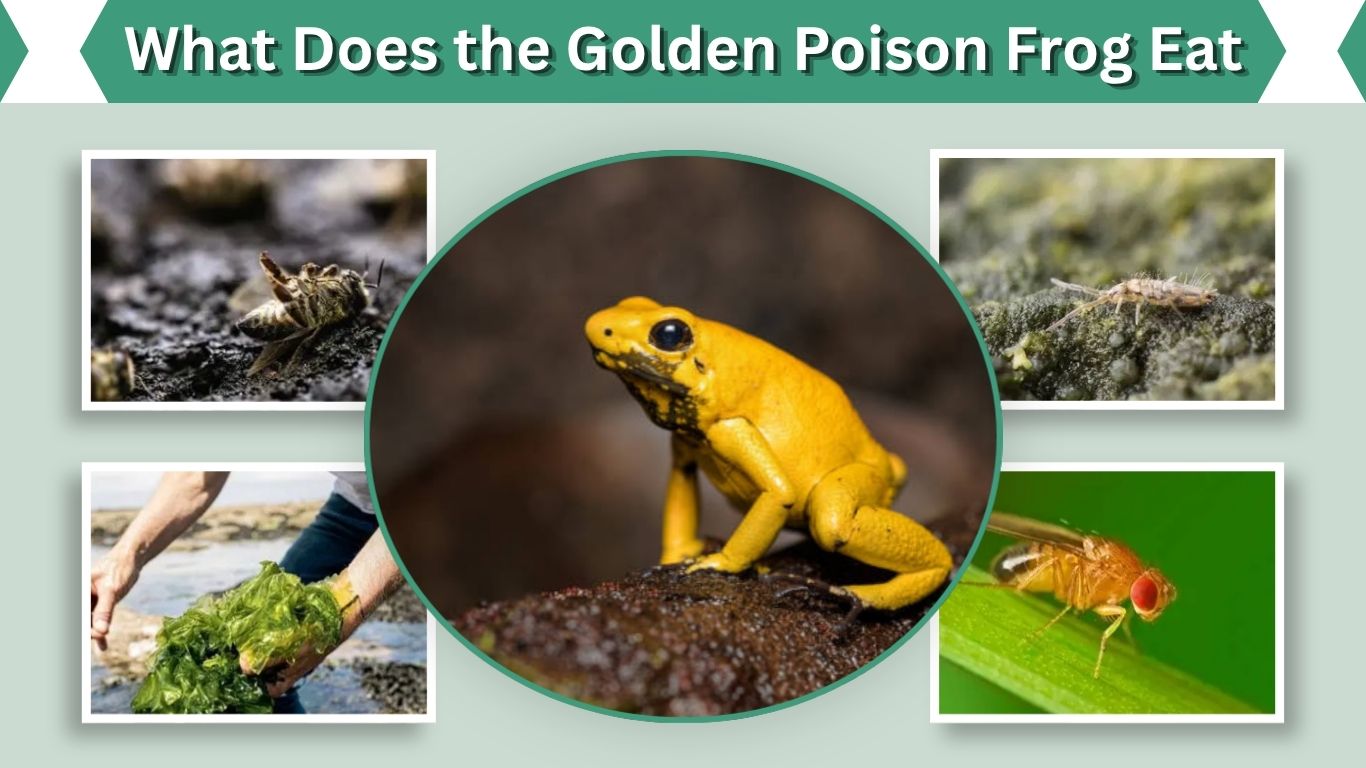
The golden poison frog, scientifically known as Phyllobates terribilis, is a small insect-eating amphibian from Colombia’s humid forests. Adult frogs hunt tiny ants, beetles, flies, mites and other arthropods on the forest floor. Their natural diet does more than provide nutrition—it also supplies chemical compounds that wild frogs store as powerful toxins in their skin.
What Do Golden Poison Frogs Eat?
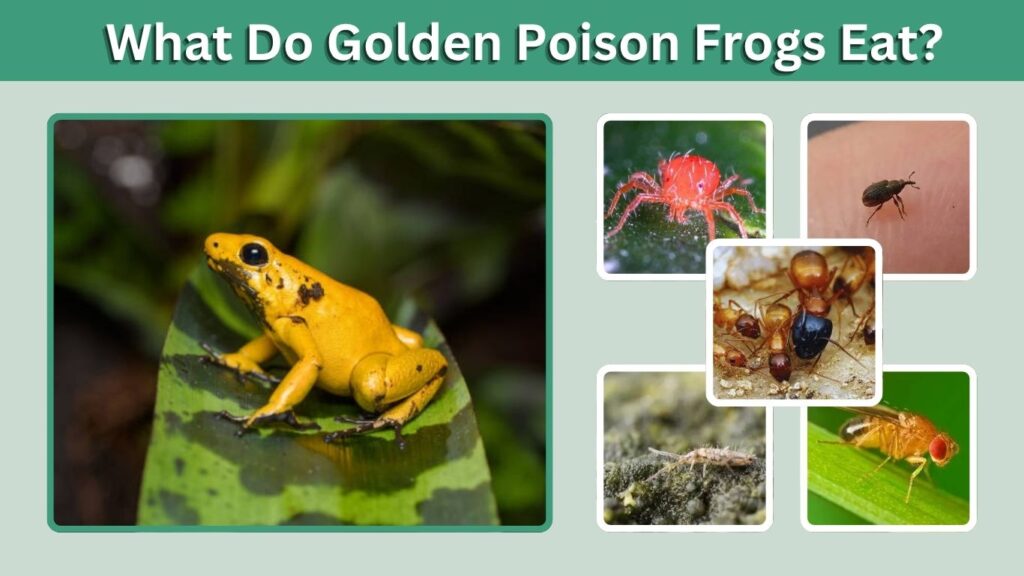
Golden poison frogs are insectivores. They eat small, moving prey that can fit inside their mouths. Ants appear to be particularly important, although wild frogs consume a broader mixture of tiny invertebrates.
Their common foods include:
- Ants
- Mites
- Small beetles
- Fruit flies
- Termites
- Springtails
- Tiny crickets
- Small insect larvae
- Other small flies
- Small spiders and similar arthropods
1. Ants
Ants are among the most important foods in the golden poison frog’s natural diet. The frog searches through leaves, damp soil and low vegetation for small ants that can be swallowed whole.
Certain ants and other arthropods contain alkaloid compounds. Poison frogs can absorb and store some of these chemicals in their skin, where they contribute to the frog’s chemical defense.
2. Mites
Tiny soil and leaf-litter mites are another important food. Although they may be difficult for people to notice, mites can be abundant in humid tropical forests.
Research on poison frogs has shown that oribatid mites can contain several classes of alkaloids found in frog skin. This suggests that mites may make an important contribution to the chemical defenses of at least some poison frog species.
3. Small Beetles
Golden poison frogs consume beetles small enough to fit into their mouths. These may include tiny adults and soft-bodied beetle stages found among damp leaves and decaying plant material.
Beetles provide protein, fats and other nutrients. Some beetles may also contain defensive chemicals that can contribute to the wider range of alkaloids detected in poison frogs.
4. Fruit Flies
Small flies are caught whenever they move within striking distance. In human care, flightless fruit flies are among the most frequently offered foods because they are small, active and easy for frogs to catch.
Captive frogs eating ordinary fruit flies do not develop the extreme toxicity seen in wild golden poison frogs because these feeder insects lack the necessary defensive alkaloids.
5. Termites
Golden poison frogs may eat termites encountered on the forest floor or around decomposing wood. Termites are soft-bodied, relatively slow-moving and appropriately sized for a small frog.
Wild poison frogs are known to consume termites as part of their varied arthropod diet. However, the exact proportions of ants, termites and other prey can change according to location and prey availability.
6. Springtails
Springtails are extremely small arthropods that live in damp soil, moss and decomposing leaves. They are particularly suitable for newly metamorphosed froglets because the smallest fruit flies may still be too large.
Captive keepers commonly use cultured springtails as supplementary food. They can also live temporarily inside a planted enclosure, giving frogs opportunities to forage naturally.
7. Tiny Crickets
Young crickets can be eaten when they are small enough for the frog. They should not be wider than the space between the frog’s eyes.
Crickets are commonly included in captive diets, but they should not be the only food. A varied diet helps provide a broader nutritional profile and encourages natural hunting activity. Captive crickets also do not provide the wild alkaloids responsible for the frog’s famous toxicity.
8. Small Insect Larvae
Golden poison frogs may consume tiny larvae found in leaf litter, rotting plant material and other damp areas. Suitable larvae are soft-bodied and easy to swallow.
However, large, hairy, chemically defended or unidentified larvae may be unsuitable. Captive frogs should receive only safe, cultured feeders rather than insects collected from gardens where pesticides or parasites may be present.
9. Other Small Flies
In addition to fruit flies, wild frogs may catch gnats and other tiny flying insects. Their movement attracts the frog’s attention, especially when the insects land nearby.
Flies offered in captivity should come from controlled cultures. Wild flies may have contacted chemicals, garbage or animal waste.
10. Small Spiders and Other Arthropods
A golden poison frog may occasionally eat tiny spiders and other suitably sized arthropods. Poison frogs are opportunistic hunters and generally respond to small prey moving nearby.
However, large spiders, centipedes and defensive insects could injure a frog. Captive diets should focus on established feeder species rather than random wild-caught animals.
How Do Golden Poison Frogs Eat?
Golden poison frogs are active daytime hunters. They search through damp leaf litter and vegetation, watching for the movement of tiny prey.
When suitable food comes close, the frog rapidly extends its sticky tongue. The prey adheres to the tongue and is pulled into the mouth. Golden poison frogs have been described as highly accurate tongue hunters that rarely miss a strike.
They do not chew food like mammals. Small prey is usually swallowed whole, sometimes with help from movements of the eyes and throat.
Does Their Diet Make Them Poisonous?
The golden poison frog does not create its entire chemical defense independently from ordinary nutrients. It obtains important toxin-related compounds from specific arthropods in its natural diet.
Poison frogs can absorb dietary alkaloids through the digestive system and transport them to glands in the skin. Evidence shows that ants, mites, beetles and other small arthropods can serve as sources of these chemicals.
Wild vs. Captive Diet
| Wild golden poison frog | Captive-bred golden poison frog |
| Eats naturally occurring ants, mites and other arthropods | Eats cultured fruit flies, springtails and small crickets |
| May acquire powerful defensive compounds | Normally lacks extreme wild toxicity |
| Forages across tropical leaf litter | Hunts inside a controlled vivarium |
| Consumes prey with naturally variable nutrition | May require carefully supplemented feeders |
Frogs raised in human care on alkaloid-free feeder insects lose or fail to develop the powerful toxic defense of wild frogs. Nevertheless, they should still be handled only when necessary because amphibian skin is delicate and readily absorbs substances from human hands.
What Do Golden Poison Frog Tadpoles Eat?
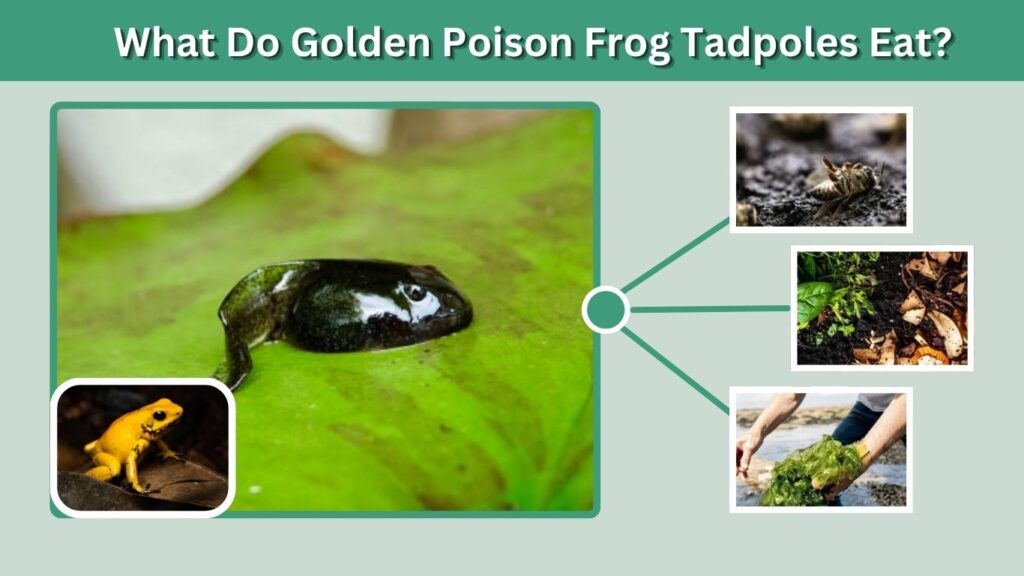
Golden poison frog tadpoles have different feeding habits from adults. Poison frog tadpoles may consume algae, organic debris, microorganisms, insect larvae, dead insects and other available material in the water.
Their exact diet can change as they develop. After metamorphosis, young froglets switch to hunting extremely small live arthropods such as springtails and newly hatched fruit flies.
How Often Do Golden Poison Frogs Eat?
Wild frogs forage repeatedly whenever suitable prey is available. They may capture numerous extremely small arthropods throughout the day rather than relying on one large meal.
In human care, feeding frequency depends on the frog’s age, body condition and feeder size. Young froglets generally need frequent access to tiny prey, while healthy adults can receive appropriately sized live food several times per week. Variety is more valuable than offering excessive amounts of one feeder.
What Eats the Golden Poison Frog?
Most predators avoid adult golden poison frogs because their bright coloration warns of their toxic skin. However, this does not mean they have no predators.
Animal Diversity Web reports one known predator associated with P. terribilis: the snake traditionally identified as Leimadophis epinephelus, now generally placed in the genus Erythrolamprus. This snake has some resistance to poison frog toxins, although it may not be completely immune.
Eggs, tadpoles and young frogs are more vulnerable than toxic adults. Aquatic insects, snakes and other small predators may consume immature stages before the frogs develop their full defenses.
FAQs
Do golden poison frogs eat plants?
No. Adult golden poison frogs are insectivores and do not normally eat leaves, fruit or other plant tissue. However, their prey may obtain chemical compounds from plants, which can then pass through the food chain to the frogs.
Do golden poison frogs eat other frogs?
They mainly hunt tiny arthropods rather than other frogs. A food item must be small enough to swallow, and adult golden poison frogs are not generally regarded as regular frog-eaters.
Can golden poison frogs eat mealworms?
Very small mealworms may be accepted, but they are not an ideal staple because their hard outer covering and size can make them less suitable than fruit flies or springtails.
Why are captive golden poison frogs not poisonous?
They are normally fed cultured fruit flies, springtails and crickets that lack the alkaloids found in certain wild ants, mites and other arthropods. Without those dietary compounds, the frogs do not develop their extreme wild toxicity.
What is the best captive food for a golden poison frog?
Cultured flightless fruit flies are a common staple. Springtails, very small crickets and other safe cultured invertebrates can add variety. Feeders may require suitable vitamin and mineral supplementation under experienced care.
