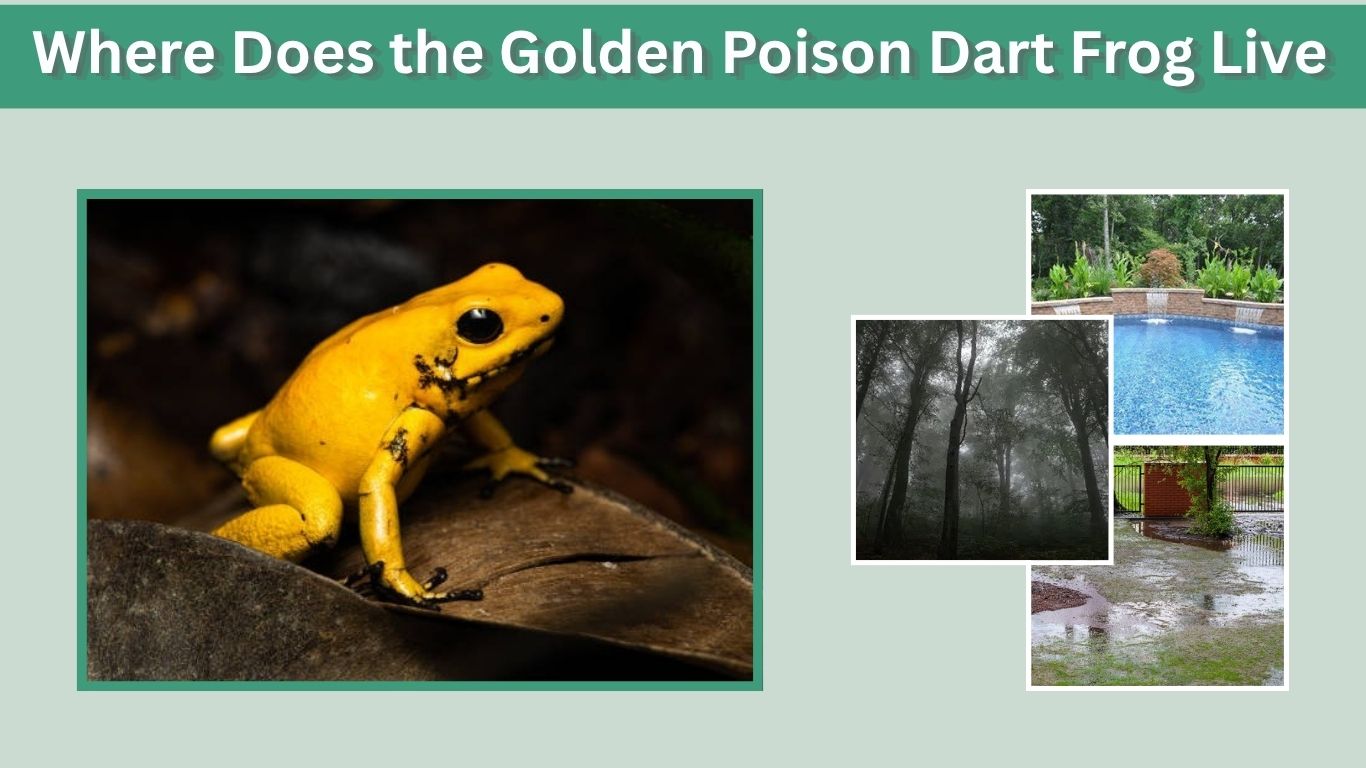
The golden poison dart frog lives in a small area of western Colombia, where it occupies warm, extremely humid lowland rainforest. Scientifically known as Phyllobates terribilis, this frog is naturally found nowhere else in the world. It spends most of its time on the forest floor among roots, damp ground, low plants and fallen vegetation. Despite sometimes climbing short distances, it is not a canopy-dwelling tree frog. Its survival depends on continuous moisture, abundant tiny insects and nearby freshwater for tadpole development.
Where Is the Golden Poison Frog Found?
The golden poison frog is endemic to Colombia, meaning its natural wild population occurs only in that country. Its documented range lies along Colombia’s Pacific side, primarily in the departments of Cauca and Valle del Cauca.
The species was originally described from rainforest around Quebrada Guangüí in the upper Río Saija drainage of Cauca. Later records extended its known distribution roughly 60 kilometres north into Valle del Cauca. Most documented populations occur approximately 100–200 metres above sea level.
Golden Poison Frog Range at a Glance
| Feature | Description |
| Continent | South America |
| Country | Colombia |
| Main region | Pacific lowlands |
| Departments | Cauca and Valle del Cauca |
| Typical elevation | About 100–200 metres |
| Main ecosystem | Humid lowland tropical rainforest |
| Natural distribution | Restricted and highly localized |
Its range is much smaller than that of many other poison frog species. Golden poison frogs are not naturally distributed across the Amazon Basin, Central America or other parts of South America.
Golden Poison Dart Frog Habitat
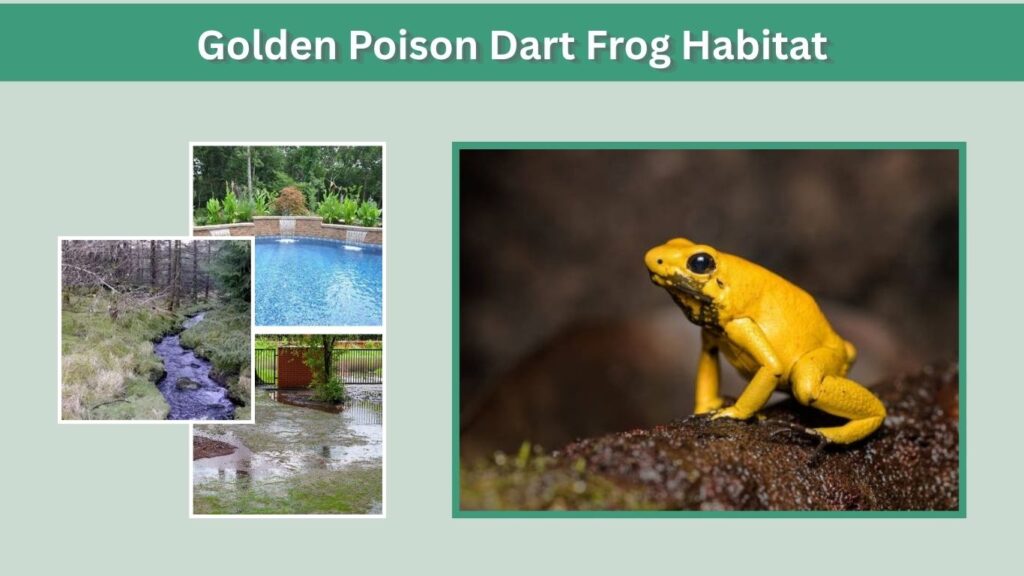
The golden poison frog inhabits wet tropical forest receiving substantial rainfall. It occurs on both relatively dry ridge tops and wetter forest slopes, usually around tree roots, damp ground litter and low vegetation.
Important habitat features include:
- Consistently humid air
- Warm temperatures
- Damp soil and ground cover
- Tree roots and sheltered cavities
- Low-growing plants and saplings
- Small streams, pools or other freshwater
- Large populations of ants, mites and other tiny prey
These forests may receive several metres of rain annually. Moisture is essential because amphibians have permeable skin and can lose water quickly in dry surroundings. The humid forest also supports the tiny arthropods forming the frog’s diet.
Does the Golden Poison Frog Live in the Canopy?
The golden poison frog is primarily terrestrial, so it spends most of its life at or close to ground level. It searches for food around roots, low plants, damp soil and forest-floor material rather than living high in the canopy.
It can climb low vegetation when moving, escaping danger or exploring its surroundings. However, its body form and daily behavior are better suited to travelling across the forest floor than remaining in tall trees.
This distinguishes it from strongly arboreal frogs that spend most of their lives on branches or leaves high above the ground.
Why Does It Need Freshwater?
Adult golden poison frogs live mainly on land, but their tadpoles require water. Eggs are deposited in a protected, damp terrestrial location. After the tadpoles hatch, an adult transports them on its back to suitable freshwater, where they continue developing.
The frog therefore needs a habitat combining moist land with accessible aquatic breeding sites. Suitable water may occur in:
- Small forest pools
- Slow-moving stream areas
- Water-filled ground depressions
- Other protected freshwater locations
The loss or pollution of these sites can interrupt reproduction even when some surrounding forest remains.
How Does the Rainforest Help the Frog Survive?
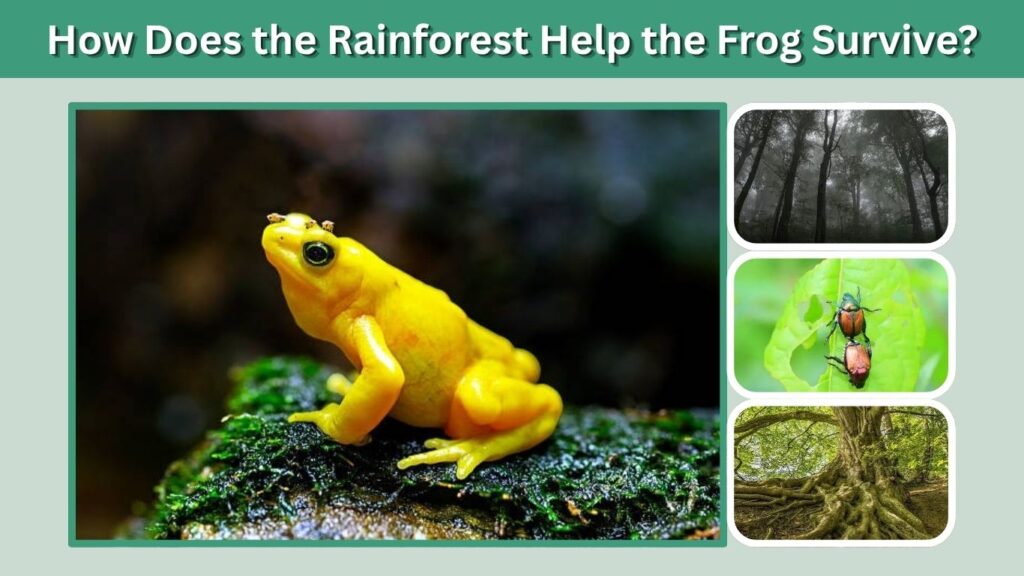
The rainforest supplies nearly everything the golden poison frog needs.
Moisture and Shelter
Thick vegetation reduces direct sunlight and helps the ground remain cool and damp. Roots, plants and natural cavities provide hiding places from weather and potential predators.
Food
Golden poison frogs feed on tiny ants, mites, beetles and other invertebrates. The warm, wet forest supports these prey throughout much of the year.
Some wild prey contain alkaloids that the frog stores in its skin. These dietary chemicals contribute to its powerful toxic defense. Poison frogs raised on ordinary captive foods do not develop the same extreme toxicity.
Warning Coloration
The frog’s yellow, orange or mint-green coloration is easy to notice against dark forest vegetation. This bright appearance warns potential predators that attacking the frog could be dangerous.
Are Golden Poison Frogs Found Outside Colombia?
Wild golden poison frogs are not naturally established outside Colombia. Frogs seen in North America, Europe, Asia or elsewhere are generally captive-bred animals living in zoos, research facilities or privately maintained vivariums.
Captive populations do not expand the species’ natural geographic range. Captive frogs must never be released because they could introduce diseases, fail to survive or disrupt local ecosystems.
How Long Do Golden Poison Dart Frogs Live?
The precise lifespan of wild golden poison frogs has not been firmly established. Tracking individual frogs for many years in dense tropical rainforest is difficult.
Poison frogs maintained under professional human care may live approximately 12–20 years, although longevity varies with species, genetics, nutrition and environmental conditions.
A wild frog may face additional dangers, including habitat disturbance, disease, drought, pollution and loss of breeding sites.
Is Their Habitat Disappearing?
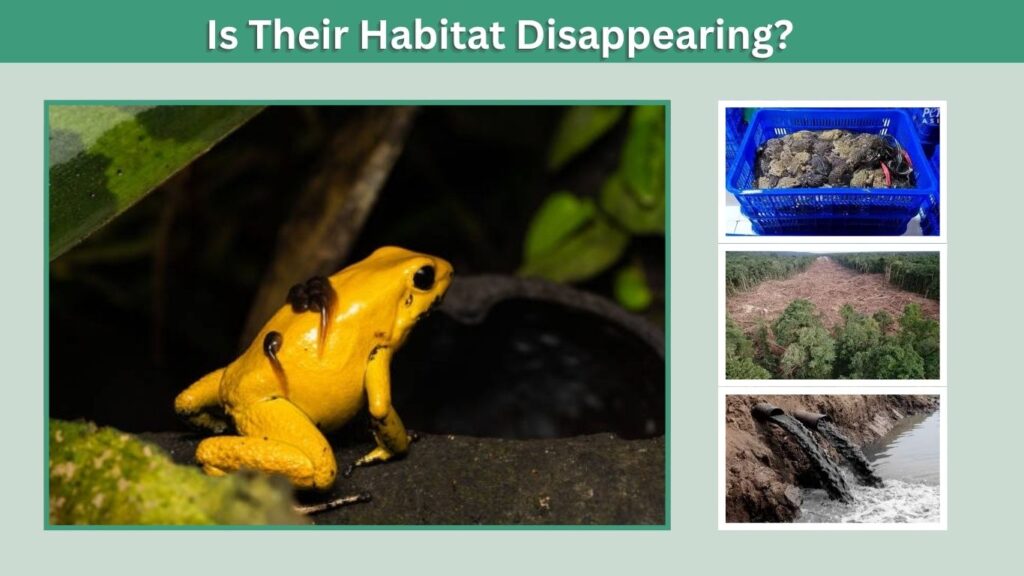
The golden poison frog is currently listed as Endangered. Its restricted distribution makes it especially vulnerable because damage within a relatively small region can affect a large part of the global population.
Major threats include:
- Rainforest clearing
- Conversion of forest into farmland
- Mining activities
- Water contamination
- Pesticide pollution
- Habitat fragmentation
- Illegal collection
Current reports describe the population as declining, but there is no reliable count showing exactly how many golden poison frogs remain in the wild. Protecting Colombia’s Pacific rainforest and keeping its waterways clean are essential for the species’ survival.
FAQs
Does the golden poison frog live in the Amazon rainforest?
No. It lives in humid Pacific lowland rainforest in western Colombia. Its range is separate from the main Amazon Basin and is concentrated in Cauca and Valle del Cauca.
Does it live in trees?
It may climb low vegetation, but it is mainly a ground-dwelling frog. Most feeding and daily activity occur around roots, damp ground and low plants.
What elevation does it live at?
Documented populations generally occur approximately 100–200 metres above sea level, making it primarily a lowland rainforest species.
Can golden poison frogs live in water?
Adults live mainly on land and cannot remain underwater permanently. Their tadpoles are aquatic and require freshwater until completing metamorphosis.
Why does the frog have such a small range?
The species has evolved within a specialized Colombian rainforest environment. Its dependence on constant moisture, particular prey and suitable breeding sites limits where it can survive naturally.
