
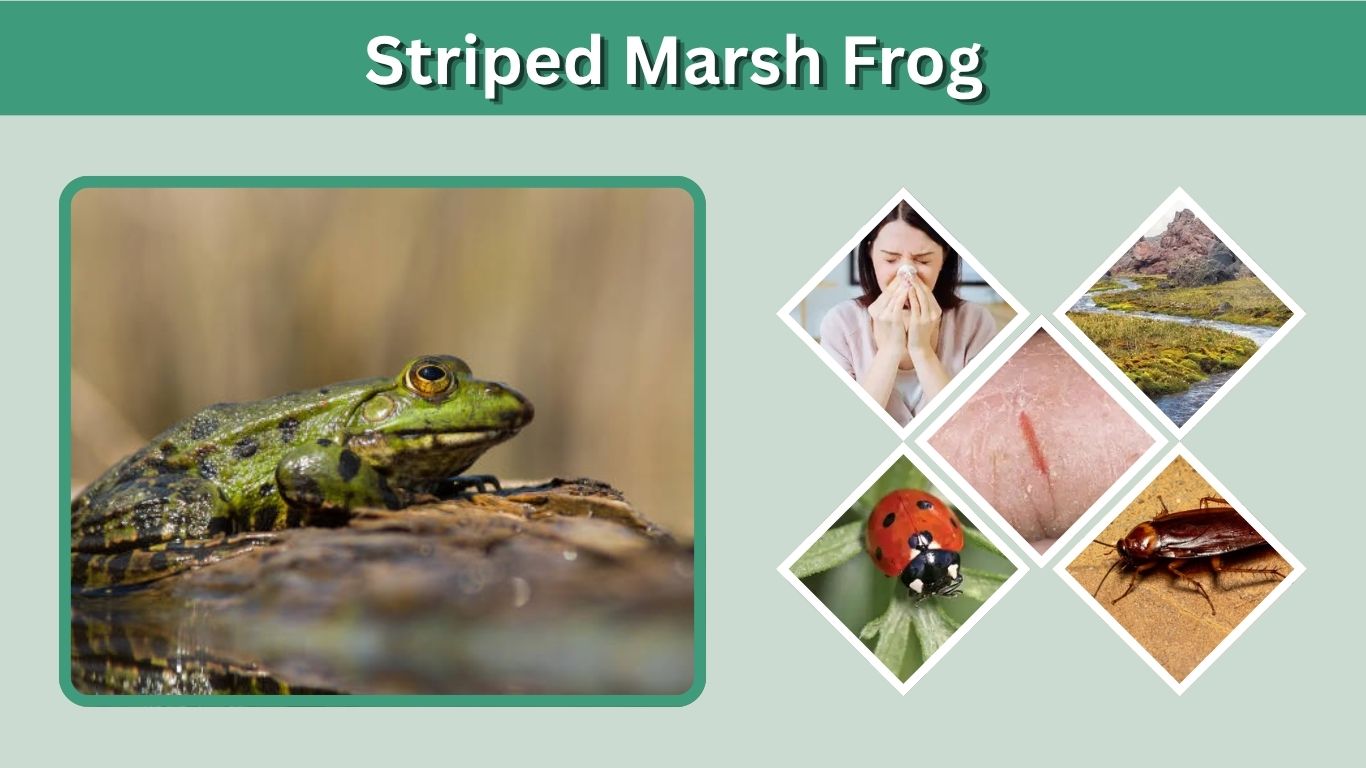
The striped marsh frog is a common Australian amphibian known for the dark longitudinal stripes running along its brown back. Scientifically named Limnodynastes peronii, this adaptable frog inhabits wetlands, ponds, creeks, dams, gardens, and even modified urban environments. It is usually heard rather than seen because males produce a distinctive “tok” sound after rain. Although sometimes mistaken for a poisonous frog, the striped marsh frog is not considered dangerous to people or pets under normal circumstances.
Striped Marsh Frog Quick Facts
The striped marsh frog belongs to the Australian ground-frog family Myobatrachidae. It is one of the larger and more adaptable marsh frogs found in eastern Australia.
Basic information
| Feature | Description |
| Common name | Striped marsh frog |
| Scientific name | Limnodynastes peronii |
| Family | Myobatrachidae |
| Order | Anura |
| Subphylum | Vertebrata |
| Adult size | Up to approximately 7.5 cm |
| Body color | Brown with dark longitudinal stripes |
| Diet | Insects, spiders, worms, snails, and smaller frogs |
| Tadpole size | Up to approximately 9.5 cm |
| Captive lifespan | Up to about eight years |
| Activity | Primarily nocturnal |
| Breeding season | Spring through autumn |
Striped Marsh Frog Appearance and Identification
The striped pattern provides this frog with excellent camouflage among reeds, grasses, leaf litter, and muddy wetland margins.
Identification features
- Brown, grey-brown, or bronze-colored back
- Multiple dark brown longitudinal stripes
- Occasional cream or reddish stripe along the middle
- Pale stripe extending from below the eye toward the front leg
- White or cream belly
- Golden iris with a horizontal pupil
- Fingers and toes without adhesive discs
- Little or no webbing between the toes
- Stronger and thicker forearms in adult males
Adults may reach about 7.5 cm in body length, although many are smaller. The Australian Museum describes the species as having a brown back, dark longitudinal stripes, a white belly, and unwebbed fingers and toes.
Brown and green striped marsh frogs
Most striped marsh frogs are various shades of brown, bronze, or grey-brown. Their appearance can change slightly with lighting, moisture, temperature, and surroundings.
Some individuals may appear olive or greenish-brown, but a bright green frog with toe pads is more likely a tree frog. The arrangement of long back stripes is more dependable than body color alone.
Similar marsh frogs
The spotted marsh frog has dark spots or blotches rather than several continuous stripes. The salmon-striped frog has prominent pink, orange, or salmon-colored stripes along its sides. Calls are also useful because similar-looking species usually produce noticeably different sounds.
Striped Marsh Frog Habitat and Distribution
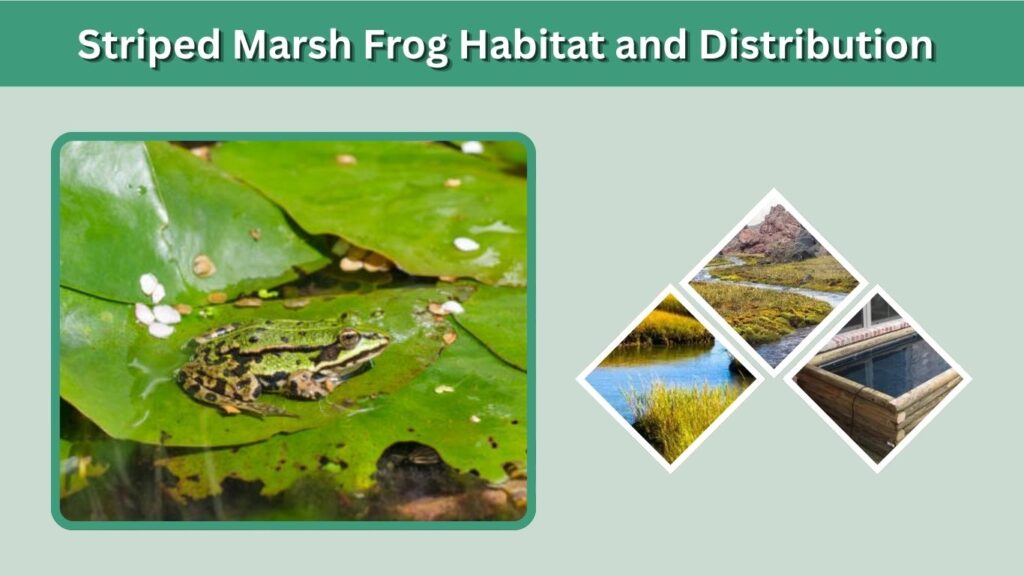
Striped marsh frogs can survive in natural and human-modified environments. However, they still require damp shelter and access to still or slow-moving water for breeding.
Preferred habitat
Their habitat includes:
- Marshes and freshwater wetlands
- Permanent and temporary ponds
- Lakes and slow-moving creeks
- Farm dams and flooded paddocks
- Roadside drains and ditches
- Damp forests and woodlands
- Suburban gardens and backyard ponds
- Abandoned or poorly maintained swimming pools
During the day, these frogs shelter beneath logs, rocks, vegetation, bark, or deep leaf litter. They become more active at night, particularly following rain.
Where are striped marsh frogs found?
Striped marsh frogs occur along coastal Queensland outside Cape York, throughout coastal New South Wales and Victoria, in the Australian Capital Territory, southeastern South Australia, and northern Tasmania.
They are particularly familiar around Brisbane, Sydney, Canberra, and eastern Victorian wetlands. The species tolerates disturbed and moderately polluted habitats better than many Australian frogs, allowing it to persist in some cities and agricultural areas.
Striped Marsh Frog Call and Sound
The male’s call is one of the easiest ways to detect this secretive frog. Calling normally becomes more frequent during warm, wet weather.
What does the call sound like?
A striped marsh frog produces a single sharp “tok,” “tuk,” or “whuck” repeated every few seconds. People often compare the sound to a dripping tap, a small hammer hitting wood, a tennis ball being struck, or a table-tennis ball bouncing.
A group calling from the same pond can create a loud and repetitive nighttime chorus. Males generally call from shallow water, floating vegetation, muddy banks, or dense plants near the water’s edge.
Why do striped marsh frogs call?
Only males produce the familiar breeding call. Its primary purpose is to advertise their presence and attract females. Males may also respond to neighboring males, causing several frogs around a pond to call in sequence.
Calls are most common from spring through autumn, but frogs may call outside this period following heavy rain and suitable temperatures.
Striped Marsh Frog Diet and Feeding Behavior
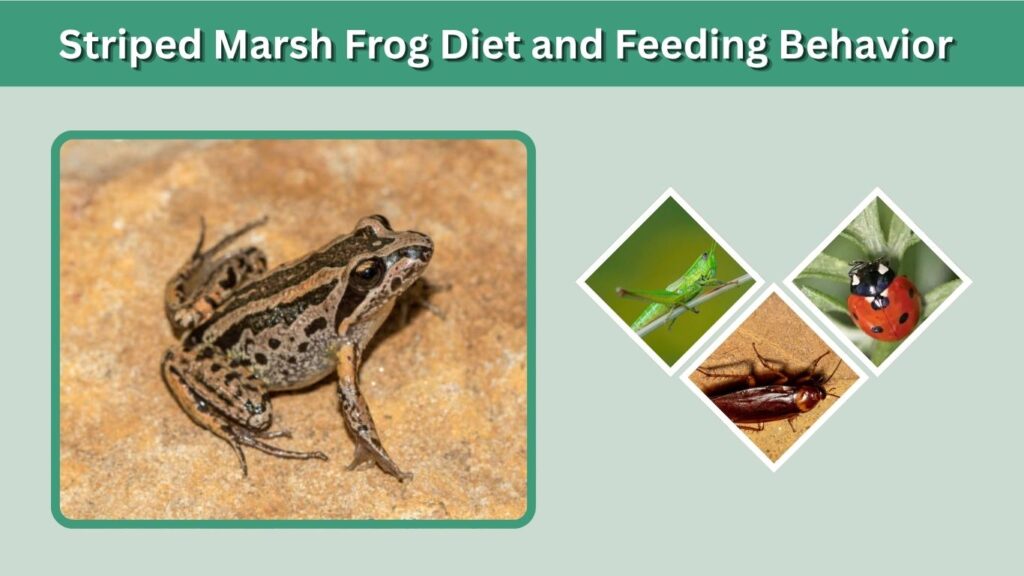
Adult striped marsh frogs are carnivorous hunters, while their tadpoles consume a mixture of algae, microorganisms, decaying material, and small aquatic organisms.
What do striped marsh frogs eat?
- Flies and mosquitoes
- Beetles and moths
- Crickets and cockroaches
- Ants and other insects
- Spiders
- Earthworms
- Slugs and snails
- Small aquatic invertebrates
- Occasionally smaller frogs
Striped marsh frogs hunt mostly at night. They frequently sit motionless and wait for prey to approach before lunging forward and catching it with their sticky tongue.
What do the tadpoles eat?
Tadpoles usually graze on algae, microorganisms, soft plant material, and decomposing organic matter. They may also consume tiny aquatic invertebrates when available.
In captivity, tadpoles should not be given excessive food because decomposing leftovers quickly reduce water quality. However, wild tadpoles should generally be left in their original pond rather than collected.
Striped Marsh Frog Breeding, Eggs and Life Cycle
Striped marsh frogs breed in still or slow-moving water. Rainfall, temperature, and water availability influence the timing and success of breeding.
Striped marsh frog eggs
The female lays her eggs in a floating foam nest, usually among vegetation at the edge of a pond, dam, ditch, or other still body of water. A female may lay as many as approximately 1,000 eggs.
The foam helps keep the eggs together and may offer some protection from drying, temperature changes, and aquatic predators. The eggs generally hatch after several days when conditions are suitable.
Tadpole identification
Striped marsh frog tadpoles are dark brown or almost black and commonly remain near the bottom of the water. They can reach approximately 9.5 cm in total length, making a fully grown tadpole longer than an adult frog’s body.
Tadpole development is comparatively slow. Metamorphosis may take seven or eight months, depending on temperature, food availability, water quality, and other conditions.
Life-cycle stages
| Stage | What happens |
| Egg | Eggs develop inside a floating foam nest |
| Tadpole | Aquatic larvae hatch and feed in the pond |
| Developing tadpole | Hind legs and then front legs appear |
| Froglet | The tail is absorbed and the young frog leaves the water |
| Adult | The mature frog returns to water to breed |
Are Striped Marsh Frogs Poisonous?
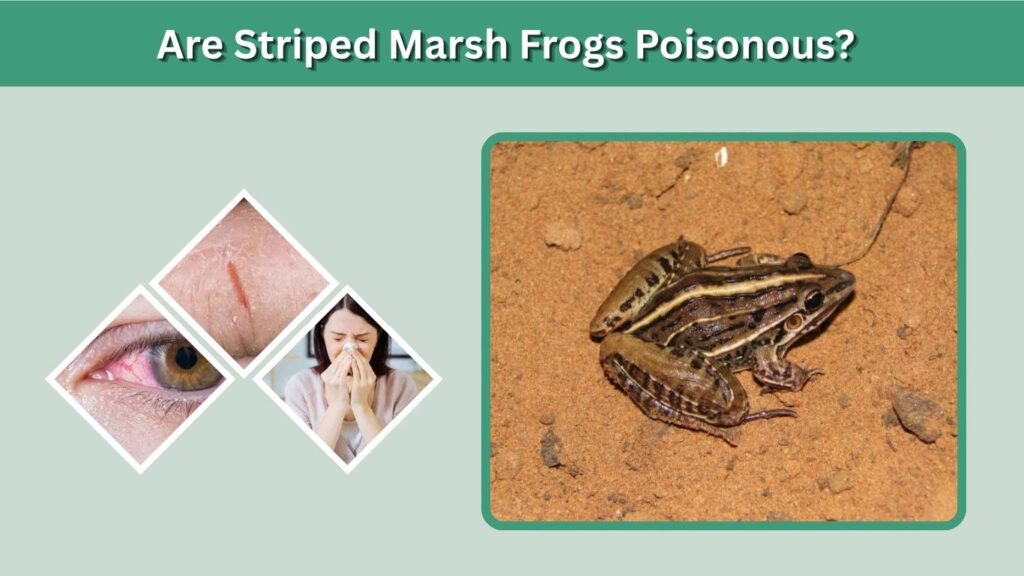
The striped marsh frog is not regarded as a dangerously poisonous species. It does not possess the large toxin-producing glands associated with Australia’s invasive cane toad.
Are they poisonous to humans?
Striped marsh frogs are not considered dangerous to humans. Like other frogs, they have protective skin secretions that may irritate sensitive eyes, mouths, broken skin, or allergies.
Avoid unnecessary handling. If contact occurs, wash your hands thoroughly and do not touch your face beforehand. The frog cannot inject venom and is unlikely to bite except in exceptional defensive circumstances.
Are they poisonous to dogs and cats?
Striped marsh frogs are not known to cause the severe poisoning associated with cane toads. However, a dog or cat that mouths any frog may experience drooling, pawing at its mouth, vomiting, or irritation from skin secretions.
Rinse the pet’s mouth gently with water directed outward, prevent further contact, and contact a veterinarian promptly if symptoms are severe, persistent, or neurological. Never assume an unidentified amphibian is harmless, particularly in cane-toad regions.
Predators and Adaptations
Striped marsh frogs occupy the middle of wetland food chains. They control invertebrate populations but are also hunted by numerous native and introduced animals.
Natural predators
Their predators include waterbirds, snakes, large fish, turtles, larger frogs, lizards, and some mammals. Eggs and tadpoles may be eaten by fish, aquatic insects, waterbirds, and other amphibian larvae.
Domestic cats and dogs can also capture frogs in gardens. Keeping pets indoors at night helps protect both the frog and the pet.
Survival adaptations
The frog’s brown striped body blends into wet vegetation, soil, bark, and leaf litter. Nocturnal activity reduces exposure to daytime heat and some predators. Strong hind legs allow it to jump toward water, while hiding under damp debris prevents its permeable skin from drying.
Its tolerance of urban wetlands, garden ponds, and altered water bodies has helped the species remain widespread across much of eastern Australia.
Striped Marsh Frog Care
Native Australian frogs are wildlife rather than animals that should be casually collected. Captive ownership rules and permit requirements vary between states and territories.
Can striped marsh frogs be pets?
A striped marsh frog may be kept legally in some Australian jurisdictions with the appropriate wildlife licence and proof that it came from an approved captive source. Removing frogs, eggs, or tadpoles from the wild may be illegal.
Prospective keepers should check current state wildlife regulations before obtaining one. A proper enclosure requires clean dechlorinated water, high humidity, damp land, hiding places, ventilation, suitable temperatures, and appropriately sized live invertebrates.
Creating a frog-friendly garden
Instead of capturing a frog, homeowners can provide a safe natural habitat by maintaining a chemical-free pond with shallow edges, aquatic plants, logs, rocks, and dense native vegetation.
Avoid pesticides, slug pellets, pool chemicals, and mosquito treatments that can harm frogs or tadpoles. Keep cats indoors and prevent dogs from entering frog-breeding areas.
Managing Unwanted Frog Noise
A loud striped marsh frog call can become repetitive when males breed close to a house. Killing, spraying, or chemically treating native frogs is unsafe and may be illegal.
Humane ways to discourage frogs
Reduce unnecessary outdoor lighting that attracts insects, cover accessible water containers, repair leaking taps, remove stagnant artificial water, and maintain swimming pools correctly. Dense vegetation immediately beside bedroom windows can also be relocated elsewhere in the garden.
Do not move frogs, eggs, or tadpoles without advice. If they must be removed from a dangerous location, contact a local wildlife authority or licensed frog rescue organization.
FAQs
These answers cover common questions about striped marsh frog safety, behavior, sound, and development.
How big does a striped marsh frog get?
An adult striped marsh frog can reach approximately 7.5 cm in body length, although many individuals are closer to 4–6 cm. Males and females look similar, but breeding males develop noticeably stronger forearms and may have a pale yellow throat with brown mottling.
Is a striped marsh frog dangerous?
Striped marsh frogs are not considered dangerous. They cannot inject venom, and their skin secretions are not comparable to cane-toad toxin. Nevertheless, avoid touching them because their secretions may irritate sensitive tissue, while chemicals and oils on human hands can damage their permeable skin.
How long do striped marsh frogs live?
An exact average lifespan in the wild is difficult to determine. Available observations suggest striped marsh frogs may live for several years, with reports of individuals surviving up to approximately eight years in captivity. Wild survival depends on habitat quality, weather, disease, food, and predators.
Why is a striped marsh frog calling at night?
A calling frog is normally a male attempting to attract a female during the breeding season. Warm temperatures, rain, and a nearby pond frequently trigger calling. The repeated “tok” sound may continue for long periods when several males are competing around the same breeding site.
Can I raise striped marsh frog tadpoles?
Wild tadpoles should normally remain where they were found. Collecting or keeping native tadpoles may require a state wildlife permit, and moving them can spread amphibian diseases. Anyone legally raising captive-bred tadpoles needs clean water, appropriate food, land access, and expert husbandry guidance.
