
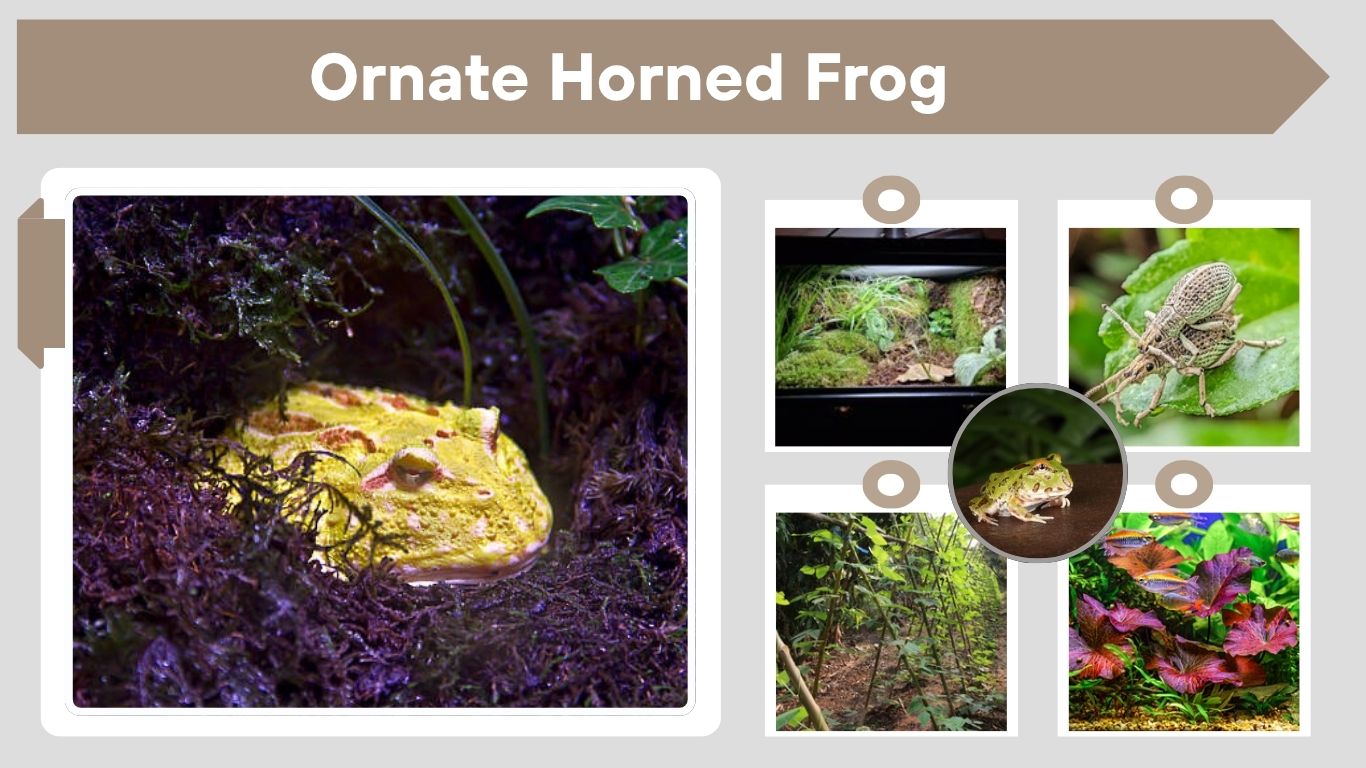
The ornate horned frog is a large, round-bodied amphibian famous for its massive mouth, bold colors, and ambush hunting behavior. Native to South America, this species is commonly called a Pacman frog because of its wide mouth and circular body shape. Ornate horned frogs spend much of their lives partially buried in soil while waiting for prey to approach. Their unusual appearance and relatively simple care requirements have made them popular in the exotic pet trade. Understanding their habitat, diet, behavior, and environmental needs helps owners care for these fascinating amphibians properly.
What Is an Ornate Horned Frog?
The ornate horned frog is a carnivorous amphibian scientifically known as Ceratophrys ornata. It belongs to the South American horned frog family and is closely related to other Pacman frog species. These frogs are known for their aggressive feeding behavior and impressive camouflage abilities.
Unlike many active amphibians, ornate horned frogs spend most of their time sitting motionless while hidden among leaves or soil. Their large mouths allow them to swallow prey almost as large as their own bodies. Because of this unique appearance, they are often one of the most recognizable pet frog species in the world.
Physical Appearance and Size
Several physical traits help distinguish the ornate horned frog from other amphibians.
- Large round body with short legs
- Horn-like projections above the eyes
- Green, brown, yellow, and red color patterns
- Wide mouth designed for ambush feeding
- Strong front feet adapted for burrowing
Adult females are usually larger than males. Many ornate horned frogs grow between 4 and 7 inches long, although especially large females may appear much bulkier.
Why Is It Called a Horned Frog?
The species gets its name from the pointed skin projections above its eyes. These “horns” are not true horns but raised extensions of skin that help break up the frog’s outline while hiding in leaf litter.
This camouflage allows the frog to blend into its surroundings while waiting for insects, rodents, or other prey animals to move close enough for an attack.
Where Do Ornate Horned Frogs Live?
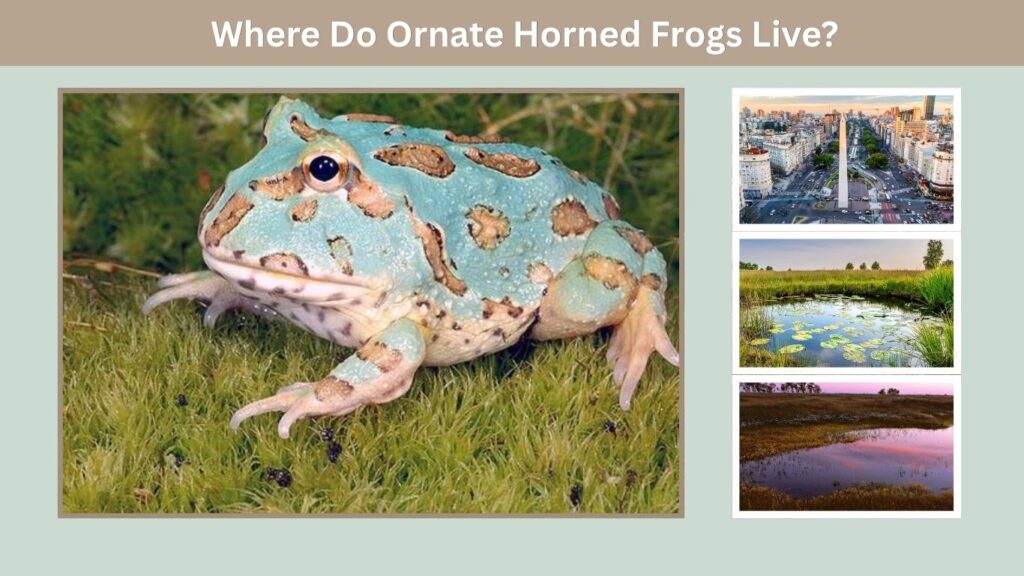
Ornate horned frogs naturally inhabit warm and humid regions of South America. They are especially common in Argentina, Uruguay, and nearby grassland ecosystems where seasonal rainfall supports amphibian populations.
These frogs prefer moist soil, shallow wetlands, forest edges, and grassy habitats with enough cover to remain hidden during the day. Because they rely heavily on camouflage and ambush hunting, environments with loose soil and vegetation are ideal for survival.
Native Habitat in South America
The species thrives in regions with moderate humidity and warm temperatures throughout most of the year. Seasonal rain creates muddy and moist conditions that support insect populations and breeding activity.
Common habitat features include:
- Moist grasslands and forest edges
- Areas with leaf litter and soft soil
- Warm environments with seasonal rainfall
- Shallow wetlands and muddy ground
- Dense vegetation for camouflage
These environmental conditions provide shelter, prey availability, and safe breeding areas for the species.
Ornate Horned Frog Adaptations
Ornate horned frogs possess several adaptations that help them survive in the wild. Their camouflage patterns allow them to remain almost invisible while buried beneath leaves and soil.
They also have powerful jaws and quick strike reflexes that make them highly effective ambush predators. Rather than chasing prey, they wait patiently for food to move within reach before lunging forward rapidly.
Ornate Horned Frog Diet and Feeding
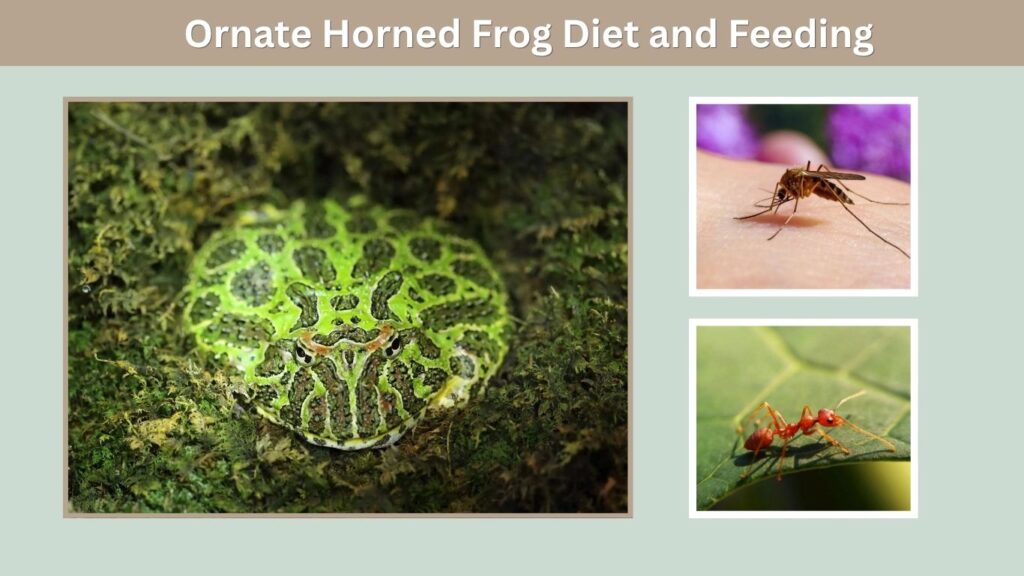
The ornate horned frog is a strict carnivore with a powerful appetite. In both the wild and captivity, these frogs consume a wide variety of prey items. Their feeding response is extremely aggressive, and they will attempt to eat nearly anything that moves nearby.
Because of their wide mouths and strong jaws, ornate horned frogs can consume surprisingly large prey compared to their body size.
What Do Ornate Horned Frogs Eat?
Their natural diet includes insects, small vertebrates, and other amphibians found within their habitat.
Common foods eaten by ornate horned frogs include:
- Crickets and roaches
- Earthworms and mealworms
- Small fish and amphibians
- Pinky mice in captivity
- Beetles and other large insects
Young frogs require more frequent feeding than adults because they grow rapidly during early development.
Ornate Horned Frog Eating Behavior
Ornate horned frogs are ambush predators rather than active hunters. They remain hidden beneath soil or leaves with only their eyes visible while waiting for prey to approach.
Once prey moves close enough, the frog lunges forward with surprising speed and grips the animal using its strong jaws. Their bite is powerful enough to discourage predators and control struggling prey items effectively.
Ornate Horned Frog Care Guide
Ornate horned frogs are popular exotic pets because they require relatively simple enclosures and limited daily handling. However, maintaining correct humidity and temperature levels is essential for their health.
These frogs are generally solitary animals and should not be housed together because aggressive feeding instincts can lead to injury or cannibalism.
Are Ornate Horned Frogs Good Pets?
Many amphibian enthusiasts consider ornate horned frogs suitable for beginners due to their simple care routines and fascinating appearance.
Benefits of keeping ornate horned frogs include:
- Unique colors and patterns
- Minimal enclosure space requirements
- Easy feeding routines
- Interesting ambush behavior
- Long captive lifespan with proper care
Although they are visually impressive pets, these frogs are best observed rather than handled frequently because excessive handling can stress amphibians.
Ornate Horned Frog Tank Setup

Creating the proper enclosure is one of the most important parts of ornate horned frog care. These frogs require warm temperatures, soft substrate, and steady humidity levels to remain healthy in captivity. Because they spend much of their time partially buried, the enclosure should closely imitate their natural environment.
A single adult ornate horned frog usually does well in a medium-sized terrarium with secure ventilation and constant access to clean water. The setup should remain simple but carefully maintained.
Essential Enclosure Requirements
A healthy ornate horned frog habitat should include several important features.
- Moist coconut fiber or soil substrate
- Shallow water dish for soaking
- Temperatures between 75 and 85 degrees Fahrenheit
- Humidity levels around 60 to 80 percent
- Hiding areas with moss or plants
Substrate should remain damp but not overly wet because excessive moisture may encourage bacterial growth or skin problems.
Feeding and Maintenance in Captivity
Captive ornate horned frogs need regular feeding schedules and routine enclosure cleaning. Juveniles generally eat every one to two days, while adults may eat only a few times each week.
Owners should remove uneaten food quickly to prevent bacteria and insects from spreading throughout the enclosure. Fresh water should also be replaced daily because amphibians absorb moisture directly through their skin.
Ornate Horned Frog Lifespan and Growth

Ornate horned frogs can live surprisingly long lives when kept under proper environmental conditions. Their lifespan depends heavily on diet quality, humidity stability, and overall habitat cleanliness.
Young frogs grow rapidly during the first year and gradually slow their growth as they mature into adults. Females often become noticeably larger and heavier than males over time.
Ornate Horned Frog Life Cycle
The life cycle of an ornate horned frog begins in shallow water after breeding season rainfall. Eggs hatch into tadpoles that develop quickly in temporary pools and wetlands.
As they mature, the tadpoles grow legs, absorb their tails, and transition into juvenile frogs capable of hunting small prey independently. Adults eventually develop the thick bodies and large mouths associated with mature Pacman frogs.
How Long Do Ornate Horned Frogs Live?
In captivity, ornate horned frogs commonly live between 8 and 15 years when cared for properly. Stable temperatures, balanced nutrition, and low stress levels contribute greatly to long-term health.
Wild frogs may have shorter lifespans because they face predators, drought conditions, disease, and environmental changes throughout their lives.
Chacoan vs Ornate Horned Frog
Many people confuse ornate horned frogs with Chacoan horned frogs because both belong to the Pacman frog family. Although they share similar body shapes and feeding behavior, several differences help separate the two species.
Chacoan horned frogs are generally larger and display different coloration patterns compared to ornate horned frogs. Their environmental preferences may also vary slightly depending on habitat conditions.
Appearance Differences
Careful observation reveals several distinctions between these two horned frog species.
- Chacoan frogs are usually larger and heavier
- Ornate horned frogs show brighter green and yellow patterns
- Chacoan frogs often have rougher skin texture
- Ornate frogs display more colorful markings
- Body proportions vary slightly between species
Both species remain highly popular among amphibian hobbyists because of their unusual appearance and feeding behavior.
Ornate Horned Frog Facts for Kids
Ornate horned frogs are fascinating animals that attract attention because of their giant mouths and colorful camouflage. Their Pacman frog nickname comes from the famous video game character known for its large circular mouth.
These frogs spend most of their lives waiting quietly for prey instead of actively chasing food. Their hunting strategy helps conserve energy while allowing them to surprise nearby animals quickly.
Interesting Ornate Horned Frog Facts
Several unusual facts make ornate horned frogs especially interesting for young readers and animal enthusiasts.
- They can swallow prey nearly as large as their bodies
- Their camouflage helps them disappear into leaves and soil
- They spend long periods sitting motionless underground
- Females are usually much larger than males
- Their strong jaws can produce a surprisingly powerful bite
Because of these characteristics, ornate horned frogs remain one of the most recognizable amphibians in the exotic pet world.
Ornate Horned Frog in Games and Pop Culture
The ornate horned frog has also become popular in online games and digital pet collections. In the game Adopt Me, players often collect and trade frog-themed pets inspired by real amphibian species.
The frog’s unusual appearance, wide mouth, and bright coloration make it an appealing design for animated characters and virtual pet systems. Its resemblance to the classic Pacman shape further increases its popularity in entertainment and internet culture.
FAQs
Are ornate horned frogs aggressive?
Ornate horned frogs are considered aggressive feeders rather than aggressive pets. They instinctively strike at moving objects near their mouths, including food, fingers, or other animals. This behavior is part of their natural ambush hunting strategy and helps them capture prey quickly in the wild.
Can ornate horned frogs live together?
No, ornate horned frogs should usually be housed alone. These frogs are highly territorial and may attempt to bite or eat other frogs sharing the same enclosure. Keeping them separately helps prevent injuries, stress, and cannibalistic behavior in captivity.
How big do ornate horned frogs get?
Adult ornate horned frogs generally grow between 4 and 7 inches long. Females are typically much larger and heavier than males. With proper feeding and care, some individuals develop thick, round bodies that make them appear even larger than their actual length.
Do ornate horned frogs bite?
Yes, ornate horned frogs can bite if they feel threatened or mistake movement for food. Their jaws are surprisingly strong for amphibians, and larger frogs can deliver painful bites. Owners should avoid placing fingers directly near the frog during feeding time.
Why are ornate horned frogs called Pacman frogs?
Ornate horned frogs are called Pacman frogs because of their large round bodies and oversized mouths. Their appearance resembles the classic Pacman video game character. The nickname became popular among reptile and amphibian hobbyists due to the frog’s wide mouth and strong appetite.
