
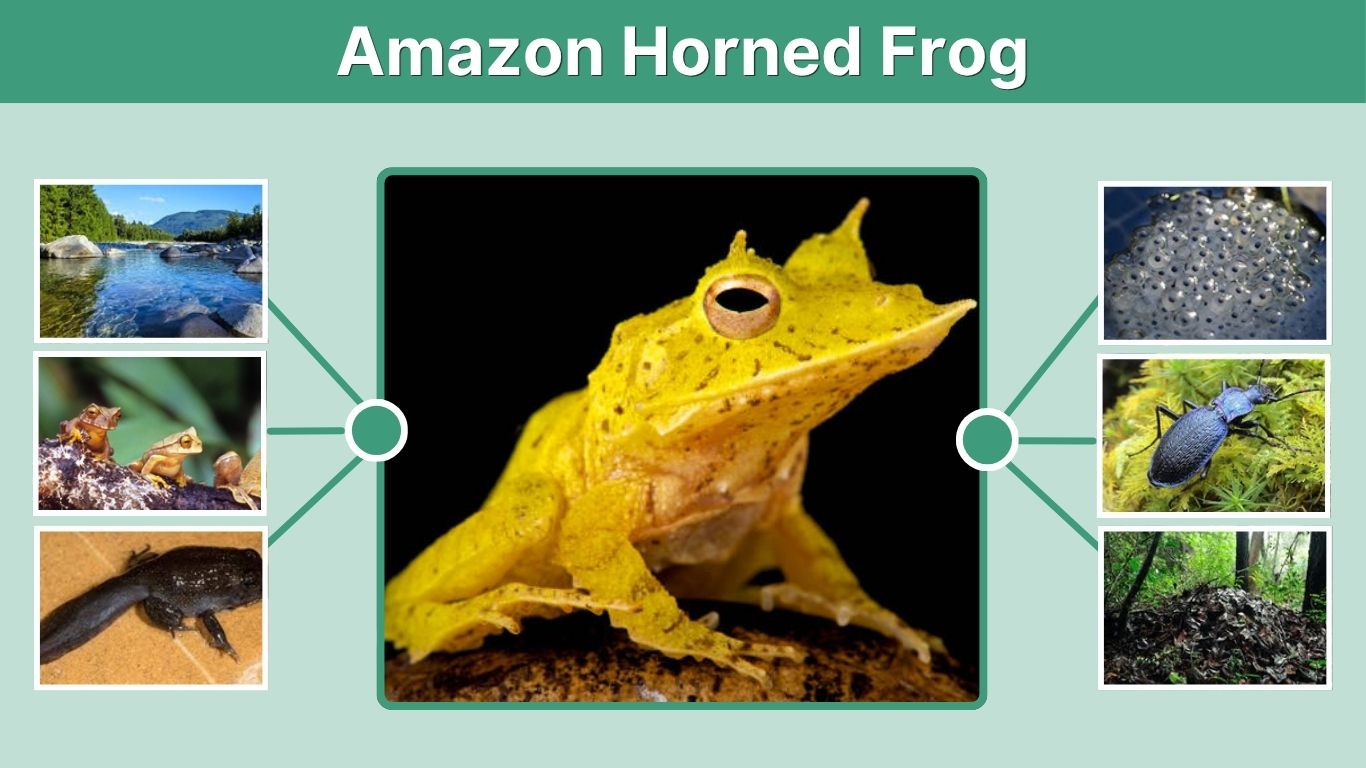
The Amazon horned frog is a large rainforest amphibian known for its enormous mouth, colorful camouflage, and aggressive hunting behavior. Native to the Amazon Basin of South America, this frog spends much of its life hidden among leaves and moist forest soil waiting for prey to approach. Its horn-like projections above the eyes give the species a unique appearance that helps it blend into the rainforest floor. Because of its unusual looks and powerful feeding instincts, the Amazon horned frog has become popular in wildlife education, exotic pet care, and amphibian research.
What Is an Amazon Horned Frog?
The Amazon horned frog is a carnivorous amphibian belonging to the horned frog family found throughout tropical regions of South America. It is closely related to Pacman frogs and other ambush-hunting amphibians known for their large mouths and round bodies.
These frogs rely heavily on camouflage and patience rather than speed. They usually remain partially buried beneath leaves or soil while waiting for prey to move nearby. Once prey comes close enough, the frog attacks rapidly using its strong jaws and wide mouth.
What Does the Amazon Horned Frog Look Like?
Several physical characteristics help distinguish the Amazon horned frog from other rainforest amphibians.
- Horn-like projections above the eyes
- Large mouth and rounded body shape
- Green, brown, yellow, and red camouflage colors
- Thick body with short powerful legs
- Wide head designed for ambush feeding
Adult frogs can appear surprisingly large because of their broad bodies and oversized mouths. Females are usually larger than males and often heavier as well.
Amazon Horned Frog Physical Adaptations
The Amazon horned frog possesses several adaptations that improve survival in rainforest environments. Its coloration helps it blend perfectly into fallen leaves and muddy forest floors.
The species also has strong jaws and quick reflexes that allow it to capture prey efficiently. Instead of actively chasing food, the frog waits silently until an animal moves within striking distance. This hunting strategy conserves energy while increasing feeding success in dense rainforest habitats.
Where Do Amazon Horned Frogs Live?
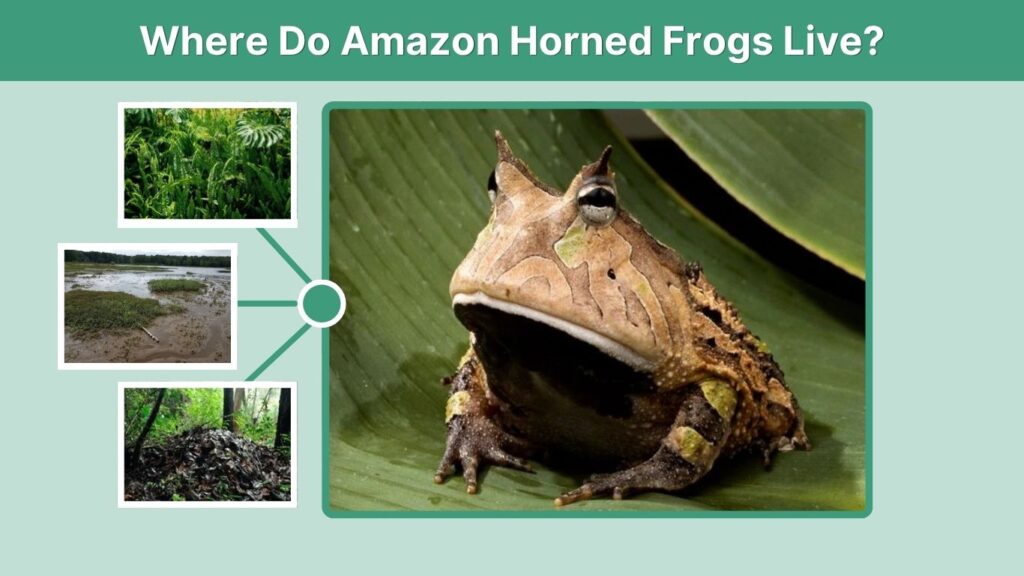
Amazon horned frogs naturally inhabit humid rainforest ecosystems throughout parts of South America. These frogs prefer warm temperatures, moist soil, and dense vegetation that provide both shelter and camouflage opportunities.
Most individuals spend their time hidden on the forest floor where leaves, mud, and plants create ideal hunting conditions. Rainfall and humidity are extremely important because amphibians absorb moisture through their skin and depend on damp environments for survival.
Amazon Horned Frog Habitat
The species thrives in tropical rainforest regions with steady moisture and thick vegetation cover.
Common habitat features include:
- Humid rainforest floors
- Shallow wetlands and muddy ground
- Dense leaf litter and vegetation
- Warm temperatures throughout the year
- Areas with heavy seasonal rainfall
These conditions provide protection from predators while supporting insects, reptiles, and other prey animals.
Geographic Distribution in South America
Amazon horned frogs are commonly associated with the Amazon Basin and surrounding rainforest regions. Populations exist across several South American countries where tropical forests remain intact.
They are most often found in areas of Brazil, Peru, Ecuador, Colombia, and nearby rainforest environments. The species depends heavily on healthy tropical ecosystems for food, breeding, and shelter.
Amazon Horned Frog Diet and Feeding
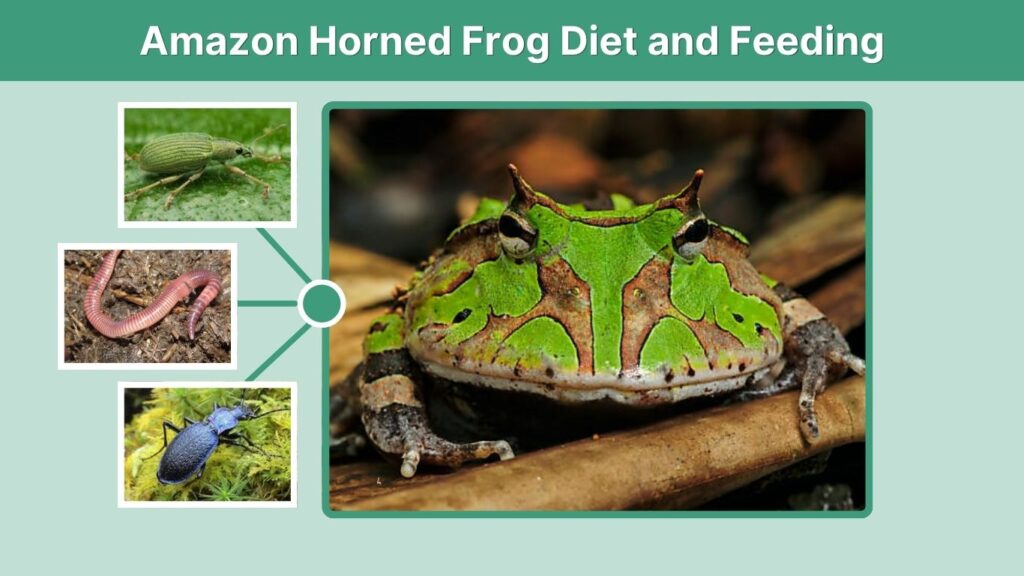
The Amazon horned frog is a powerful carnivore with an extremely aggressive feeding response. Like many horned frog species, it will attempt to eat almost any moving animal small enough to fit inside its mouth.
Their feeding behavior is based on ambush predation rather than active pursuit. The frog remains hidden until prey approaches closely before striking with remarkable speed.
What Do Amazon Horned Frogs Eat?
Amazon horned frogs consume a wide variety of prey animals in both wild and captive environments.
Common prey items include:
- Insects such as crickets and beetles
- Small reptiles and amphibians
- Earthworms and large invertebrates
- Small rodents in captivity
- Fish and other tiny vertebrates
Young frogs usually feed more frequently because rapid growth requires additional nutrients during early development stages.
Amazon Horned Frog Eating Behavior
The feeding style of the Amazon horned frog is one of its most interesting characteristics. These frogs stay motionless for long periods with only their eyes visible above leaves or soil.
Once prey moves close enough, the frog lunges forward instantly and grabs the animal using strong jaws and sharp gripping teeth. Their mouths are large enough to swallow prey nearly half their own body size, making them highly effective predators within rainforest ecosystems.
Amazon Horned Frog Predators and Defense
Although Amazon horned frogs are dangerous predators themselves, they still face threats from larger rainforest animals. Birds, snakes, mammals, and reptiles may prey on younger or smaller frogs in the wild.
To survive, the species relies heavily on camouflage and defensive behavior. Their leaf-like coloration makes them difficult for predators to spot on the rainforest floor.
Natural Predators of Amazon Horned Frogs
Several rainforest animals hunt Amazon horned frogs when opportunities arise.
- Snakes searching through leaf litter
- Large birds hunting amphibians
- Small rainforest mammals
- Larger reptiles and lizards
- Predatory fish targeting tadpoles
Young frogs and tadpoles face the greatest risk because they are smaller and less capable of defending themselves.
Amazon Horned Frog Defense Mechanisms
When threatened, Amazon horned frogs often inflate their bodies and open their mouths widely to appear larger and more dangerous. Some individuals may attempt to bite predators using their surprisingly strong jaws.
Combined with excellent camouflage, these behaviors help the species avoid many attacks in dense rainforest habitats.
Amazon Horned Frog Behavior and Life Cycle
Amazon horned frogs are solitary amphibians that spend most of their time hidden beneath leaves or partially buried in moist soil. They are generally inactive during the day and rely on camouflage rather than movement to avoid predators and surprise prey.
These frogs become more active during rainy periods when humidity rises and breeding conditions improve. Their territorial feeding behavior means they usually prefer living alone instead of sharing space with other frogs.
Amazon Horned Frog Behavior
Several behaviors help Amazon horned frogs survive in dense rainforest environments.
- Burrowing into soft soil for camouflage
- Remaining motionless while hunting prey
- Inflating the body when threatened
- Producing defensive biting behavior
- Hunting mainly through ambush attacks
Their quiet and patient nature makes them highly effective predators despite their slow movement and heavy body shape.
Amazon Horned Frog Life Cycle
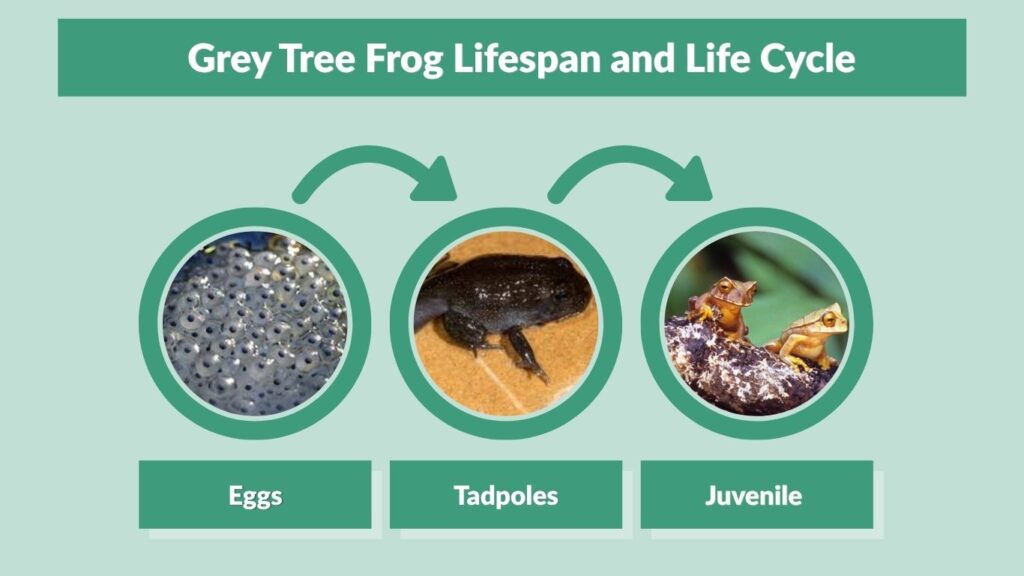
The life cycle of the Amazon horned frog begins in shallow water during rainy breeding seasons. Females lay eggs in moist aquatic areas where tadpoles hatch within a short period.
The tadpoles develop quickly and feed actively before transforming into juvenile frogs. As they mature, they gradually develop stronger jaws, thicker bodies, and the horn-like projections above their eyes.
Adult frogs can live for many years when environmental conditions remain stable and food sources are available consistently.
Amazon Horned Frog Facts for Kids
The Amazon horned frog is one of the most unusual amphibians in the rainforest. Its giant mouth and leaf-like camouflage make it especially interesting for children learning about tropical wildlife and animal adaptations.
Because the frog spends much of its time hiding in leaves, people sometimes overlook it even when standing nearby. This camouflage ability helps the species survive in crowded rainforest ecosystems filled with predators.
Fun Facts About Amazon Horned Frogs
Several surprising facts make these frogs popular in wildlife education and amphibian studies.
- They are often called Pacman frogs because of their huge mouths
- Their camouflage helps them resemble dead leaves
- They can swallow prey almost half their own size
- Females are usually much larger than males
- They spend long periods sitting completely still
These unusual characteristics help the species stand out among South American amphibians.
How to Draw an Amazon Horned Frog
The Amazon horned frog is a popular animal for beginner wildlife drawings because of its round shape and bold facial features. Artists often focus on the frog’s wide mouth, raised eye horns, and camouflage patterns.
Drawing tutorials for children usually simplify the body into large curved shapes before adding legs, eyes, and color details. Green, brown, and yellow shades are commonly used to recreate the frog’s rainforest appearance.
Easy Amazon Horned Frog Drawing Tips
Simple drawing techniques can help beginners create recognizable frog illustrations.
- Start with a large oval body shape
- Draw a wide curved mouth near the front
- Add raised horn-like eye shapes
- Sketch short thick legs beneath the body
- Use green and brown camouflage patterns
These basic steps make the frog easier to draw for kids, students, and beginner artists.
Amazon Horned Frog as a Pet
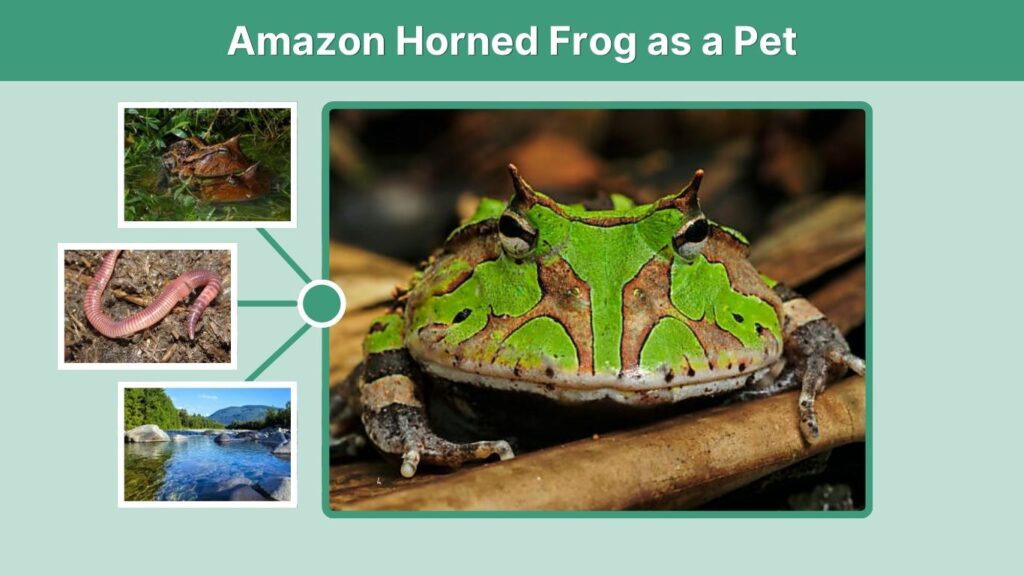
Amazon horned frogs are occasionally kept as exotic pets because of their unusual appearance and relatively simple enclosure needs. However, they require careful humidity control and proper feeding routines to remain healthy in captivity.
These frogs are best suited for observation rather than handling because amphibian skin is delicate and sensitive to stress. Owners usually maintain tropical terrariums designed to imitate rainforest conditions.
Are Amazon Horned Frogs Good Pets?
Many amphibian hobbyists appreciate Amazon horned frogs because they require less space than larger reptiles and remain visually impressive throughout their lives.
Important care considerations include:
- Warm temperatures and high humidity
- Soft moist substrate for burrowing
- Live insect and carnivore diets
- Clean shallow water access
- Separate housing to prevent aggression
Proper enclosure maintenance is essential because unhealthy conditions may quickly lead to infections or stress-related illness.
Are Amazon Horned Frogs Dangerous?
Amazon horned frogs are not considered poisonous to humans, but they can bite if threatened or handled improperly. Their strong jaws and sharp gripping teeth allow them to hold prey securely during feeding.
Most bites occur when the frog mistakes fingers for food during feeding time. While not medically dangerous, larger individuals can deliver surprisingly painful bites.
Amazon Horned Frog Defense Mechanisms
When frightened, these frogs often puff up their bodies and open their mouths wide to appear more intimidating. Combined with camouflage and aggressive feeding behavior, this defensive display helps discourage predators.
Although they may look dangerous because of their huge mouths and aggressive feeding habits, Amazon horned frogs are generally harmless when respected and handled carefully.
FAQs
How big do Amazon horned frogs get?
Adult Amazon horned frogs usually grow between 4 and 7 inches long, with females often becoming larger than males. Their round bodies and oversized mouths can make them appear even bigger. Proper nutrition and healthy habitat conditions play an important role in overall growth and development.
Do Amazon horned frogs bite?
Yes, Amazon horned frogs can bite when they feel threatened or mistake movement for food. They have strong jaws and sharp gripping teeth designed for catching prey. Although their bites are not dangerous to humans, they can be painful because of the frog’s powerful feeding response.
Can Amazon horned frogs swim?
Amazon horned frogs can swim, but they are not strong aquatic frogs. They usually prefer shallow water areas and moist forest floors instead of deep water. These frogs spend most of their time sitting in mud, leaf litter, or soft soil while waiting for prey nearby.
Why do Amazon horned frogs bury themselves?
Amazon horned frogs bury themselves for camouflage, protection, and hunting. Hiding beneath leaves or soil helps them avoid predators and remain unnoticed by prey animals. This ambush strategy allows the frog to conserve energy while waiting patiently for insects or small animals to approach.
Are Amazon horned frogs good beginner pets?
Amazon horned frogs can be suitable for beginner amphibian owners because they need relatively simple enclosures and limited space. However, they still require proper humidity, temperature control, and feeding schedules. Owners should also avoid excessive handling because these frogs are sensitive to stress.
