
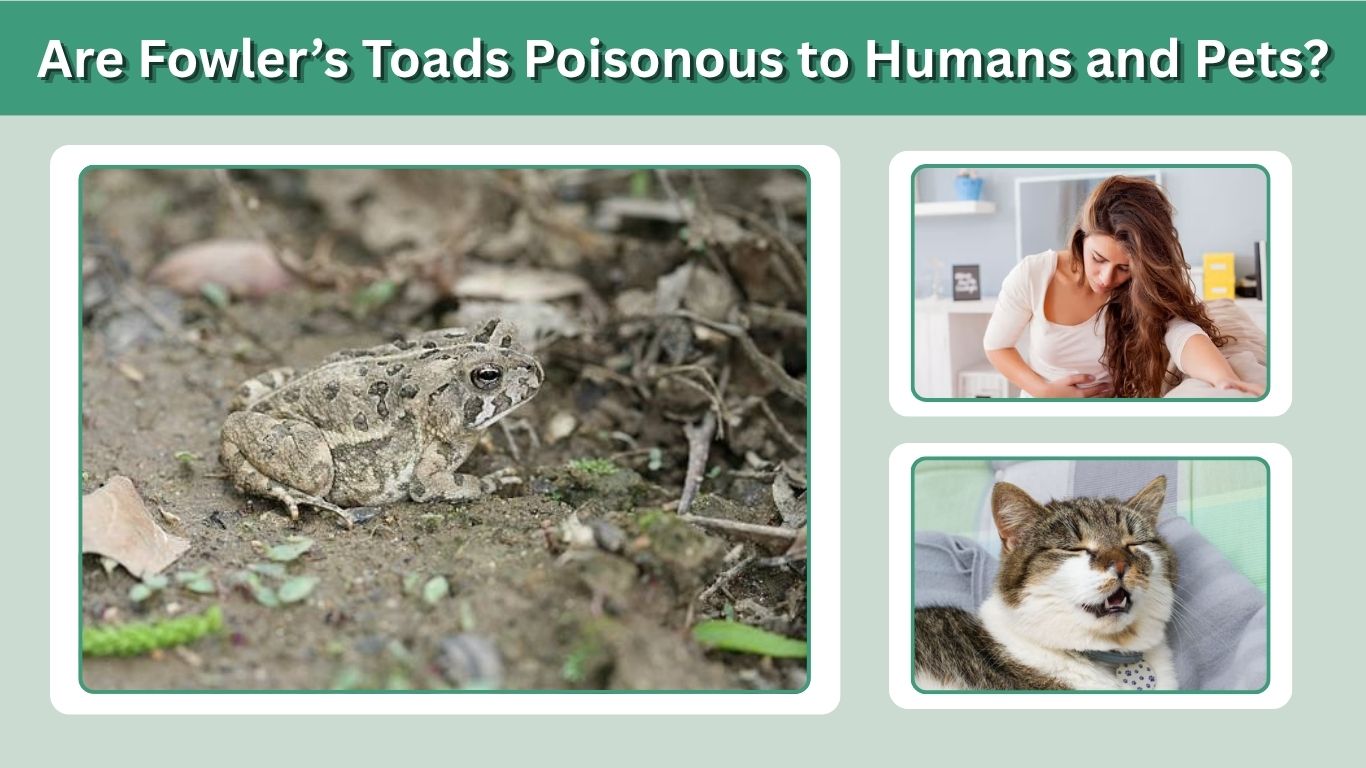
Fowler’s toads may look harmless, but they do have a natural defense system that makes many people wonder if they are poisonous. The short answer is yes, Fowler’s toads can produce toxic skin secretions. However, they are usually not dangerous to humans when left alone. The bigger concern is dogs or cats that lick, bite, or try to eat them.
Fowler’s Toad Poisonous: What Does It Mean?
When people search “Fowler’s toad poisonous,” they are usually asking whether touching, holding, licking, or eating the toad can cause harm. Fowler’s toads are not venomous in the way a snake injects venom. Instead, they are poisonous because their skin glands can release irritating toxins.
These secretions are mainly a defense against predators. If a bird, raccoon, snake, dog, or cat tries to bite the toad, the bitter chemicals can make the animal release it. This helps the toad survive.
Poisonous vs Venomous
A Fowler’s toad is poisonous, not venomous. That difference matters.
| Term | Meaning | Does It Apply to Fowler’s Toads? |
|---|---|---|
| Poisonous | Harmful if touched, swallowed, or absorbed through the mouth or eyes | Yes |
| Venomous | Injects venom through a bite, sting, or spine | No |
| Toxic to pets | Can cause symptoms if a pet licks, bites, or eats it | Yes |
| Usually deadly to humans | Likely to kill a person through normal contact | No |
So, a Fowler’s toad will not chase, bite, or inject poison into you. The risk comes from its skin secretions contacting sensitive areas like the mouth, eyes, or broken skin.
Are Fowler’s Toads Poisonous to Humans?
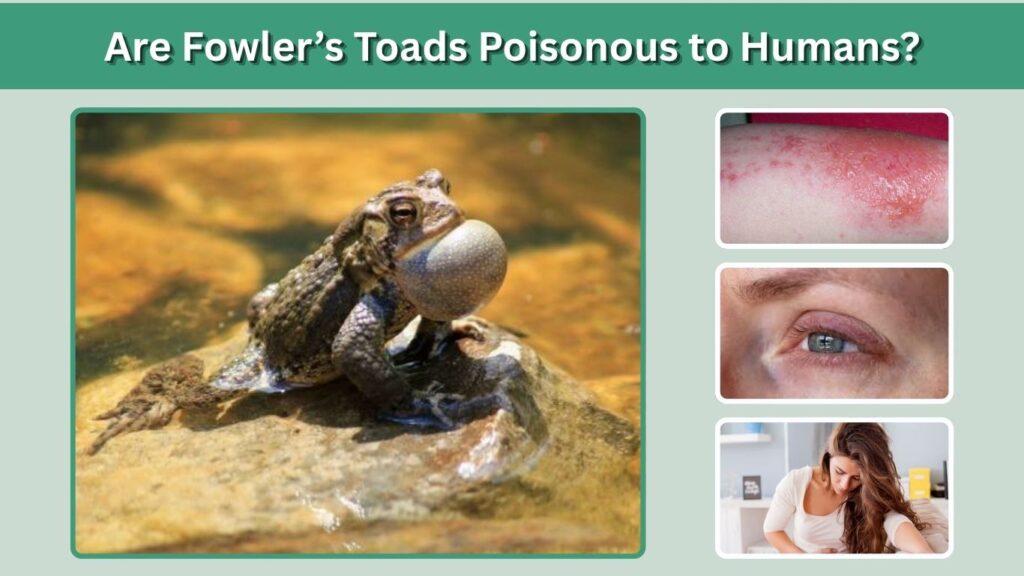
Fowler’s toads can irritate humans, but they are not usually dangerous when handled briefly and carefully. A person who simply sees one in the yard, garden, or near a porch is not in danger. The toad’s toxins are defensive, not aggressive.
What Happens If You Touch One?
Touching a Fowler’s toad with bare hands may not cause any noticeable reaction for many people. However, the secretions can irritate your skin, especially if you have cuts or sensitive skin. The bigger problem happens if you touch your eyes, lips, or mouth afterward.
Possible human reactions include:
- Mild skin irritation
- Eye burning or watering
- Bad taste if secretions reach the mouth
- Nausea if toxin is accidentally swallowed
- Stronger irritation in children or sensitive individuals
Always wash your hands with soap and water after touching any wild amphibian. Toads can also absorb chemicals through their skin, so lotions, sunscreen, soap residue, and insect repellent on your hands may harm them.
Can a Fowler’s Toad Kill a Human?
A Fowler’s toad is not considered a major lethal threat to humans. Normal contact is unlikely to cause serious poisoning. However, no one should lick, eat, squeeze, or intentionally handle the toad’s poison glands. Children should be taught not to pick up or put wild amphibians near their face.
If toxin gets into the eyes, rinse with clean water. If someone swallows secretions and feels sick, contact a poison control center or medical professional.
Are Fowler’s Toads Poisonous to Dogs?
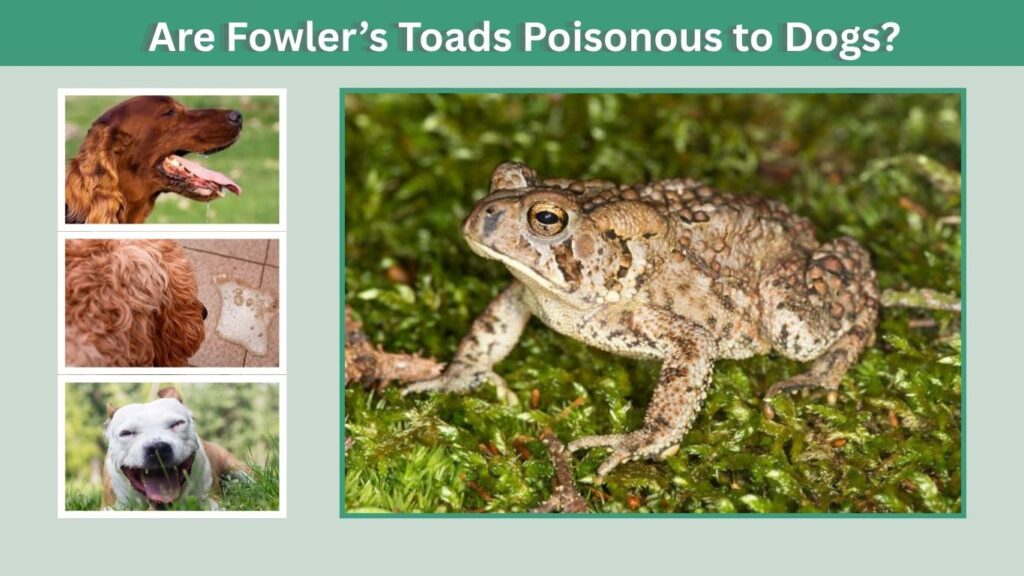
Yes, Fowler’s toads can be toxic to dogs. Dogs are at greater risk than humans because they often investigate toads with their mouths. A curious dog may lick, bite, mouth, or swallow the toad, which allows toxins to contact the gums and tongue.
Most encounters with smaller North American toads cause irritation rather than life-threatening poisoning, but symptoms can look dramatic. Smaller dogs, puppies, and dogs that swallow the toad may have a higher risk of stronger reactions.
Symptoms in Dogs
A dog exposed to a Fowler’s toad may show signs quickly. Symptoms often begin within minutes because the toxin contacts the mouth directly.
Common symptoms include:
- Excessive drooling
- Foaming at the mouth
- Pawing at the mouth
- Gagging or retching
- Vomiting
- Red or irritated gums
- Whining or distress
- Head shaking
- Bad breath or bitter-mouth reaction
More serious symptoms can include weakness, trouble breathing, abnormal heart rhythm, tremors, seizures, collapse, or severe disorientation. These are emergency signs and require immediate veterinary attention.
What to Do If Your Dog Licks a Fowler’s Toad
Stay calm and act quickly. Do not wait to see if symptoms get worse, especially if your dog is small or already showing distress.
Follow these steps:
- Remove the dog from the toad immediately.
- Prevent the dog from biting or swallowing the toad.
- Wipe the gums, tongue, and inside of the mouth with a damp cloth.
- Rinse the mouth carefully from the side, allowing water to flow out.
- Do not force water down the throat.
- Call your veterinarian or an emergency animal clinic.
- Watch for vomiting, weakness, shaking, breathing trouble, or seizures.
Never use a high-pressure hose directly into the dog’s mouth. This can cause choking or aspiration. The goal is to remove toxin from the mouth, not make the dog swallow water.
Are Fowler’s Toads Poisonous to Cats?
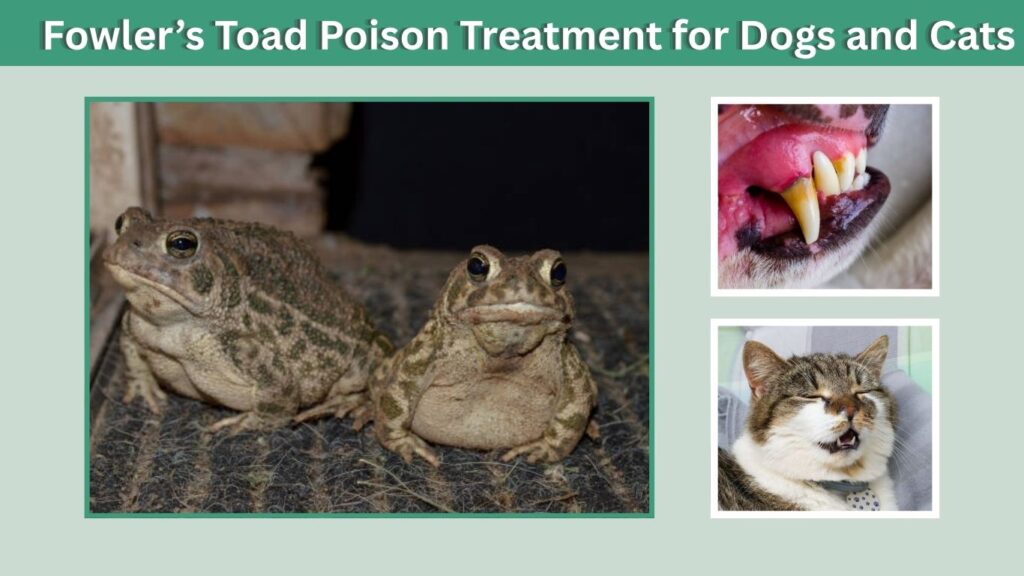
Fowler’s toads can also be poisonous to cats, although cats may be less likely than dogs to grab a toad repeatedly. A cat that bats at, bites, or carries a toad in its mouth can still be exposed.
Symptoms in Cats
Cats may show many of the same mouth-irritation symptoms as dogs. Watch for drooling, foaming, pawing at the mouth, vomiting, hiding, restlessness, or loss of coordination.
Cats are smaller than many dogs, so even a brief exposure should be taken seriously if symptoms appear. If your cat seems weak, confused, shaky, or has trouble breathing, contact a veterinarian immediately.
What to Do If Your Cat Bites a Fowler’s Toad
Move the cat away from the toad and prevent further contact. If possible, wipe the mouth gently with a damp cloth. Do not force your cat’s mouth open aggressively, and do not pour water down its throat. Cats can panic, bite, or inhale liquid.
Call your veterinarian for advice, especially if symptoms continue for more than a few minutes.
Are Fowler’s Toads Dangerous?
Fowler’s toads are not dangerous in the way many people imagine. They are not aggressive. They do not attack people. They do not chase pets. Their poison is a passive defense that becomes a problem when another animal mouths or eats them.
When They Are Not Dangerous
A Fowler’s toad is usually low-risk when it is:
- Sitting in the yard
- Hiding near a garden
- Crossing a path
- Calling near water
- Resting under leaves or logs
In these situations, the best response is to leave it alone. Toads help control insects and are part of a healthy outdoor ecosystem.
When They Can Be Dangerous
A Fowler’s toad becomes more concerning when:
- A dog bites it
- A cat carries it in its mouth
- A child handles it and touches their eyes or mouth
- Someone intentionally licks or eats it
- The toad is crushed or squeezed, releasing more secretion
The risk is not from being near the toad. The risk is from direct contact with its toxins, especially through the mouth or eyes.
Fowler’s Toad Poison Treatment for Dogs and Cats
There is no home remedy that replaces veterinary care. For mild exposure, quick mouth cleaning may reduce irritation. For severe symptoms, pets may need professional treatment.
First Aid at Home
For dogs, gently wipe the mouth and gums with a wet cloth. You may carefully rinse from the side of the mouth so the water runs out instead of being swallowed. For cats, wiping is usually safer than rinsing because cats are harder to handle and may inhale water.
After first aid, monitor your pet closely. Call a veterinarian if symptoms are strong, continue, or worsen.
When to Call a Vet Immediately
Seek urgent veterinary help if your pet shows:
- Repeated vomiting
- Weakness or collapse
- Tremors or seizures
- Trouble breathing
- Irregular heartbeat
- Extreme distress
- Pale, blue, or very red gums
- Signs that the toad was swallowed
A veterinarian may provide supportive care depending on the severity of symptoms. This can include monitoring, fluids, medication for abnormal heart rhythms or seizures, and treatment for vomiting or distress.
How to Keep Pets Away from Fowler’s Toads
The best protection is prevention. Fowler’s toads are most active during warm, humid weather, especially at night and after rain. Dogs and cats that roam outdoors during these times are more likely to encounter them.
Helpful prevention steps include:
- Supervise dogs outside at night.
- Use a leash in damp areas.
- Teach “leave it” and “drop it” commands.
- Keep cats indoors or supervised.
- Remove pet food that attracts insects.
- Reduce clutter where toads hide near doors.
- Check the yard after rain.
Do not kill Fowler’s toads. They are beneficial animals that eat insects. Instead, reduce pet access and move pets away when you see one.
How to Safely Move a Fowler’s Toad
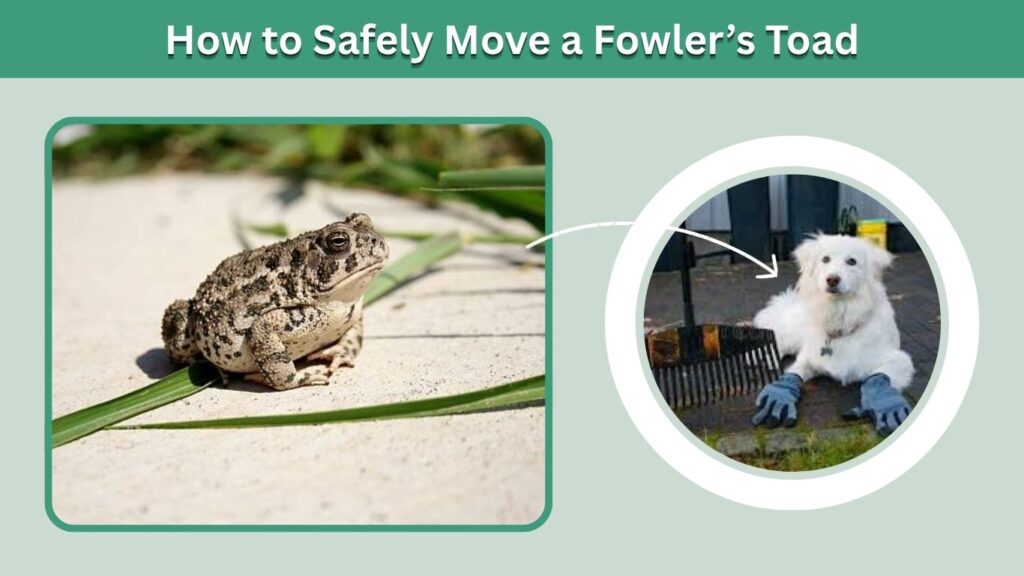
If a Fowler’s toad is in a dangerous spot, such as a driveway, walkway, or dog run, you can move it carefully. Wear gloves or wet your hands first. Pick it up gently and move it a short distance to a safe, shaded area in the direction it was already traveling.
Never move a wild toad far from where you found it. Amphibians depend on local habitat, moisture, shelter, and breeding areas. Relocating one too far can reduce its chances of survival.
After moving the toad, wash your hands thoroughly.
FAQs
Are Fowler’s toads poisonous to humans?
Yes, Fowler’s toads have toxic skin secretions, but they are usually not seriously dangerous to humans through normal contact. The toxin may irritate skin, eyes, or the mouth. Wash your hands after handling one, and avoid touching your face, eating, or rubbing your eyes afterward.
Are Fowler’s toads poisonous to dogs?
Yes, Fowler’s toads can be poisonous to dogs if a dog licks, bites, mouths, or eats one. Common symptoms include drooling, foaming, pawing at the mouth, gagging, vomiting, and distress. Severe symptoms such as tremors, weakness, breathing trouble, or seizures need urgent veterinary care.
What should I do if my dog licks a Fowler’s toad?
Move your dog away from the toad immediately. Wipe the gums and tongue with a damp cloth, and carefully rinse the mouth from the side so water flows out. Do not force water down the throat. Call your veterinarian, especially if symptoms are strong or continue.
Are Fowler’s toads poisonous to cats?
Yes, Fowler’s toads can be toxic to cats if bitten, licked, or carried in the mouth. Cats may drool, foam, paw at the mouth, vomit, hide, or act distressed. Contact a veterinarian if symptoms continue, worsen, or include weakness, shaking, or breathing problems.
Should I kill Fowler’s toads in my yard?
No. Fowler’s toads are beneficial insect-eating animals and are not a threat when left alone. The better approach is to supervise pets, teach dogs to avoid toads, and move the toad safely if it is in a high-risk area like a dog run or doorway.
