
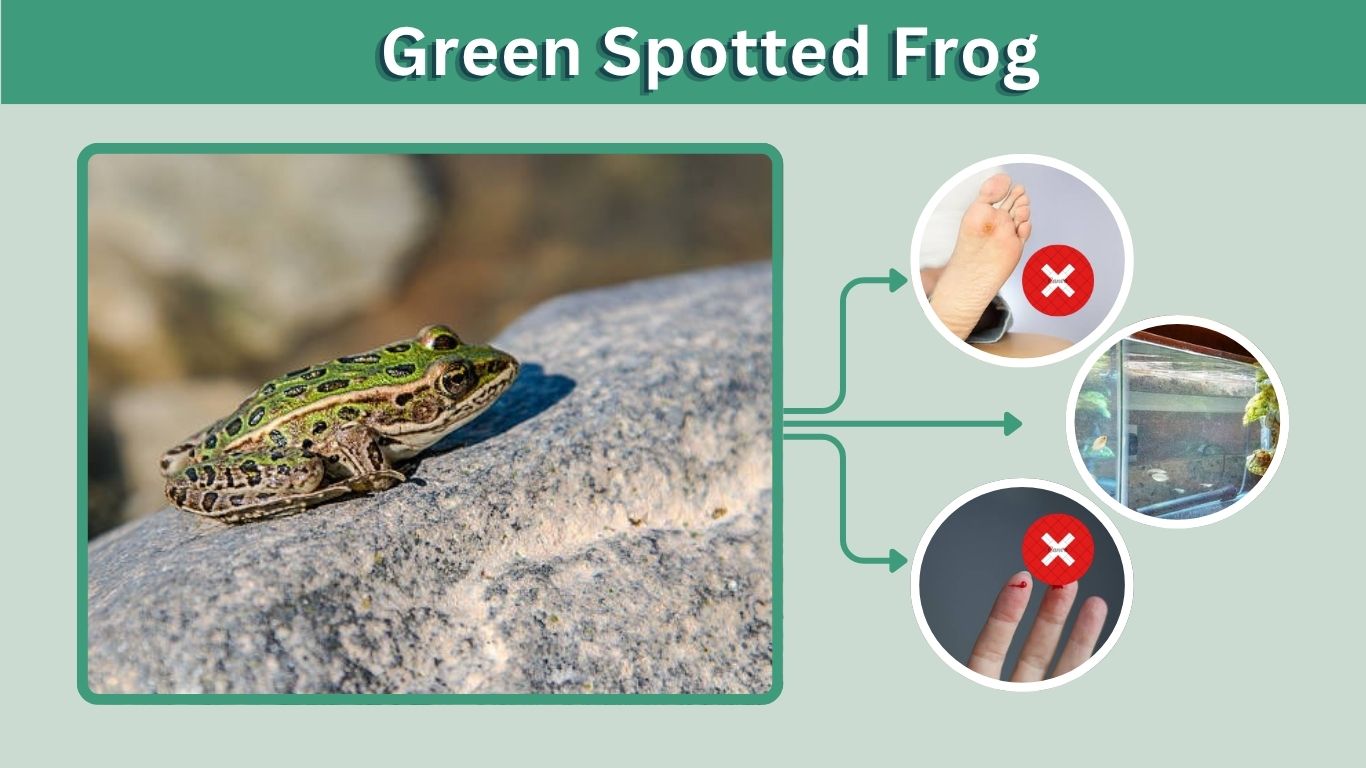
A green spotted frog is not one specific species. The description may refer to a naturally patterned barking treefrog, leopard frog, American green treefrog, White’s tree frog, or another species with green skin and contrasting spots. Identification depends on the frog’s location, size, skin texture, toe pads, markings, and habitat. For captive frogs, newly appearing white, brown, black, or yellow spots may occasionally indicate a health problem rather than normal coloration.
What Is a Green Spotted Frog?
Many frogs use green, brown, yellow, and black markings as camouflage. Spots break up the body’s outline, helping a frog blend into leaves, moss, tree bark, mud, or aquatic vegetation.
Some frogs remain consistently spotted, while others change between green, gray, tan, and brown. Therefore, body color alone is rarely enough to identify a species.
| Possible species | Typical spots or markings | Main identification clue |
| Barking treefrog | Round dark spots on green or gray skin | Large toe pads and granular skin |
| Southern leopard frog | Irregular dark “leopard” spots | Light ridges running down the back |
| American green treefrog | Small yellow flecks | Smooth skin and pale side stripe |
| White’s tree frog | Small white or pale-gold spots | Broad body and oversized toe pads |
| Pinewoods treefrog | Yellow or orange spots behind legs | Dark stripe through the eye |
| Spotted tree frog | Green and brown with dark spots | Stream-dwelling Australian species |
Common Types of Green Frogs With Spots
Several species closely match the general description of a green frog with spots.
Barking Treefrog
The barking treefrog is one of the most recognizable green spotted tree frogs in the southeastern United States. It has a broad, heavy body and grainy or slightly bumpy skin.
Its color may be bright green, dull green, gray, or brown. Many individuals have evenly spaced, rounded dark spots with black borders across the back. Its large adhesive toe pads help it climb trees and other vegetation.
A barking treefrog can be distinguished from a leopard frog by its larger toe pads, more rounded body, and climbing habits.
Southern Leopard Frog
The southern leopard frog is commonly green, tan, or brown with irregular dark spots across its back and legs. Two pale ridges usually extend lengthwise down its back.
Unlike tree frogs, leopard frogs have relatively small toe pads and spend much of their time around ponds, wetlands, ditches, and grassy areas. Their dark rounded markings create the leopard-like appearance responsible for their name.
American Green Treefrog
The American green treefrog normally has smooth green skin and a white or cream stripe running along each side. Some individuals also display small yellow or golden flecks on their backs.
These frogs are generally small and slender, measuring approximately 1–2.5 inches. Their color ranges from grayish green to bright green, and the side stripe may be bold, faint, or occasionally absent.
White’s Tree Frog
White’s tree frog, also called the Australian green tree frog or dumpy tree frog, is a large, broad-bodied species. It may appear green, blue-green, olive, gray, or brown.
Some individuals naturally develop small white or pale-yellow dots. Captive-bred frogs with numerous pale flecks are sometimes described as having a “snowflake” pattern. White’s tree frogs have thick bodies, waxy-looking skin, golden eyes, and very large toe pads. The related Australian magnificent tree frog can also display prominent white or yellow spots.
Pinewoods Treefrog
A pinewoods treefrog may appear green, gray, tan, or brown, sometimes with darker bands or blotches. Yellow or orange spots are often visible on the hidden surfaces of its hind legs.
It also commonly has a dark line passing through the eye. These frogs are small and slender and are associated with pine forests, wetlands, bromeliads, and temporary pools.
What Do Different Spot Colors Mean?
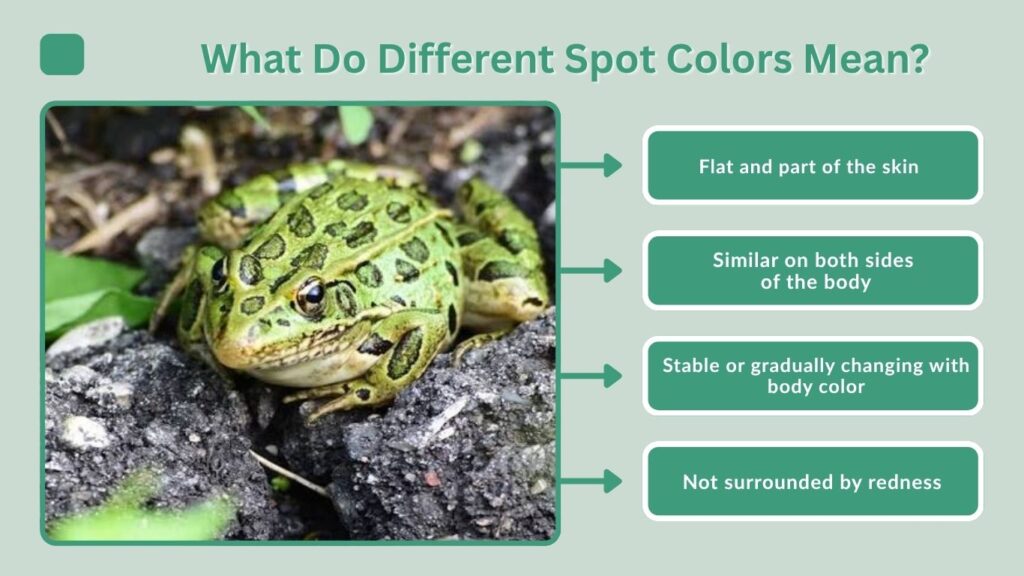
The color, shape, texture, and location of a frog’s spots can provide useful identification and health clues.
Black or Dark Spots
Dark spots are normal in barking treefrogs, leopard frogs, chorus frogs, and several other species. Natural markings are usually:
- Flat and part of the skin
- Similar on both sides of the body
- Stable or gradually changing with body color
- Not surrounded by redness
- Unaccompanied by abnormal behavior
A green tree frog with large, irregularly warty skin and oversized toe pads may be a Cuban treefrog rather than an American green treefrog, particularly in Florida. Cuban treefrogs can vary from green to cream, gray, or brown.
Yellow Spots
Small yellow flecks can be normal on American green treefrogs. Other species have yellow or orange markings on the groin, legs, or sides rather than directly across the back.
The location matters. Yellow spots hidden behind the legs may be a normal identification feature, while newly spreading yellow discoloration on a captive frog should be monitored carefully.
White Spots
Flat, unchanged white spots may be natural pigmentation, particularly on White’s tree frogs. Temporary pale marks can also result from mineral residue, substrate particles, lighting, or skin that is about to shed.
White spots become more concerning when they are:
- Raised or swollen
- Fuzzy, crusty, or ulcerated
- Rapidly spreading
- Accompanied by excessive shedding
- Associated with appetite or behavior changes
Brown Spots
Brown markings can be normal when a frog changes color or naturally has a mottled pattern. Green frogs may become brownish because of species, background, temperature, lighting, or activity.
Sudden brown-to-red discoloration accompanied by mucus, abnormal shedding, weakness, or poor coordination may indicate illness and requires professional evaluation.
Are Spots on a Green Tree Frog Normal?
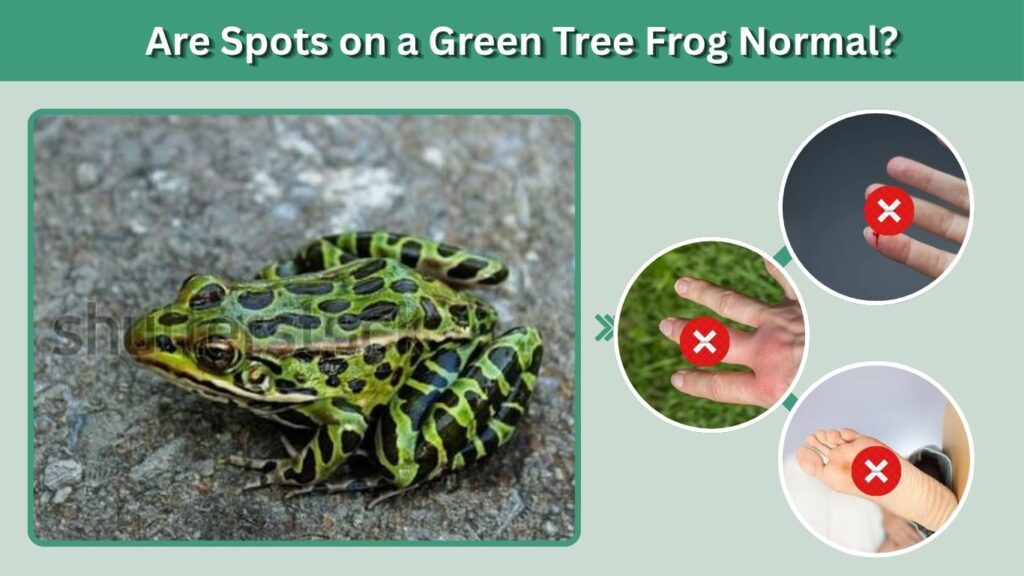
Spots are more likely to be normal when they have been present for a long time, remain flat, and do not affect the frog’s behavior. Compare current markings with earlier photographs taken under similar lighting.
Natural spots generally do not cause:
- Swelling
- Bleeding
- Open sores
- Loss of appetite
- Difficulty climbing
- Repeated abnormal shedding
- Unusual soaking or lethargy
A frog that is alert, eating normally, gripping securely, and maintaining a stable weight is less concerning than one displaying several physical or behavioral changes.
When Can Spots Indicate Disease?
Color alone cannot diagnose a frog. Amphibian skin infections may be bacterial, fungal, viral, parasitic, or related to poor environmental conditions.
Merck Veterinary Manual notes that some amphibian fungal infections can produce white, brown, or black skin nodules. Other infectious conditions may cause color changes, red spots, swelling, balance problems, excess mucus, or abnormal shedding.
Seek an amphibian-experienced veterinarian when the frog develops:
- Raised, fuzzy, or crusted spots
- Open wounds or bleeding
- Redness on the belly or legs
- Rapidly changing skin color
- Swelling or fluid buildup
- Loss of appetite or weight
- Poor coordination
- Inability to climb or right itself
- Persistent excessive shedding
Do not apply human antifungal creams, aquarium medication, essential oils, salt, alcohol, or household disinfectants directly to a frog. Amphibians absorb substances through their skin, making unsuitable treatment potentially harmful.
What to Do if Your Frog Develops New Spots
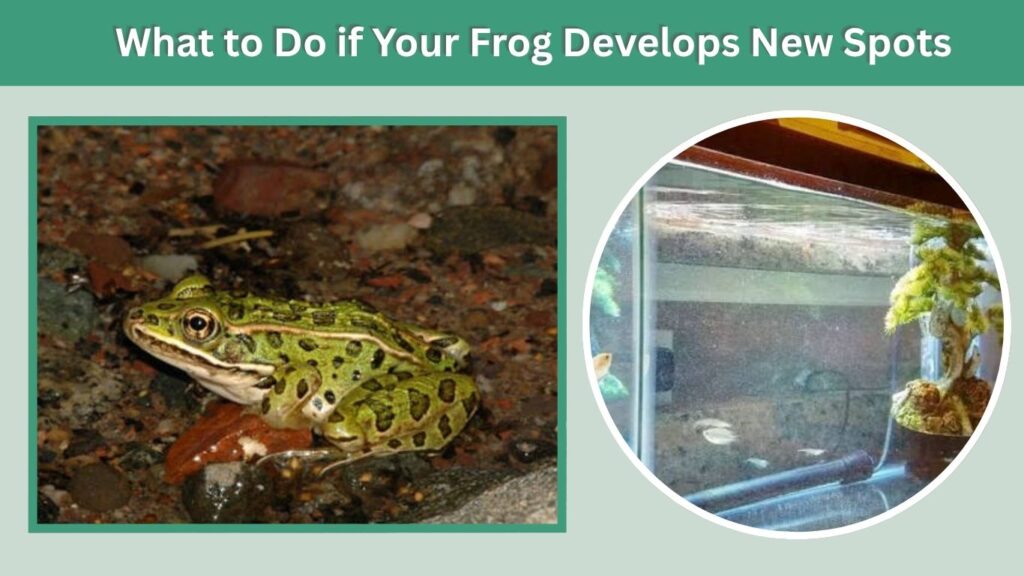
Separate an affected captive frog from other amphibians using a simple, clean quarantine enclosure. Maintain appropriate temperature and humidity for the species and provide clean, appropriately treated water.
Photograph the spots daily under similar lighting and record changes in appetite, waste, activity, shedding, and body weight. Clean equipment carefully and avoid sharing water, tools, plants, or decorations between enclosures.
A veterinarian may need skin samples or other diagnostic tests because several diseases and normal color patterns can appear similar.
FAQs
What kind of frog is green with black spots?
A green frog with round black spots may be a barking treefrog or leopard frog. Barking treefrogs have large toe pads and bumpy skin, while leopard frogs have smaller toe pads and pale ridges running down their backs.
Why does my green tree frog have white spots?
Flat, stable white spots may be natural pigmentation, especially on White’s tree frogs. Newly developing raised, fuzzy, spreading, or inflamed spots may indicate a skin problem and should be examined by an amphibian veterinarian.
Is a green frog with yellow spots poisonous?
Yellow spots do not automatically mean a frog is poisonous. Many harmless species naturally have yellow flecks or hidden leg markings. Identification requires location, body shape, skin texture, toe pads, and the exact position of the spots.
Can green tree frogs change color?
Many tree frogs can shift between green, gray, olive, tan, or brown. Changes may relate to temperature, lighting, surroundings, moisture, activity, or stress. Color change alone does not necessarily indicate illness.
What is the difference between natural spots and an infection?
Natural spots are normally flat, stable, and part of a consistent pattern. Infection is more likely when spots spread rapidly, become raised or fuzzy, form sores, or occur alongside swelling, poor appetite, abnormal shedding, or lethargy.
