
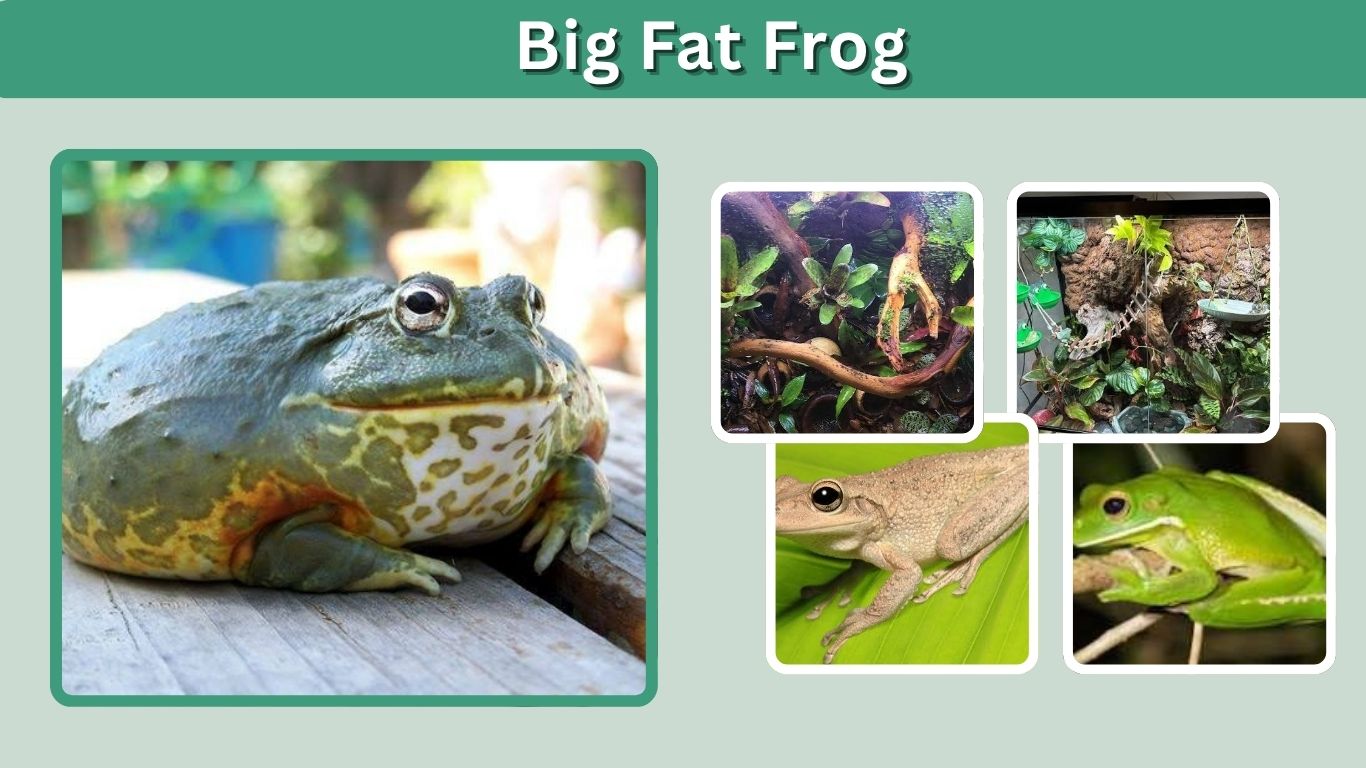
A big fat frog may be a naturally broad-bodied species, an adult female carrying eggs, or a pet that has gained too much weight. White’s tree frogs, Cuban treefrogs, white-lipped tree frogs, Pacman frogs, and bullfrogs can all appear unusually large or round. Identification depends on body shape, toe pads, skin texture, color, habitat, and geographic location—not size alone.
What Kind of Frog Looks Big and Fat?
Some frogs naturally have wide heads, rounded bodies, loose skin, and short-looking limbs. These features can make a healthy animal appear overweight even when its body condition is normal.
| Possible frog | Typical appearance | Main clue |
| White’s tree frog | Plump, smooth, green or blue-green | Large toe pads and golden eyes |
| White-lipped tree frog | Large, bright green, long-bodied | Bold white line along lower lip |
| Cuban treefrog | Broad, variable in color, bumpy | Very large toe pads and irregular skin |
| Pacman frog | Extremely round with a huge mouth | Mostly terrestrial and partly buried |
| American bullfrog | Large, muscular, green-brown | Aquatic, with a large circular eardrum |
| American green treefrog | Small and slender | White side stripe and smooth skin |
Common Big Green Frogs
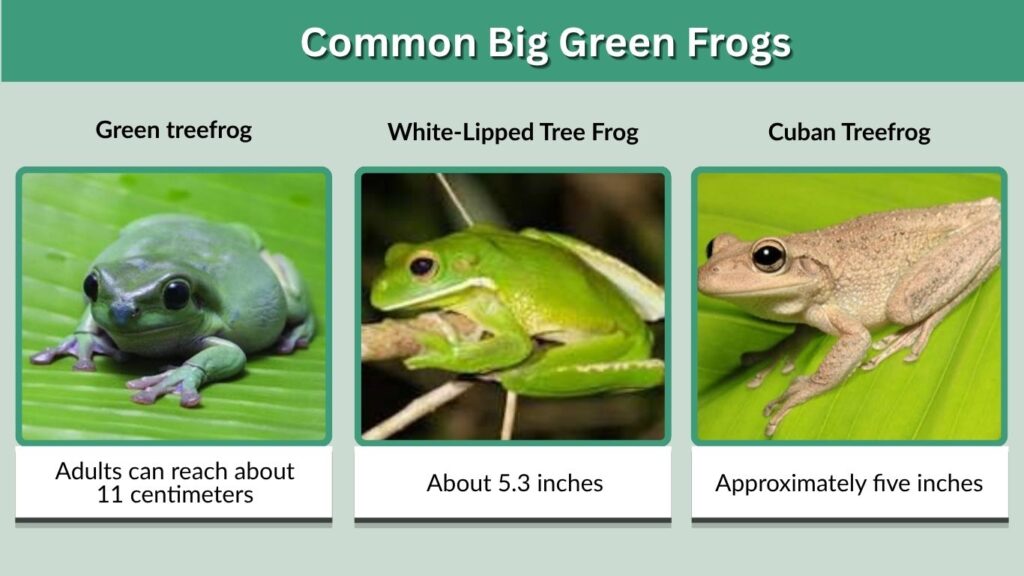
A large green frog is not necessarily a green treefrog. Several unrelated species can appear green, especially when resting among leaves or aquatic vegetation.
White’s Tree Frog
White’s tree frog, also called the Australian green tree frog or dumpy tree frog, is one of the best-known “big fat” frogs. It has a broad head, rounded body, smooth or waxy-looking skin, golden eyes, and large adhesive toe pads.
Adults can reach about 11 centimeters, or roughly 4.3 inches, in body length. Their backs may be green, olive, brownish, or blue-green, sometimes with small white spots. Their naturally loose skin and heavy build often make them look overweight.
White-Lipped Tree Frog
The white-lipped tree frog is one of the largest tree frogs. It may reach approximately 13.5 centimeters, or about 5.3 inches, in body length.
This species is usually bright green with a striking white stripe running along the lower lip. It has long legs, broad toe pads, and a more elongated shape than the dumpy White’s tree frog.
Cuban Treefrog
A large green, gray, tan, or brown treefrog in Florida may be an invasive Cuban treefrog. It has oversized toe pads, prominent eyes, and irregularly bumpy skin.
Cuban treefrogs can reach approximately five inches, making them the largest treefrog found in Florida. A Florida treefrog longer than three inches is especially likely to be this species rather than a native American green treefrog.
American Green Treefrog
The American green treefrog is much smaller than the species above. It usually measures only 1–2.5 inches and has a slender body rather than a genuinely fat appearance.
Its smooth skin may be bright green, gray-green, or dark green. Most individuals have a cream or white stripe running along each side, although the stripe may be faint or absent.
A male calling with its vocal sac inflated can temporarily look like a round or bloated green frog. The expanded throat disappears after calling stops and is not a sign of obesity.
How Big Do Tree Frogs Get?
Tree frogs range from tiny species shorter than one inch to large frogs exceeding five inches in body length.
| Tree frog | Approximate adult size |
| Eastern dwarf tree frog | Up to 1 inch |
| American green treefrog | 1–2.5 inches |
| Peron’s tree frog | Up to about 2.8 inches |
| White’s tree frog | About 4.3 inches |
| Cuban treefrog | Up to about 5 inches |
| White-lipped tree frog | About 5.3 inches |
Treefrog size should be measured from the tip of the snout to the opening at the rear of the body, excluding the legs. Long legs can make a frog look substantially larger than its official body measurement.
Why Does a Frog Look Fat?
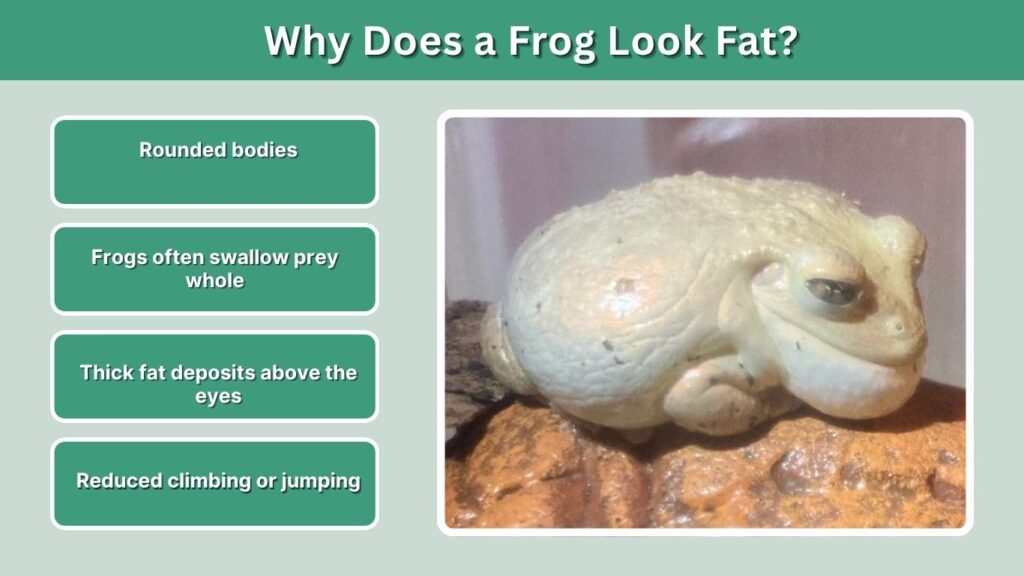
A rounded frog may be healthy, but sudden enlargement deserves attention.
Natural Body Shape
White’s tree frogs and horned frogs naturally have thick, rounded bodies. Females are often larger and heavier than males, and a female carrying eggs may temporarily appear especially full.
A frog may also inflate its lungs as a defensive response. This makes its body look larger and more difficult for a predator to swallow.
A Full Stomach
Frogs often swallow prey whole. After eating a large meal, the abdomen may look temporarily uneven or enlarged. The swelling should gradually decrease as the food is digested.
Continued feeding despite a persistently enlarged abdomen can worsen obesity or conceal an underlying problem.
Obesity
Captive frogs can become overweight when they receive too many high-calorie feeders and have limited opportunities for movement. Merck Veterinary Manual notes that overfeeding is the primary cause of obesity in amphibians because many continue eating whenever prey is available.
Possible signs include:
- Thick fat deposits above the eyes
- Heavy folds around the legs
- Reduced climbing or jumping
- A body much wider than the head
- Steady weight gain over time
Do not place a frog on a severe diet without guidance. Feeding frequency and portion size must match the species, age, temperature, and health of the animal.
Bloating or Fluid Retention
A frog that suddenly becomes balloon-like may not simply be fat. Fluid accumulation, organ disease, infection, poor nutrition, or other disorders can produce generalized swelling.
Warning signs include lethargy, loss of appetite, difficulty breathing, red skin, abnormal posture, swollen limbs, loss of coordination, or an inability to climb. Amphibian edema requires veterinary evaluation rather than home treatment.
Big Tree Frog vs Bullfrog
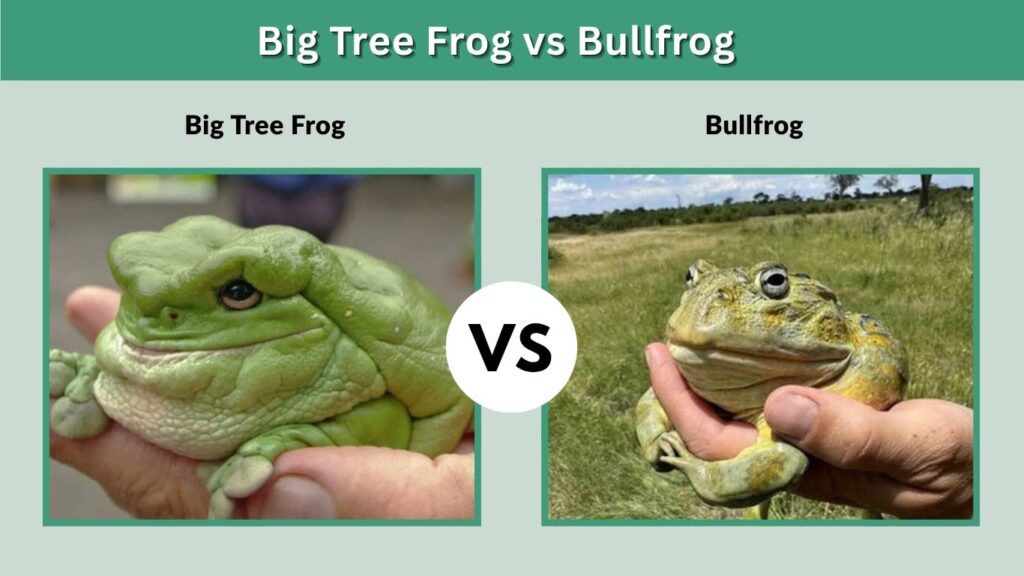
A large frog found around a pond may be a bullfrog rather than a treefrog.
Tree frogs usually have expanded toe pads that help them grip vegetation, walls, and branches. Bullfrogs have powerful hind legs, relatively small toe tips, and a more aquatic body shape.
An American bullfrog commonly has:
- Green or olive coloring around the head
- Brown or mottled coloration toward the rear
- A large circular eardrum behind each eye
- No pale ridges running completely down the back
- Strongly webbed hind feet
- A deep, resonant call
A big green frog sitting on a tree, window, or wall is more likely a treefrog. One resting at the edge of a pond and diving directly into the water is more likely an aquatic frog.
Are Big Green Frogs Dangerous?
Most large green frogs are not dangerous to people. They do not chase humans, possess stingers, or inject venom.
However, frogs may release defensive skin secretions, and amphibians can carry microorganisms even when healthy. Avoid touching your eyes or mouth after contact and wash your hands thoroughly.
Handling should be limited because a frog’s permeable skin can absorb soap, lotion, sanitizer, insect repellent, and other substances from human hands. When moving a captive frog is necessary, use clean, moistened, powder-free gloves.
Caring for a Big Pet Frog
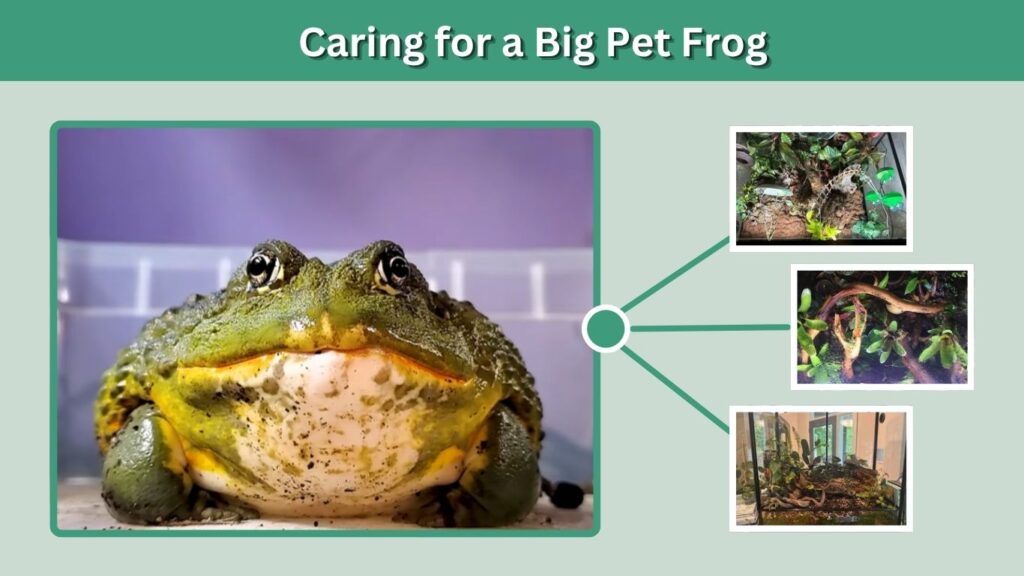
Care depends on the exact species. A large treefrog needs a tall enclosure with climbing branches, while a Pacman frog requires more horizontal floor space and deep substrate.
General requirements include:
- An enclosure large enough for normal movement
- Species-appropriate temperature and humidity
- Clean, treated water
- Suitable hiding and climbing areas
- Appropriately sized feeder insects
- Controlled meal portions
- Regular removal of waste
- Minimal handling
Do not house a large frog with much smaller frogs. Many frogs are opportunistic predators and may swallow any tank mate that fits inside their mouth.
FAQs
What is the big fat green frog called?
It may be a White’s tree frog, also known as a dumpy tree frog. Other possibilities include a white-lipped tree frog, Cuban treefrog, bullfrog, or Pacman frog. Location and toe-pad shape are important for identification.
How big do green tree frogs get?
American green treefrogs usually reach only 1–2.5 inches. The Australian green tree frog, or White’s tree frog, can grow to about 4.3 inches. “Green tree frog” therefore describes different species with very different adult sizes.
What is the biggest type of tree frog?
The white-lipped tree frog is among the largest and may reach approximately 5.3 inches in body length. Several large tropical treefrogs approach similar sizes, so the answer can vary depending on classification and measurement method.
Why is my frog suddenly very fat?
Sudden enlargement can result from a large meal, defensive inflation, eggs, constipation, fluid retention, or disease. Seek an amphibian-experienced veterinarian when swelling persists or appears with lethargy, redness, breathing difficulty, or appetite loss.
Is a fat White’s tree frog healthy?
White’s tree frogs are naturally plump, but they can become obese in captivity. A steadily increasing weight, heavy fat folds, reduced activity, and excessive feeding are concerning. Have the frog’s body condition assessed before making major dietary changes.
