
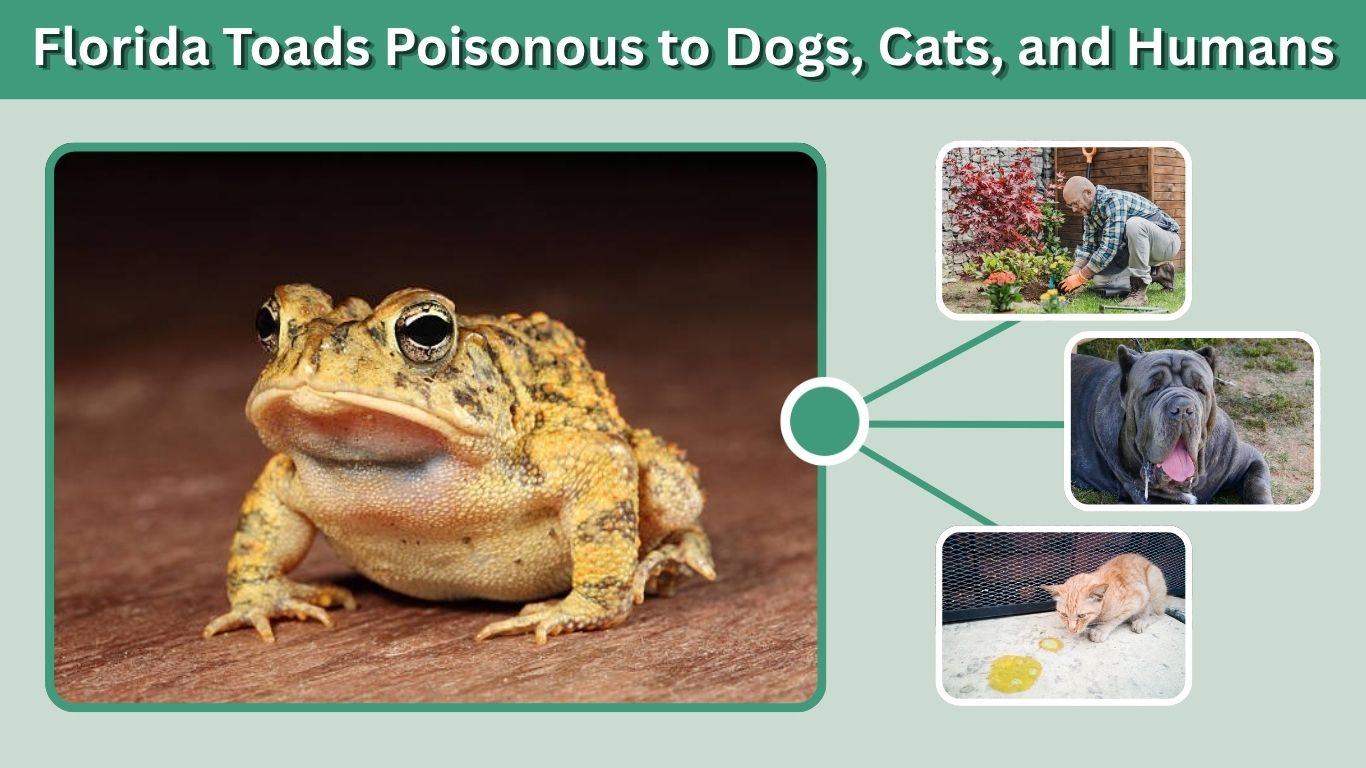
Florida has many native frogs and toads, but one species causes the most concern for pet owners: the cane toad. Also called the bufo toad, giant toad, or marine toad, this large invasive amphibian can be highly poisonous to dogs and cats. Many people search for “Florida toads poisonous to dogs,” “are Florida toads poisonous to cats,” and “poisonous toads in South Florida” because pets can become very sick after biting, licking, or eating toxic toads.
Are There Poisonous Toads in Florida?
Yes, there are poisonous toads in Florida. The most dangerous one is the cane toad, known scientifically as Rhinella marina. It is not native to Florida and is considered invasive. Cane toads have large poison glands behind their eyes that release a milky toxin when the toad feels threatened.
This toxin is dangerous because it can be absorbed through a pet’s mouth, gums, and mucous membranes. A dog does not need to fully eat the toad to be poisoned. Biting, licking, or mouthing the toad can be enough to cause symptoms.
Most native Florida toads also produce defensive secretions, but they are usually much less dangerous than cane toads. The key issue for homeowners is learning how to tell cane toads apart from native species such as the southern toad.
Keyword Intent: What People Want to Know
The keyword list shows several clear search patterns. Most readers are worried about pets, identification, and removal.
Main Keyword Groups
| Keyword Group | Search Intent | Article Focus |
|---|---|---|
| Florida toads poisonous to dogs/cats | Pet safety | Symptoms, emergency steps, prevention |
| Are Florida toads poisonous to humans | Human safety | Skin and eye irritation risks |
| Poisonous toads in South Florida | Local concern | Cane toad range and high-risk areas |
| Pictures of poisonous toads in Florida | Identification | Cane toad features and lookalikes |
| How to get rid of poisonous toads in Florida | Control | Safe, humane, legal removal tips |
| Non poisonous toads in Florida | Comparison | Native toads vs cane toads |
| Southern toads poisonous to dogs | Species confusion | Southern toad risk vs cane toad risk |
The best article strategy is to answer the urgent pet-safety questions first, then explain identification, prevention, and removal.
Poisonous Cane Toads in Florida
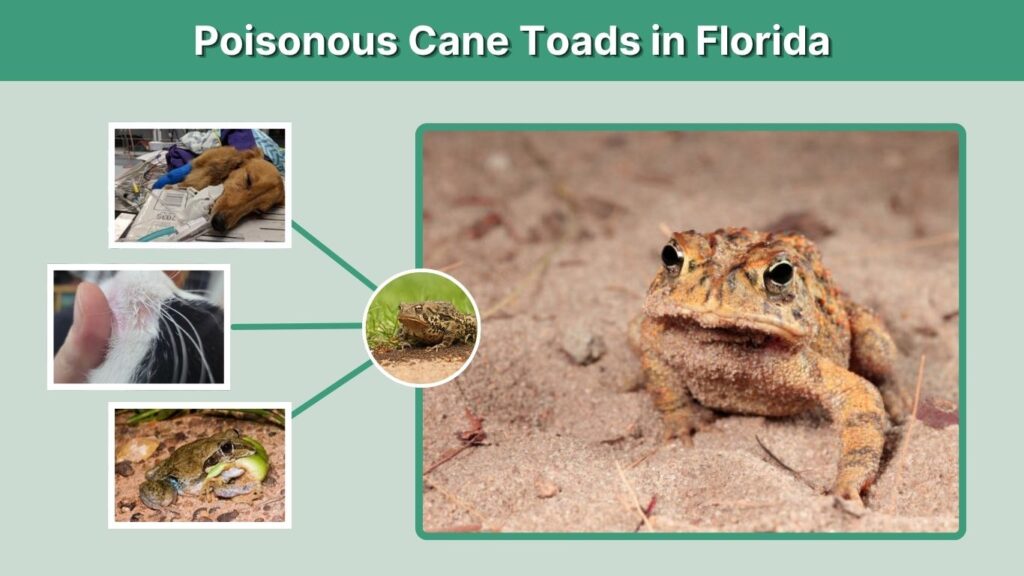
Cane toads are the main poisonous toads in Florida that pet owners need to recognize. They are large, heavy-bodied toads with dry, bumpy skin and prominent poison glands behind the eyes. These glands release a toxin that can affect the heart, nervous system, and blood vessels of animals.
Cane toads are especially common in South Florida, but they may also appear in other parts of the state. They are often active at night, after rain, and around outdoor lights where insects gather.
Why Cane Toads Are Dangerous
Cane toads are dangerous because their toxin can act quickly. Dogs are especially at risk because many dogs chase, sniff, lick, or bite moving animals. Cats may be less likely to mouth a toad, but they can still be poisoned.
A pet can be exposed when it:
- Bites a cane toad
- Licks a cane toad
- Picks up a toad in its mouth
- Eats a small toad
- Contacts toxin left on surfaces
- Plays with a dead or injured cane toad
Even a brief encounter can be serious, especially for small dogs, puppies, elderly pets, and pets with heart problems.
Florida Toads Poisonous to Dogs
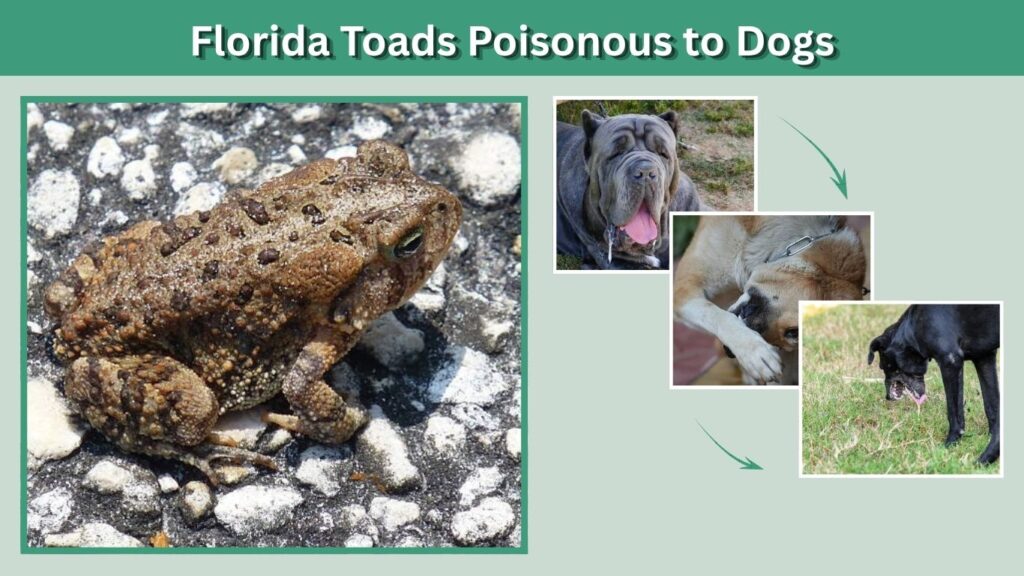
Dogs are the most common victims of cane toad poisoning. A curious dog may grab a toad before the owner can react. Because the toxin enters through the mouth, symptoms can appear within minutes.
Symptoms of Toad Poisoning in Dogs
Watch for these warning signs:
- Heavy drooling
- Foaming at the mouth
- Pawing at the mouth
- Bright red or irritated gums
- Vomiting or retching
- Whining or agitation
- Weakness
- Stumbling or loss of coordination
- Tremors
- Seizures
- Fast or irregular heartbeat
- Difficulty breathing
- Collapse
This is an emergency. If you suspect your dog bit or licked a cane toad, act immediately and contact a veterinarian or emergency animal hospital.
What to Do If Your Dog Bites a Cane Toad
Move the dog away from the toad right away. Then wipe the inside of the dog’s mouth with a damp cloth. Wipe the gums, tongue, and inner cheeks from back to front so the toxin is removed from the mouth instead of pushed down the throat.
Rinse the cloth often and continue wiping for several minutes. Do not force water down the dog’s throat because the dog could inhale it. After wiping the mouth, call a veterinarian immediately.
Are Florida Toads Poisonous to Cats?
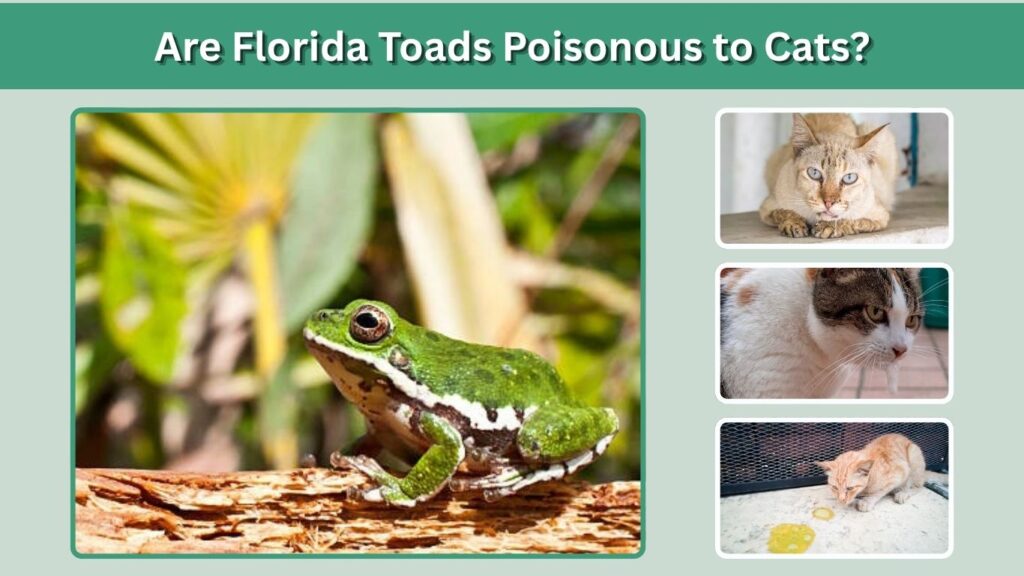
Yes, some Florida toads can be poisonous to cats, especially cane toads. Cats may be more cautious than dogs, but outdoor cats can still paw at, bite, or lick a toad. Because cats are smaller, toxin exposure can become serious quickly.
Symptoms in Cats
Possible symptoms include:
- Drooling
- Foaming at the mouth
- Vomiting
- Pawing at the mouth
- Shaking the head
- Weakness
- Trouble walking
- Tremors
- Seizures
- Hiding or acting abnormal
Cats often hide when sick, so sudden hiding after outdoor activity should be taken seriously. If you think your cat contacted a cane toad, call a veterinarian immediately.
Are Florida Toads Poisonous to Humans?
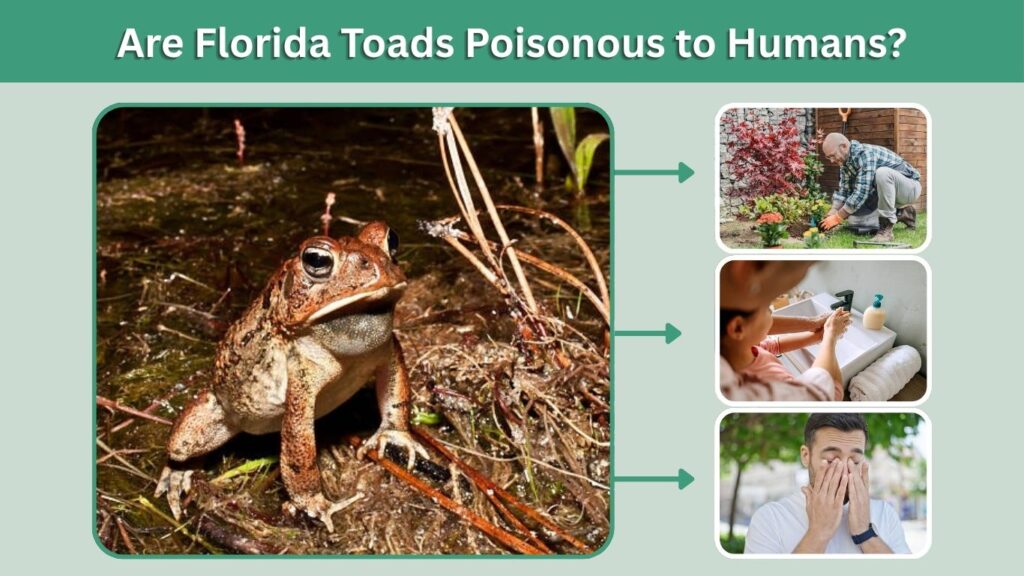
Florida toads are not usually dangerous to humans in the same way they are dangerous to pets. However, cane toad toxin can irritate human skin, eyes, nose, and mouth. A person should not handle cane toads with bare hands, especially if they have cuts or sensitive skin.
Human Safety Tips
If you need to deal with a suspected cane toad:
- Wear gloves
- Avoid touching your face
- Do not rub your eyes
- Wash hands thoroughly after contact
- Keep children away from toads
- Do not allow children to pick up unknown amphibians
- Keep pets away during removal
If toxin gets into the eyes or mouth, rinse thoroughly and seek medical advice if irritation continues.
Poisonous Toads in South Florida
South Florida is the area most associated with cane toad problems. Warm temperatures, rainfall, canals, landscaped yards, golf courses, and suburban neighborhoods create suitable conditions for them.
Cane toads are often seen around homes after dark. They may sit under lights where insects gather or appear near pet bowls, ponds, and damp areas. Dogs let outside at night are at the highest risk.
High-Risk Places Around Homes
Cane toads may gather near:
- Outdoor pet food bowls
- Water bowls
- Garden ponds
- Swimming pools
- Landscape lighting
- Porch lights
- Dense shrubs
- Irrigated lawns
- Drainage areas
- Garages and patios
Removing attractants can reduce the chance of pet exposure.
Large Poisonous Toads in Florida
When people search for “large poisonous toads in Florida,” they are usually looking for cane toads. Cane toads can grow much larger than many native Florida toads. Size is one clue, but it should not be the only identification method.
How to Identify a Cane Toad
Look for these features:
- Large, heavy body
- Dry, warty skin
- Brown, tan, gray, or reddish-brown color
- Large triangular poison glands behind the eyes
- No strong raised ridges on top of the head
- Broad head and thick body
- Often seen on the ground at night
Color alone is not reliable. Cane toads can vary in shade, and native toads may also be brown or gray.
Pictures of Poisonous Toads in Florida: What to Notice
Pictures of poisonous toads in Florida can help, but many toads look similar at first glance. The most important feature to look for is the large gland behind each eye. Cane toads have very large parotoid glands that look like swollen patches or triangles behind the eyes.
When comparing pictures, pay attention to:
- Size of the toad
- Shape of the poison glands
- Head shape
- Presence or absence of head ridges
- Body width
- Skin texture
- Where the toad was found
If you are unsure whether a toad is a cane toad, keep pets away and treat it as potentially dangerous.
Are Florida Cane Toads Poisonous?
Yes, Florida cane toads are poisonous. Their toxin can harm dogs, cats, wildlife, and other animals that attempt to bite or eat them. They are one of the most important amphibian hazards for pet owners in Florida.
Cane toads do not chase or attack pets. The danger happens when a pet interacts with the toad. A dog may think the toad is a toy or prey, and the toad defends itself by releasing toxin.
Are Florida Southern Toads Poisonous to Dogs?
The southern toad is a native Florida species and is often confused with the cane toad. Southern toads do have defensive secretions, and a dog that mouths one may drool, gag, or show mild irritation. However, southern toads are generally not considered as dangerous as cane toads.
The problem is that many pet owners cannot confidently tell the difference in a stressful moment. If your dog mouths a large toad and develops symptoms, assume it could be cane toad exposure and call a veterinarian.
Southern Toad vs Cane Toad
Cane toads are usually larger and have very large poison glands. Southern toads tend to be smaller and have noticeable cranial crests or ridges on the head. Still, identification can be difficult, especially at night.
Non Poisonous Toads in Florida
Strictly speaking, most toads produce some kind of skin secretion, so “non poisonous toads” is not always scientifically exact. However, many native Florida toads are much lower risk than cane toads.
Lower-risk native toads may include:
- Southern toad
- Oak toad
- Fowler’s toad in some areas
- Narrow-mouthed toads
These species can still irritate a pet’s mouth if bitten. Pets should not be allowed to play with or eat any wild toad.
Poisonous Frogs and Toads in Florida
Many people use “frog” and “toad” interchangeably. In Florida, the most dangerous pet-poisoning concern is usually a toad, not a frog. Some frogs, such as Cuban treefrogs, can produce irritating secretions, but they are generally not as dangerous as cane toads.
Native green treefrogs and many other frogs are usually low-risk to pets. Still, dogs and cats should not bite or swallow wild amphibians because irritation, vomiting, or misidentification can occur.
How to Get Rid of Poisonous Toads in Florida
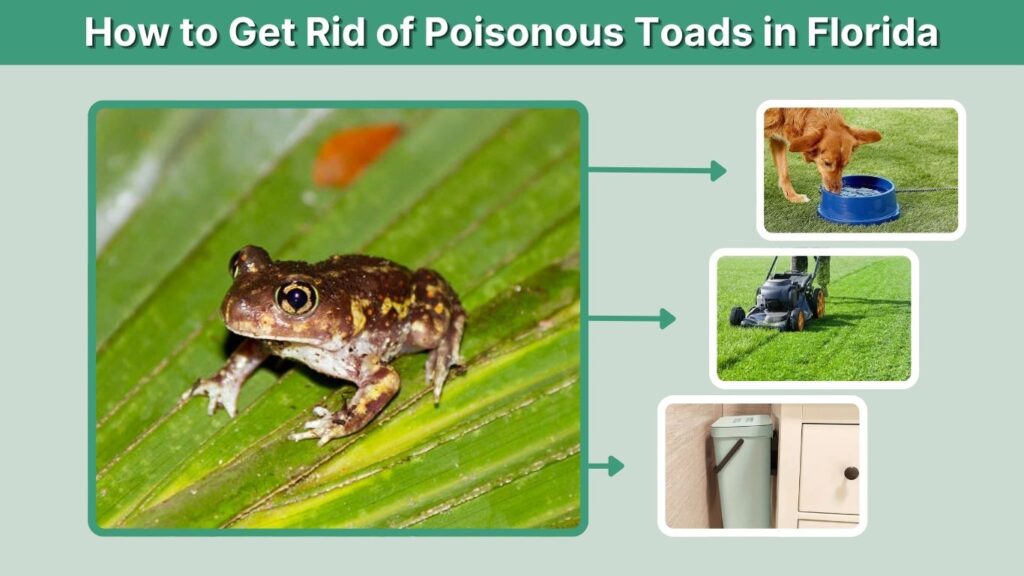
Getting rid of poisonous toads in Florida should be done carefully. Cane toads are invasive, but homeowners should still use humane and safe methods. Do not handle suspected cane toads with bare hands, and do not use poisons that could harm pets, wildlife, or children.
Prevention and Yard Management
To reduce cane toad activity:
- Bring pet food and water bowls indoors at night
- Remove standing water when possible
- Keep grass trimmed
- Reduce dense ground-level hiding places
- Turn off unnecessary outdoor lights
- Use sealed trash containers
- Check the yard before letting dogs out
- Supervise pets at dusk and night
- Teach dogs “leave it”
- Block access to ponds or damp corners
The goal is to make your yard less attractive to insects and toads.
Safe Removal Options
If you find a suspected cane toad, keep pets away. Wear gloves and use a container or tool to capture it safely. Many Florida homeowners hire wildlife removal professionals, especially when cane toads appear often.
If you are unsure about identification or humane removal rules, contact local wildlife authorities, animal control, or a qualified nuisance wildlife professional.
What Not to Do Around Poisonous Toads
Avoid risky or ineffective methods. Do not spray chemicals around your yard to kill toads. Do not let dogs “learn” by interacting with them. Do not assume a dead toad is safe, because toxin can still be present.
Avoid these mistakes:
- Leaving pet food outside overnight
- Letting dogs roam unsupervised after rain
- Picking up unknown toads barehanded
- Waiting too long after pet exposure
- Forcing water down a pet’s throat
- Ignoring drooling or red gums
- Assuming all small toads are harmless
- Using pesticides or poisons for control
Fast action and prevention are the safest approach.
FAQs
Are there poisonous toads in Florida?
Yes, Florida has poisonous toads. The most dangerous is the cane toad, also called the bufo, marine, or giant toad. It is invasive and can poison dogs, cats, and wildlife that bite or eat it. Native toads may cause irritation but are usually less dangerous.
Are Florida toads poisonous to dogs?
Some Florida toads are poisonous to dogs, especially cane toads. Dogs can become sick after licking, biting, or eating them. Symptoms may include drooling, foaming, red gums, vomiting, weakness, tremors, seizures, and collapse. Suspected exposure should be treated as an emergency.
Are Florida toads poisonous to cats?
Yes, cane toads can poison cats. Cats may drool, vomit, paw at the mouth, become weak, shake, or have seizures after exposure. Outdoor cats in South Florida may be at risk, especially at night or after rain.
Are Florida toads poisonous to humans?
Cane toad toxin can irritate human skin and eyes, but people are usually at lower risk than pets. Do not handle cane toads barehanded. Wash your hands after contact and keep children from touching unknown toads.
Are Florida southern toads poisonous to dogs?
Southern toads can cause mouth irritation if a dog bites or licks them, but they are generally less dangerous than cane toads. Because southern toads and cane toads can be confused, any serious symptoms after a toad encounter should be handled as a veterinary emergency.
