
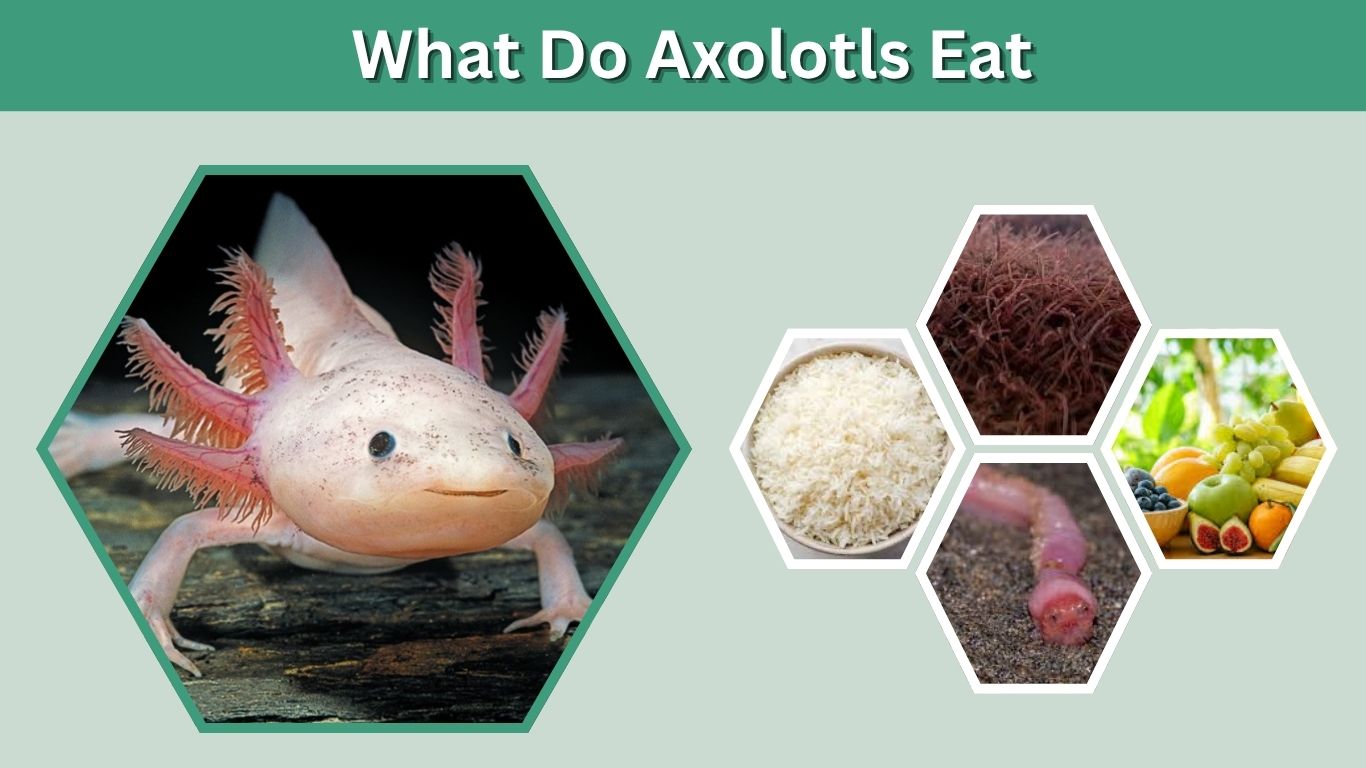
Axolotls eat animal-based foods such as worms, insect larvae, small aquatic prey, and suitable sinking pellets. They are carnivorous aquatic salamanders, not fish, so they do not eat flakes, vegetables, bread, rice, or ordinary human food. As pets, their best staple food is usually earthworms or nightcrawlers, while young axolotls need smaller foods such as bloodworms, blackworms, brine shrimp, or finely cut worms.
Axolotl Diet Basics
Axolotls are meat eaters. In the wild, they hunt small animals that fit into their mouths. In captivity, owners need to provide foods that are nutritious, soft enough to swallow, and safe for the water.
An axolotl does not chew like a mammal. It uses suction to pull food into its mouth. This means food size matters a lot. If the food is too large, hard, sharp, or difficult to digest, it can cause stress, choking, or digestive problems.
What Makes a Good Axolotl Food?
A good axolotl food should be high in protein, easy to swallow, and safe for aquatic feeding. It should not pollute the tank quickly or contain chemicals, parasites, or sharp shells.
Good axolotl foods usually have these features:
- Soft body
- Animal-based nutrition
- Safe size
- Low choking risk
- No pesticides
- No seasoning
- No sharp shell
- Easy to remove if uneaten
The safest diet is simple. Most pet axolotls do well when their staple food is earthworms or nightcrawlers, with occasional variety from other suitable foods.
What Do Axolotls Eat as Pets?
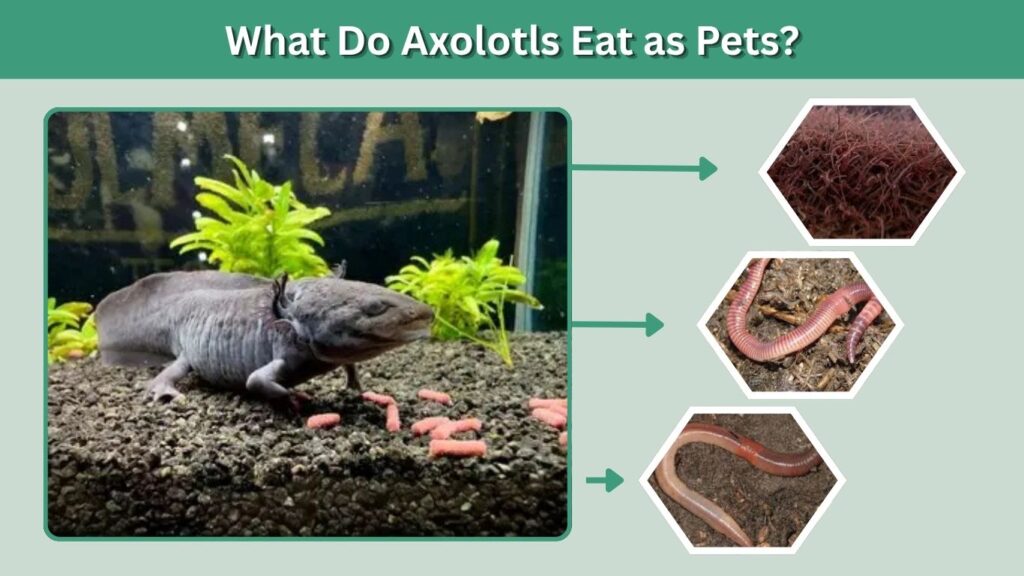
Pet axolotls commonly eat earthworms, nightcrawlers, blackworms, bloodworms, brine shrimp, and high-quality sinking pellets. The exact food depends on the axolotl’s age and size.
Adult axolotls need larger, more filling foods. Young axolotls need smaller prey because their mouths and digestive systems are still developing.
Best Foods for Pet Axolotls
The best foods for pet axolotls include:
- Earthworms
- Nightcrawlers
- Blackworms
- Bloodworms
- Brine shrimp
- Axolotl pellets
- Soft aquatic larvae
- Occasional safe shrimp pieces
Earthworms and nightcrawlers are often preferred because they are nutritious and easy for many axolotls to digest. Pellets can also be useful, but they should be high-quality sinking carnivore pellets made for aquatic amphibians or similar animals.
Axolotl Food Chart
| Food | Best For | How Often | Notes |
|---|---|---|---|
| Earthworms | Juveniles and adults | Staple food | Cut into pieces if needed |
| Nightcrawlers | Larger axolotls | Staple food | Very nutritious and filling |
| Bloodworms | Babies and treats | Occasional | Not ideal as the only adult food |
| Blackworms | Young axolotls | Regular for babies | Small and easy to eat |
| Brine shrimp | Larvae and babies | Early growth stage | Best for very young axolotls |
| Pellets | Juveniles and adults | Regular or backup | Must be sinking and high quality |
| Shrimp pieces | Larger axolotls | Occasional | Use plain, safe, unseasoned food only |
1. Earthworms
Earthworms are one of the best foods for axolotls. They are soft, rich in nutrients, and suitable for many juvenile and adult axolotls. Many keepers use earthworms as the main food because they provide balanced nutrition without needing complicated feeding plans.
Earthworms are especially useful because they are easy to portion. A small axolotl can eat a chopped worm piece, while a larger axolotl can eat a bigger section or whole worm depending on size.
Feeding Earthworms Safely
The worm should be clean and pesticide-free. Do not collect worms from lawns, gardens, or soil that may have been treated with chemicals. Store-bought worms from a safe supplier are usually better.
If the worm is too large, cut it into smaller pieces. A good feeding rule is to offer food that is no wider than the axolotl’s head. Remove uneaten pieces so they do not foul the water.
2. Nightcrawlers
Nightcrawlers are a type of large earthworm and are often used as a staple food for adult axolotls. They are filling and nutritious, making them a strong choice for healthy growth and maintenance.
Some axolotls may reject nightcrawlers at first because the worms can produce a bitter slime. Rinsing the worm before feeding may help. Cutting it into smaller pieces can also make it easier for the axolotl to accept.
Why Nightcrawlers Are Popular
Nightcrawlers are easy to find, easy to store, and suitable for many adult axolotls. They also create less mess than some frozen foods if fed properly.
They are best for axolotls large enough to swallow them safely. For smaller axolotls, cut the worm into small pieces.
3. Bloodworms
Bloodworms are commonly fed to baby and young axolotls. They are small, soft, and easy to eat. Frozen bloodworms are widely available, which makes them convenient for beginners.
However, bloodworms are not the best long-term staple for adult axolotls. They are useful for young axolotls or as a treat, but adults usually need more filling and balanced foods such as earthworms, nightcrawlers, or suitable pellets.
When to Use Bloodworms
Bloodworms are helpful when an axolotl is still small and cannot handle chopped worms. They can also be useful for encouraging feeding in young axolotls.
The downside is mess. Bloodworms can spread through the tank and affect water quality if not cleaned up. Feeding them in a dish can help reduce waste.
4. Blackworms
Blackworms are another good food for young axolotls. They are small, wriggly, and attractive to axolotls because their movement triggers feeding behavior.
Blackworms are especially useful for baby axolotls that are too small for chopped earthworms. They can support growth during the early stages after the axolotl begins eating live or meaty foods.
Feeding Blackworms
Blackworms should come from a trusted source. Poor-quality live foods can introduce parasites, bacteria, or dirty water into the tank. Always rinse live food when appropriate and avoid anything with a bad smell or unusual appearance.
Like other small foods, blackworms can hide in substrate or decorations. A bare-bottom tank or feeding dish can make cleanup easier.
5. Brine Shrimp
Brine shrimp are often used for very young axolotls, especially larvae. Newly hatched brine shrimp are tiny and move in a way that encourages young axolotls to strike.
Brine shrimp are not usually the main food for larger juveniles or adults. They are too small to be practical once the axolotl grows. However, they are valuable during the earliest feeding stages.
Best Use for Brine Shrimp
Brine shrimp are best for tiny axolotls that need very small moving food. As the axolotl grows, it should transition to larger, more nutritious foods such as blackworms, chopped earthworms, and later full worm pieces.
Good feeding progression matters. Staying too long on tiny foods may not provide enough nutrition for a growing axolotl.
6. Axolotl Pellets
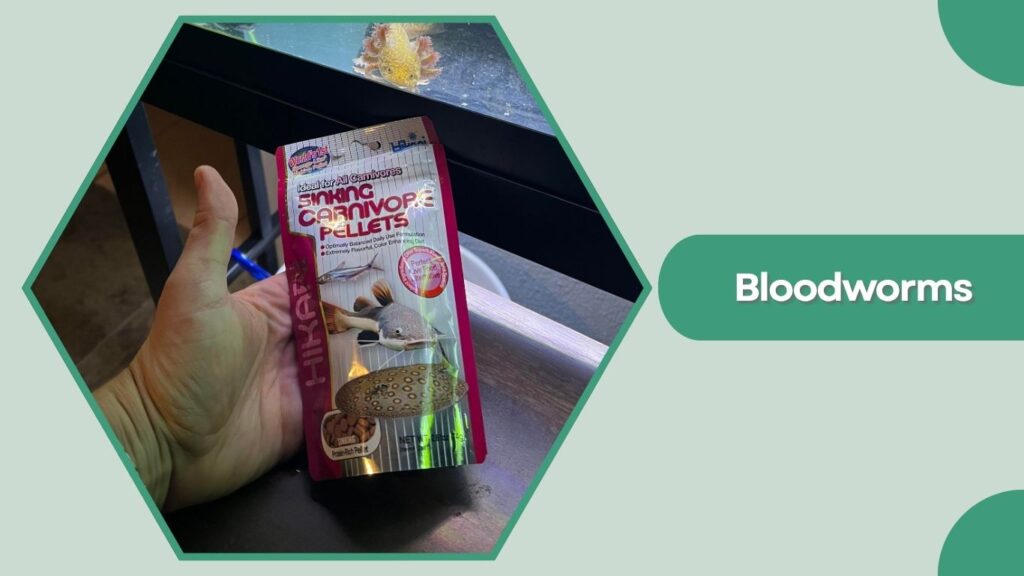
High-quality sinking pellets can be part of an axolotl’s diet. Pellets are convenient, easy to store, and less unpleasant for owners who do not like handling live worms.
The pellet must be suitable for carnivorous aquatic animals. Floating flakes are not appropriate because axolotls feed from the bottom and may swallow air while trying to eat at the surface.
Pellets as Staple or Backup
Some keepers use pellets as a regular food, while others use them as backup when worms are unavailable. Pellets can be useful, but not every axolotl accepts them immediately.
Choose sinking pellets with strong animal protein content. Avoid cheap fish flakes, plant-heavy pellets, or foods made mainly for herbivorous fish.
7. Shrimp and Small Aquatic Foods
Some axolotls can eat small pieces of plain shrimp or other soft aquatic animal foods. These should be occasional foods, not the main diet. Any shrimp must be plain, unseasoned, and cut to a safe size.
Do not feed cooked, salted, spiced, oily, or processed shrimp. Human-prepared seafood may contain salt, seasoning, preservatives, or texture changes that are not ideal for axolotls.
Can Axolotls Eat Snails?
Axolotls may eat small snails in the wild, but snails can be risky in captivity. Shells can be hard, sharp, or difficult to digest. Snails from unknown sources may also carry parasites.
If you are unsure, avoid snails and choose safer foods such as worms or pellets.
What Do Axolotls Eat in the Wild?
Wild axolotls eat small aquatic animals found in their native freshwater habitat. Their natural diet may include worms, insect larvae, small crustaceans, small fish, and other tiny aquatic prey.
Wild axolotls are ambush-style feeders. They wait, sense movement, and suck prey into their mouths. Their wide mouths help them capture food quickly underwater.
Wild Diet Examples
In nature, axolotls may eat:
- Aquatic worms
- Insect larvae
- Small crustaceans
- Small fish
- Tiny mollusks
- Other small aquatic animals
Their wild diet is based on opportunity. They eat prey that fits into their mouth and moves close enough to catch.
Do Axolotls Eat Fish?
Axolotls can eat small fish, but feeder fish are usually not recommended as a regular pet food. Fish can carry parasites, nip at axolotl gills, or create water quality issues.
Some feeder fish also contain enzymes or nutritional problems that make them poor long-term foods. A fish that seems small enough may still cause health risks.
Why Fish Are Risky
Fish can introduce disease into the tank. They may also stress the axolotl by swimming around constantly. Some fish nip at the axolotl’s delicate external gills.
For most pet axolotls, worms and suitable pellets are safer than feeder fish.
Do Axolotls Eat Each Other?
Yes, axolotls can bite or eat each other, especially when they are young, hungry, crowded, or different sizes. Young axolotls may nip at limbs, gills, and tails. Larger axolotls may injure smaller ones.
This is one reason axolotls are often kept alone. If multiple axolotls are kept together, they should be similar in size, well fed, and monitored carefully.
Cannibalism in Young Axolotls
Baby and juvenile axolotls are more likely to bite each other. They react to movement and may mistake a sibling’s leg or gill for food. Fortunately, axolotls can regenerate limbs, but repeated injuries are stressful and should be prevented.
How Often Do Axolotls Eat?
Feeding frequency depends on age, size, temperature, and health. Baby axolotls eat more often because they are growing quickly. Adults eat less often because their metabolism is slower.
A general feeding pattern is:
- Baby axolotls: daily or very frequent small meals
- Juveniles: daily or every other day
- Adults: two to three times per week
- Older adults: based on body condition and appetite
These are general guidelines, not strict rules. Watch the axolotl’s body shape and behavior. A healthy axolotl should not look extremely thin or overly bloated.
How Much Do Axolotls Eat?
Axolotls should eat enough to maintain a healthy body shape. Their belly should be about as wide as their head, but not swollen.
For adults, one appropriately sized worm or several smaller pieces may be enough per feeding. Younger axolotls need smaller meals more often.
Signs of Overfeeding
Overfeeding can cause digestive stress and dirty water. Signs include leftover food, frequent waste buildup, bloating, and reduced interest in food.
Uneaten food should be removed quickly. Dirty water can cause more health problems than a missed meal.
What Do Baby Axolotls Eat?
Baby axolotls need very small foods. Newly hatched axolotls usually start with tiny live foods such as baby brine shrimp. As they grow, they can move to blackworms, bloodworms, chopped earthworms, and eventually larger worm pieces.
Baby axolotls often need moving food because movement triggers their feeding response. Dead or still food may be ignored at first.
Baby Axolotl Feeding Tips
Baby axolotls should be fed small, safe foods often. Keep their water clean because tiny foods can spoil quickly. Remove waste and uneaten food to prevent ammonia problems.
As they grow, slowly increase food size. Do not rush them onto large worms before they can swallow safely.
What Human Food Can Axolotls Eat?
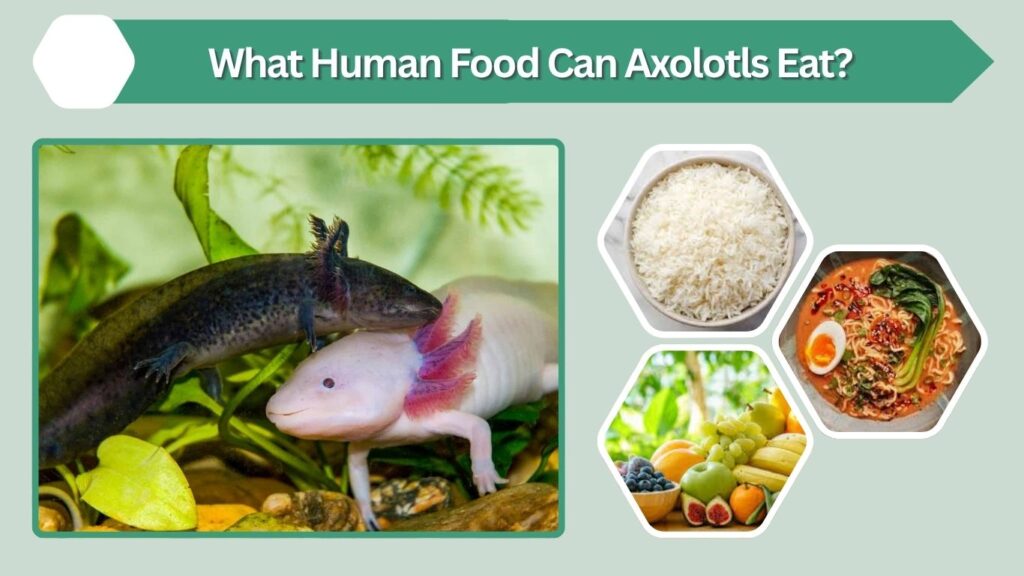
Axolotls should not eat normal human food. Bread, rice, noodles, ramen, fruit, vegetables, cooked meat, salty food, and processed snacks are unsuitable.
Searches like “axolotl eating ramen” may come from memes or cartoons, but ramen is not safe axolotl food. Axolotls need plain animal-based aquatic foods, not seasoned human meals.
Foods to Avoid
Do not feed axolotls:
- Bread
- Rice
- Ramen
- Fruit
- Vegetables
- Cheese
- Cooked meat
- Spiced seafood
- Salted shrimp
- Fish flakes
- Large mealworms
- Wild-caught insects
- Feeder fish from unknown sources
Mealworms and crickets are also not ideal staple foods. Their hard parts may be harder to digest than soft worms.
Why Is My Axolotl Not Eating?
An axolotl may stop eating because of stress, poor water quality, high temperature, illness, constipation, unsuitable food, or recent environmental changes. Adults may also skip meals occasionally, but repeated refusal should not be ignored.
Common Reasons for Refusing Food
Possible causes include:
- Water too warm
- Ammonia or nitrite in the tank
- Sudden water changes
- Stress from tank mates
- Food too large
- Wrong food type
- Constipation
- Illness or injury
- Bright light or lack of hiding places
- Recent move to a new tank
Test the water first if an axolotl refuses food. Water quality problems are one of the most common causes of appetite loss.
When to Worry
A single missed meal is not always an emergency, especially for an adult. However, you should act quickly if the axolotl refuses food for several days and also shows signs of stress, fungus, weight loss, floating problems, curled gills, or unusual skin changes.
If symptoms continue, contact an exotic veterinarian or amphibian specialist.
What Eats Axolotls?
In the wild, axolotls may be eaten by larger fish, birds, and other predators. Introduced fish are one of the major threats to wild axolotls because they may eat eggs, larvae, or young axolotls.
Pet axolotls do not have natural predators in a home aquarium, but they can still be injured by unsuitable tank mates. Fish may nip their gills, and larger axolotls may bite smaller ones.
FAQs
What do axolotls eat?
Axolotls eat animal-based foods such as earthworms, nightcrawlers, blackworms, bloodworms, brine shrimp, insect larvae, small aquatic prey, and suitable sinking pellets. Pet axolotls do best with nutritious soft foods that are easy to swallow. Adult axolotls are commonly fed worms, while babies need much smaller live foods.
How often do axolotls eat?
Baby axolotls usually eat daily because they are growing fast. Juveniles may eat daily or every other day. Adults often eat two to three times per week, depending on size, temperature, and body condition. Feeding frequency should be adjusted if the axolotl becomes too thin, too round, or leaves food uneaten.
Can axolotls eat fish?
Axolotls can eat small fish, but feeder fish are usually not recommended. Fish can carry parasites, introduce disease, nip at axolotl gills, and stress the tank environment. Worms and suitable sinking pellets are safer staple foods for most pet axolotls. Fish should not be used as the main diet.
What do baby axolotls eat?
Baby axolotls eat very small live foods such as baby brine shrimp, blackworms, and small bloodworms. As they grow, they can eat chopped earthworms and larger food pieces. Baby axolotls often respond best to moving food because movement triggers their feeding instinct.
Why won’t my axolotl eat?
An axolotl may stop eating because of poor water quality, warm water, stress, illness, constipation, wrong food size, or a sudden tank change. Test the water first and check temperature, ammonia, nitrite, and nitrate. If appetite loss continues with weight loss, fungus, floating issues, or unusual behavior, seek expert help.
