
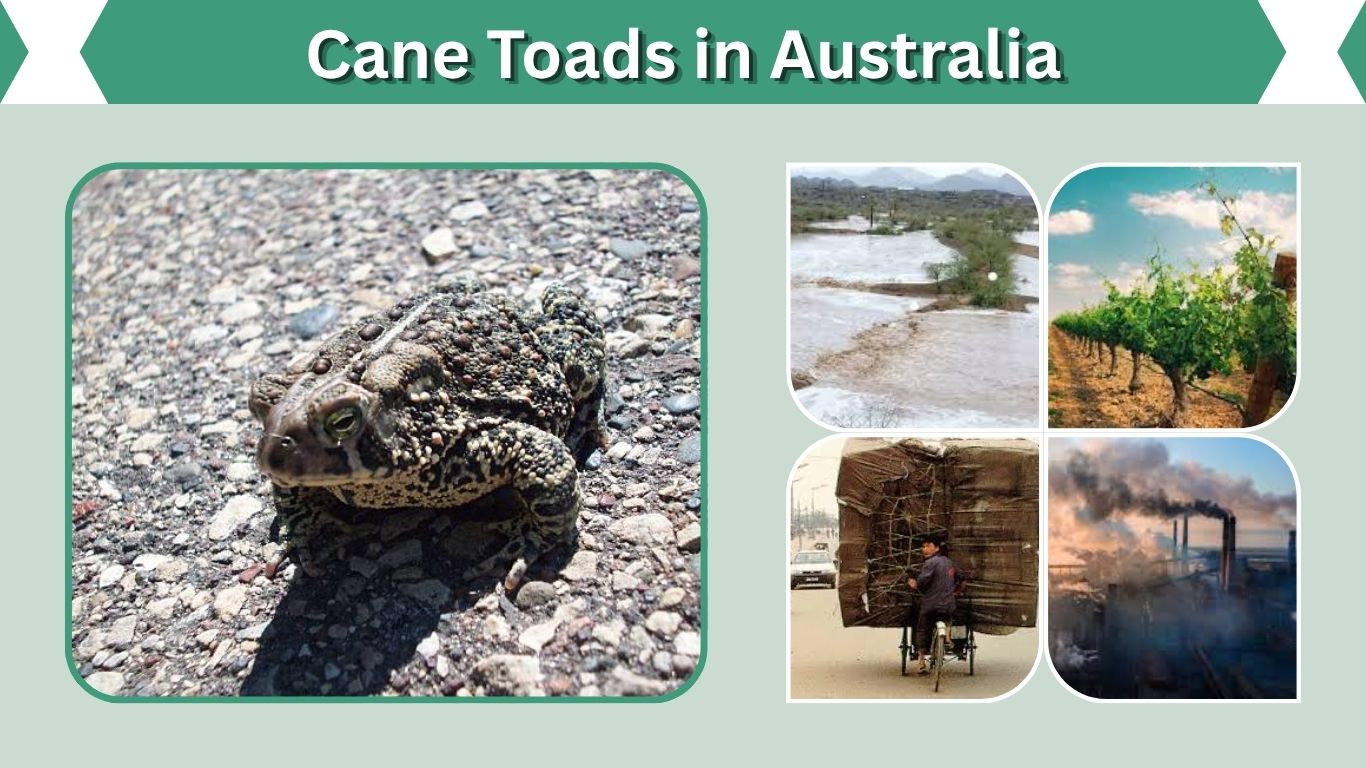
Cane toads in Australia are one of the country’s most famous examples of an introduced species gone wrong. Brought in with the hope of protecting sugar cane crops, they quickly became an environmental problem. Today, they are widely known for their toxic skin, rapid spread, and harmful effects on native wildlife. Understanding how cane toads arrived, why they failed as pest control, and what Australia is doing now helps explain one of the nation’s biggest invasive species challenges.
What Are Cane Toads?
Cane toads are large, ground-dwelling amphibians originally native to Central and South America. They are tough, adaptable, and able to survive in many warm environments. Their dry, warty skin and large poison glands behind the eyes make them easy to recognize. These glands release toxins that can harm or kill animals that try to eat them.
In their native range, cane toads are part of a balanced ecosystem. Predators, parasites, and environmental limits help keep their numbers under control. In Australia, however, they found a very different situation. Many native animals had no experience with the toad’s poison, and the toads had few effective natural enemies.
This difference helped cane toads become successful invaders. They breed quickly, eat a wide range of food, and can move across large areas when conditions are suitable. These traits made them far more difficult to manage than the people who introduced them expected.
Why Were Cane Toads Introduced to Australia?
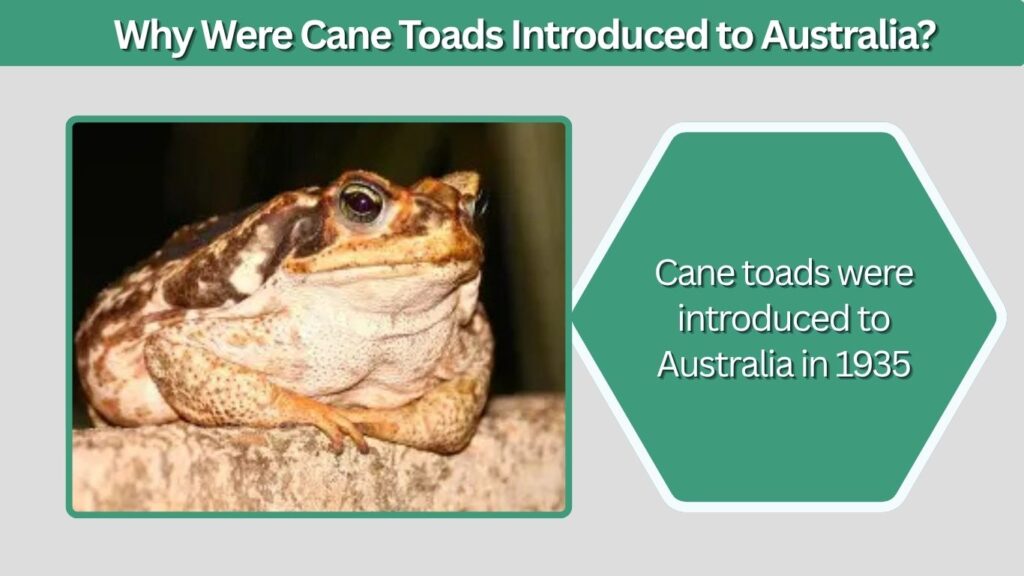
Cane toads were introduced to Australia in 1935 to control beetles that were damaging sugar cane crops in Queensland. At the time, the sugar industry was important to the state’s economy, and cane beetle larvae were attacking the roots of sugar cane plants.
The idea seemed practical on the surface. Cane toads had been used in other sugar-growing regions, and some agricultural officials believed they could eat the beetles and reduce crop losses. Australia imported cane toads from Hawaii, bred them, and released them in cane-growing areas of Queensland.
The plan failed for a simple reason: cane toads were not well suited to solving the problem. The beetle larvae lived underground, while cane toads mostly hunted prey above ground. Adult beetles were also not easy targets. Instead of controlling cane beetles, the toads began feeding on many other insects and small animals.
The introduction became a warning about biological control. Bringing in a predator or pest-control species can create new problems if the full ecological impact is not understood before release.
How Cane Toads Spread Across Australia
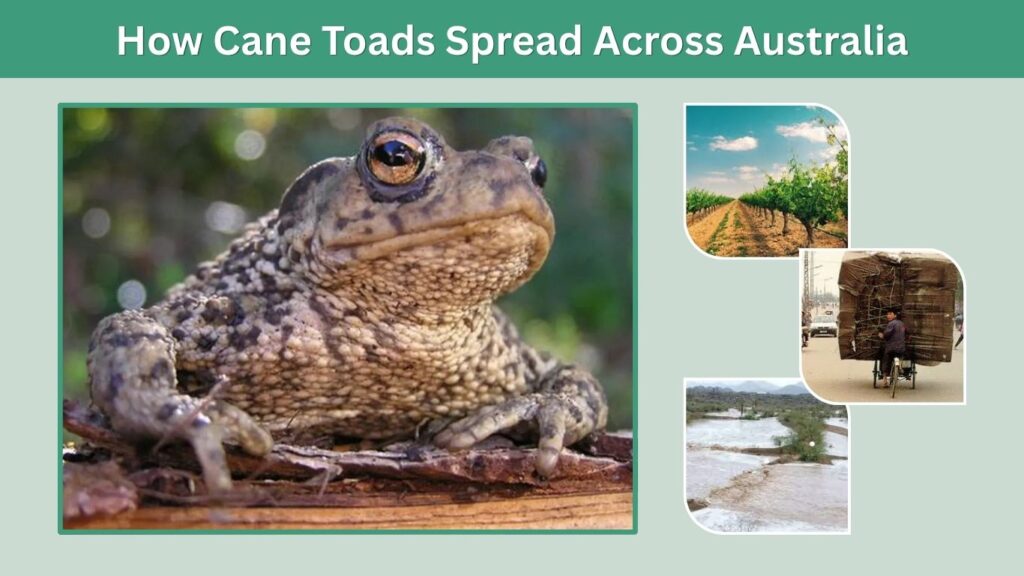
After their first release in Queensland, cane toads slowly established themselves and then expanded across northern Australia. Their spread was helped by warm climates, seasonal rainfall, human transport, and their ability to breed in many kinds of water bodies.
Cane toads are especially successful because they can use farm dams, ponds, drains, wetlands, and temporary pools for breeding. Females can lay thousands of eggs at a time, and tadpoles develop quickly when conditions are right.
Their range now includes large parts of Queensland, the Northern Territory, northern New South Wales, and Western Australia’s north. They continue to be a concern in areas where they are not yet established because once they settle into a region, removing them becomes extremely difficult.
| Topic | Key Point |
| Year introduced | 1935 |
| First release area | Queensland sugar cane regions |
| Original purpose | Control cane beetles in sugar cane crops |
| Main problem today | Toxic impact on native animals and pets |
| Control difficulty | No simple broadscale eradication method exists |
Why Cane Toads Became a Problem in Australia
Cane toads became a problem because they entered an ecosystem that was not prepared for them. Many Australian predators naturally eat frogs, so they tried to eat cane toads as well. Unfortunately, the toads’ toxins can be deadly.
Native animals most at risk include:
- Quolls
- Goannas
- Snakes
- Freshwater crocodiles
- Some birds and mammals
- Domestic dogs and cats
When predators eat or bite a cane toad, toxins from the skin and poison glands can affect the heart and nervous system. In many cases, the result is rapid illness or death. This has caused declines in some predator populations, especially in northern Australia.
Cane toads also compete with native species for food and habitat. They eat insects, small reptiles, young frogs, and other small animals. Their presence can change local food webs by reducing some prey populations while also removing native predators that die from poisoning.
Another issue is their ability to survive near people. They are often found around gardens, parks, roadsides, farms, and water sources. This makes them not only an environmental issue but also a concern for pet owners and local communities.
How Many Cane Toads Are in Australia?
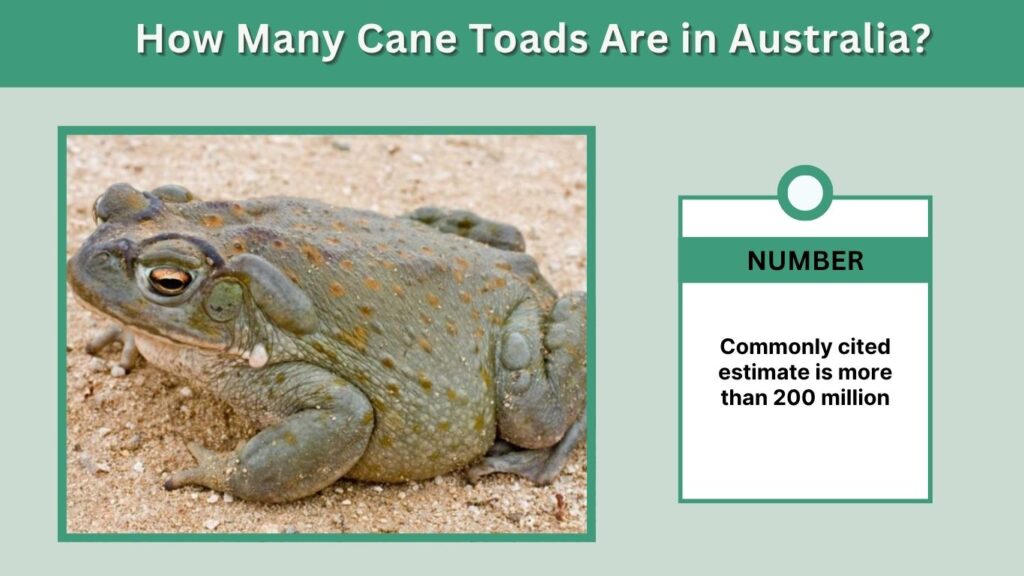
The exact number of cane toads in Australia is difficult to measure because they occupy a huge and varied range. A commonly cited estimate is more than 200 million. The real number may change depending on rainfall, breeding success, local control programs, and seasonal conditions.
Population estimates are difficult for several reasons:
- Cane toads breed in large numbers.
- Many live in remote or hard-to-survey areas.
- Their populations rise and fall with weather.
- Tadpoles and juveniles are easy to overlook.
- New sightings can appear far from known populations due to accidental transport.
Even without a precise count, it is clear that cane toads are well established. Their population is too large for simple removal, which is why management focuses on slowing spread, protecting vulnerable wildlife, and controlling local populations where possible.
Cane Toad Poison and Its Effects
The cane toad’s poison is one of the main reasons it is so damaging in Australia. The toxin is present throughout the toad’s life cycle, including eggs, tadpoles, juveniles, and adults. The large glands behind the eyes are the most visible source of poison in adult toads.
For native predators, the danger is often immediate. An animal may bite a cane toad and receive enough toxin to become seriously ill. Some predators die before they learn to avoid them. Over time, certain animal populations may adapt behaviorally or biologically, but this does not happen quickly enough to prevent major damage in many areas.
Pets are also at risk. Dogs are especially likely to mouth or bite cane toads. Signs of poisoning can include drooling, red gums, pawing at the mouth, vomiting, weakness, shaking, or collapse. Pet owners in cane toad areas are usually advised to act quickly and contact a vet if exposure occurs.
People should also avoid handling cane toads carelessly. While they are not aggressive, their toxin can irritate skin and eyes. Anyone handling a suspected cane toad should use gloves, avoid touching the face, and follow local biosecurity advice.
Are Cane Toads Native to Australia?
Cane toads are not native to Australia. They were introduced from overseas for agricultural pest control. This is why they are considered an invasive species.
A native species belongs naturally in an ecosystem and has long-standing relationships with local predators, prey, parasites, and competitors. An invasive species is a non-native organism that spreads and causes harm. Cane toads fit this definition because they have expanded far beyond their release area and caused damage to wildlife.
The cane toad story shows why introduced species can be risky. Even when the original goal is useful, such as controlling crop pests, the long-term effects can be unpredictable. Once a species spreads into the wild, it may be impossible to fully reverse the damage.
How Australia Controls Cane Toads Today
There is currently no simple way to remove cane toads from Australia at a national scale. They are too widespread, breed too quickly, and occupy too many remote landscapes. Instead, control efforts focus on practical local and regional actions.
Common management approaches include:
- Community “toad busting” events
- Trapping around breeding sites
- Removing eggs and tadpoles from water bodies
- Public reporting through monitoring tools
- Preventing accidental transport into new areas
- Protecting vulnerable native predators
Some researchers are also studying more advanced control methods. These include attractants for traps, tadpole-targeting techniques, genetic research, and ways to teach native predators to avoid eating cane toads. These methods aim to reduce harm rather than promise complete eradication.
Local action can still matter. Removing breeding adults, eggs, and tadpoles from a small area may reduce pressure on native wildlife and pets. Monitoring also helps authorities understand where cane toads are spreading and where early action may still be possible.
Why Eradication Is So Difficult
Eradicating cane toads is difficult because they have nearly every trait an invasive species needs to succeed. They reproduce quickly, eat many types of food, tolerate a range of environments, and have poison that protects them from many predators.
Their eggs are laid in long strings in water, and a single female can produce thousands at a time. Even if many eggs or tadpoles die, enough may survive to maintain the population. Adults can also travel over land, especially during wet conditions.
Another challenge is detection. In a large landscape, it is easy to miss small breeding groups. If even a few survive, the population can recover. This is why total eradication is unrealistic in areas where cane toads are already well established.
However, prevention is still possible in places where they have not arrived or where only isolated sightings occur. Early reporting, careful identification, and rapid response can stop new populations from forming.
What Cane Toads Teach About Invasive Species
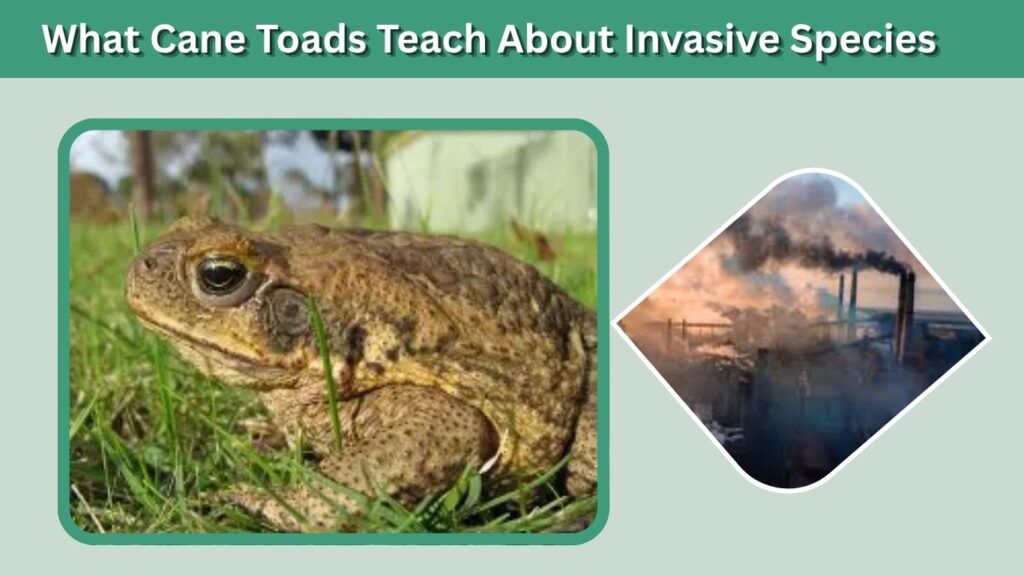
The history of cane toads in Australia is often used as a lesson in ecological caution. The original plan focused on a short-term agricultural problem but underestimated the complexity of natural systems.
Several lessons stand out:
- Pest control must be tested carefully before release.
- Non-native species can behave differently in new environments.
- A solution for one industry can become a national environmental problem.
- Prevention is usually cheaper and easier than control after spread.
- Public awareness is essential for managing invasive species.
Cane toads also show that ecological mistakes can last for generations. A decision made in 1935 still affects wildlife, land managers, farmers, pet owners, and conservation scientists today.
Cane Toads in Australia Today
Cane toads remain one of Australia’s most recognized invasive animals. They are common in many northern regions and continue to affect ecosystems where native predators are vulnerable to their toxins. While some animals have learned to avoid them, others remain at risk.
The focus today is not simply on removing cane toads, because that is not realistic across their full range. Instead, Australia’s response combines science, local action, education, monitoring, and wildlife protection. Communities are encouraged to identify cane toads correctly, report sightings in sensitive areas, and follow humane control advice.
The cane toad problem is still evolving. Climate, landscape change, and the toads’ own adaptability may influence where they spread next. Continued research and public involvement will be important for limiting their damage.
FAQs
Why were cane toads introduced to Australia?
Cane toads were introduced to Australia in 1935 to control beetles damaging sugar cane crops in Queensland. The goal was to protect the sugar industry by using the toads as natural pest control. The plan failed because cane toads did not effectively target the beetles’ underground larvae.
How did cane toads get to Australia?
Cane toads were brought to Australia from Hawaii after being used in other sugar-growing regions. They were imported, bred, and released in Queensland cane fields. Officials hoped they would eat cane beetles, but the toads spread into the environment and became invasive.
Why are cane toads a problem in Australia?
Cane toads are a problem because they are toxic to many native predators. Animals such as quolls, goannas, snakes, and freshwater crocodiles may die after eating them. They also compete with native wildlife for food and can affect pets, agriculture, and local ecosystems.
How many cane toads are in Australia?
The exact number is hard to measure, but estimates often suggest more than 200 million cane toads in Australia. Their population changes with rainfall, breeding success, and local conditions. Because they occupy huge areas, scientists cannot count every individual accurately.
Can cane toads be removed from Australia?
Cane toads cannot realistically be removed from all of Australia with current methods. They are too widespread and breed too quickly. However, local control can reduce numbers in specific areas, protect wildlife, slow spread, and help prevent new populations from forming.
