
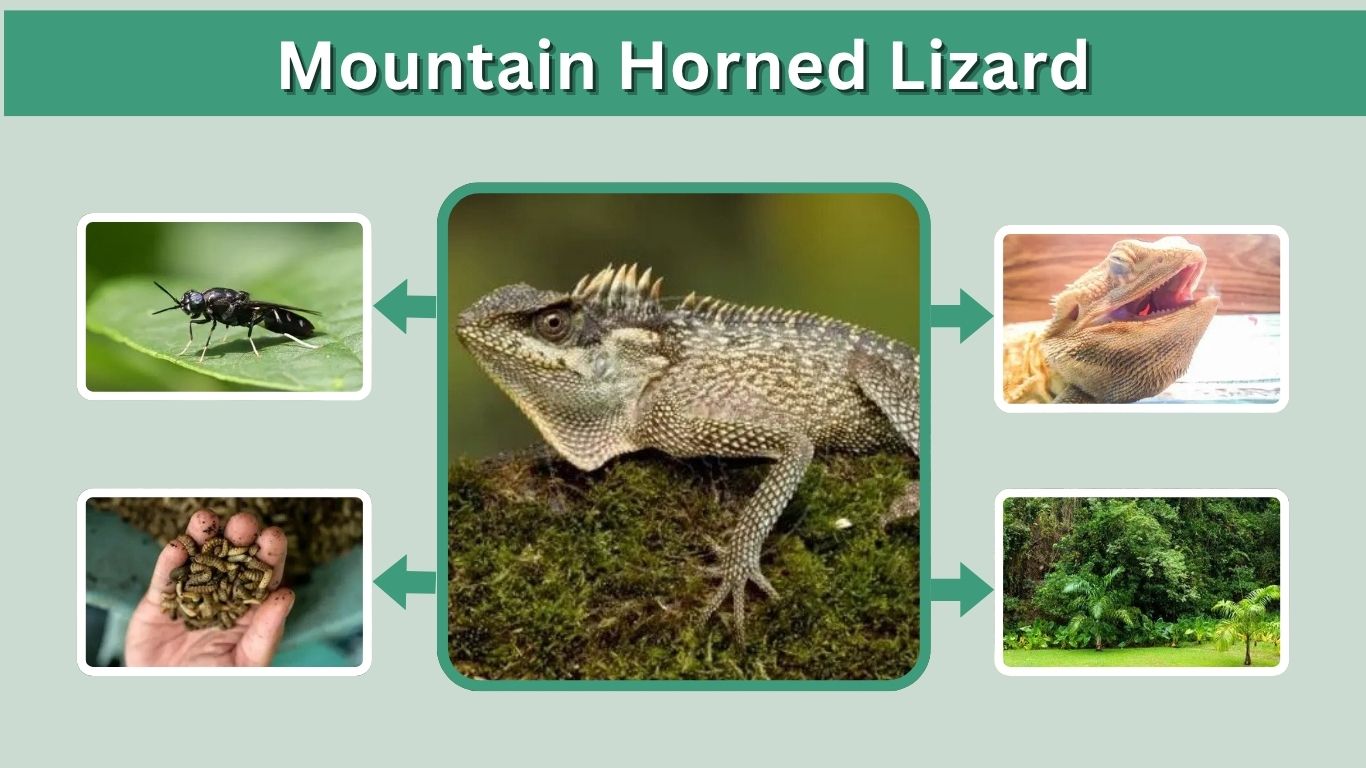
The term “mountain horned lizard” can be confusing because people use it for more than one reptile. In the pet trade, it usually means the mountain horned dragon, a tropical agamid lizard from Southeast Asia, often from the genus Acanthosaura. In North America, “mountain short-horned lizard” usually refers to Phrynosoma hernandesi, also called the greater short-horned lizard. This article focuses mainly on the pet-trade mountain horned lizard, while also explaining the difference between the two.
What Is a Mountain Horned Lizard?
A mountain horned lizard is usually a forest-dwelling agamid lizard with a slender body, long tail, rough scales, and horn-like projections around the head. Many reptile keepers call them mountain horned dragons. They are popular because they look prehistoric, stay a manageable size, and have calm, watchful behavior.
However, they are not the same as the North American short-horned lizard. Mountain horned dragons are tropical, tree-climbing reptiles that need humidity and vertical space. Short-horned lizards are ground-dwelling reptiles from open habitats, often found in semiarid plains, sagebrush, grasslands, and high mountain areas. NatureServe describes Phrynosoma hernandesi habitat as ranging from semiarid plains to high mountains, usually in open shrubby or wooded areas with sparse ground vegetation.
Mountain Horned Lizard vs Mountain Short-Horned Lizard
| Feature | Mountain Horned Lizard / Dragon | Mountain Short-Horned Lizard |
|---|---|---|
| Common pet trade name | Mountain horned dragon | Short-horned lizard |
| Scientific group | Often Acanthosaura species | Phrynosoma hernandesi |
| Habitat | Tropical forest, humid areas | Open plains, shrublands, mountains |
| Lifestyle | Mostly arboreal or semi-arboreal | Ground-dwelling |
| Pet suitability | Kept in captivity by experienced keepers | Usually not recommended or legal to collect |
| Diet | Insects and small invertebrates | Mostly insects, especially ants |
This difference matters because a care sheet for one species will not work for the other.
Mountain Horned Lizard Size and Appearance
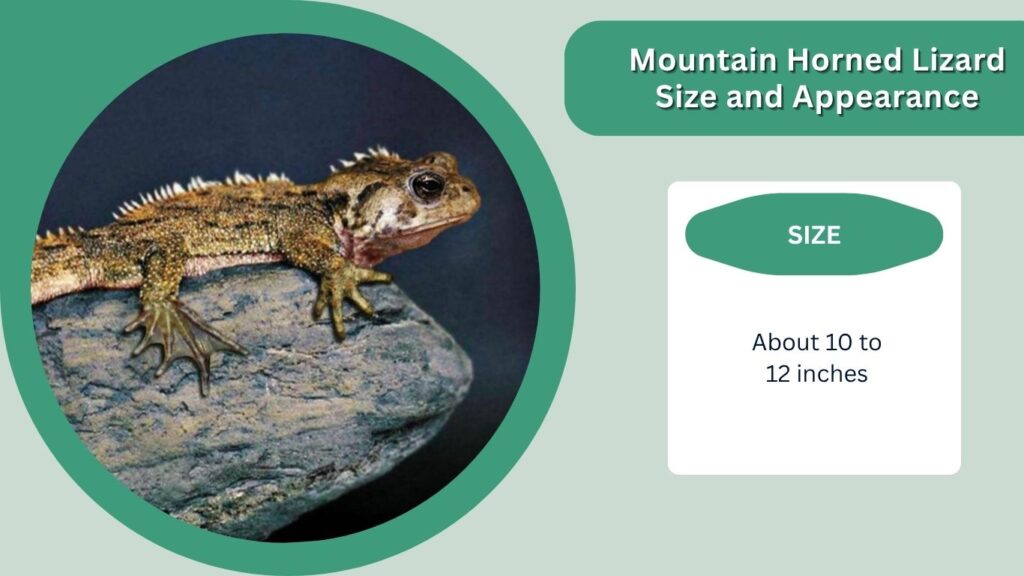
Mountain horned lizards are medium-small reptiles with a dramatic appearance. They usually have a triangular head, pointed scales, a narrow body, and a long tail used for balance while climbing. Some are green, brown, gray, or mixed in color, depending on species, age, stress level, and environment.
How Big Do Mountain Horned Lizards Get?
Most mountain horned dragons reach about 10 to 12 inches in total length, including the tail. Some species or individuals may be slightly smaller or larger. Reptiles of Australia lists the mountain horned dragon, Acanthosaura capra, as growing to about 1 foot, or 30 cm.
Their body is much shorter than their full length suggests because the tail makes up a large portion of the measurement. A full-grown mountain horned lizard may look long, but it is usually lightweight and not bulky like a bearded dragon.
Male vs Female Mountain Horned Lizard
Sexing mountain horned lizards can be tricky, especially when they are young. Adult males may have a slightly larger head, more pronounced crest or horns, and sometimes a thicker tail base. Females may look rounder in the body, especially when carrying eggs.
Do not rely on color alone. Stress, temperature, lighting, shedding, and mood can affect their appearance.
Mountain Horned Lizard Habitat
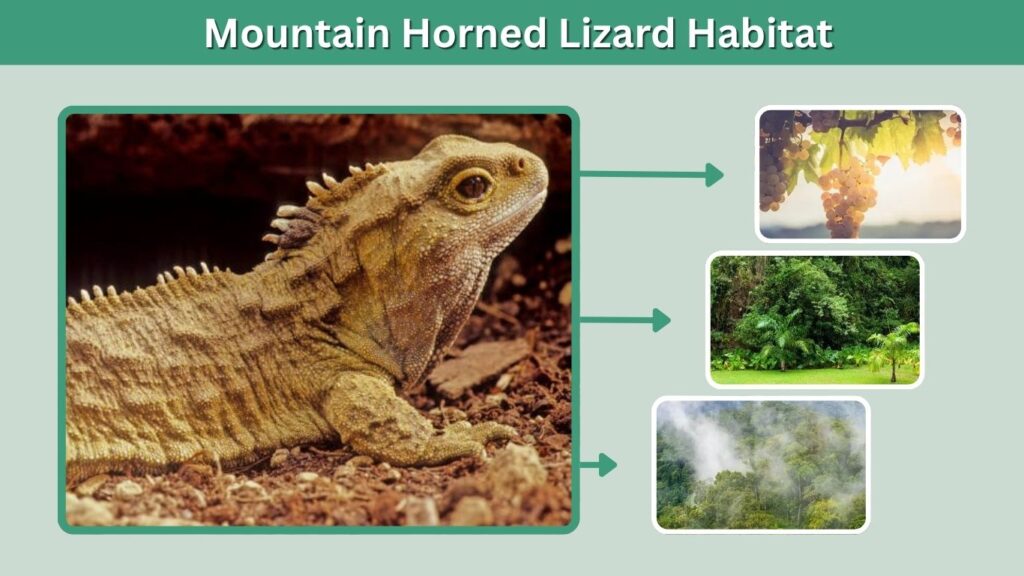
In the wild, mountain horned dragons live in humid forest habitats, often near streams or damp vegetation. They climb branches, perch above the ground, and use plants for cover. Because they come from humid forest environments, they need very different care from desert lizards.
Reptiles Magazine describes mountain horned dragons as rainforest lizards that require high humidity, while also warning that keepers must balance moisture with ventilation to avoid a moldy enclosure.
Natural Habitat Features
Their natural habitat usually includes:
- High humidity
- Dense plants
- Branches and vines
- Frequent rainfall or mist
- Moderate temperatures
- Shaded forest areas
- Access to dripping or moving water
This is why a simple dry tank setup is not enough. A mountain horned lizard enclosure should feel more like a humid forest than a desert terrarium.
Mountain Horned Lizard Enclosure Setup
A good mountain horned lizard setup should be tall, humid, well-ventilated, and full of climbing options. These lizards often feel safer when they can perch above the ground. A bare tank with one branch and a water bowl will not meet their needs.
Best Enclosure Size
For one adult mountain horned lizard, a tall enclosure is recommended. A setup around 18 x 18 x 36 inches may work for a smaller adult, but bigger is better. Many keepers prefer an enclosure closer to 24 x 24 x 36 inches or larger, especially for active individuals.
| Lizard Stage | Suggested Enclosure |
|---|---|
| Baby | Smaller vertical enclosure with safe climbing branches |
| Juvenile | Medium planted enclosure with good humidity |
| Adult | Tall enclosure with branches, plants, and ventilation |
| Pair or group | Larger enclosure only, with careful monitoring |
Avoid keeping multiple males together. They may become territorial.
Cage Setup Checklist
A proper mountain horned lizard cage should include:
- Vertical climbing branches
- Live or artificial plants
- Cork bark or hiding areas
- Moisture-retaining substrate
- Drainage layer if bioactive
- Digital thermometer
- Digital hygrometer
- UVB light
- Low to moderate basking area
- Daily misting system or hand misting
These lizards do not need an extremely hot desert basking spot. They do better with moderate warmth, high humidity, and access to cooler shaded areas.
Temperature, Humidity, and Lighting
Temperature and humidity are two of the most important parts of mountain horned lizard care. They are sensitive to dry conditions and overheating. Many health problems happen when keepers treat them like bearded dragons or desert reptiles.
Temperature Range
A comfortable daytime temperature range is usually around the low to upper 70s°F, with a gentle basking area around the low 80s°F. Night temperatures can drop slightly. Avoid extreme heat, especially if the enclosure is poorly ventilated.
They should always have a temperature gradient. This means one area should be warmer and another area should be cooler so the lizard can choose where to sit.
Humidity Needs
Mountain horned lizards need high humidity. A range around 70–80% during the day is often recommended for mountain horned dragons, with higher humidity at night. Dubia’s care guide describes them as a tropical species that should have high enclosure humidity, around 70–80% during the day and higher at night.
Good humidity does not mean a wet, dirty cage. The enclosure should dry slightly between misting sessions, and airflow is important.
Do Mountain Horned Lizards Need UVB?
Yes, UVB lighting is recommended. UVB helps reptiles process calcium and supports healthy bones, muscles, and overall behavior. Reptile Supply’s care guide states that UVB lighting is required for mountain horned dragons to stay healthy.
A forest-strength UVB bulb is usually better than a strong desert bulb. The exact bulb depends on enclosure height, screen type, distance from the basking branch, and brand.
Mountain Horned Lizard Diet
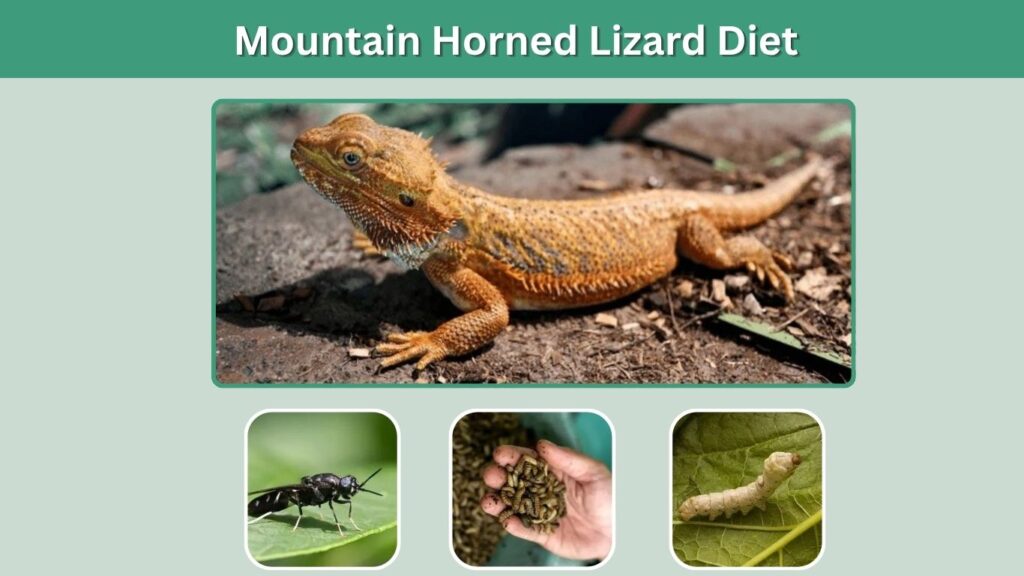
Mountain horned lizards are insectivores. They eat live prey and usually respond best to movement. A varied diet is important because feeding only one insect can lead to poor nutrition.
What Do Mountain Horned Lizards Eat?
Good feeder insects may include:
- Crickets
- Dubia roaches
- Black soldier fly larvae
- Silkworms
- Small hornworms
- Small locusts where legal
- Occasional waxworms as treats
Dubia roaches can be used if they are the right size. A mountain horned lizard should not be given prey that is too large. A safe rule is to offer insects no wider than the space between the lizard’s eyes.
Foods to Avoid
Avoid feeding wild-caught insects unless you are certain they are pesticide-free and safe. Do not feed fireflies, toxic insects, or hard-to-digest oversized prey. Ladybugs should not be used as feeders because many species can release defensive chemicals and may be unsafe.
Feeding Schedule
Baby and juvenile mountain horned lizards usually eat more often than adults. Adults may eat several times per week, depending on body condition, age, temperature, and activity level.
| Age | Feeding Frequency |
|---|---|
| Baby | Small meals daily or near daily |
| Juvenile | Several times per week |
| Adult | Usually 3–5 times per week |
| Breeding female | May need extra nutrition and calcium |
Use calcium and vitamin supplements carefully. Too little calcium can cause metabolic bone disease, but too much supplementation can also create problems. Follow a reptile-vet-approved schedule when possible.
Water and Hydration
Mountain horned lizards often prefer drinking droplets from leaves rather than drinking from a still water bowl. This is why misting is important. A dripper system can also help encourage natural drinking behavior.
The enclosure should be misted daily, sometimes more than once depending on ventilation, climate, and substrate. Reptiles Magazine recommends frequent misting while also maintaining ventilation so moisture can evaporate properly.
Signs of dehydration may include sunken eyes, wrinkled skin, weakness, sticky saliva, and reduced appetite. If these signs appear, a reptile veterinarian should be contacted.
Handling and Temperament
Mountain horned lizards are usually display reptiles, not heavy-handling pets. Some individuals become calm around people, but many are easily stressed by frequent handling. They may freeze, darken in color, gape, or try to escape if they feel threatened.
Are Mountain Horned Lizards Good Pets?
They can be good pets for keepers who understand humidity, live insect feeding, vertical enclosures, and reptile health. They are not the easiest beginner lizard. A bearded dragon, leopard gecko, or crested gecko is usually easier for a first-time reptile keeper.
Mountain horned lizards are better for someone who wants a naturalistic display animal and is willing to maintain daily misting, humidity control, and proper feeding.
Do Mountain Horned Lizards Bite?
They can bite if scared, but they are not aggressive animals. Most prefer to flee, freeze, or hide. A bite from a small mountain horned lizard is usually not serious, but stress can be serious for the lizard. Handle only when necessary, such as for health checks or enclosure maintenance.
Mountain Horned Lizard Lifespan and Health
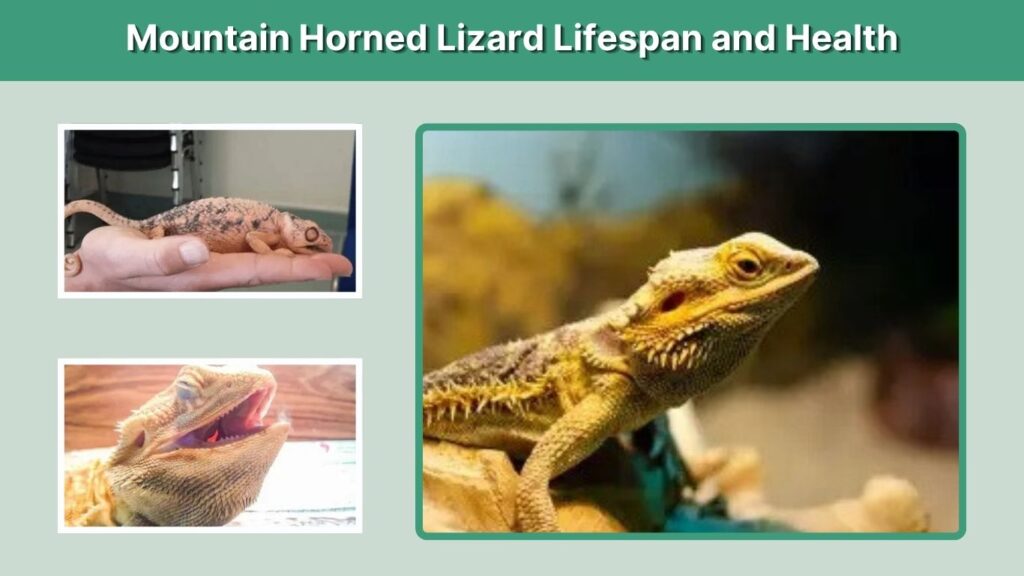
With proper care, mountain horned lizards may live several years in captivity. Lifespan depends on species, source, diet, stress, parasite load, and enclosure conditions. Wild-caught animals often arrive with parasites, dehydration, or stress-related problems.
Common Health Problems
Common issues include:
- Dehydration
- Internal parasites
- Respiratory infections
- Mouth rot
- Stuck shed
- Metabolic bone disease
- Stress from poor enclosure setup
- Burns from unsafe heating equipment
Because many mountain horned lizards in the trade may be wild-caught, a reptile vet exam and fecal parasite test are wise after purchase. Searches like “cost of treating horned mountain lizard for parasites” are common because parasite treatment can become part of ownership.
Mountain Horned Lizard Price and Buying Tips
Mountain horned lizard prices can vary based on species, size, age, source, and availability. Some may appear inexpensive compared with other reptiles, but the full setup cost is much higher than the animal price.
Buying Checklist
Before buying a mountain horned lizard, ask:
- Is it captive bred or wild caught?
- Is it eating regularly?
- What insects does it accept?
- Has it been checked for parasites?
- Are the eyes clear and alert?
- Is the body weight healthy?
- Are there any wounds, stuck shed, or mouth issues?
- What species is it exactly?
Captive-bred mountain horned lizards are usually a better choice when available. They are often healthier, less stressed, and better adapted to captivity than wild-caught animals.
Mountain Horned Lizard vs Bearded Dragon
Many people compare mountain horned lizards with bearded dragons, but they are very different pets. A bearded dragon is a dry-climate basking lizard that usually tolerates handling better. A mountain horned lizard is a humid forest reptile that needs more moisture, plants, climbing space, and privacy.
| Feature | Mountain Horned Lizard | Bearded Dragon |
|---|---|---|
| Habitat style | Humid forest | Dry desert/scrub |
| Handling | Limited | Usually tolerates more |
| Care difficulty | Intermediate | Beginner to intermediate |
| Humidity | High | Low to moderate |
| Enclosure style | Tall and planted | Longer ground-space enclosure |
| Diet | Mostly insects | Insects and vegetables |
Do not house a mountain horned lizard with a bearded dragon. Their habitat needs are too different, and cohabitation can cause stress, injury, or illness.
FAQs
How big do mountain horned lizards get?
Most mountain horned lizards reach around 10 to 12 inches in total length, including the tail. Some species may be slightly smaller or larger, but they are generally manageable medium-small reptiles.
What do mountain horned lizards eat?
They eat live insects such as crickets, dubia roaches, black soldier fly larvae, silkworms, and small hornworms. A varied diet is best. Avoid toxic insects, wild-caught bugs from sprayed areas, and oversized prey.
Do mountain horned lizards need UVB?
Yes, UVB is recommended for healthy calcium metabolism and long-term health. Use a forest-appropriate UVB bulb and make sure the distance from the basking branch is correct.
Are mountain horned lizards good pets?
They can be good pets for intermediate reptile keepers, but they are not the easiest beginner lizard. They need high humidity, live insects, vertical space, regular misting, and careful temperature control.
Can mountain horned lizards live with bearded dragons?
No. Mountain horned lizards and bearded dragons should not live together. They need different temperatures, humidity levels, diets, and enclosure styles. Keeping them together can cause stress and health problems.
