
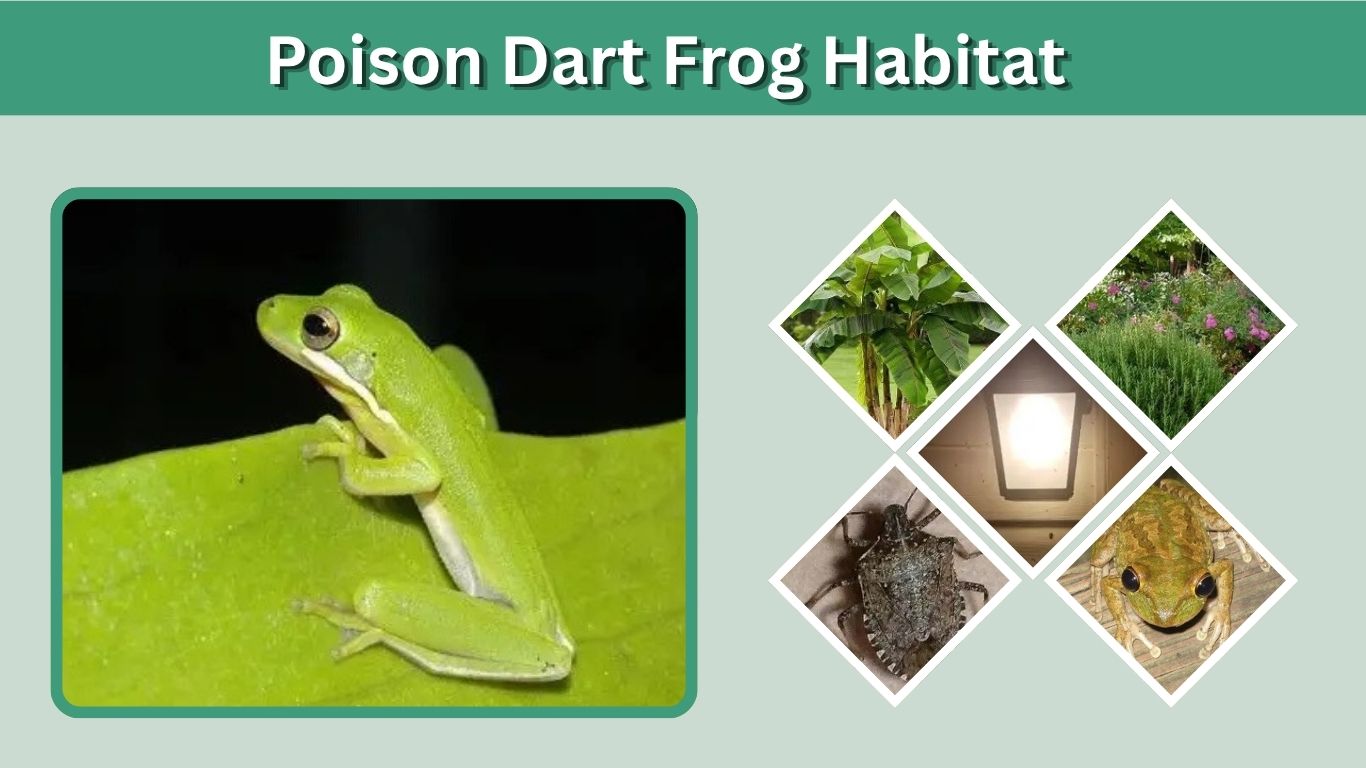
The Florida green tree frog is one of the most familiar native frogs seen around porches, windows, shrubs, wetlands, and backyard ponds. Also called the American green treefrog, this small bright-green frog is known for its smooth body, pale side stripe, sticky toe pads, and loud nighttime call. In Florida, green tree frogs are usually harmless, insect-eating amphibians that help control bugs, but they should still be handled carefully because frogs have sensitive skin.
What Is the Florida Green Tree Frog?
The Florida green tree frog usually refers to the American green treefrog, a native tree frog found throughout Florida. The Florida Museum lists the green treefrog as Hyla cinerea, while many modern sources also use Dryophytes cinereus for the same species. It is a shy, nocturnal frog that eats bugs, lives in trees and shrubs, and lays eggs in ponds and marshes.
Identification
You can identify a Florida green tree frog by looking for:
- Bright green to olive-green body color
- Smooth, moist-looking skin
- White or pale yellow stripe along each side
- Large sticky toe pads for climbing
- Slender body and long legs
- Golden or bronze eyes
- Usually around 1.25 to 2.5 inches long
Some individuals may appear light green, dark green, grayish, or even brownish depending on temperature, mood, humidity, and surroundings. This can make people search for “brown and green tree frogs in Florida,” but many are still green treefrogs.
Quick Facts Table
| Feature | Florida Green Tree Frog |
| Common name | Green treefrog / American green treefrog |
| Scientific name | Hyla cinerea / Dryophytes cinereus |
| Native to Florida? | Yes |
| Active time | Mostly night |
| Diet | Insects and small invertebrates |
| Habitat | Trees, shrubs, marshes, ponds, wetlands, yards |
| Dangerous to humans? | No, but avoid touching eyes or mouth after handling |
Where Do Green Tree Frogs Live in Florida?
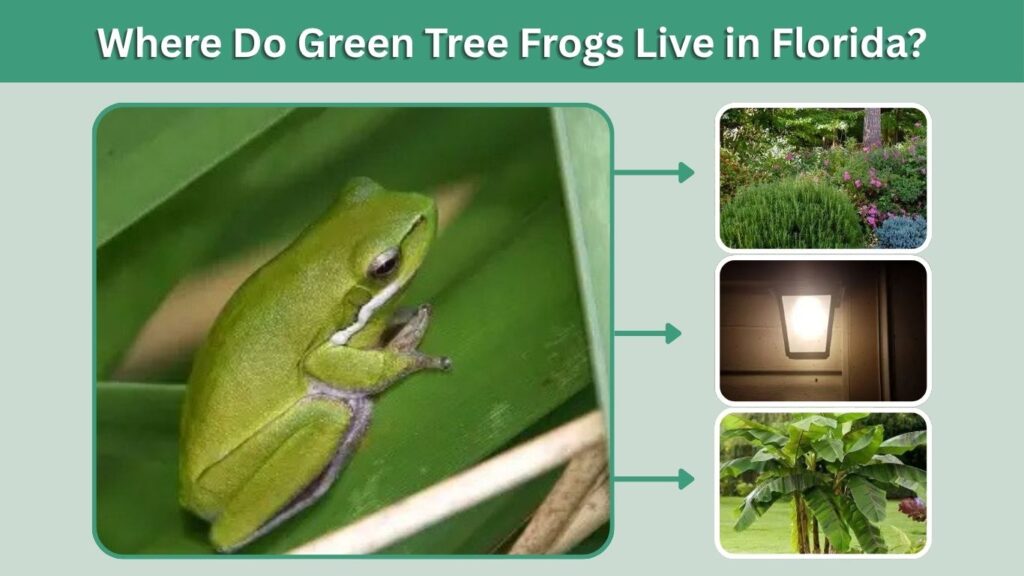
Green tree frogs are found all over Florida, including the Panhandle, Central Florida, South Florida, and suburban neighborhoods. UF/IFAS notes that these native frogs occur throughout Florida in natural habitats and around suburban homes.
They prefer moist places with plants, water, and insects. Common habitats include marshes, swamps, ponds, lakes, ditches, wet gardens, shrubs, and trees near standing water. NatureServe describes their habitat as swamps, marshes, and areas near ponds, lakes, and slow streams, especially where aquatic vegetation is present.
Backyard Habitat
In Florida yards, green tree frogs may hide in:
- Banana plants, shrubs, and garden foliage
- PVC pipes or “frog houses”
- Porch lights where insects gather
- Rain barrels, gutters, and outdoor sinks
- Window frames and patio plants
- Vegetation around ponds or ditches
UF/IFAS says treefrogs like plant-filled areas because they provide hiding places, insects, and branches where frogs can sit and wait for prey.
Are Florida Green Tree Frogs Poisonous?
Florida green tree frogs are not dangerously poisonous to humans like poison dart frogs, but they can produce mild skin secretions. These secretions may irritate eyes, mouths, open cuts, or sensitive skin. PetMD advises limiting handling because amphibians have delicate skin and may secrete toxins, and handlers should avoid contact with eyes, mouth, or open wounds.
They are also not the same as Florida’s invasive cane toads, which can be dangerous to pets. FWC notes that cane toads secrete potent poison from large parotoid glands and can harm dogs that bite them.
Can Green Tree Frogs Make You Sick?
A green tree frog can potentially make you sick if you handle it and then touch your mouth or food without washing your hands. Frogs and other amphibians may carry bacteria, including salmonella. The safest rule is simple: enjoy them by watching, and wash your hands if you touch one.
What Do Florida Green Tree Frogs Sound Like?
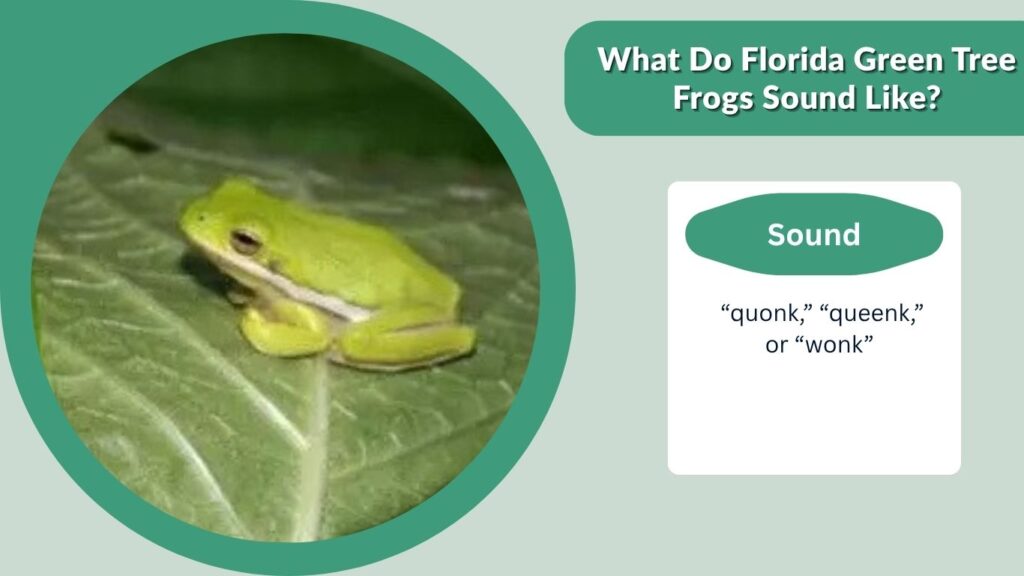
The Florida green tree frog sound is a loud, nasal, bell-like call often heard at night, especially before or after rain. Males call to attract females during the breeding season. Many people describe the call as a repeated “quonk,” “queenk,” or “wonk” sound.
Florida green tree frog calls are common near ponds, ditches, wetlands, and flooded areas. The Florida Museum’s frog call guide includes the green treefrog among Florida frog calls, making sound one of the easiest ways to recognize this species.
What Do Florida Green Tree Frogs Eat?
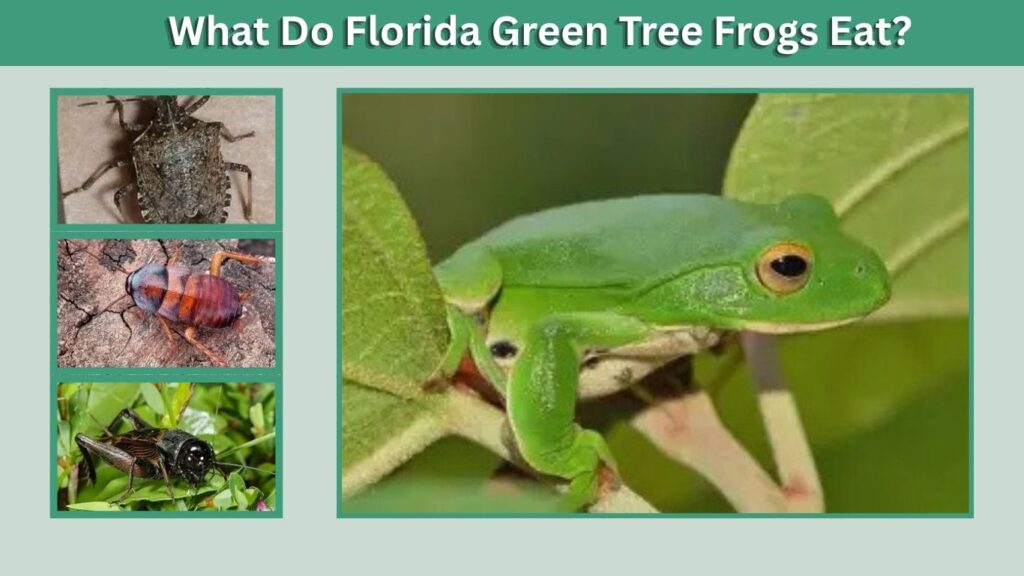
Florida green tree frogs are insectivores. They eat small insects and other tiny invertebrates, especially at night. UF/IFAS says green treefrogs feed on small insects and invertebrates such as beetles, caterpillars, and stinkbugs.
Common foods include:
- Moths
- Flies
- Beetles
- Crickets
- Small roaches
- Caterpillars
- Stinkbugs
- Mosquito-sized insects
This makes them helpful in yards and gardens. Porch lights often attract insects, which can also attract green tree frogs looking for an easy meal.
Florida Green Tree Frog Eggs and Life Cycle
Green tree frogs breed in warm months when water is available. UF/IFAS reports that green treefrogs breed from March to October and lay eggs in standing water such as ditches, lakes, swamps, marshes, and ponds.
Life Cycle Stages
| Stage | What Happens |
| Egg | Laid in standing water |
| Tadpole | Lives in water and feeds as it grows |
| Metamorphosis | Tadpole develops legs and loses tail |
| Juvenile frog | Leaves water and begins climbing plants |
| Adult | Lives mostly in shrubs, trees, and vegetation near breeding areas |
In Florida’s warm, wet climate, breeding activity often increases after rain. Backyard ponds, ditches, and temporary flooded spots can become breeding sites if conditions are right.
Florida Green Tree Frog Care
A wild Florida green tree frog should usually be left alone. It is a native species and plays a useful role in the local ecosystem. If one appears on your porch, window, or patio, the best option is to let it move away on its own or gently guide it toward nearby plants.
For pet care, only buy captive-bred American green tree frogs from responsible breeders. Do not collect wild frogs from Florida. Captive green tree frogs need a humid enclosure, vertical climbing space, safe plants or branches, clean dechlorinated water, and a diet of appropriate live insects. Pet care sources also recommend minimal handling because their skin is sensitive.
Florida Green Tree Frog vs Cuban Treefrog
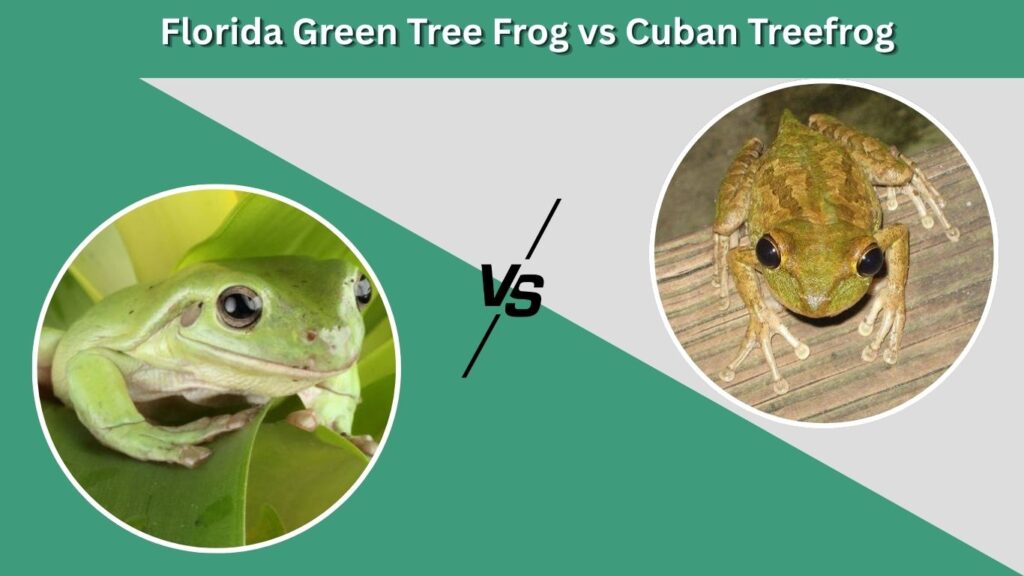
Some people confuse native green tree frogs with invasive Cuban treefrogs. This matters because Cuban treefrogs can harm native frogs in Florida. The Florida Museum notes that Cuban treefrogs are invasive and harm native Floridian treefrogs and local ecology.
Main Differences
| Feature | Green Tree Frog | Cuban Treefrog |
| Native to Florida | Yes | No, invasive |
| Body size | Smaller and slender | Often larger |
| Skin | Smooth | Often warty or bumpy |
| Color | Usually bright green | Gray, tan, brown, green, or mottled |
| Toe pads | Noticeable | Very large toe pads |
| Impact | Beneficial native species | Can eat and outcompete native frogs |
FAQs
Are Florida green tree frogs native?
Yes. The green treefrog, also called the American green treefrog, is native to Florida. It lives in natural wetlands, forests, marshes, and suburban yards, especially where there are plants, insects, and nearby standing water.
Are green tree frogs in Florida poisonous to dogs?
They are not as dangerous as cane toads, but pets should not bite, lick, or eat them. Green tree frogs may have mild skin secretions that can irritate a pet’s mouth or stomach. If a dog shows drooling, vomiting, or distress, call a veterinarian.
Why is a green tree frog on my window?
A green tree frog may sit on your window because lights attract insects. The frog waits nearby and catches bugs. Windows, porch lights, patio doors, and outdoor walls are common nighttime hunting spots for green tree frogs in Florida.
What does a Florida green tree frog call sound like?
The call is usually loud, nasal, and repeated. Many people describe it as a “quonk,” “wonk,” or bell-like sound. Males call mostly at night, especially around warm, rainy weather and wet breeding areas.
Can I keep a Florida green tree frog as a pet?
You should not take a wild Florida green tree frog from your yard. If you want one as a pet, choose a captive-bred American green tree frog from a responsible source. Captive frogs need humidity, climbing space, clean water, live insects, and very limited handling.
