
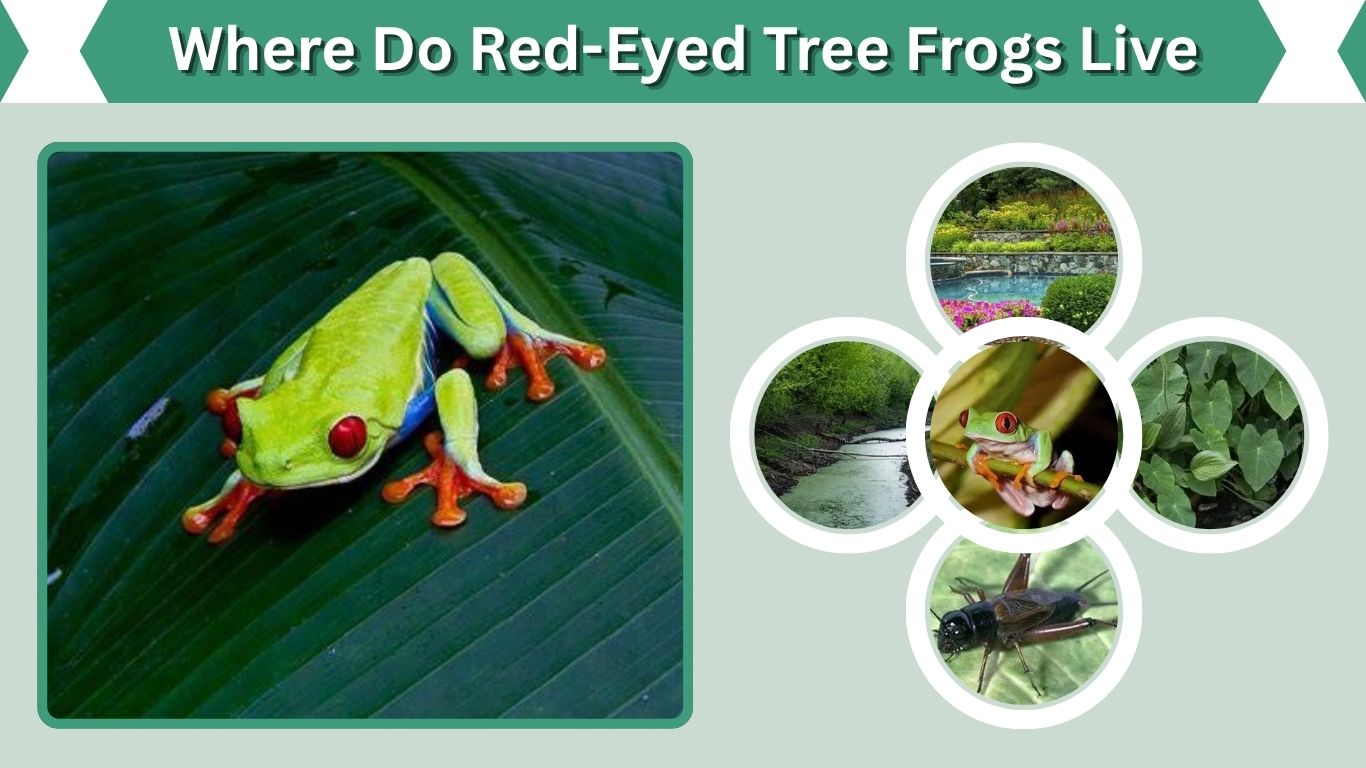
Red-eyed tree frogs live in warm, humid tropical forests from southern Mexico through Central America, with some records in northern South America. These colorful frogs are strongly linked to rainforest habitats, especially areas near ponds, rivers, swamps, and temporary pools. Although they are famous for their bright red eyes and green bodies, their daily life is usually hidden among leaves, branches, and vines. They are arboreal frogs, which means they spend much of their adult life in trees and vegetation.
Where Do Red-Eyed Tree Frogs Live in the World?
Red-eyed tree frogs, also called red-eyed leaf frogs, live in the Neotropical region. Their range extends from southern Mexico through countries such as Belize, Guatemala, Honduras, Nicaragua, Costa Rica, and Panama. Some sources also mention isolated records or limited distribution in northern Colombia.
Countries Where Red-Eyed Tree Frogs Live
- Southern Mexico
- Belize
- Guatemala
- Honduras
- Nicaragua
- Costa Rica
- Panama
- Isolated areas of northern Colombia
Most people associate red-eyed tree frogs with Central America because that is where they are most famously seen in rainforest habitats. Costa Rica, Panama, and Nicaragua are especially well-known for red-eyed tree frog sightings in humid forests and protected rainforest areas.
Where Do Red-Eyed Tree Frogs Live in the Rainforest?
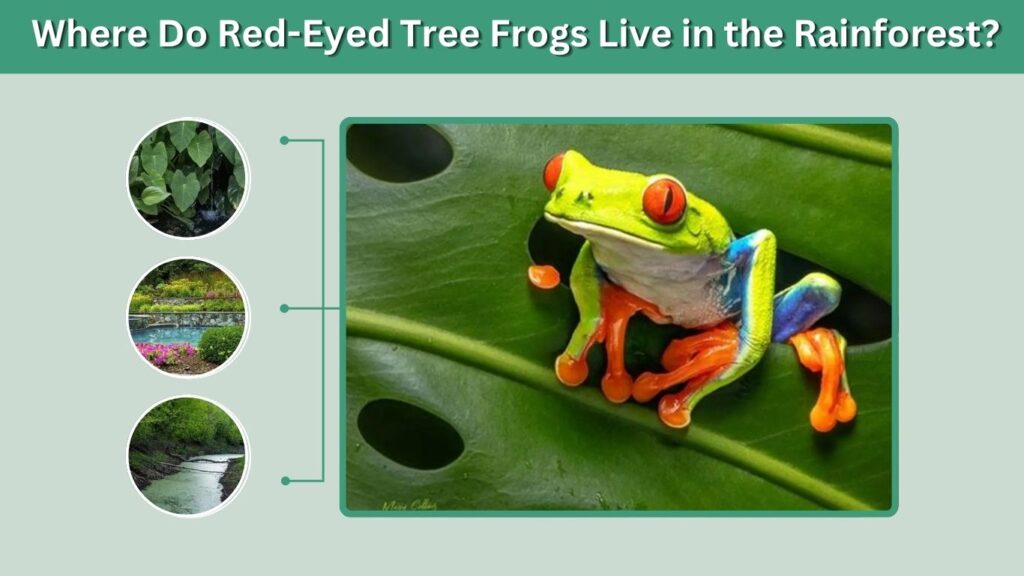
In the rainforest, red-eyed tree frogs live mostly on leaves, branches, shrubs, and low-to-mid forest vegetation. They are tree-dwelling frogs, so they do not spend most of their adult life walking on the forest floor. Instead, they cling to smooth leaves and branches using sticky toe pads. National Geographic describes them as nocturnal carnivores that hide in the rainforest canopy and ambush insects such as crickets, flies, and moths.
Rainforest Microhabitats
Red-eyed tree frogs may be found in:
- Broad leaves above ponds
- Shrubs near forest pools
- Low branches near streams
- Humid forest edges
- Vegetation around temporary rain pools
- Tropical lowland rainforest plants
- Moist premontane forest vegetation
They often stay near water because their eggs and tadpoles depend on aquatic habitats. Adults may sleep on the underside of leaves during the day and become active at night.
What Type of Forest Do Red-Eyed Tree Frogs Prefer?
Red-eyed tree frogs prefer humid tropical forests with plenty of vegetation and nearby water. World Land Trust notes that they live in tropical lowland and montane forest with continuous forest cover, especially near rivers and ponds that are important for reproduction.
| Habitat Feature | Why It Matters |
| High humidity | Keeps the frog’s skin moist |
| Dense vegetation | Provides shelter and climbing areas |
| Nearby water | Needed for eggs and tadpoles |
| Warm temperatures | Supports tropical frog activity |
| Insect-rich areas | Provides food at night |
They are most often connected with tropical lowland rainforests, but they may also occur in humid forests on slopes. Exo Terra describes their habitat as tropical rainforests and humid lowland forests, with some populations found on premontane slopes up to around 1,250 meters above sea level.
Do Red-Eyed Tree Frogs Live in Trees?
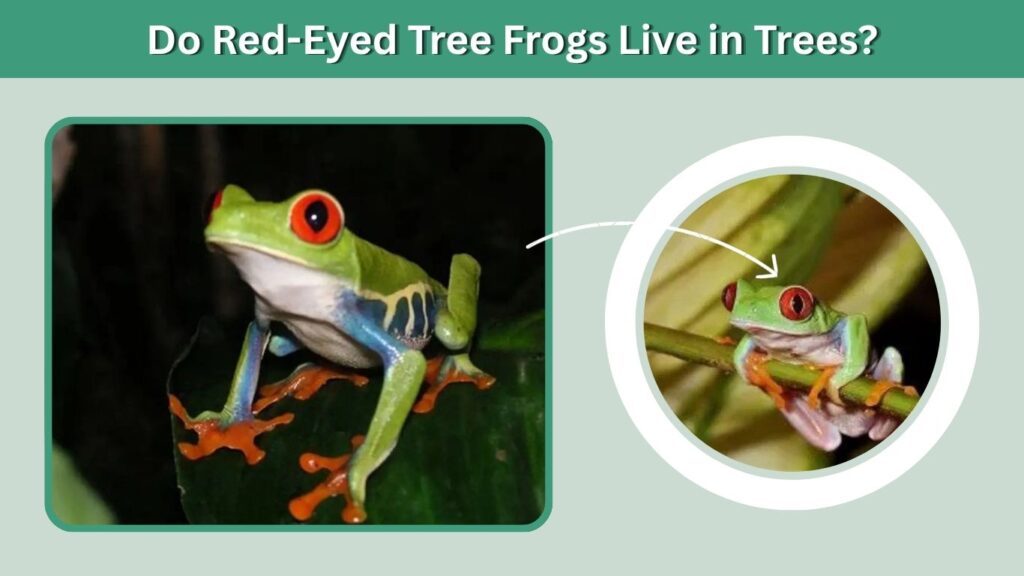
Yes, red-eyed tree frogs live in trees and plants. They are arboreal, meaning they are adapted for climbing and life above the ground. Their large toe pads help them grip leaves, branches, and stems. PetMD also describes red-eyed tree frogs as a tree-dwelling species that needs vertical climbing space in captive habitats, which reflects their natural lifestyle.
During the day, they often rest on the underside of leaves. This helps hide their bright colors from predators. At night, they move around the vegetation to hunt insects and search for mates during the breeding season.
Why Do Red-Eyed Tree Frogs Stay Near Water?
Red-eyed tree frogs stay near water because they need it for breeding. Adults lay eggs on leaves that hang over ponds or other water bodies. When the tadpoles hatch, they drop from the leaves into the water below. Smithsonian Tropical Research Institute explains that red-eyed treefrogs lay eggs on leaves over ponds so the hatchlings can fall into the water.
Breeding Habitat
Their breeding areas usually include:
- Forest ponds
- Rain-filled pools
- Swamps
- Slow-moving streams
- Marshy edges
- Temporary pools after heavy rain
This is why red-eyed tree frogs are not just “tree frogs” in a simple sense. They live in trees as adults, but they still need aquatic habitats for their life cycle.
Where Do Most Red-Eyed Tree Frogs Live?
Most red-eyed tree frogs live in Central American tropical rainforests, especially in warm, humid areas with forest cover and water nearby. While their range begins in southern Mexico and extends toward Panama, they are most famously associated with rainforests in Costa Rica, Nicaragua, Honduras, Belize, and Panama.
They are not native to the United States, Canada, Europe, Africa, or Asia. If someone sees a red-eyed tree frog outside its natural range, it is usually in captivity, a zoo, a wildlife center, or the pet trade.
Do Red-Eyed Tree Frogs Live on the Forest Floor?
Adult red-eyed tree frogs usually do not live mainly on the forest floor. They may come lower in the vegetation during breeding activity, but they are built for climbing. Their bright green color helps them blend with leaves, while their red eyes and colorful sides may startle predators when they suddenly move. National Geographic notes that they are not venomous and hide in the rainforest canopy despite their bright colors.
Red-Eyed Tree Frog Habitat vs Pet Habitat
A wild red-eyed tree frog lives in a warm, humid rainforest with plants, water, insects, and natural cover. A pet red-eyed tree frog needs an enclosure that tries to copy those conditions. PetMD says adults need a tall enclosure with vertical climbing space, a secure screen top, and good ventilation.
| Wild Habitat | Captive Habitat Need |
| Rainforest trees | Tall enclosure |
| Humid air | Controlled humidity |
| Leaves and vines | Plants and climbing branches |
| Natural ponds | Clean water source |
| Night insects | Live insect diet |
Wild frogs should not be taken from rainforest habitats. Captive-bred frogs are the better choice for the pet trade because collecting wild frogs can harm local populations.
What Do Red-Eyed Tree Frogs Eat in Their Habitat?
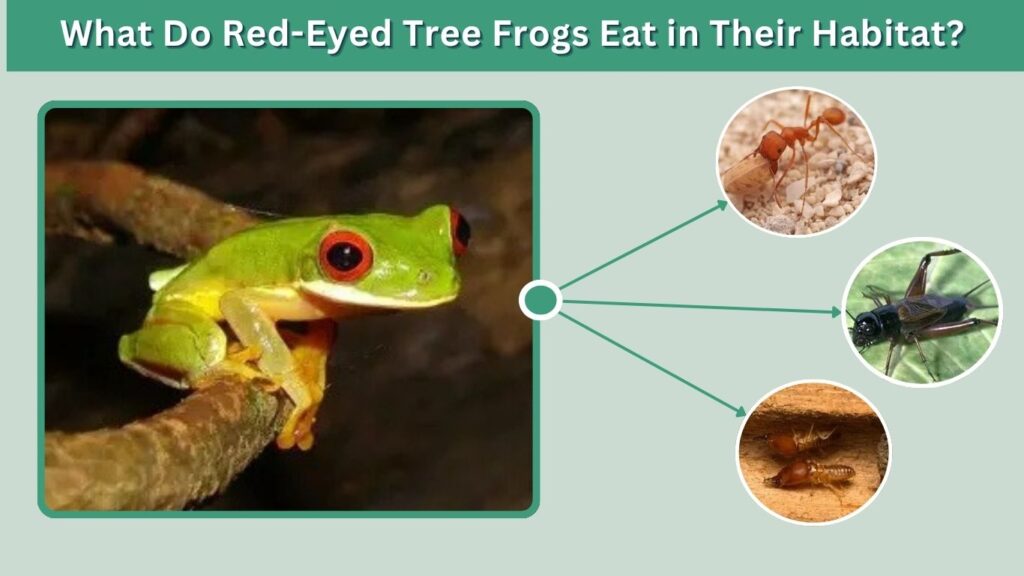
Red-eyed tree frogs are carnivores that mainly eat insects. In the rainforest, they hunt at night and feed on prey such as crickets, flies, moths, and other small insects. Rainforest Alliance notes that they are mostly insect-eaters and may sometimes eat smaller frogs.
Their habitat must support a steady supply of insects. This is another reason they do well in warm, wet forests with dense vegetation and rich biodiversity.
FAQs
Where do red-eyed tree frogs live naturally?
Red-eyed tree frogs naturally live from southern Mexico through Central America, including Belize, Guatemala, Honduras, Nicaragua, Costa Rica, and Panama. Some sources also mention limited or isolated records in northern Colombia. They are mainly rainforest frogs.
Where do red-eyed tree frogs live in the rainforest?
In the rainforest, red-eyed tree frogs live on leaves, branches, shrubs, and vegetation near water. Adults often rest under leaves during the day and become active at night. They are arboreal frogs, so they spend much of their time climbing.
Do red-eyed tree frogs live in water?
Adult red-eyed tree frogs do not live fully in water. They live mostly in trees and plants, but they need water for breeding. Their eggs are laid on leaves above ponds, and the tadpoles drop into the water after hatching.
Do red-eyed tree frogs live in the Amazon rainforest?
Red-eyed tree frogs are mainly associated with Central American rainforests, not the main Amazon rainforest. Their range is generally described from southern Mexico to Panama, with limited or isolated northern South American records.
Are red-eyed tree frogs found in the United States?
Red-eyed tree frogs are not native to the United States. In the U.S., they are usually seen in zoos, wildlife exhibits, or as captive-bred pets. Their natural wild range is mainly in tropical forests of southern Mexico and Central America.
