
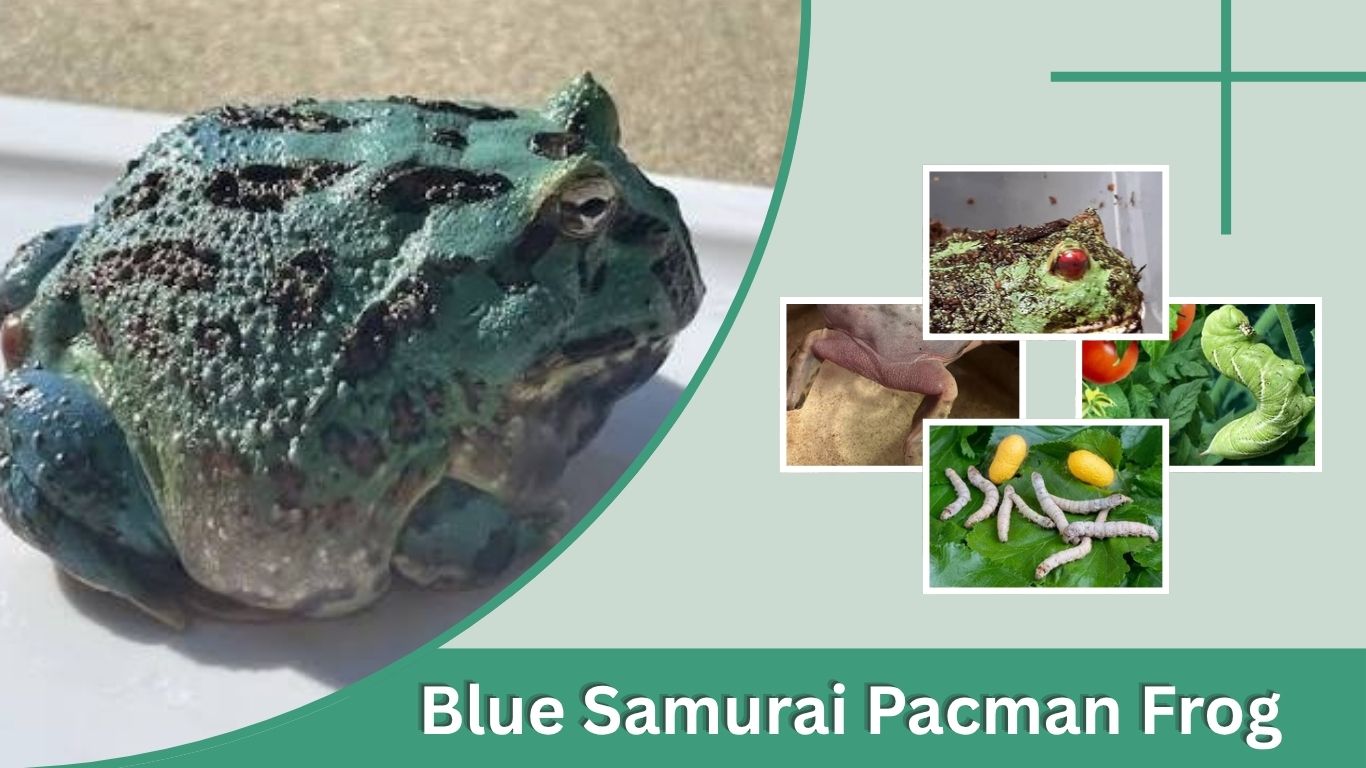
The blue Samurai Pacman frog is a selectively bred color morph admired for its mint-green, turquoise, or blue-green appearance. Despite its unusual color, it requires the same basic husbandry as other Cranwell’s horned frogs. It spends much of its time buried in moist substrate, waiting for food to approach its enormous mouth. Proper temperature, humidity, nutrition, and hygiene are essential because an attractive color cannot compensate for poor health or unsuitable care.
What Is a Blue Samurai Pacman Frog?
The blue Samurai Pacman frog is not a separate species. It is a captive-bred color variety of Cranwell’s horned frog, scientifically known as Ceratophrys cranwelli. The name “Samurai Blue” is used in the pet trade for frogs selectively bred to display reduced yellow pigmentation and stronger mint, teal, or blue-green tones.
Wild-type Cranwell’s horned frogs are robust, terrestrial amphibians native to South America. Like other Pacman frogs, they have rounded bodies, broad heads, short limbs, and exceptionally wide mouths suited to ambush hunting.
| Feature | Information |
| Common trade name | Blue Samurai or Samurai Blue Pacman frog |
| Scientific name | Ceratophrys cranwelli |
| Animal type | Terrestrial amphibian |
| Diet | Carnivorous |
| Adult size | About 3–8 inches |
| Typical lifespan | About 10–15 years with proper care |
| Temperament | Solitary and mostly sedentary |
| Color | Mint, teal, greenish blue, or turquoise |
What Does a Samurai Blue Pacman Frog Look Like?
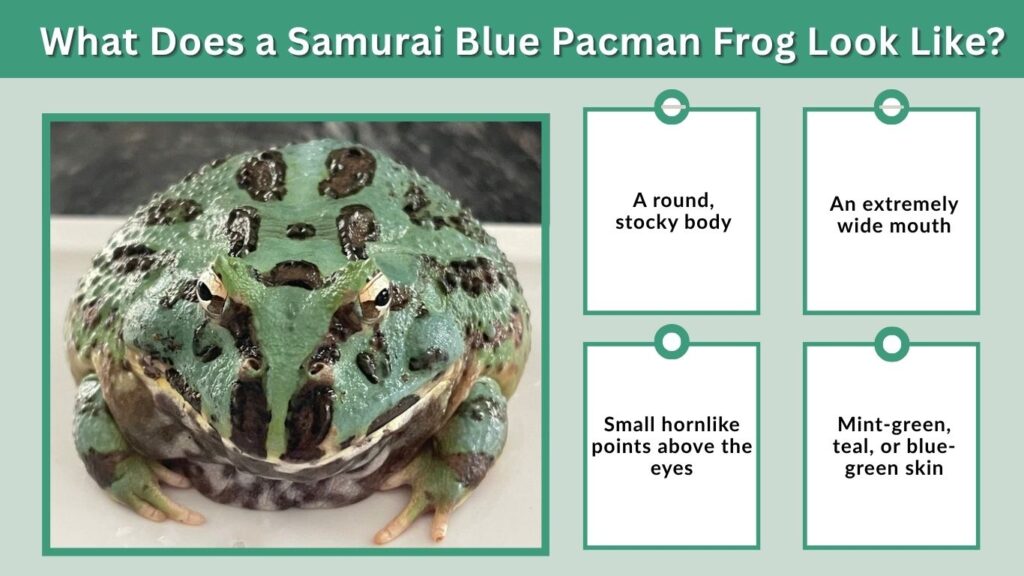
A Samurai Blue generally has a pale green, turquoise, or teal base color with brown, olive, or gray markings. Some individuals develop stronger blue-green coloration as they mature, while others remain mostly mint green.
Identification Features
- A round, stocky body
- An extremely wide mouth
- Small hornlike points above the eyes
- Mint-green, teal, or blue-green skin
- Brown or olive patches across the back
- Short legs designed for digging rather than climbing
- Eyes positioned high on the head
- A pale underside
The word “blue” can create unrealistic expectations. Most Samurai Blue frogs are not bright sky blue. Their coloration commonly falls somewhere between mint green and turquoise, and the intensity may change with age, lighting, temperature, moisture, substrate, and individual genetics.
Does the Blue Color Stay?
Color development is not entirely predictable. Breeders report that some frogs become bluer as they approach adulthood, but others develop more green, brown, or yellow. Pacman frogs can also change their apparent shade as environmental conditions and age affect their pigmentation.
Because photographs can be affected by lighting, editing, or color-enhancing feeds, buyers should not choose a frog solely from one highly saturated image. Requesting recent photographs under ordinary lighting and asking about the parents can provide more realistic expectations.
Blue Samurai Pacman Frog Size and Lifespan
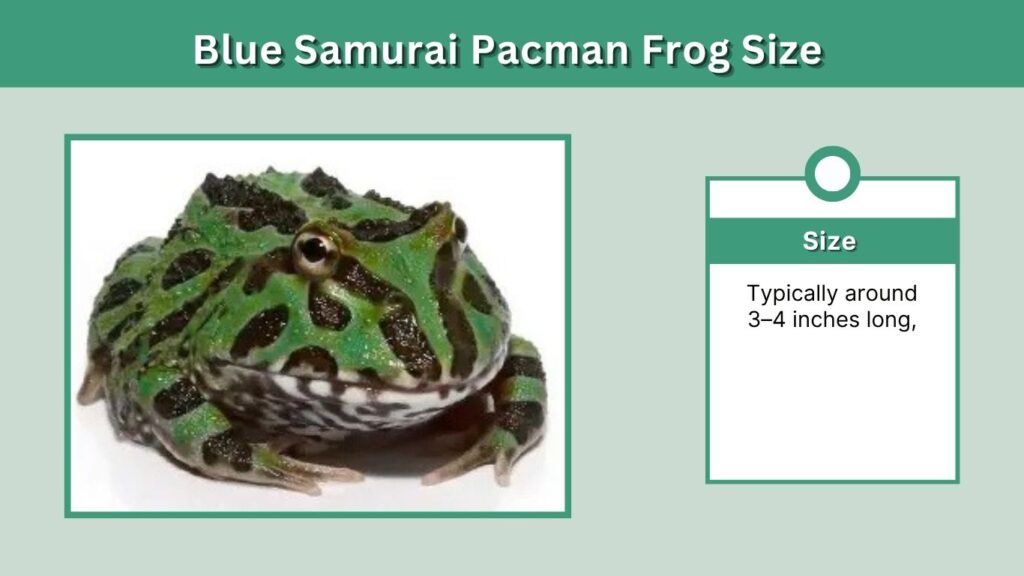
Pacman frog size depends heavily on sex. Adult males are typically around 3–4 inches long, while females may reach approximately 4–8 inches. Females usually develop broader and heavier bodies than males.
Baby Samurai Blue Pacman frogs are often sold when they are only about 1–2 inches long. With proper feeding and environmental conditions, young Pacman frogs can grow quickly during their first year.
A properly maintained Pacman frog may live approximately 10–15 years in captivity. Poor nutrition, incorrect temperatures, dehydration, dirty substrate, and untreated disease can significantly shorten its life.
Samurai Blue Pacman Frog Care
Its unusual coloration does not require special care. A blue Samurai needs the same warm, humid, terrestrial environment as other Ceratophrys cranwelli morphs.
Enclosure Setup
One adult should have a wide enclosure of approximately 10–20 gallons. Pacman frogs are sedentary, but they still need enough floor area to burrow, turn around, soak, and move between warmer and cooler areas. They must be housed alone because they are territorial and may attempt to eat other frogs.
Provide the following:
- Three to four inches of moisture-retaining substrate
- Coconut fiber or another amphibian-safe soil
- A shallow bowl containing dechlorinated water
- A hide or plant cover
- A secure, ventilated lid
- A thermometer and hygrometer
- A thermostatically controlled heat source when needed
- A regular day-and-night cycle
Avoid gravel, wood chips, and other large particles that may be swallowed during feeding. Artificial carpet can also damage delicate amphibian skin.
Temperature and Humidity
Keep daytime temperatures around 75–83°F, with nighttime temperatures near 70–75°F. Humidity should remain approximately 70–80%, although the substrate must be damp rather than soaked. Constantly waterlogged conditions encourage bacterial and fungal growth, while dry conditions can cause dehydration and abnormal inactivity.
Heating equipment should always be controlled by a thermostat. Hot rocks are unsuitable, and any heat source must be arranged so the frog can move away from excessive warmth. A low-output UVB lamp may be provided as part of a normal daylight cycle.
Water
Provide a shallow dish that allows soaking without creating a drowning risk. Use properly treated, dechlorinated water and replace it daily. The bowl should be easy for the frog to enter and leave without struggling.
What Does a Blue Samurai Pacman Frog Eat?
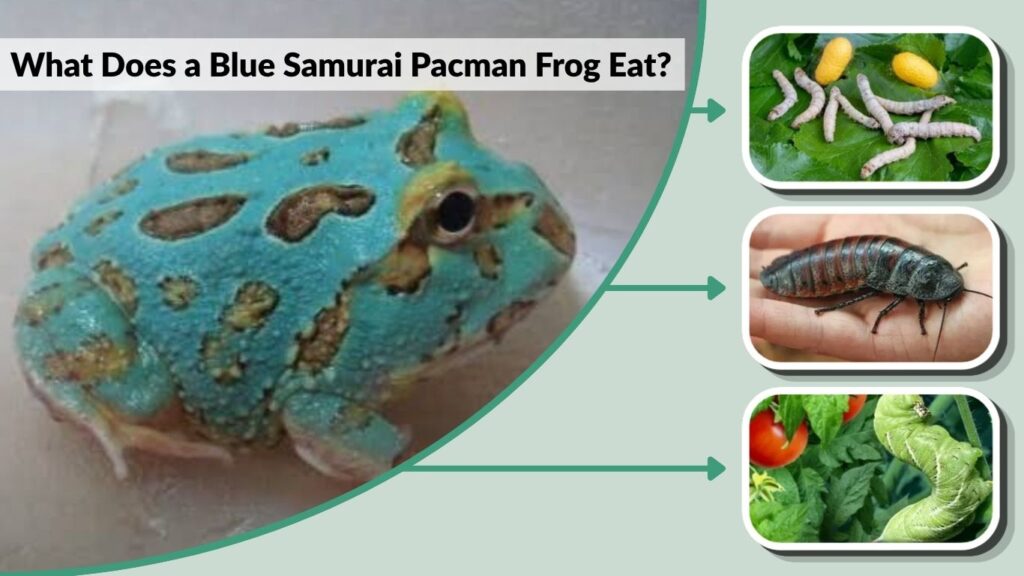
Blue Samurai Pacman frogs are carnivorous ambush predators. In captivity, they need a varied diet rather than relying on one feeder insect.
Suitable foods include:
- Earthworms
- Appropriately sized crickets
- Dubia roaches
- Silkworms
- Hornworms
- Occasional mealworms
- Other captive-raised, amphibian-safe feeders
Earthworms, gut-loaded crickets, and roaches can form a strong dietary foundation. Waxworms and mealworms are comparatively fatty and are better used occasionally. Feeder insects should be appropriately sized, gut-loaded, and supplemented according to advice from an amphibian veterinarian.
Juveniles usually require food more frequently than adults. Veterinary guidance commonly recommends daily feeding for young frogs and approximately one or two meals weekly for adults, adjusted for body condition, prey size, and appetite.
Overfeeding can cause obesity. Rodents are not necessary as a staple and are nutritionally dense; live rodents should never be offered because they can severely injure the frog.
Temperament and Handling
Samurai Blue Pacman frogs are primarily display animals. They usually remain partly buried and wait for prey instead of actively exploring the enclosure. This inactivity is normal for an ambush predator.
Handling should be limited to essential situations. Amphibian skin is delicate and readily absorbs substances from human hands, including soap, lotion, oils, and cleaning chemicals. When moving the frog is unavoidable, use clean, damp, powder-free gloves and support its entire body.
Pacman frogs can also deliver a painful bite. Feeding tongs help prevent the animal from associating fingers with food.
Common Health Problems
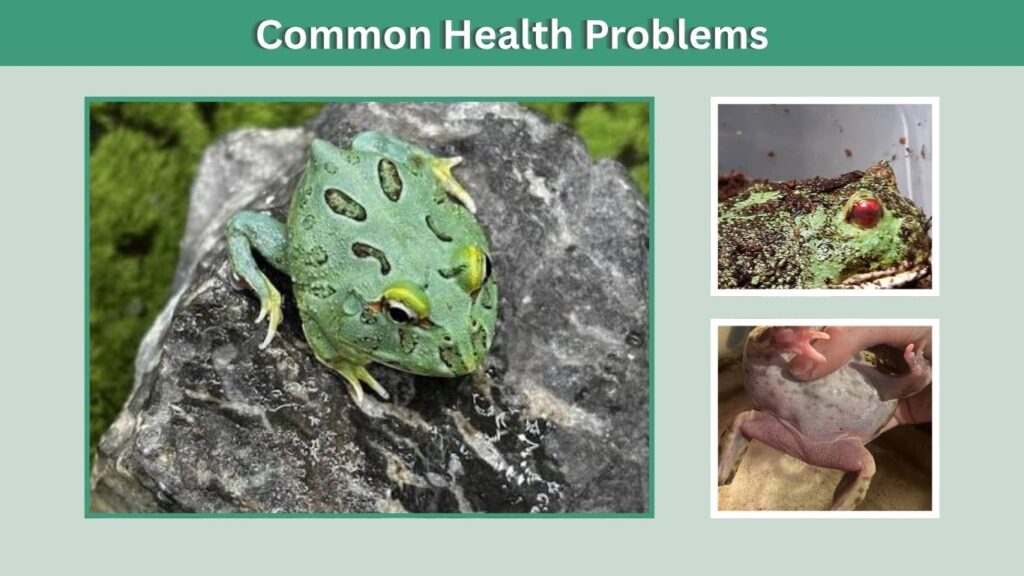
A healthy Samurai Blue should have clear eyes, moist intact skin, a rounded body, clean nostrils, and a consistent feeding response. Color alone is not a reliable measure of health.
Potential problems include:
- Impaction: Often associated with swallowing large substrate particles or oversized prey
- Metabolic bone disease: Linked to poor calcium balance, inadequate supplementation, or unsuitable lighting
- Red-leg syndrome: Redness, lethargy, or skin lesions associated with serious infection
- Dehydration: Dry skin, prolonged inactivity, or difficulty shedding
- Obesity: Excess body fat caused by overfeeding or frequent fatty prey
- Respiratory disease: Wheezing, mucus, or open-mouth breathing
- Mouth infection: Swelling, white patches, or refusal to eat
Loss of appetite, significant swelling, red skin, weight loss, discharge, breathing difficulty, or abnormal posture requires prompt attention from an experienced exotic-animal veterinarian.
Buying a Samurai Blue Pacman Frog
When searching for a blue Samurai Pacman frog for sale, prioritize health and responsible captive breeding over the brightest photograph.
Ask the seller about:
- Whether the frog was captive-bred
- Its current age and approximate size
- What it is eating consistently
- Its feeding and supplementation schedule
- Whether it has experienced health problems
- The appearance of the parents
- Whether the displayed image shows the exact animal
- Live-arrival and health policies
A healthy baby should appear alert, well-rounded, and free of sores, swelling, discharge, or deformed limbs. Avoid sellers who guarantee that every juvenile will become intensely blue, since adult coloration can vary considerably.
FAQs
Are blue Samurai Pacman frogs naturally blue?
They are selectively bred rather than naturally occurring as a distinct wild blue population. Most display mint, turquoise, teal, or blue-green coloration instead of a pure sky-blue shade. Their final color depends on genetics, age, and environmental conditions.
How big does a Samurai Blue Pacman frog get?
Males usually reach around 3–4 inches, while females may grow from approximately 4–8 inches. The frog’s sex, genetics, feeding, and general health influence its final size.
Do Samurai Blue Pacman frogs require special care?
No. Their color morph does not change their fundamental husbandry needs. They require a warm and humid enclosure, deep damp substrate, dechlorinated water, a varied carnivorous diet, suitable supplementation, and minimal handling.
Can two Samurai Blue Pacman frogs live together?
No. Pacman frogs should be kept individually. They are solitary, territorial predators and may bite, injure, or attempt to consume another frog placed in the same enclosure.
Why is my blue Samurai Pacman frog turning green or brown?
Color can vary as the frog grows and responds to lighting, temperature, humidity, substrate, and genetics. A greener or darker appearance is not automatically a health problem, provided the frog remains alert, hydrated, and feeding normally.
