
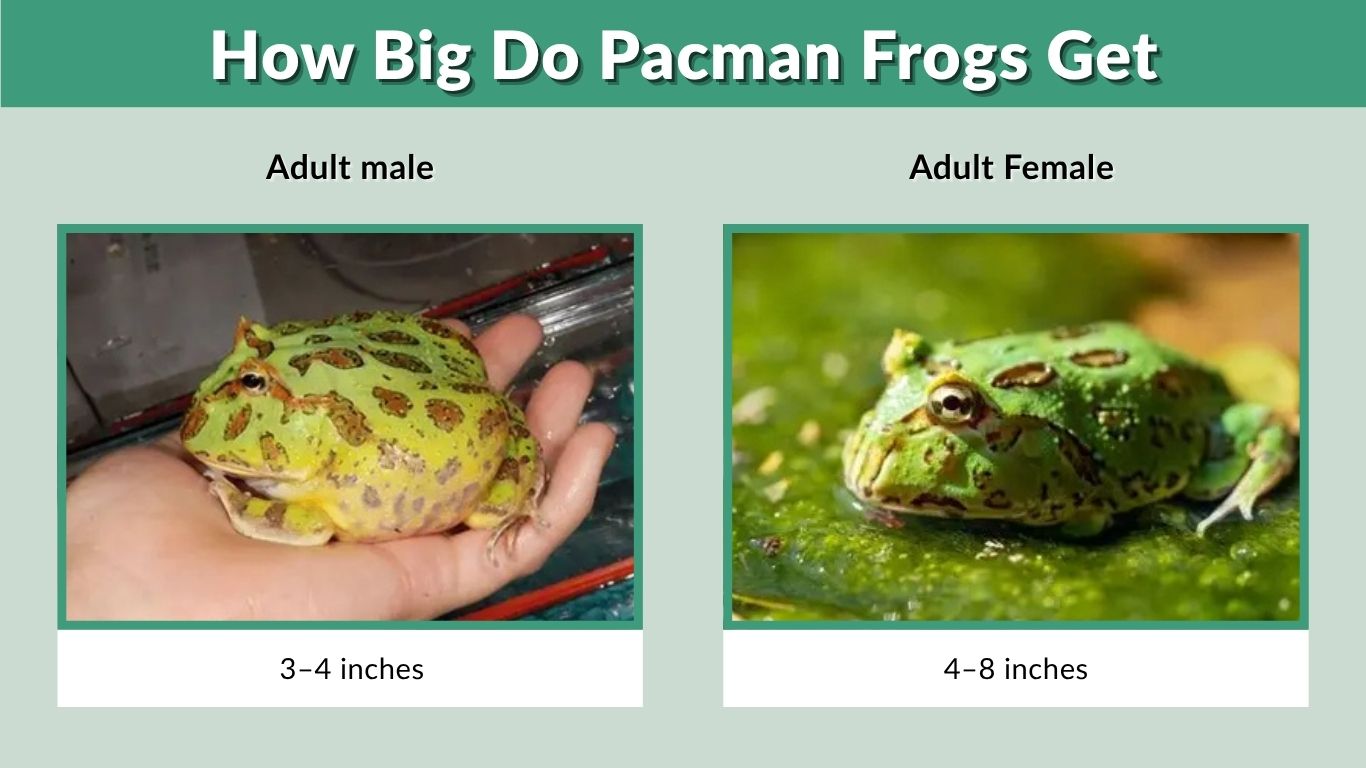
Pacman frogs usually grow between 3 and 8 inches long, making them some of the largest commonly kept pet frogs. However, their final size depends heavily on sex, species, genetics, nutrition, and overall health. Males usually remain relatively compact, while females can become nearly hand-sized, with broad, heavy bodies. Most healthy Pacman frogs complete the majority of their growth during their first year, although some individuals continue filling out after reaching their full body length.
How Big Do Pacman Frogs Get When Fully Grown?
An adult Pacman frog generally measures 3–8 inches from the tip of its nose to the rear of its body. This measurement does not include the legs because frogs are usually measured by snout-to-vent length.
Fully grown adults commonly weigh between half a pound and one pound, although weight varies considerably. Females are normally longer, broader, and heavier than males. Veterinary guidance states that most Pacman frogs reach adult size within approximately 6–12 months when provided with suitable care.
| Pacman frog | Typical adult length | General body shape |
| Adult male | 3–4 inches | Smaller and more compact |
| Adult female | 4–8 inches | Larger, broader, and heavier |
| Average overall range | 3–8 inches | Round, stocky body |
| Adult weight | 0.5–1 pound | Depends on sex and body condition |
These figures are general ranges rather than guaranteed measurements. Individual frogs may remain smaller or grow larger because “Pacman frog” is a common name applied to several closely related horned-frog species.
How Big Do Male Pacman Frogs Get?
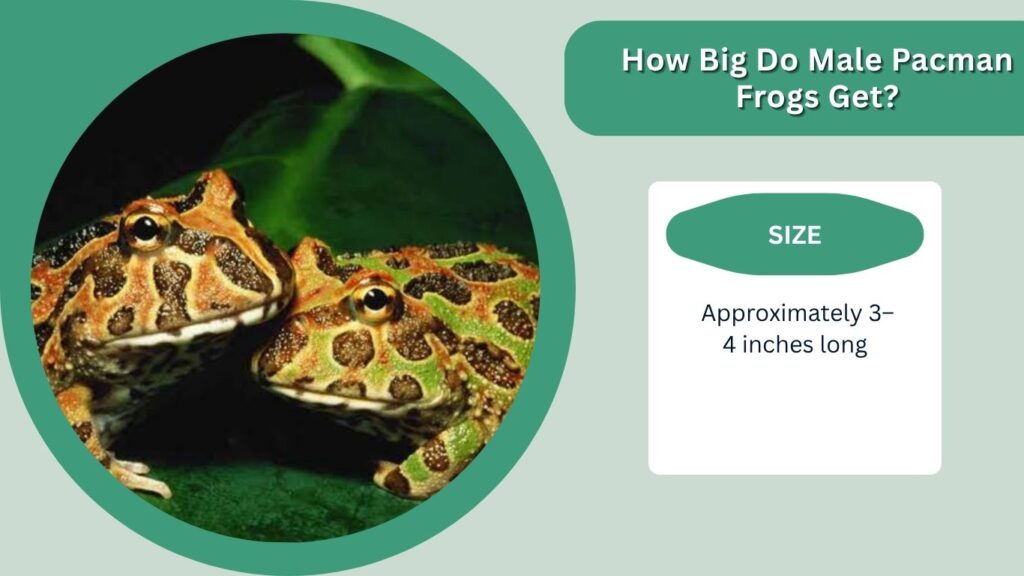
Male Pacman frogs usually reach approximately 3–4 inches long. They tend to be noticeably smaller than adult females, especially when both are fully mature.
Size is not the only way to recognize a male. Mature males may also develop dark nuptial pads on their front feet and are more likely to call. Their call may sound like croaking, chirping, or buzzing, especially during humid conditions or the breeding season.
A male’s smaller size does not mean he needs significantly different care. He still requires adequate floor space, deep substrate for burrowing, stable humidity, and a varied diet. Most adult Pacman frogs should be housed individually because they are solitary and may attempt to eat smaller tankmates.
How Big Do Female Pacman Frogs Get?
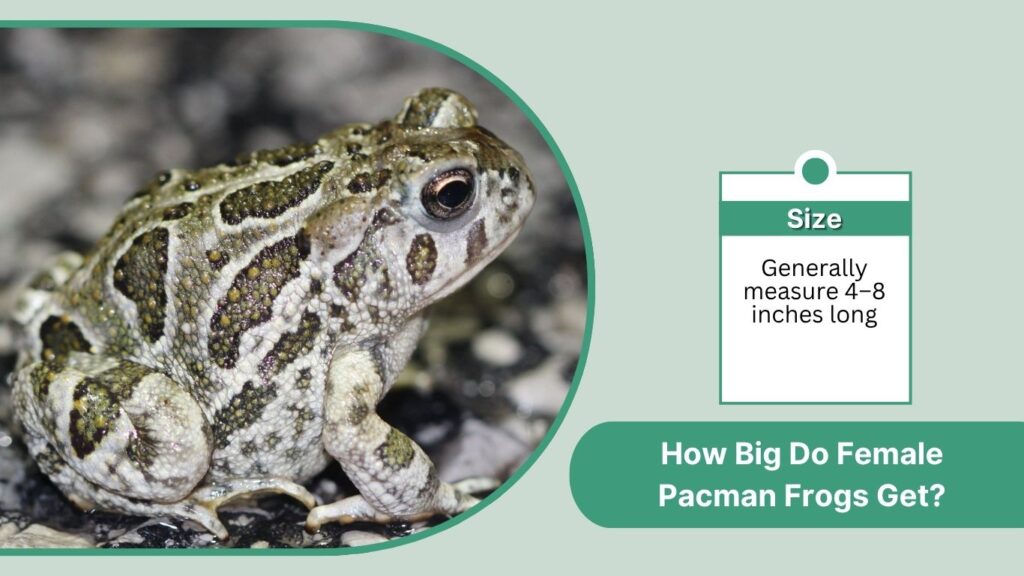
Female Pacman frogs generally measure 4–8 inches long as adults. Large females may be about the size of an adult human hand and can develop remarkably broad, heavy bodies.
Because females have a larger potential size, their enclosure should provide enough floor space to:
- Turn around comfortably
- Burrow completely into the substrate
- Reach a shallow water dish
- Move between warmer and cooler areas
- Remain separated from other frogs
A 10–20-gallon enclosure is commonly recommended for a Pacman frog, with larger females benefiting from the upper end of that range. Floor area is more important than climbing height because these frogs are terrestrial and spend much of their time sitting or burrowing.
How Big Do Albino Pacman Frogs Get?
Albino Pacman frogs generally reach the same size as normally colored frogs of the same species and sex. An albino male will usually remain around 3–4 inches, while an albino female may reach 4–8 inches.
Albinism changes pigmentation rather than creating a separate Pacman frog species. Therefore, it is reasonable to expect adult size to be determined mainly by sex, species, genetics, nutrition, and health—not by the albino coloration itself. Pacman frogs are available in many colors, including green, brown, orange, red, and albino forms.
A seller cannot reliably guarantee an exact adult size based only on a baby frog’s color morph. Information about the frog’s species, sex, parents, and breeding line provides a better indication of its future size.
How Quickly Do Pacman Frogs Grow?
Pacman frogs grow rapidly compared with many other amphibians. Under suitable conditions, most reach or approach their adult length within 6–12 months. Another exotic-animal veterinary source places full growth at around one year, with an adult range of approximately 4–7 inches.
The First Few Months
Young Pacman frogs usually grow quickly because they eat frequently and devote substantial energy to development. Juveniles may require appropriately sized food daily, while adults are usually fed only once or twice per week.
Growth should be steady rather than forced. Excessive feeding may make a frog overweight without producing healthy skeletal development.
Around Six to Twelve Months
Sexual size differences become increasingly noticeable as the frog matures. Males often stop growing at a smaller size, while females continue becoming longer and broader.
Some frogs may take longer to develop because growth rate is affected by genetics, temperature, feeding, illness, and general husbandry.
What Affects a Pacman Frog’s Adult Size?
Not every Pacman frog reaches the largest size listed in a care guide. Several factors influence its growth.
Sex and Genetics
Sex is one of the strongest predictors of size. Females are usually substantially larger than males. Genetics also influence whether an individual reaches the lower or upper end of its expected range.
Species
“Pacman frog” refers to horned frogs in the genus Ceratophrys. Cranwell’s horned frogs and ornate horned frogs are among the forms commonly kept in captivity. Adult measurements vary among species and individuals.
For example, scientific records for Cranwell’s horned frog report a broad adult snout-to-vent range of approximately 42–130 millimeters, or about 1.7–5.1 inches, illustrating how much natural variation can occur within one species.
Diet
Young frogs need sufficient protein, calcium, vitamins, and minerals to support development. Suitable foods include gut-loaded crickets, earthworms, Dubia roaches, silkworms, and other appropriately sized feeders.
A varied diet is preferable to feeding only one type of insect. Waxworms and mealworms are relatively fatty and should be occasional foods rather than dietary staples.
Temperature and Humidity
Improper environmental conditions may reduce appetite, activity, and growth. Veterinary care guidance recommends daytime temperatures of approximately 75–83°F, nighttime temperatures of 70–75°F, and humidity around 70–80%.
The substrate should remain damp but not saturated. Excessively wet conditions encourage bacterial and fungal growth, while dry conditions may cause dehydration and prolonged inactivity.
Illness and Parasites
A frog that refuses food, loses weight, develops red skin, appears swollen, or grows unusually slowly may have an underlying health problem. Nutritional deficiencies, parasites, infection, dehydration, and metabolic bone disease can all interfere with normal development.
An amphibian-experienced veterinarian should examine a frog showing persistent appetite loss, abnormal posture, bent limbs, skin lesions, breathing difficulty, or unexplained weight changes.
Is a Large Pacman Frog Overweight?
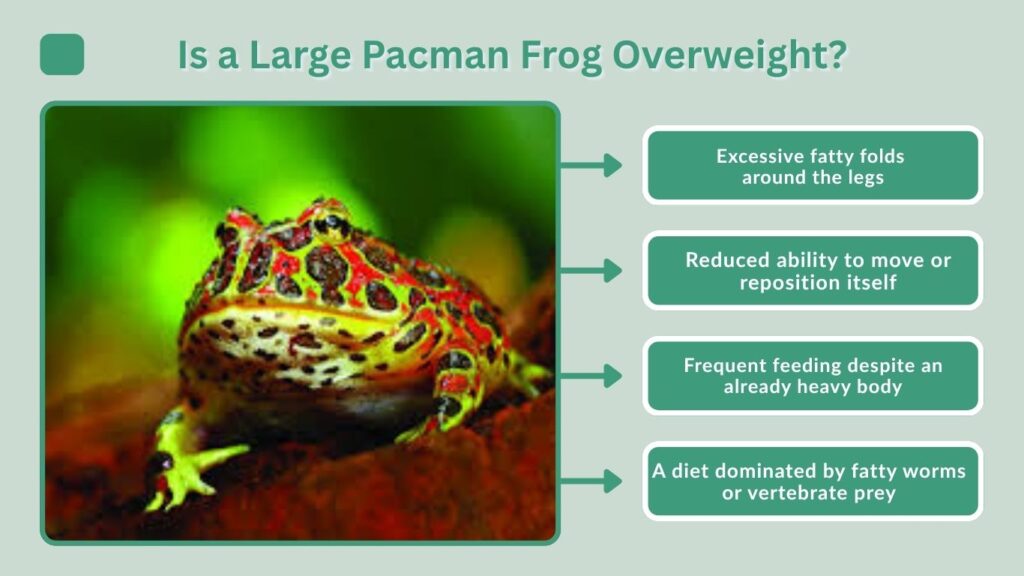
Pacman frogs naturally have round bodies, so their normal appearance can make obesity difficult to identify. A healthy frog should look plump and broad without developing excessive folds or losing the ability to move normally.
Possible signs of overfeeding include:
- Rapid weight gain after adult growth has stopped
- Excessive fatty folds around the legs
- Reduced ability to move or reposition itself
- Frequent feeding despite an already heavy body
- A diet dominated by fatty worms or vertebrate prey
Body length and body weight should be considered together. A large female may be naturally much heavier than a small male, while a short frog carrying excessive fat may still be overweight.
How to Measure a Pacman Frog
Measure the frog only when necessary because unnecessary handling can damage its delicate skin.
Place it briefly in a clean container and measure from the tip of the nose to the rear opening of the body. Do not stretch the legs or press the frog flat. When physical contact is unavoidable, use clean, damp, powder-free gloves moistened with dechlorinated water.
Recording the frog’s length and weight every few weeks during its first year can help track development. Measurements taken every day are not useful because normal hydration and feeding can cause temporary weight changes.
FAQs
What is the average size of a full-grown Pacman frog?
A full-grown Pacman frog usually measures between 3 and 8 inches long. Males commonly remain around 3–4 inches, while females may reach 4–8 inches and develop much broader, heavier bodies.
How big do male Pacman frogs get?
Adult male Pacman frogs generally grow to approximately 3–4 inches in body length. Genetics and species can produce some variation, but males normally remain considerably smaller than mature females.
How big do female Pacman frogs get?
Female Pacman frogs usually reach 4–8 inches. Large females can become nearly hand-sized and may weigh close to one pound when fully grown, although not every female reaches the maximum reported size.
How big do albino Pacman frogs get?
Albino Pacman frogs follow the same general size range as other color morphs. Albino males commonly reach 3–4 inches, while females may grow 4–8 inches. Their sex and species matter more than their coloration.
How long does a Pacman frog take to reach full size?
Most healthy Pacman frogs reach or approach adult size within 6–12 months. Growth rate depends on sex, species, genetics, diet, temperature, humidity, and health, so some individuals may take longer.
