
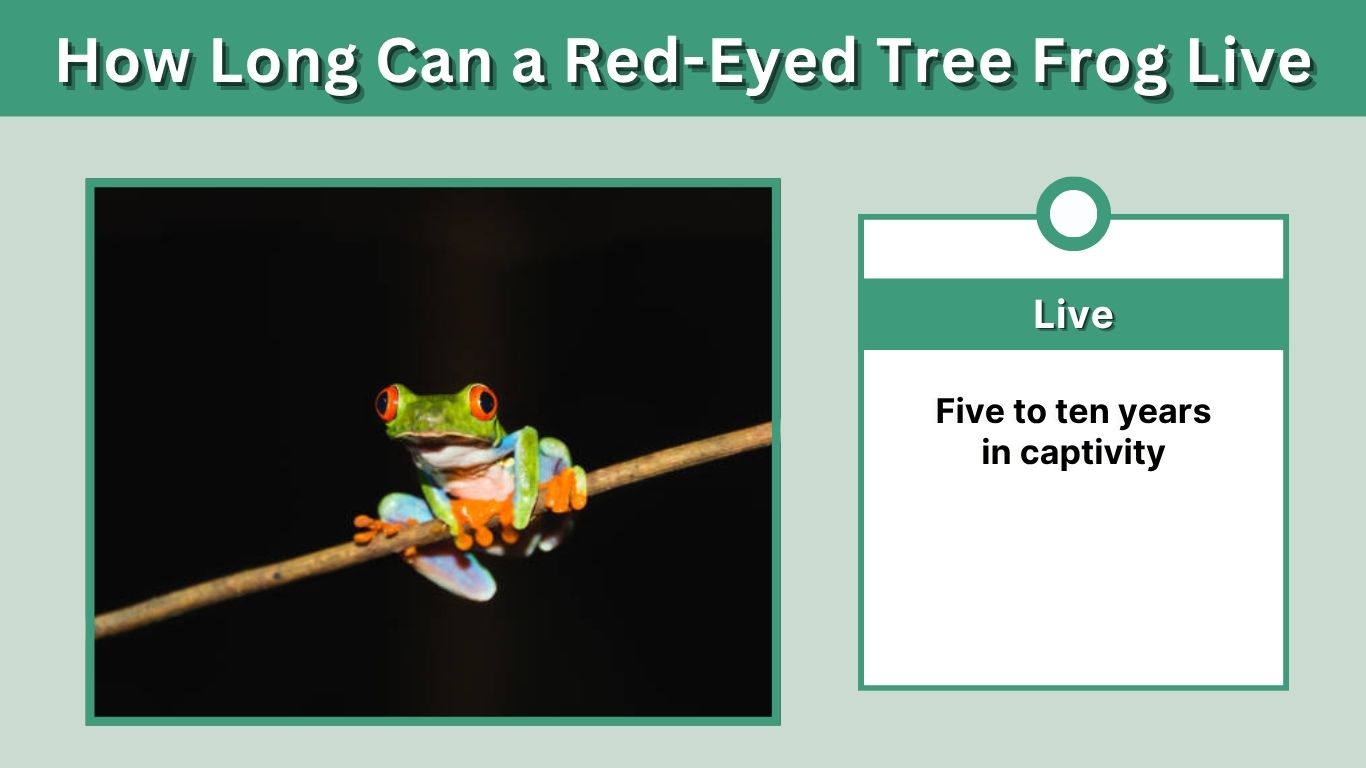
Red-eyed tree frogs are famous for their bright red eyes, green bodies, orange feet, and remarkable jumping ability. These tropical frogs can make fascinating display pets, but they require carefully controlled humidity, temperature, diet, and enclosure conditions. With proper care, a red-eyed tree frog can live considerably longer in captivity than it usually does in the wild. This guide explains their lifespan, housing needs, diet, handling safety, social behavior, swimming ability, and what to consider before buying one.
How Long Can a Red-Eyed Tree Frog Live?
A red-eyed tree frog can generally live for five to ten years in captivity. Some exceptionally well-cared-for individuals may live for around 10–12 years, although this is not guaranteed.
In the wild, their lifespan is often shorter because they face predators, parasites, diseases, food shortages, and changing weather conditions. Captive frogs are protected from many of these dangers, but their survival depends heavily on appropriate husbandry.
| Living Conditions | Expected Lifespan |
| In the wild | Around 3–5 years |
| In captivity | Around 5–10 years |
| Exceptional captive care | Occasionally 10–12 years |
Factors That Affect Their Lifespan
Several conditions can influence how long a red-eyed tree frog lives:
- Appropriate temperature and humidity
- A clean, well-ventilated enclosure
- Nutritious, gut-loaded insects
- Calcium and vitamin supplementation
- Access to clean, dechlorinated water
- Low stress and limited handling
- Early treatment of illness or parasites
- Purchase from a responsible breeder
Poor ventilation, constant wetness, dehydration, nutritional deficiencies, and dirty enclosure conditions can significantly shorten a frog’s life.
Can You Keep Red-Eyed Tree Frogs as Pets?
Yes, red-eyed tree frogs can be kept as pets. However, they are best suited to owners who are prepared to maintain a tropical enclosure consistently.
These frogs are nocturnal and usually remain still or hidden during the day. At night, they become active and climb, hunt, and explore. They are primarily display animals rather than pets that enjoy being held.
How Big Can a Red-Eyed Tree Frog Get?
Adult females are usually larger than males. Females commonly reach approximately 2.5–3 inches in body length, while males are often around 1.5–2.5 inches long.
Their enclosure should provide more vertical space than floor space because they spend most of their time climbing leaves, branches, vines, and enclosure walls.
Can You Handle a Red-Eyed Tree Frog?
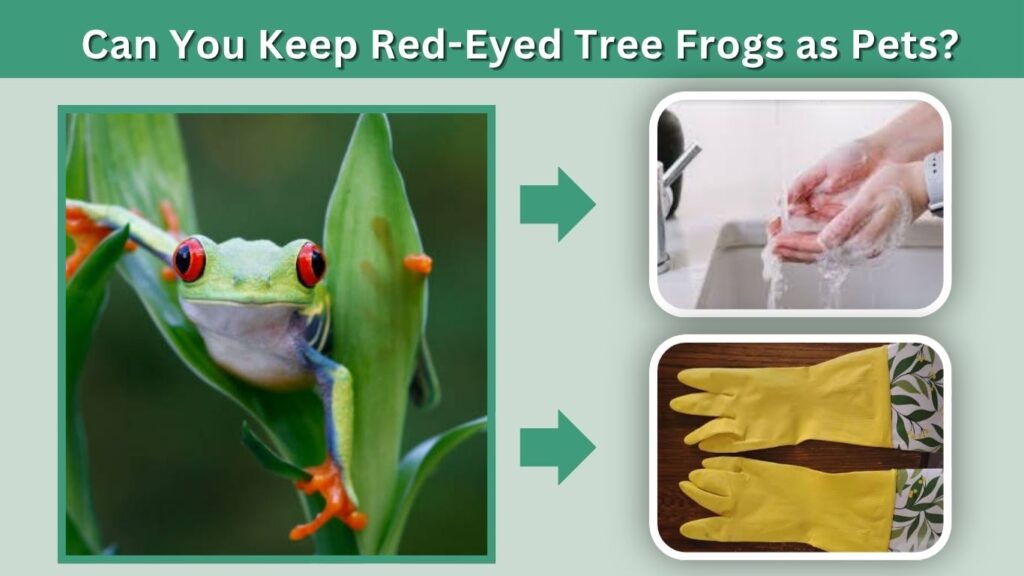
Red-eyed tree frogs should only be handled when necessary. Their skin is delicate and can absorb oils, soap, lotion, chemicals, and other substances from human hands.
When handling is unavoidable:
- Wash and rinse your hands thoroughly without leaving soap residue.
- Wet your hands with dechlorinated water.
- Support the frog gently without squeezing it.
- Keep handling sessions extremely brief.
- Use clean, powder-free gloves when possible.
Excessive handling can cause stress and may damage the protective coating on the frog’s skin.
Can Red-Eyed Tree Frogs Live Alone?
Red-eyed tree frogs can live alone without experiencing loneliness in the same way a social mammal might. A single frog can remain healthy when its environmental and nutritional needs are properly met.
They can also live in small groups when the enclosure is large enough. Keeping multiple frogs together allows owners to observe more natural climbing, resting, calling, and feeding behavior.
How Many Red-Eyed Tree Frogs Can Live Together?
The number depends on the enclosure’s dimensions, ventilation, plant coverage, and available feeding space. A tall enclosure of around 18 × 18 × 24 inches may house two or three adults, although additional space is always beneficial.
Avoid overcrowding because it can cause:
- Competition for food
- Increased stress
- Poor air circulation
- Faster waste accumulation
- Easier transmission of parasites or infections
Two male red-eyed tree frogs can generally live together. However, males may call frequently, especially during humid conditions or the breeding season. Owners should monitor every frog to ensure each one is eating and maintaining a healthy body condition.
Can Red-Eyed Tree Frogs Live With Other Frogs?
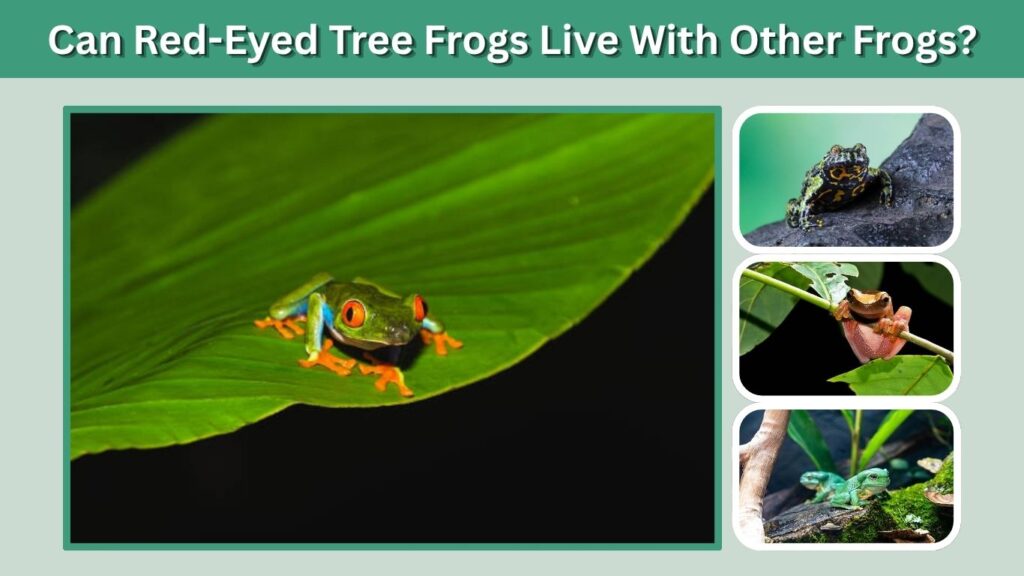
Housing different frog species together is generally not recommended. Even species with similar temperature and humidity requirements may carry different microorganisms, compete for food, or produce defensive skin secretions that affect their enclosure mates.
Red-eyed tree frogs should not normally be housed with:
- White’s tree frogs
- Dart frogs
- Fire-bellied toads
- Clown tree frogs
- Green tree frogs
- Crested geckos
- Day geckos
- Chameleons
Different species can also have incompatible activity levels, feeding habits, body sizes, and enclosure requirements. A larger animal may injure or eat a smaller frog.
The safest approach is to create a species-only enclosure containing red-eyed tree frogs of similar size.
Can a Red-Eyed Tree Frog Swim?
Red-eyed tree frogs can swim when necessary, but they are not strongly aquatic frogs. They naturally spend most of their lives in trees and vegetation above ponds, streams, or temporary pools.
Their enclosure should not contain deep, open water. A frog could become exhausted or struggle to climb out of a steep-sided container.
Provide a shallow water dish that:
- Is easy to enter and leave
- Contains clean, dechlorinated water
- Is changed every day
- Is wide enough for soaking
- Is not deep enough to create a drowning risk
Red-eyed tree frogs often absorb water through their skin rather than drinking it directly with their mouths.
What Can Red-Eyed Tree Frogs Eat?
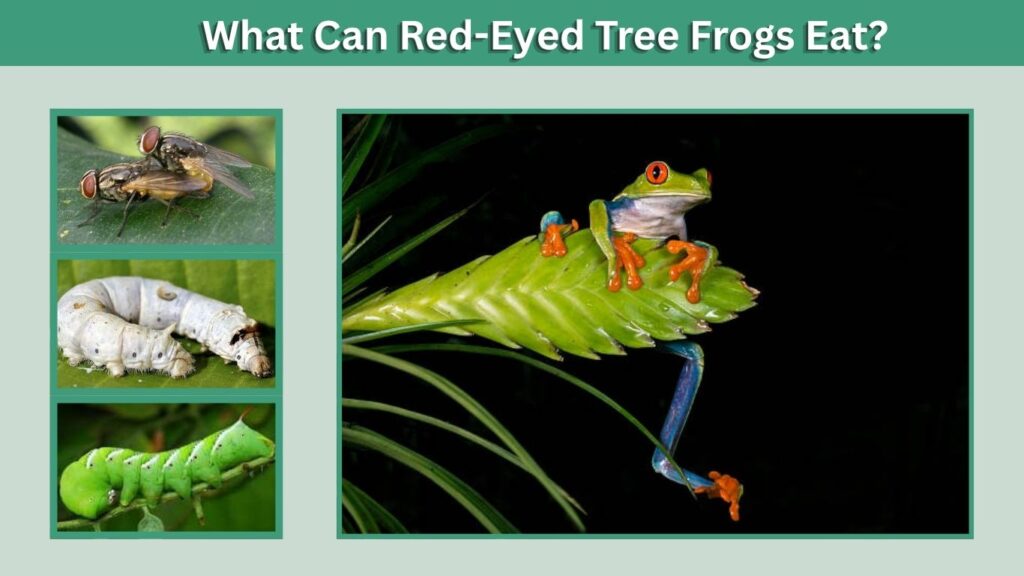
Red-eyed tree frogs are insectivores. They require appropriately sized live prey that stimulates their natural hunting behavior.
Suitable foods include:
- Crickets
- Small Dubia roaches
- Black soldier fly larvae
- Houseflies
- Silkworms
- Hornworms
- Occasional waxworms
Dubia roaches can be offered when they are small enough for the frog to swallow safely. Mealworms should only be occasional foods because their hard outer shells can be difficult to digest, particularly for young frogs.
Feeding and Supplementation
As a general guide, juveniles may eat daily, while adults are often fed every two or three days. The exact schedule should be adjusted according to the frog’s age, size, activity level, and body condition.
Feeder insects should be gut-loaded before being offered. They should also be dusted with an appropriate calcium supplement. A reptile or amphibian multivitamin may be used according to its instructions.
Remove uneaten insects because loose crickets may stress or bite a resting frog.
How Long Can They Go Without Food?
A healthy adult might survive several days without eating, but owners should not intentionally test how long a frog can go without food. Juveniles have fewer energy reserves and require more frequent feeding.
Temporary appetite loss may occur after transportation, enclosure changes, temperature fluctuations, or stress. Contact an experienced exotic veterinarian when a frog repeatedly refuses food, loses weight, becomes weak, or displays abnormal behavior.
How Far Can a Red-Eyed Tree Frog Jump?
Red-eyed tree frogs are powerful jumpers capable of leaping several times their own body length. Their long hind legs and adhesive toe pads help them move between leaves and branches.
Exact jumping distance varies by age, size, surface, and motivation. Because they can suddenly leap through an open door, all enclosure maintenance should be performed carefully.
A secure enclosure should include:
- A tightly fitting lid or door
- Tall branches and vines
- Broad-leaved live or artificial plants
- Multiple elevated resting locations
- No sharp decorations
How Many Eggs Can a Red-Eyed Tree Frog Lay?
A female commonly deposits approximately 30–50 eggs in a gelatinous cluster on a leaf positioned above water. She may produce multiple clutches during favorable breeding conditions.
After developing for several days, the tadpoles hatch and fall from the leaf into the water below. Breeding red-eyed tree frogs requires a carefully designed rain chamber, aquatic tadpole habitat, and preparation for raising many offspring. It should not be attempted without adequate research and space.
Where Can You Buy a Red-Eyed Tree Frog?
Red-eyed tree frogs may be available from reputable amphibian breeders, specialist reptile shops, exotic-pet expos, and established online sellers. Availability varies between Canada, the United Kingdom, the United States, and other countries.
Choose a captive-bred frog whenever possible. Captive-bred animals are generally better adapted to captivity and are less likely to carry heavy parasite loads than wild-caught frogs.
Before buying, ask the seller about:
- Whether the frog is captive-bred
- Its approximate age
- Its current diet and feeding schedule
- Any previous health problems
- How long the seller has cared for it
- Whether live-arrival or health guarantees apply
A healthy frog should appear alert at night, have clear eyes, maintain a normal body shape, and show no obvious wounds, swelling, or discoloration.
Check national, provincial, state, or local regulations before purchasing an exotic amphibian. Buyers should also prepare the complete enclosure before bringing the frog home.
Essential Care Requirements
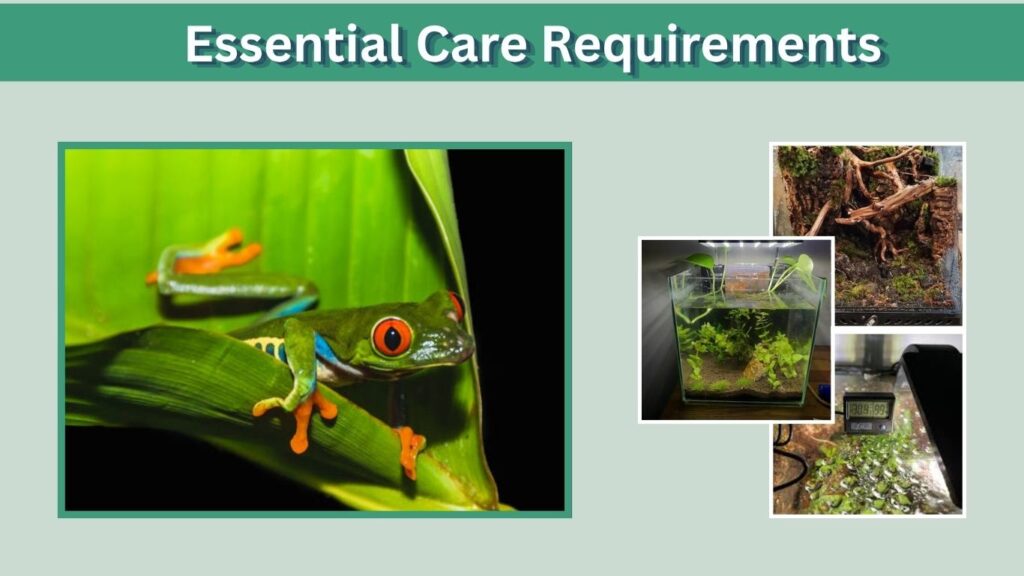
Maintaining stable conditions is one of the most important parts of achieving a long captive lifespan.
| Care Requirement | General Recommendation |
| Enclosure style | Tall, secure, well-ventilated terrarium |
| Daytime temperature | Approximately 75–82°F |
| Night temperature | Approximately 68–75°F |
| Humidity | Moderate to high, with some drying between misting |
| Water | Fresh, dechlorinated water |
| Diet | Varied, gut-loaded live insects |
| Handling | Minimal |
| Housing | Alone or with similar-sized red-eyed tree frogs |
Avoid keeping the enclosure permanently soaked. Constant wetness combined with poor airflow may encourage bacterial and fungal growth. Humidity should rise after misting and gradually decrease while adequate ventilation remains available.
FAQs
Can red-eyed tree frogs live together?
Yes, similar-sized red-eyed tree frogs can live together in a sufficiently large enclosure. Provide numerous climbing branches, hiding places, feeding locations, and good ventilation. Monitor their body condition carefully because dominant or faster frogs may consume more food than their enclosure mates.
Can red-eyed tree frogs see red light?
Red-eyed tree frogs can detect light, and bright nighttime lighting may disturb their natural behavior. A natural day-and-night cycle is preferable. Avoid keeping strong red, blue, or white lights on throughout the night simply for viewing purposes.
Can red-eyed tree frogs eat mealworms?
They can eat appropriately sized mealworms occasionally, but mealworms should not be the main food. Their hard exoskeleton and relatively poor nutritional balance make softer, gut-loaded insects such as crickets, small roaches, silkworms, and flies better regular choices.
Can red-eyed tree frogs live near deep water?
They naturally live around water, but captive adults do not need a deep aquatic area. Deep containers can create a drowning risk, especially when they have slippery or steep sides. A shallow dish with an easy exit is safer.
Can red-eyed tree frogs live with crested geckos?
No, they should not normally be housed with crested geckos. Although both prefer humid, vertically oriented habitats, they have different care needs and may injure, stress, compete with, or transmit microorganisms to one another. Separate species-specific enclosures are safer.
