
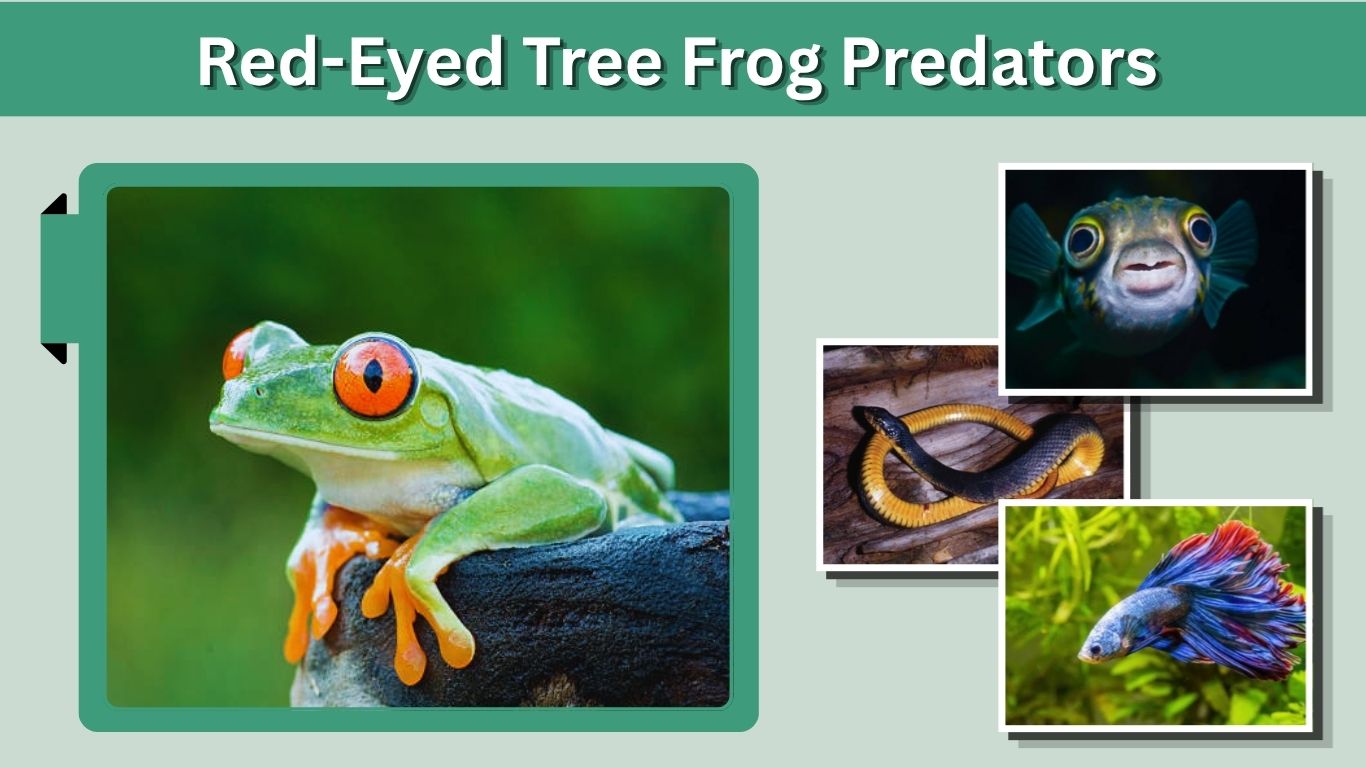
The red-eyed tree frog may look bold and intimidating with its vivid red eyes, orange toes, and blue-striped sides, but it is a small rainforest animal with many natural enemies. Snakes, birds, bats, spiders, fish, shrimp, and wasps may prey on these frogs at different stages of their lives. Fortunately, red-eyed tree frogs have several defenses, including camouflage, powerful jumps, kicking, and remarkably early hatching. This guide explains their main predators, prey, escape methods, and position in the rainforest food chain.
What Are the Predators of Red-Eyed Tree Frogs?
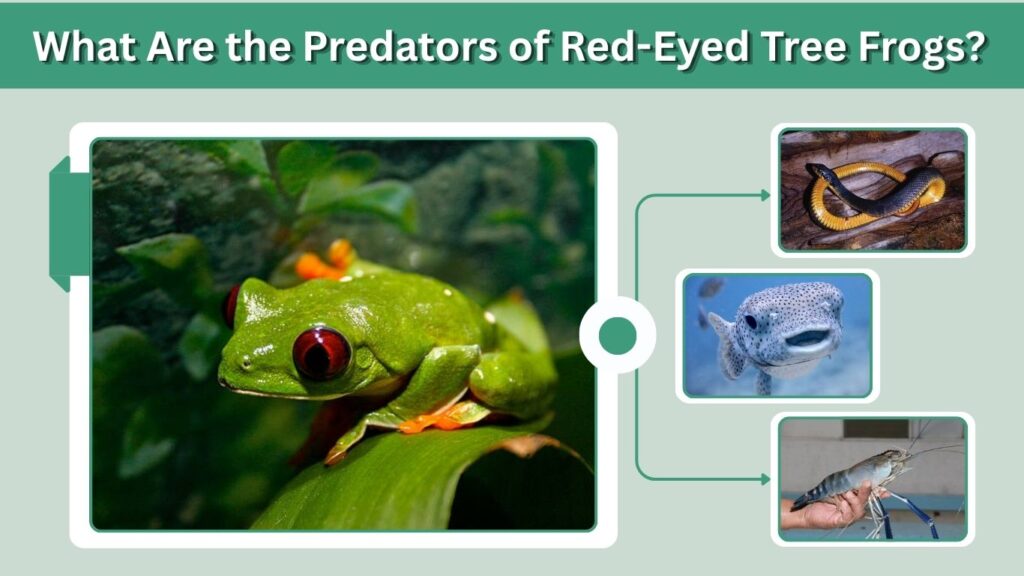
The predators of a red-eyed tree frog depend largely on its life stage. Eggs attached to leaves face different dangers from tadpoles living in water or adults climbing through rainforest vegetation.
| Life stage | Common predators |
|---|---|
| Eggs and embryos | Arboreal snakes, social wasps and some insect larvae |
| Tadpoles | Fish, freshwater shrimp, aquatic insects and spiders |
| Froglets | Snakes, birds, bats and spiders |
| Adults | Arboreal snakes, birds and bats |
Red-eyed tree frogs therefore encounter predators both above and below the water. Their life cycle requires them to move from exposed egg clutches to ponds and eventually into trees, creating different risks at every stage.
Snakes
Arboreal snakes are among the best-known predators of red-eyed tree frogs. Cat-eyed snakes and other climbing snakes can search vegetation for adult frogs, young froglets and egg clutches.
A snake attacking an egg clutch may attempt to swallow many eggs at once. Because the eggs are attached to leaves over water, embryos sometimes escape by hatching early and dropping into the pond below.
However, entering the water early creates another problem. Prematurely hatched tadpoles are smaller and less developed, making them more vulnerable to aquatic predators.
Birds
Insect-eating and small vertebrate-eating birds may capture red-eyed tree frogs from branches, leaves or vegetation surrounding breeding ponds. Birds can attack during the day if they notice a sleeping frog or around dawn and dusk when frogs are moving between resting and feeding locations.
A sleeping frog reduces its visibility by folding its legs against its body and keeping its eyes closed. This hides much of its orange, blue and red coloration and leaves mainly the green back visible against the leaf.
Bird predation may vary between locations because different bird species occur throughout the frog’s range.
Bats
Some tropical bats prey on frogs and other small vertebrates. Red-eyed tree frogs are active at night, placing them in the same environment and activity period as many predatory bats.
A bat may detect a moving or calling frog and capture it from vegetation. Male frogs may be especially noticeable during the breeding season because they call to attract females near ponds.
Bats are recognized as predators of juvenile and adult red-eyed tree frogs, although the level of predation varies by habitat and local predator populations.
Spiders
Large spiders can capture small froglets and, in some cases, adult frogs. Spiders near ponds may also attack recently hatched tadpoles or frogs moving close to the water.
Young frogs are particularly vulnerable because their small size allows a greater variety of predators to overpower them. Even predators too small to attack an adult may be able to capture a newly transformed froglet.
Predators of Red-Eyed Tree Frog Eggs
Female red-eyed tree frogs usually lay gelatinous egg clutches on leaves positioned above ponds. This keeps the eggs away from many aquatic predators, but it exposes them to snakes, wasps and other animals that search the vegetation.
Social Wasps
Social wasps are important predators of red-eyed tree frog eggs. A wasp can land on a clutch, break into the gelatinous material and remove individual embryos.
Research in Panama found that the social wasp Polybia rejecta regularly attacked red-eyed tree frog eggs. Developing embryos sometimes responded by hatching immediately and falling into the water, even when they had not reached their normal hatching age.
Egg-Eating Snakes
Climbing snakes can consume large portions of an egg clutch. Unlike a wasp that may remove one egg at a time, a snake can threaten many embryos during a single attack.
The vibrations produced by a snake moving and biting into the clutch can alert the embryos. Once they identify the vibrations as dangerous, multiple embryos may hatch together and escape into the pond.
Predators of Red-Eyed Tree Frog Tadpoles
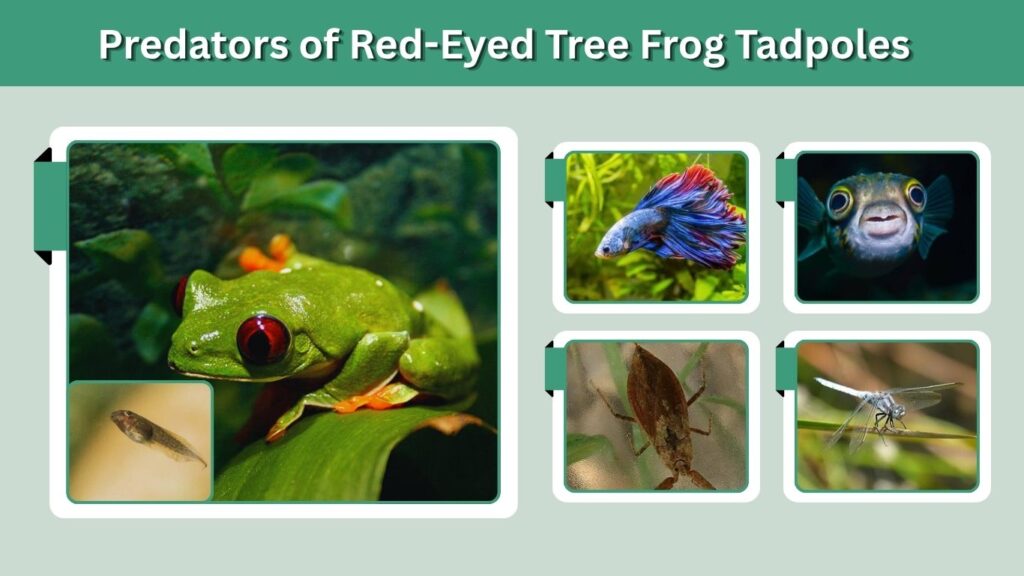
After hatching, tadpoles fall from the leaves into the water. They are safe from egg-eating wasps and climbing snakes, but they enter an aquatic environment filled with new predators.
Fish and Aquatic Insects
Fish may consume red-eyed tree frog tadpoles whenever the two occur in the same pond. Giant water bugs, dragonfly larvae and other predatory aquatic insects may also capture tadpoles.
This explains why remaining inside the egg longer can be beneficial. Older, more developed hatchlings generally swim and escape more effectively than tadpoles forced to hatch prematurely.
Freshwater Shrimp
Predatory freshwater shrimp can capture young tadpoles near the bottom of a pond. Experiments involving Macrobrachium americanum found that older hatchlings were better at fleeing and avoiding bottom areas where shrimp attacks were more successful.
The tadpoles must therefore balance two dangers: staying in the egg leaves them exposed to egg predators, while hatching too early places an underdeveloped tadpole among aquatic predators.
Are Red-Eyed Tree Frogs Predators or Prey?
Red-eyed tree frogs are both predators and prey. They are predators because they actively hunt small animals, but they are also food for larger rainforest species.
Adult red-eyed tree frogs primarily eat small invertebrates, especially insects. Their diet may include:
- Moths
- Flies
- Crickets
- Grasshoppers
- Beetles
- Mosquitoes
- Small roaches
- Other suitably sized arthropods
They hunt mostly at night, using movement to locate prey before lunging forward and capturing it with their mouth.
At the same time, their relatively small size makes them suitable prey for snakes, birds, bats and large spiders. They occupy a middle position in the rainforest food web, controlling insects while transferring energy to larger predators.
How Do Red-Eyed Tree Frogs Avoid Predators?
Red-eyed tree frogs do not have strong claws, teeth or armor. Instead, they depend mainly on hiding, detecting danger early and escaping quickly.
Camouflage
During the day, a red-eyed tree frog commonly rests on a green leaf with its legs tucked tightly against its body. Its green back blends with the surrounding vegetation, while its bright blue sides, orange feet and red eyes remain mostly hidden.
This resting posture can make the frog difficult for predators to notice. The Smithsonian National Zoo notes that their green bodies blend particularly well with leaves while they are sleeping.
Startle Coloration
When disturbed, the frog suddenly opens its bright red eyes and exposes its colorful sides and feet. This abrupt flash of color may briefly surprise or confuse an approaching predator.
The momentary hesitation can provide enough time for the frog to jump away. The colors are therefore most effective when hidden during rest and revealed suddenly during escape.
Powerful Jumping and Kicking
A red-eyed tree frog’s most dependable defense is rapid escape. Its long hind legs allow it to leap quickly between leaves and branches.
When a predator gets close, the frog may jump away immediately. It can also kick at an attacker with its hind legs while attempting to free itself.
Hatching Early
Red-eyed tree frogs begin defending themselves before they have even left the egg. Embryos can detect patterns of vibration produced by attacking snakes or wasps.
When the danger is serious, they may hatch earlier than usual and fall into the water. This behavior can save them from the immediate attack, although early hatchlings face greater risks from aquatic predators.
What Is the Red-Eyed Tree Frog’s Main Predator?
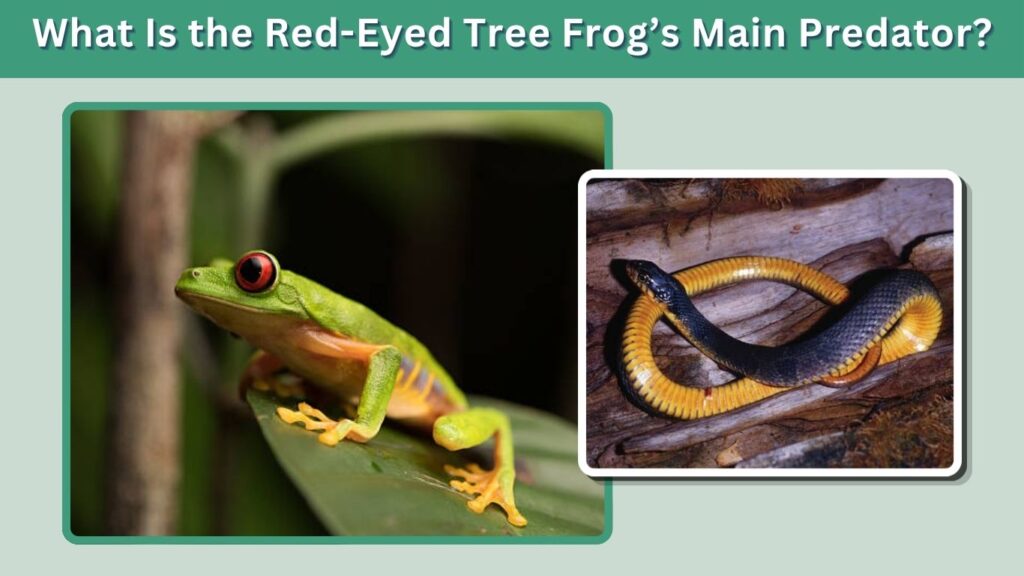
There is no single main predator throughout every part of the frog’s range or life cycle. Snakes and wasps are particularly important predators of egg clutches, while fish, shrimp and aquatic insects threaten tadpoles. Snakes, birds and bats are among the main predators of froglets and adults.
The greatest threat can also change with season, pond conditions and the types of predators living in a particular rainforest.
Why Are Red-Eyed Tree Frogs Important to the Food Chain?
Red-eyed tree frogs help control populations of insects and other small invertebrates. In turn, they provide food for many rainforest predators.
Their eggs and tadpoles support aquatic and semi-aquatic animals, while adult frogs connect the insect community with snakes, birds and bats. Losing these frogs could therefore affect several levels of the surrounding ecosystem.
FAQs
What predators eat red-eyed tree frogs?
Adult and juvenile red-eyed tree frogs may be eaten by arboreal snakes, birds, bats and large spiders. Their eggs are vulnerable to snakes and social wasps, while tadpoles may be eaten by fish, predatory shrimp, aquatic insects and spiders.
How do red-eyed tree frogs scare away predators?
They may suddenly reveal their bright red eyes, orange feet and blue sides when disturbed. This flash of color can briefly surprise an attacker. The frog then uses its long hind legs to jump away or kick while escaping.
Do snakes eat red-eyed tree frogs?
Yes. Climbing snakes can eat adults, froglets and egg clutches. Red-eyed tree frog embryos can sometimes detect the vibrations caused by a snake attack and hatch early, allowing them to fall from the leaf into the water below.
Are red-eyed tree frogs poisonous to predators?
Red-eyed tree frogs are not poison frogs and should not depend on toxicity as their primary protection. Their most important defenses are camouflage, sudden coloration, early danger detection, powerful jumping and rapid escape.
What animals eat red-eyed tree frog tadpoles?
Tadpoles may be consumed by fish, freshwater shrimp, giant water bugs, dragonfly larvae, aquatic spiders and other pond predators. Older tadpoles generally have stronger swimming and escape abilities than individuals forced to hatch early.
