
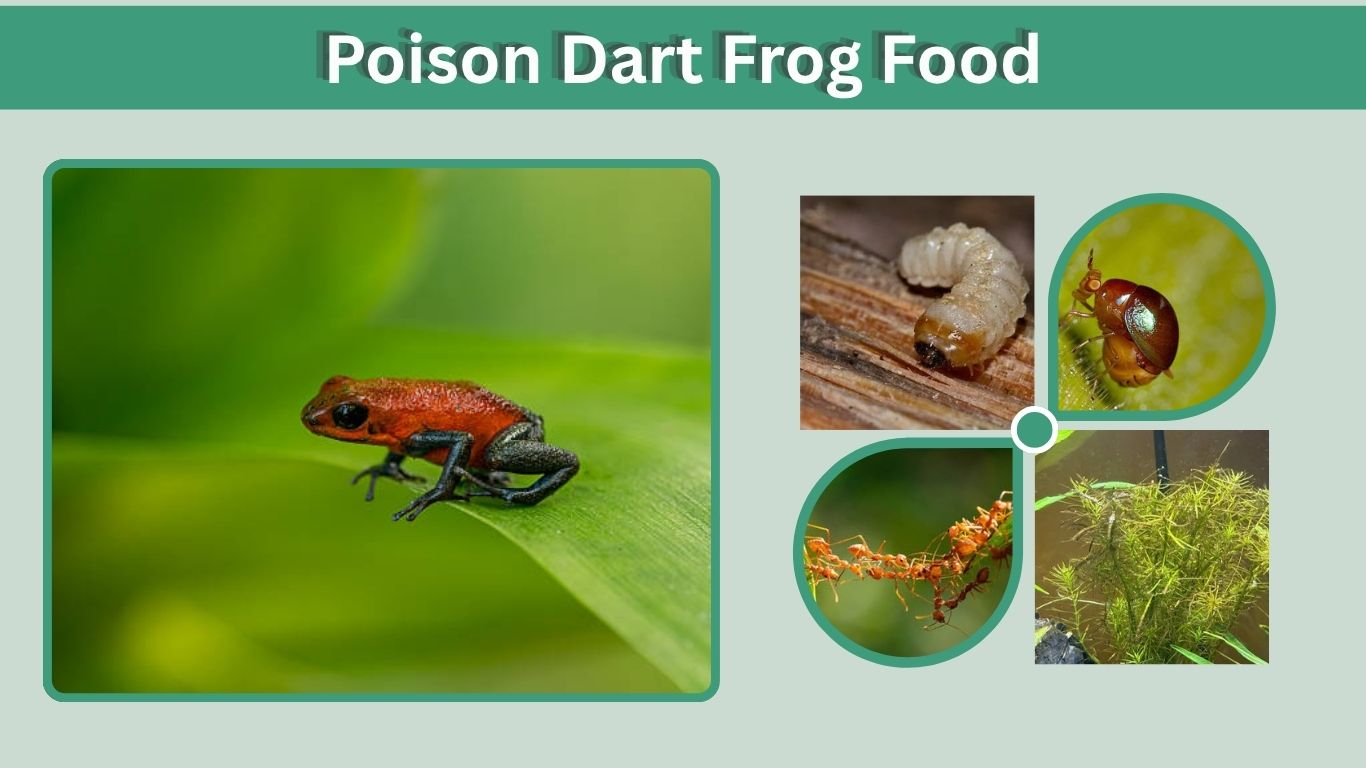
Poison dart frog food consists mainly of tiny living arthropods. In the wild, these colorful frogs hunt ants, termites, mites, beetles, flies, and other small invertebrates across the rainforest floor. Captive dart frogs are commonly fed flightless fruit flies, small crickets, bean beetles, and other appropriately sized live foods. Interestingly, diet also helps explain their famous toxicity: many wild poison frogs obtain defensive alkaloids from specific prey such as ants and mites, while captive frogs eating ordinary feeder insects generally lose those potent chemical defenses.
What Do Poison Dart Frogs Eat?
Poison dart frogs are primarily insectivores, although the exact diet differs among species and life stages. They spend much of the day searching leaf litter and vegetation for small moving prey.
Common wild foods include:
- Ants
- Termites
- Mites
- Tiny beetles
- Small flies
- Small crickets
- Spiders and other tiny arthropods
- Insect larvae
For example, the dyeing poison frog (Dendrobates tinctorius) consumes ants, beetles, and flies, while yellow-banded poison frogs (Dendrobates leucomelas) eat ants, termites, tiny beetles, crickets, spiders, and other small insects.
What Is a Poison Dart Frog’s Favorite Food?
There is no single favorite food shared by every species. However, ants and mites are particularly important in the natural diets of many poison frogs.
Strawberry poison frogs (Oophaga pumilio), for example, consume large numbers of small arthropods, especially ants and mites. Research has also identified mites as an important dietary source of defensive alkaloids in poison frogs.
In captivity, flightless fruit flies are among the most commonly used foods because their size and movement make them suitable prey for small frogs.
Food for Pet Poison Dart Frogs
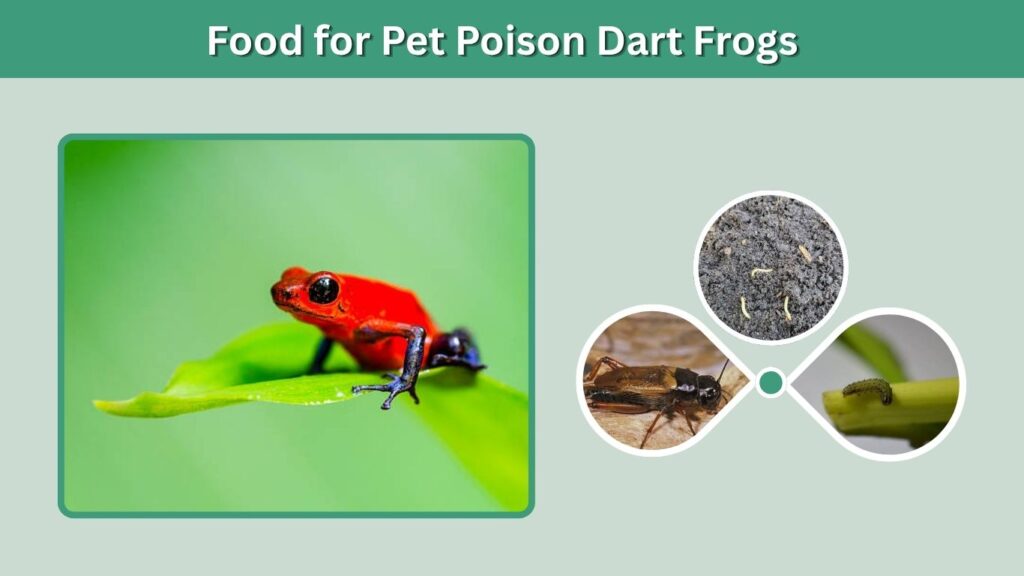
Pet poison dart frogs should receive appropriately sized live prey. The movement of live insects stimulates their natural hunting response.
The Smithsonian National Zoo feeds poison frogs foods including small crickets, bean beetles, black worms, and fruit flies. Supplements may occasionally be applied to feeder insects to improve their nutritional value.
| Food | Suitable for Dart Frogs? | Notes |
| Flightless fruit flies | Excellent | Common staple food |
| Springtails | Excellent | Especially useful for small frogs |
| Bean beetles | Good | Adds dietary variety |
| Pinhead crickets | Good | Must be appropriately sized |
| Small worms | Sometimes | Depends on frog size/species |
| Large crickets | Usually unsuitable | Often too large |
| Pellets | Generally unsuitable | Dart frogs hunt live prey |
| Human food | No | Not appropriate |
Flightless Fruit Flies
Flightless fruit flies are particularly practical because they are tiny, active, and relatively easy to culture.
Two commonly cultured types belong to the genus Drosophila. Keepers often maintain several cultures so that a fresh supply of live food is continuously available.
Newly metamorphosed froglets require especially tiny prey. Smithsonian keepers note that young poison frogs can be only a few millimeters long, meaning their food must also be extremely small.
Springtails
Springtails are another useful food, especially for froglets and smaller dart frog species.
They can also live within a bioactive vivarium, where they contribute to breaking down organic material. However, springtails alone should not automatically be considered a complete long-term diet for every species.
How Often Should Poison Dart Frogs Be Fed?
Feeding frequency depends on the frog’s species, age, body condition, enclosure, prey size, and reproductive status.
Young frogs generally need frequent access to appropriately tiny foods because they are growing rapidly. Adults can consume somewhat larger prey, although all foods still need to be small enough to swallow safely.
Smithsonian poison frogs receive small live foods daily in its managed-care program, but home keepers should follow species-specific recommendations rather than assuming one schedule fits every dart frog.
Uneaten insects should also be monitored so that excessive numbers do not accumulate in the enclosure.
How Do Poison Dart Frogs Catch Their Food?
Poison dart frogs are active hunters rather than animals that wait for food to be placed directly in their mouths.
They search the forest floor and vegetation visually for tiny moving animals. When prey comes within range, the frog quickly extends its sticky, retractable tongue to capture it.
How Do They Hunt?
The basic hunting process is simple:
- The frog moves through leaf litter or vegetation.
- It detects movement from a small arthropod.
- It approaches until the prey is within range.
- The tongue rapidly extends.
- The prey sticks to the tongue.
- The frog pulls the prey into its mouth and swallows it.
Strawberry poison frogs are active foragers that move around searching for numerous small prey rather than relying on a single large meal.
Do Poison Dart Frogs Get Their Poison From Food?
Yes, diet is a major source of the defensive alkaloids found in many wild poison frogs.
The frogs do not simply manufacture all of these chemicals from scratch. Instead, they consume arthropods containing particular alkaloids and store those compounds in glands in their skin. Research has identified ants and mites as especially important sources, while other arthropods may also contribute.
What Food Makes Poison Dart Frogs Poisonous?
Potential dietary sources of defensive alkaloids include:
- Certain ants
- Certain mites
- Some beetles
- Other alkaloid-containing arthropods
Different frog species accumulate different combinations of alkaloids depending partly on what prey is available in their habitat.
This is why poison frogs raised in captivity on conventional feeder insects such as fruit flies and crickets generally do not develop the potent toxicity associated with wild individuals.
Blue Poison Dart Frog Food
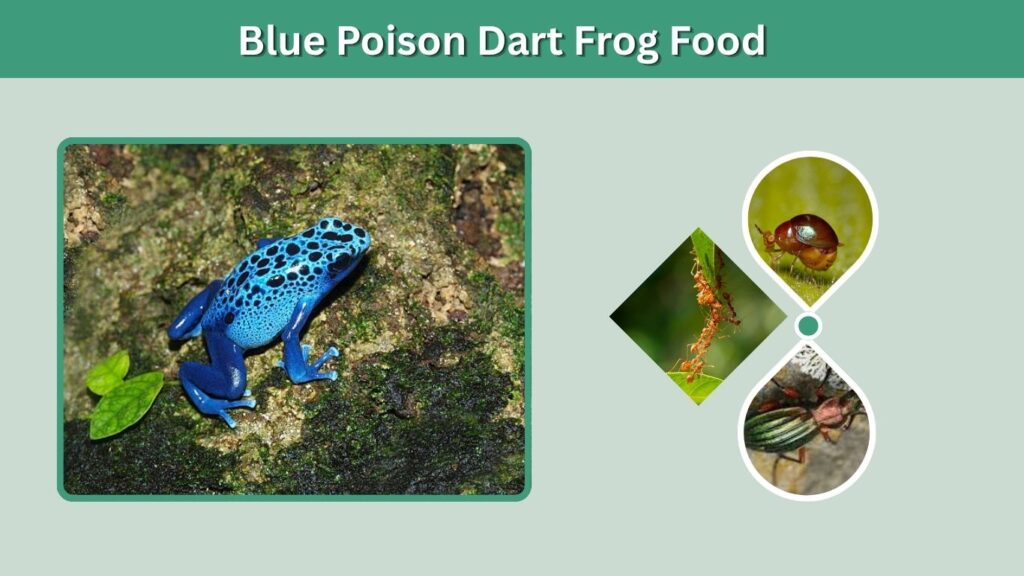
The blue poison dart frog commonly kept in captivity is a color form of Dendrobates tinctorius.
In the wild, D. tinctorius eats small arthropods including ants, beetles, and flies. In captivity, appropriately sized fruit flies, small crickets, springtails, and similar live feeder animals can form part of a varied diet.
Because captive prey does not normally contain the same defensive alkaloids found in natural prey, captive-bred blue dart frogs generally lack the potent skin toxins characteristic of wild poison frogs.
Strawberry Poison Dart Frog Food
The strawberry poison frog (Oophaga pumilio) specializes heavily on small arthropods.
Ants form an important part of its natural diet, while mites are also significant. The frog actively searches its surroundings and catches prey with its tongue.
Its diet becomes even more unusual during the tadpole stage.
What Do Poison Dart Frog Tadpoles Eat?
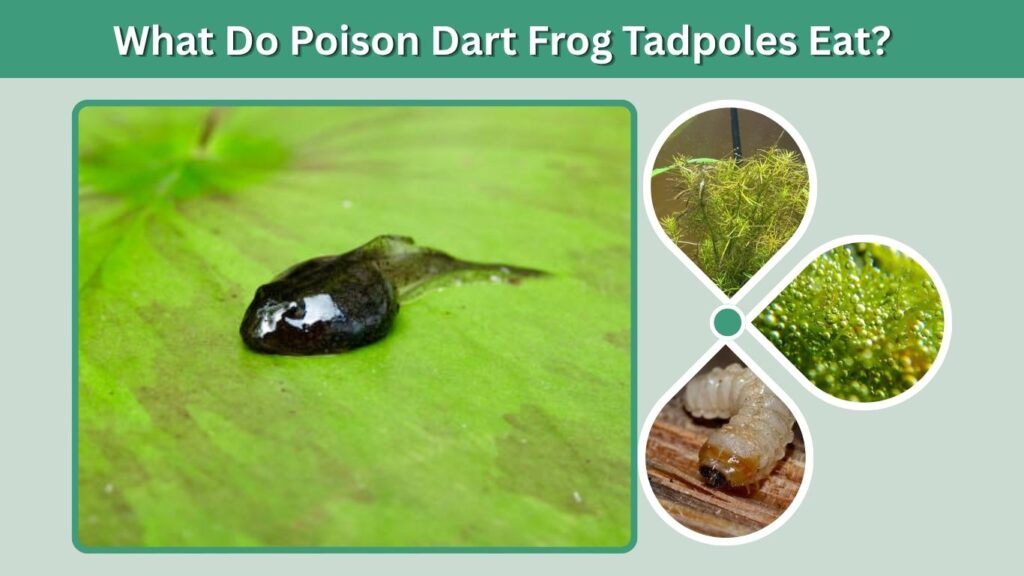
Tadpole diets vary substantially among poison dart frog species.
Many poison frog tadpoles are omnivorous and may consume:
- Algae
- Detritus
- Insect larvae
- Dead insects
- Other organic material
Some species are more carnivorous and may consume other tadpoles.
Strawberry Poison Dart Frog Tadpole Food
Strawberry poison frog tadpoles have a specialized diet.
After carrying an individual tadpole to a tiny water-filled location, such as a bromeliad, the female returns periodically and deposits unfertilized eggs for the tadpole to eat. The tadpole depends heavily on these nutritious eggs while developing.
This behavior is called oophagy, meaning egg eating.
Poison Dart Frog Food Chain
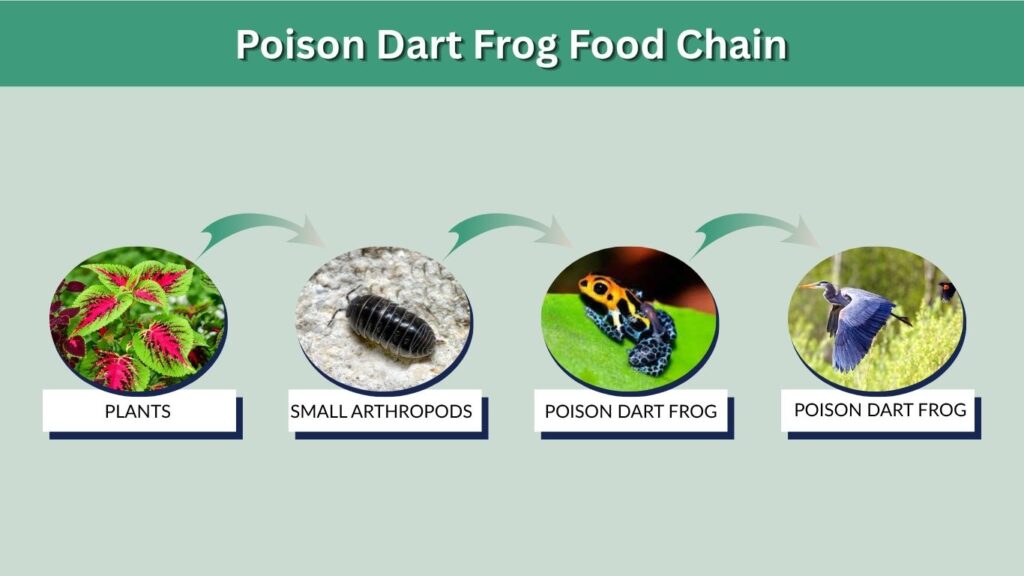
Poison dart frogs occupy an important middle position in tropical rainforest food webs.
A simplified food chain might look like:
Plants → small arthropods → poison dart frog → specialized predator
Plants indirectly support insects and other arthropods. Dart frogs then consume those small animals, helping regulate invertebrate populations. Poison dart frogs are themselves prey for some animals, although bright warning coloration and toxic skin secretions protect many species from numerous predators.
What Eats Poison Dart Frogs?
Their toxicity means that adult poison frogs often face fewer predators than non-toxic frogs.
Some snakes have adaptations that allow them to tolerate poison frog defenses. For example, a ground snake has been documented as a predator of strawberry poison frogs, while golden poison frogs also have very few known predators because of their extreme toxicity.
Tadpoles can be more vulnerable because their chemical defenses may not be as developed.
Poison Dart Frog Food Web
A rainforest food web is more complicated than a single food chain because each frog may eat many different animals while also interacting with several potential predators.
A simplified poison dart frog food web includes:
Producers: rainforest plants
Primary consumers: ants, mites, termites, beetles and other arthropods
Secondary consumers: poison dart frogs
Higher-level predators: certain toxin-resistant snakes and other predators capable of eating frogs
Poison frogs therefore connect small rainforest invertebrates with larger animals while simultaneously using some of their prey as the source of their chemical defenses.
Foods to Avoid for Pet Poison Dart Frogs
Pet dart frogs should not be offered random household foods or insects collected from areas where pesticides may have been used.
Avoid:
- Large feeder insects
- Wild insects exposed to pesticides
- Processed human foods
- Meat intended for people
- Fish food as the main adult diet
- Large mealworms that are difficult to swallow
- Prey wider than the frog can safely consume
The safest approach is to provide appropriately sized feeder animals from reliable cultures and follow husbandry recommendations for the particular dart frog species.
FAQs
What food do poison dart frogs eat?
Poison dart frogs primarily eat tiny arthropods such as ants, termites, mites, beetles, flies, and small spiders. Captive animals commonly receive fruit flies, small crickets, bean beetles, springtails, and other appropriately sized live foods.
Do poison dart frogs get their poison from their food?
Yes. Many wild poison frogs accumulate defensive alkaloids from arthropods they consume, particularly certain ants and mites. The chemicals are stored in skin glands and help protect the frogs from predators.
What do blue poison dart frogs eat?
Blue Dendrobates tinctorius naturally consume small arthropods including ants, beetles, and flies. Captive frogs can be offered appropriately sized live foods such as fruit flies and small crickets.
How do poison dart frogs catch food?
They visually locate moving prey and rapidly capture it with a sticky, retractable tongue. Poison frogs spend considerable time actively searching leaf litter and vegetation for small insects and other arthropods.
What do poison dart frog tadpoles eat?
Many species eat algae, detritus, insect larvae, and other organic material. Some species have highly specialized diets. Strawberry poison frog tadpoles, for example, are fed unfertilized eggs deposited by their mother.
