
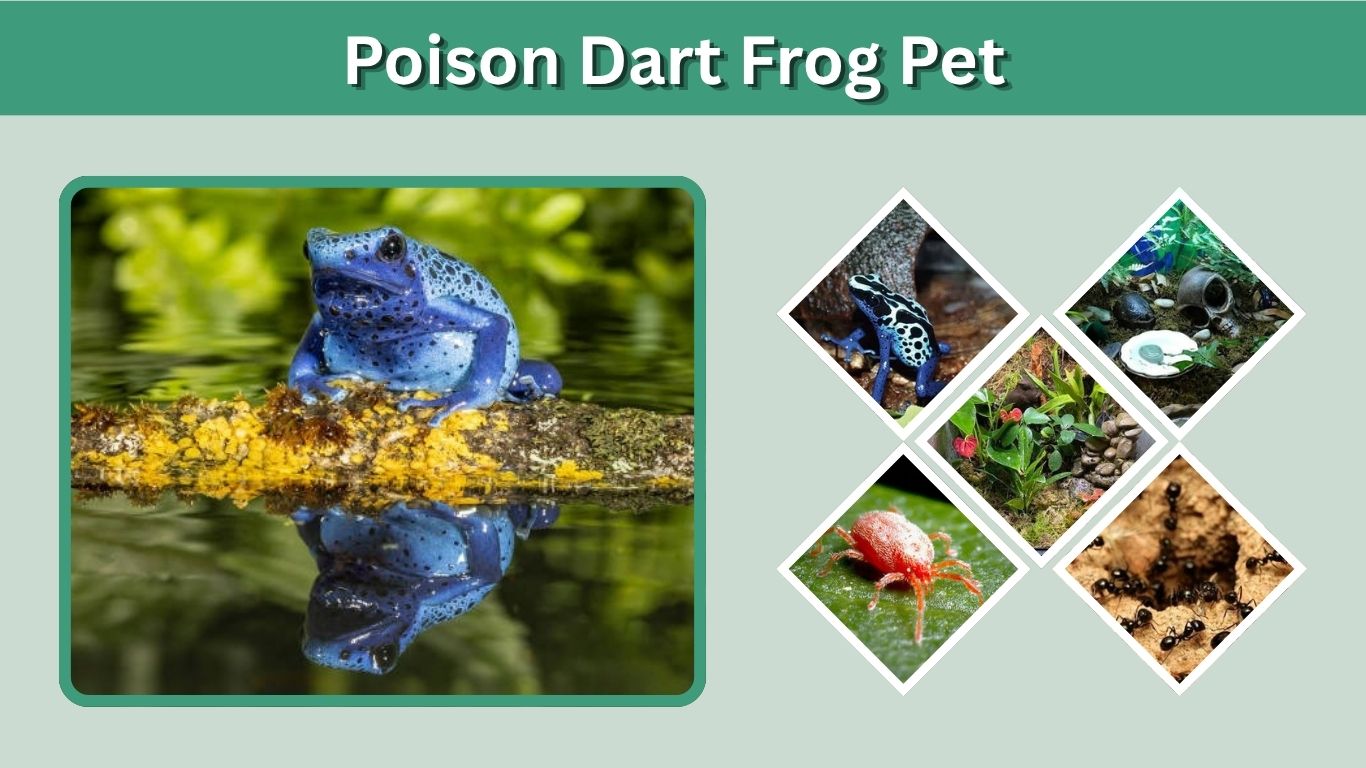
A poison dart frog pet can be a fascinating choice for anyone interested in colorful tropical amphibians. Despite their intimidating name, captive-bred poison dart frogs generally do not possess the dangerous skin toxins associated with wild frogs because those chemicals come largely from specialized prey in their natural diet. They are small, active during the day, and can live for many years, but they require carefully controlled humidity, temperature, food, and enclosure conditions. They are best considered display pets rather than animals to handle regularly.
Can You Have a Poison Dart Frog as a Pet?
Yes. Several poison dart frog species are maintained and bred in captivity, provided ownership is allowed where you live and the animals come from a legitimate source.
Captive-bred frogs are strongly preferable to wild-caught animals. They are already adapted to captive conditions, reduce pressure on wild populations, and generally lack the potent defensive alkaloids associated with wild poison frogs.
However, dart frogs are not ideal pets for someone wanting an animal they can frequently hold. Their appeal comes from observing their vivid colors, calls, feeding behavior, and activity inside a planted vivarium.
Are Pet Poison Dart Frogs Poisonous?
Captive-bred poison dart frogs are generally not poisonous in the way wild frogs can be.
Researchers believe many poison frogs obtain their defensive alkaloids from specialized arthropods such as ants, mites, and other small invertebrates. Frogs maintained on typical captive foods such as fruit flies and crickets do not receive those same alkaloids.
There is an important distinction, however. A recently wild-caught frog may retain previously accumulated toxins for some time. Research summarized for Phyllobates terribilis found that wild-caught individuals could retain substantial toxicity after entering captivity.
For a pet, choose a captive-bred animal rather than assuming every frog in captivity is immediately harmless.
Are Poison Dart Frogs Good Pets?
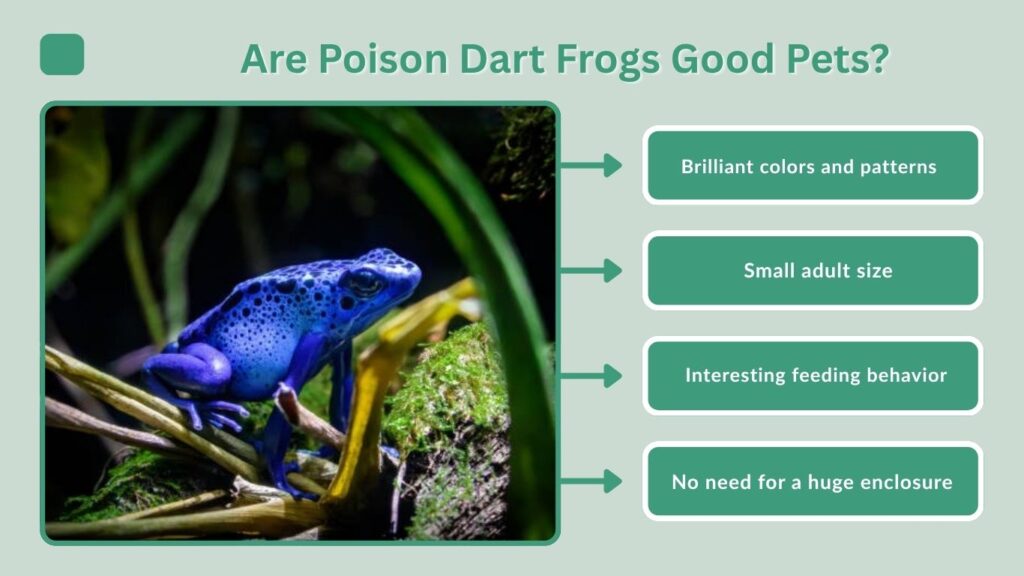
Poison dart frogs can make excellent display pets for people willing to maintain a specialized tropical enclosure.
They have several advantages:
- Brilliant colors and patterns
- Small adult size
- Daytime activity
- Interesting feeding behavior
- Relatively quiet care requirements
- No need for a huge enclosure
- Potential lifespan of 10 years or longer
Smithsonian reports that poison frogs generally can live for more than 10 years in human care, while lifespan varies by species.
The downside is that they are sensitive animals. Humidity, temperature, water quality, diet, and social compatibility all need careful attention. Smithsonian amphibian keepers emphasize that environmental conditions must be closely controlled for captive frogs.
Poison Dart Frog Pet Care
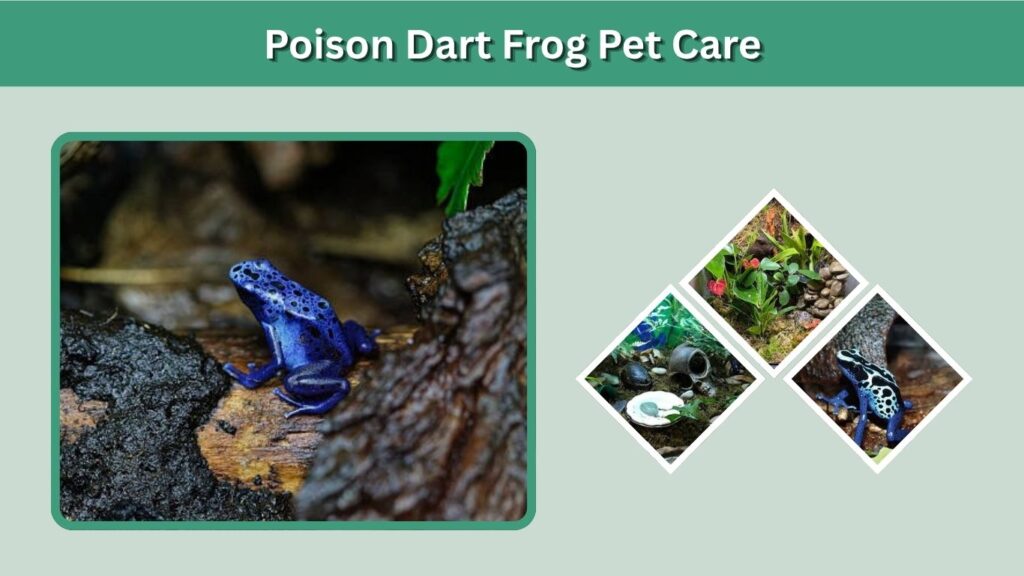
A successful dart frog enclosure should recreate important features of a humid tropical forest floor.
| Requirement | General Guideline |
| Enclosure | Secure tropical vivarium |
| Humidity | High, with good ventilation |
| Temperature | Mild tropical range; species-specific |
| Substrate | Moist, well-draining naturalistic substrate |
| Plants | Live tropical plants recommended |
| Hiding areas | Leaf litter, cork, plants and wood |
| Diet | Tiny live invertebrates |
| Activity | Mostly daytime |
| Handling | Minimal |
| Lifespan | Often 10+ years in human care |
Exact care requirements depend on the species, so a setup for one dart frog should not automatically be copied for another.
Poison Dart Frog Tank Setup
A dart frog enclosure should provide both moisture and airflow.
A naturalistic vivarium commonly includes:
- Drainage layer
- Moist substrate
- Leaf litter
- Live tropical plants
- Cork bark or wood
- Small hiding spaces
- Climbing surfaces
- Ventilation
- Misting system or hand mister
Standing water throughout the enclosure is unnecessary for most adult dart frogs. They are primarily terrestrial or semi-arboreal amphibians rather than aquatic frogs.
Drainage is important because constantly waterlogged substrate can create unhealthy conditions even though dart frogs require a humid environment.
Temperature and Humidity
Poison dart frogs come from warm, humid tropical environments, but this does not mean they should be kept extremely hot.
Amphibians can be sensitive to overheating. Smithsonian keepers note that even tropical frog species may prefer comparatively moderate temperatures and that humidity and temperature must be managed together.
Avoid placing the vivarium directly beside heaters, sunny windows, or other locations where temperatures can rise suddenly.
Humidity should remain high enough to keep the frogs and habitat moist while ventilation prevents the enclosure from becoming stagnant.
What Do Pet Poison Dart Frogs Eat?
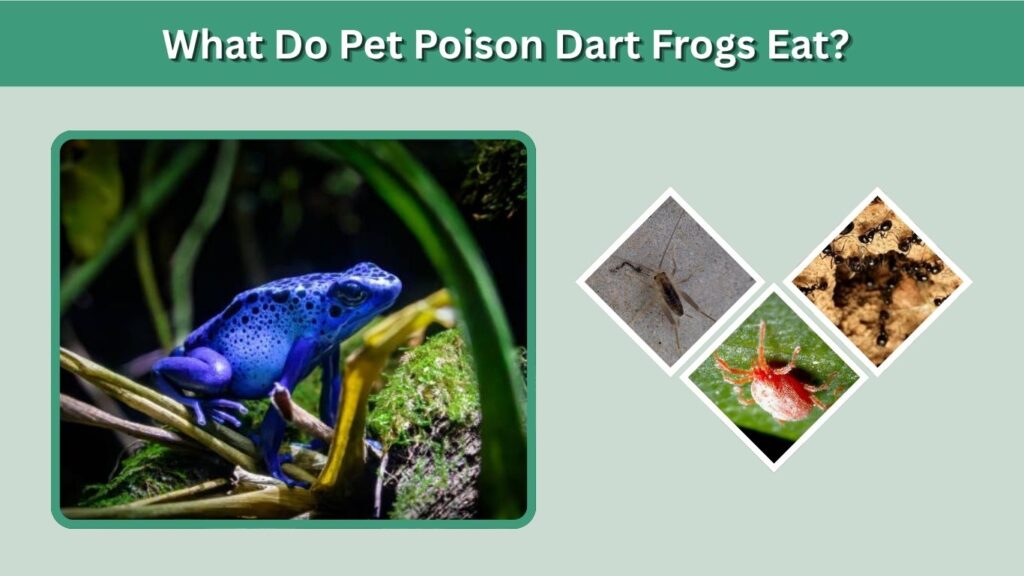
Pet poison dart frogs eat very small live invertebrates.
Common foods include:
- Flightless fruit flies
- Springtails
- Tiny crickets
- Small bean beetles
- Other appropriately sized feeder insects
Wild poison frogs primarily eat small arthropods such as ants, termites, mites, beetles, and other insects. Smithsonian also uses foods including fruit flies, bean beetles, worms, and crickets for frogs in human care.
Fruit Flies as a Staple Food
Flightless fruit flies are among the most practical foods for pet dart frogs because they are small and easy for the frogs to hunt.
Many owners maintain their own fruit-fly cultures because dart frogs require a dependable supply of live prey.
Feeder insects may also need appropriate vitamin and mineral supplementation according to the frog species and feeding program.
Best Poison Dart Frog Species for Pets
Different poison dart frogs vary in size, temperament, coloration, and care requirements.
Several species frequently encountered in captive collections include:
Dyeing Poison Dart Frog
Dendrobates tinctorius includes many spectacular color forms, including blue, yellow, black, and white combinations.
These frogs are relatively large compared with many other dart frogs. Blue forms are especially popular in captive collections. D. tinctorius feeds on tiny arthropods and has been recorded living around 10 years on average in captivity, with some individuals reaching about 12 years.
Green and Black Poison Dart Frog
Dendrobates auratus is another widely recognized species.
Individuals may show green, turquoise, blue, or metallic-looking markings over a dark background. Captive lifespan records indicate that the species can live for many years when properly maintained.
Yellow-Banded Poison Dart Frog
Dendrobates leucomelas are recognizable by their contrasting yellow and black pattern.
Its striking appearance and daytime activity make it another attractive display frog for a planted vivarium.
Strawberry Poison Dart Frog
Oophaga pumilio occurs in numerous brilliant color forms, including red, blue, orange, yellow, and combinations of these colors.
However, its specialized reproductive biology and husbandry can make it more demanding than some commonly kept Dendrobates species.
Blue Poison Dart Frog as a Pet
The famous blue poison dart frog commonly seen in the pet hobby is associated with Dendrobates tinctorius.
It has brilliant blue skin covered with irregular black markings. Like other captive-bred dart frogs, its diet in human care lacks the specialized alkaloid-containing prey responsible for toxicity in wild poison frogs.
A planted enclosure with plenty of floor space, leaf litter, hiding areas, and stable environmental conditions is preferable.
Can You Touch a Pet Poison Dart Frog?
Even a non-toxic captive-bred dart frog should not be handled unnecessarily.
Frog skin is highly specialized and plays an important role in water and gas exchange. Oils, soaps, lotions, chemicals, and contaminants from human hands can be harmful to amphibians.
Dart frogs are therefore much better treated as look-but-don’t-handle pets.
If moving a frog becomes necessary for enclosure maintenance or veterinary care, minimize contact and use appropriate amphibian-safe handling practices.
Can Poison Dart Frogs Live Together?
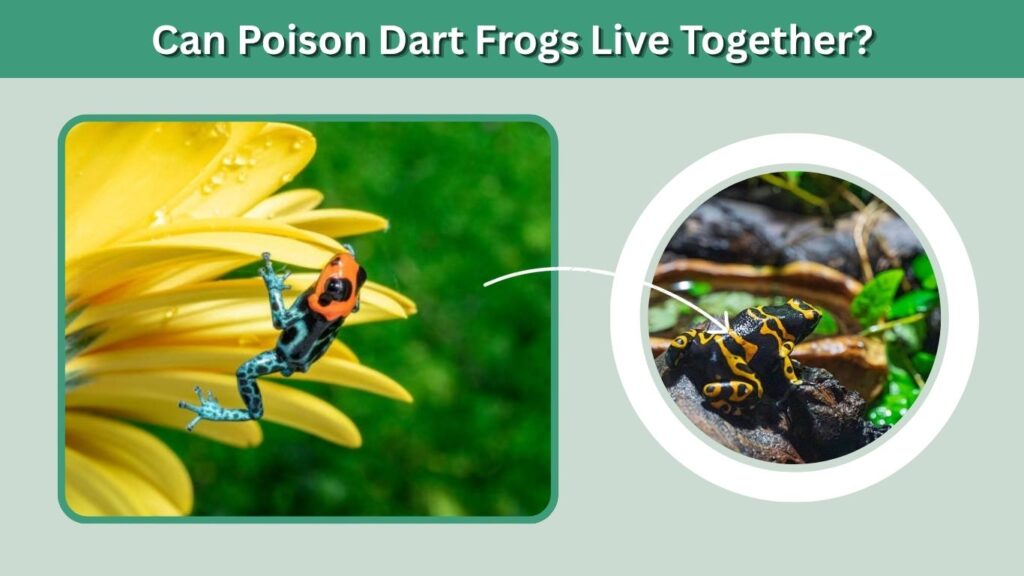
Sometimes, but compatibility depends greatly on species, sex, enclosure size, and individual behavior.
Dart frogs can be territorial. For example, Dendrobates tinctorius is known for territorial behavior, particularly among adults.
Putting several attractive species or color forms together simply because they are all dart frogs is not recommended. Housing decisions should be based on the requirements and social behavior of the particular species.
Poison Dart Frog Pet Price
The price of a poison dart frog pet varies according to species, color morph, age, rarity, breeder, and location.
The frog itself is only part of the expense. Owners also need to budget for:
- Vivarium
- Lighting
- Drainage and substrate
- Live plants
- Misting equipment
- Thermometer and humidity monitoring
- Feeder insect cultures
- Supplements
- Ongoing maintenance
A healthy captive-bred frog from a reputable breeder is generally a better choice than selecting an animal simply because it is inexpensive.
Where to Buy a Poison Dart Frog Pet
Purchase dart frogs from reputable captive breeders or specialized amphibian sellers that can clearly identify the species and origin of the animal.
Avoid buying frogs when the seller cannot explain whether they were captive-bred or wild-caught.
Laws concerning exotic amphibian ownership, transport, and importation differ between countries and regions, so check current local regulations before purchasing.
Pros and Cons of Poison Dart Frogs as Pets
Pros
- Exceptionally colorful
- Active during daylight
- Fascinating natural behavior
- Small body size
- Can live more than a decade
- Captive-bred animals lack typical wild toxicity
- Beautiful in planted vivariums
Cons
- Require live insects
- Environmental conditions must remain stable
- Not suitable for frequent handling
- Some species are territorial
- Proper enclosure setup can be expensive
- Feeding cultures require ongoing maintenance
- Veterinary care may require an exotic-animal specialist
For someone interested in creating and maintaining a miniature rainforest ecosystem, dart frogs can be highly rewarding. For someone looking for a pet to hold and interact with physically, another animal would usually be more suitable.
FAQs
Can poison dart frogs be pets?
Yes. Captive-bred poison dart frogs are kept successfully as pets in specialized tropical vivariums. They require high humidity, suitable temperatures, tiny live foods, hiding places, and careful maintenance. Always obtain animals legally from reputable captive breeders.
Are pet poison dart frogs poisonous?
Captive-bred poison dart frogs generally lack the potent toxins found in wild individuals because they do not eat the specialized alkaloid-containing prey responsible for their chemical defenses. Recently wild-caught frogs may retain toxins, which is another reason captive-bred animals are preferable.
What do pet poison dart frogs eat?
Pet dart frogs commonly eat flightless fruit flies, springtails, tiny crickets, bean beetles, and other very small live prey. Food size is important because dart frogs are small and generally consume tiny arthropods.
How long do pet poison dart frogs live?
Many poison frogs can live more than 10 years in human care, although lifespan varies by species. Smithsonian reports 12–20 years for tri-colored poison frogs, while captive Dendrobates tinctorius may average around 10 years.
Are poison dart frogs good beginner pets?
Some captive-bred dart frogs can be manageable for dedicated beginners who research their care before purchasing them. However, they are more sensitive than many common pets because their humidity, temperature, diet, water quality, and enclosure conditions must remain stable.
