
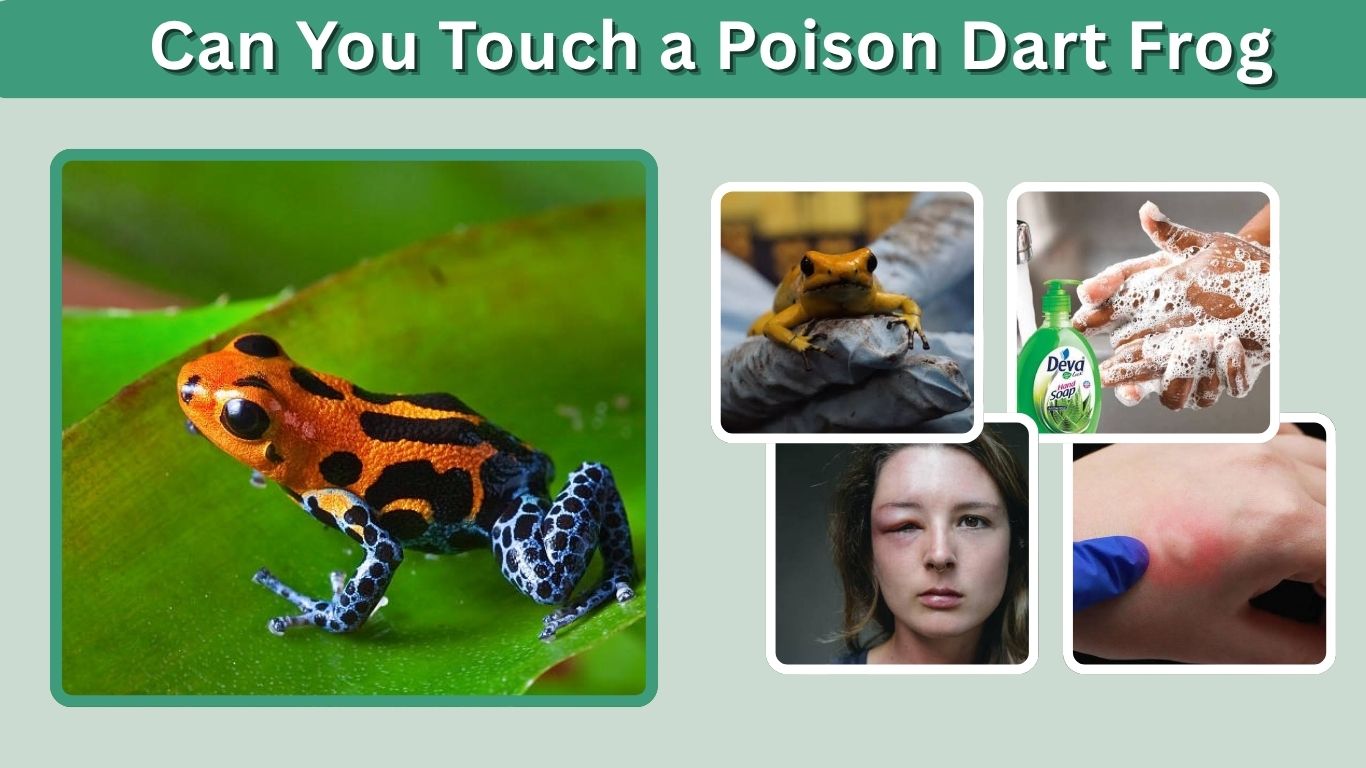
Poison dart frogs are famous for their brilliant colors and powerful skin toxins, which naturally makes people wonder: can you touch a poison dart frog safely? The answer depends heavily on whether the frog is wild or captive-bred. Wild poison dart frogs may carry toxic alkaloids on their skin, while captive-bred frogs generally lose this toxicity because of their different diet. However, even captive frogs should rarely be handled because touching can harm their delicate skin. Here’s what you need to know before ever attempting to hold or touch one.
Can You Touch a Poison Dart Frog?
Technically, you may be able to touch certain captive-bred poison dart frogs without being poisoned, but handling them is generally not recommended. Wild poison dart frogs should never be touched with bare hands.
Their skin is extremely delicate and plays an important role in breathing, hydration, and protection from infection. Oils, salt, soap residue, lotion, sanitizer, and other substances on human hands can damage the frog even when the frog itself presents little danger to the person.
What Happens If You Touch One?
What happens depends largely on where the frog came from.
If you touch a wild poison dart frog, particularly a highly toxic species, skin secretions could expose you to defensive toxins. The risk may become greater if the toxin reaches your eyes, mouth, nose, cuts, or damaged skin.
Touching a captive-bred frog usually does not cause poisoning because most captive poison dart frogs do not contain the same potent skin toxins found in wild individuals. Still, unnecessary handling can cause stress or skin damage to the frog.
Wild vs. Captive Poison Dart Frogs
| Feature | Wild Poison Dart Frog | Captive-Bred Poison Dart Frog |
| Skin toxicity | May be toxic | Usually little to no dangerous toxicity |
| Safe to touch? | No | Avoid unnecessary touching |
| Main danger | Skin alkaloids | Stress and skin damage |
| Handling | Should be avoided | Only when necessary |
| Best practice | Observe from a distance | Handle carefully only when required |
Scientists believe poison dart frogs obtain many of their defensive alkaloids through their natural diet, including certain ants, mites, and other small arthropods.
Captive frogs usually eat foods such as fruit flies and tiny crickets that do not provide the same chemical compounds. As a result, captive-bred frogs generally do not develop the dangerous toxicity associated with their wild relatives.
Can You Hold a Poison Dart Frog?
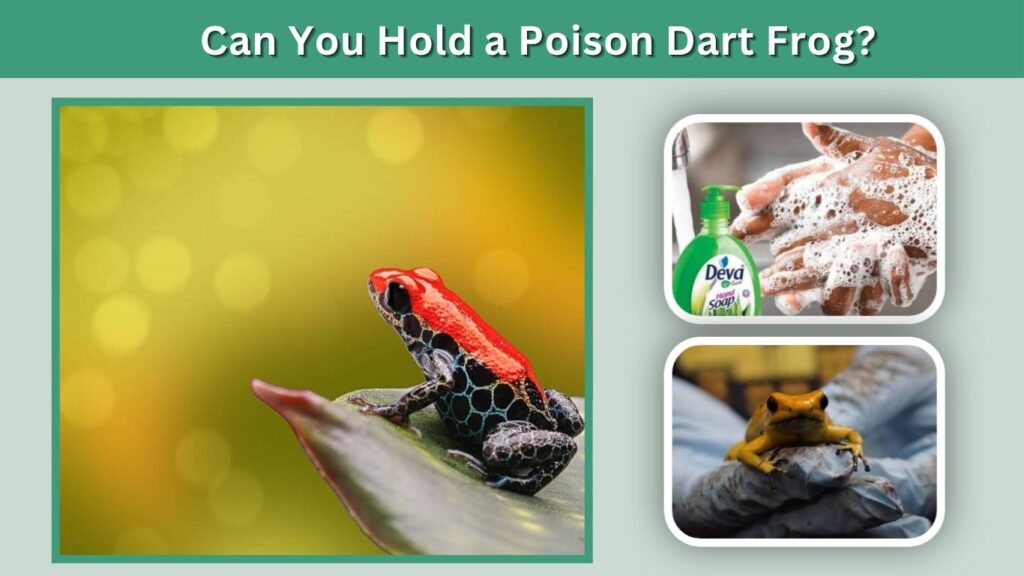
You generally should not hold a poison dart frog unless handling is necessary for its care.
Frogs are not like reptiles or mammals that may tolerate regular handling. Their thin, permeable skin easily absorbs substances from the environment.
Why Handling Can Hurt the Frog
Human hands may contain substances that are harmless to us but irritating or dangerous to amphibians. These include natural skin oils, salt from sweat, soap, moisturizer, insect repellent, sunscreen, cleaning chemicals, and hand sanitizer.
Handling can also remove or disturb the protective mucus covering the frog’s skin.
Repeated handling may additionally create unnecessary stress. A frightened frog may struggle, jump suddenly, or injure itself while attempting to escape.
Can You Touch a Poison Dart Frog With Gloves?
If a captive frog must be moved for enclosure maintenance, veterinary care, or another necessary reason, clean disposable gloves can provide additional protection.
Powder-free nitrile gloves are commonly preferred. The gloves can be lightly moistened with suitable clean water before handling so they do not dry or irritate the frog’s skin.
Never use gloves contaminated with cleaning products, lotions, chemicals, or other substances.
Whenever possible, encouraging the frog into a small clean container is often preferable to holding it directly.
Can a Poison Dart Frog Kill You?
Some wild poison dart frogs produce or carry extremely powerful defensive toxins. However, toxicity varies dramatically between species.
The species most famous for dangerous toxicity is the golden poison frog (Phyllobates terribilis), native to Colombia. Wild frogs of this species can carry batrachotoxin, an extraordinarily potent alkaloid.
Batrachotoxin interferes with normal electrical signaling in nerves and muscles, including the heart.
Can a Poison Dart Frog Kill a Human by Touching It?
Simply brushing against every poison dart frog does not automatically mean a person will die.
Nevertheless, intentionally touching wild poison frogs is unsafe. The level of risk depends on factors including the species, amount of toxin present, duration of exposure, and whether toxins enter broken skin or sensitive areas such as the eyes or mouth.
Therefore, wild poison dart frogs should always be treated as animals that are meant to be observed rather than handled.
How Fast Can a Poison Dart Frog Kill You?
There is no universal amount of time because poisoning depends on the toxin, dose, exposure route, frog species, and health of the exposed person.
Severe batrachotoxin exposure can interfere with nerves, muscles, and heart function. It should be considered a medical emergency rather than something for which a predictable countdown can be given.
Most poison dart frog encounters, however, do not involve the exceptionally toxic species responsible for their dangerous reputation.
Why Are Poison Dart Frogs Poisonous?
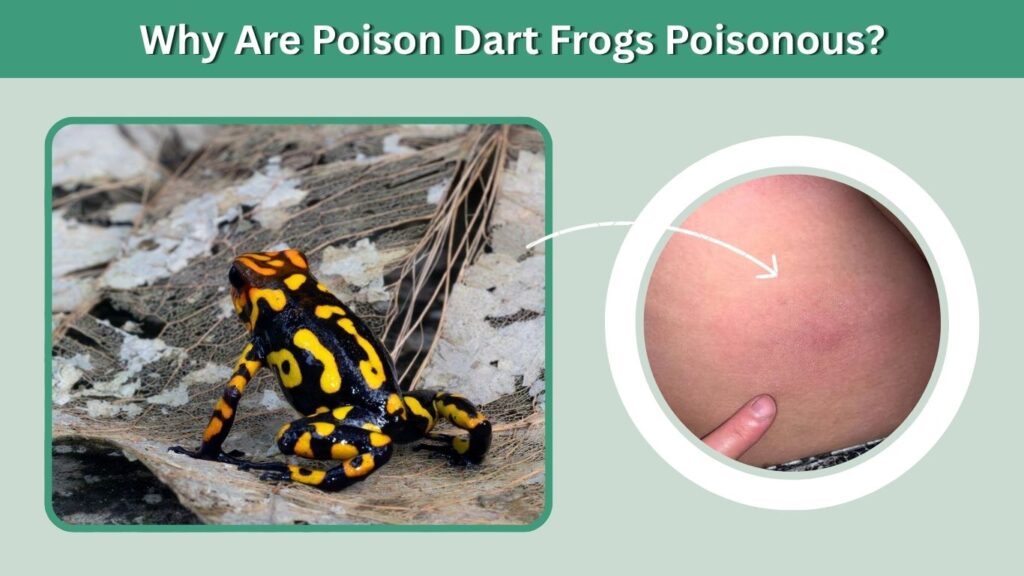
Poison dart frogs use skin toxins primarily as a defense against predators.
Their bright coloration is an example of warning coloration, or aposematism. Vivid combinations of yellow, orange, red, blue, green, and black can warn predators that attacking the frog may be unpleasant or dangerous.
Where Does Their Poison Come From?
An interesting feature of poison dart frogs is that much of their toxicity appears to come from their food rather than being produced entirely by the frog itself.
In the wild, they consume tiny arthropods that contain alkaloid chemicals. The frogs can accumulate certain compounds and store them in glands within their skin.
Captive diets normally lack these alkaloids, explaining why captive-bred poison dart frogs are generally considered non-toxic or dramatically less toxic.
Are All Poison Dart Frogs Deadly?
No. There are many species of poison frogs, and their toxicity varies substantially.
Some species possess stronger chemical defenses than others. The famous golden poison frog belongs to the genus Phyllobates, which contains some of the best-known batrachotoxin-bearing frogs.
Other colorful dart frogs may have significantly weaker defenses.
Color alone also cannot tell you exactly how dangerous a particular frog is. Therefore, you should never assume that a wild frog is harmless simply because you recognize its color or believe you know its species.
Can Poison Dart Frogs Be Pets?
Yes. Captive-bred poison dart frogs are popular among experienced amphibian keepers.
Despite their intimidating name, properly captive-bred dart frogs generally lack the dangerous toxicity of their wild counterparts.
However, they primarily display pets rather than handling pets.
Keeping Poison Dart Frogs Safely
A proper dart frog enclosure normally requires high humidity, suitable temperatures, live or artificial plants, hiding areas, clean water, and an appropriate substrate.
Their diet commonly consists of very small live foods such as flightless fruit flies, springtails, and other appropriately sized feeder insects.
Because these frogs are small and sensitive, proper husbandry is much more important than physical interaction.
You can enjoy their colors, feeding behavior, calls, and movement without regularly touching them.
Can Poison Dart Frogs Hurt Humans?
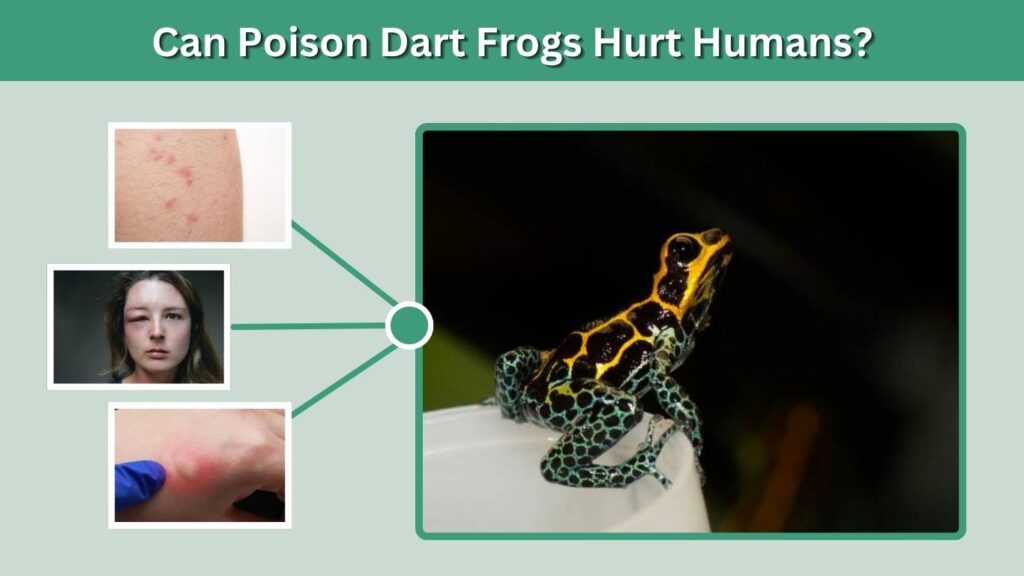
Wild poison dart frogs have the potential to harm humans through toxic skin secretions, although the danger varies widely among species.
Captive-bred frogs present much less toxic risk. In fact, when handling captive frogs, the bigger concern is often protecting the frog from the human.
Our skin carries salts, oils, microbes, and chemical residues that an amphibian may absorb.
This is why responsible keepers minimize direct contact even with completely captive-bred animals.
What Should You Do After Accidentally Touching One?
If you accidentally touch an unidentified wild poison dart frog, avoid touching your face, especially your eyes and mouth.
Wash exposed skin thoroughly with soap and water. If toxin may have reached the eyes, mouth, an open wound, or if unusual symptoms develop, seek appropriate medical assistance promptly.
Symptoms following significant toxin exposure could potentially include weakness, abnormal sensations, breathing difficulty, dizziness, or abnormal heart function.
Do not deliberately handle the frog again to identify it.
FAQs
Can You Pick Up a Poison Dart Frog?
Wild poison dart frogs should never be picked up. Captive-bred frogs should also only be handled when necessary. Their thin, sensitive skin can absorb substances from human hands, making excessive handling stressful and potentially harmful to the frog.
Can You Die From Touching a Poison Dart Frog?
Touching a poison dart frog does not automatically cause death. However, some wild species possess extremely potent toxins, so direct contact should be avoided. Captive-bred dart frogs generally lack dangerous levels of these toxins because their diet differs from that of wild frogs.
Can a Blue Poison Dart Frog Kill a Human?
Blue poison dart frogs can possess defensive alkaloids in the wild, but they are not generally considered among the most dangerously toxic dart frogs. Captive-bred blue dart frogs usually lack significant toxicity. Nevertheless, wild individuals should never be intentionally handled.
Can You Own a Poison Dart Frog?
Captive-bred poison dart frogs are commonly kept as exotic pets in places where local regulations allow them. They require specialized humidity, temperature, feeding, and enclosure conditions. Owners should treat them as observation animals rather than pets that are regularly picked up or handled.
Can You Touch a Captive Poison Dart Frog?
A captive-bred poison dart frog can usually be touched without the severe poisoning risk associated with wild frogs, but touching should still be minimized. When handling is unavoidable, clean, moistened, powder-free gloves are generally safer for protecting the frog’s sensitive skin.
