
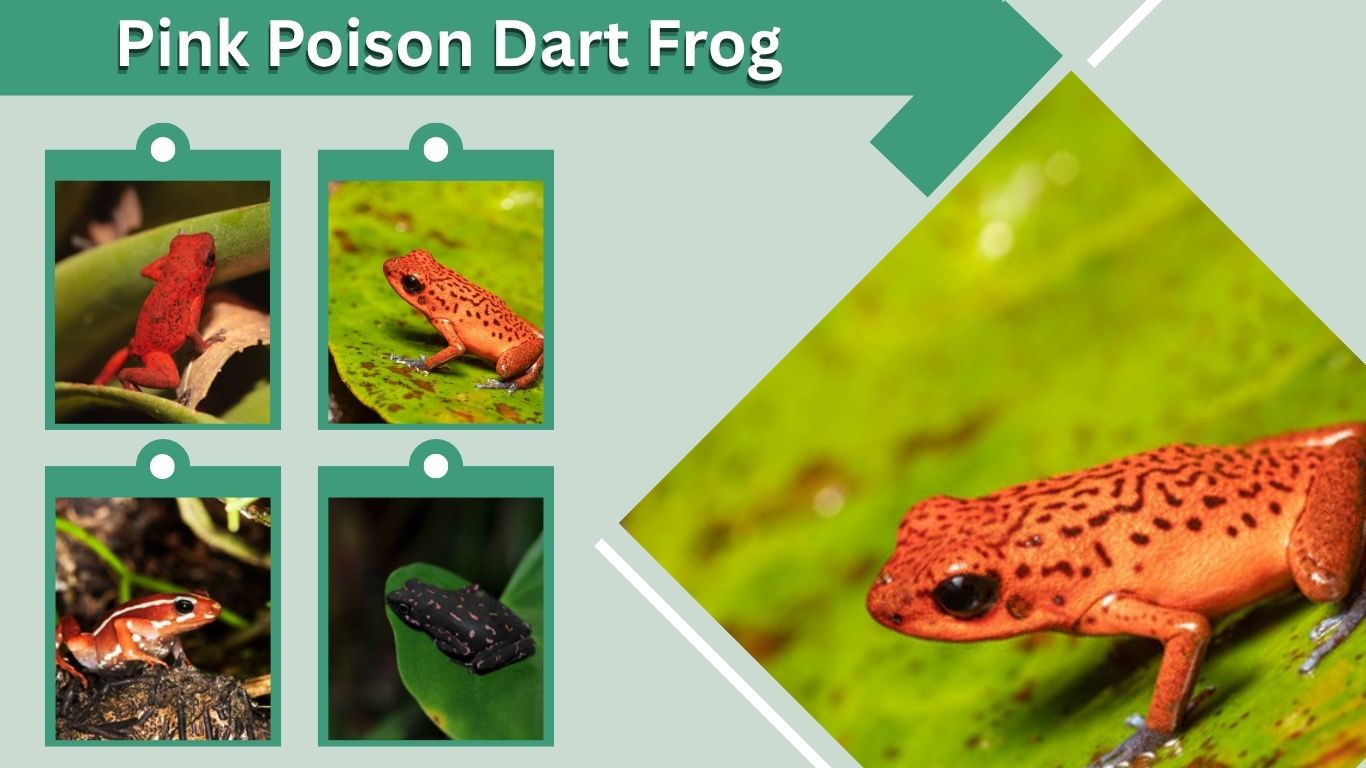
The pink poison dart frog is an eye-catching name used for dart frogs that display pink, rose, coral, or reddish-pink coloration. Pink is not usually associated with one officially recognized poison dart frog species; instead, the appearance can result from natural color variation, specific morphs, selective breeding, or lighting. Some strawberry poison dart frogs are especially known for unusual color combinations. Below, you’ll learn how to identify pink dart frogs, whether they are real, how poisonous they are, and what they require in captivity.
Are Pink Poison Dart Frogs Real?
Pink-looking poison dart frogs can be real, but the term pink poison dart frog is generally a descriptive color name rather than the common name of one specific species. Dart frogs display extraordinary variation in color, including red, orange, yellow, blue, green, black, and occasionally shades that may appear pink or coral.
Why Some Dart Frogs Look Pink
Several factors can influence the appearance of a poison dart frog:
- Natural color variation: Different populations may develop slightly different shades.
- Color morphs: Captive breeding can emphasize unusual coloration.
- Lighting: Bright terrarium or photographic lighting can make red or coral frogs appear pink.
- Age: Juveniles may look different from mature individuals.
- Photography: Camera settings and editing can significantly change perceived color.
- Genetics: Individual frogs can naturally be lighter or darker than others.
A frog described online as pink may therefore actually be a pale red, salmon, coral, or strawberry-colored dart frog.
Is There an Official Pink Species?
There is no widely recognized poison dart frog species whose standard common name is simply “pink poison dart frog.”
Instead, the name is often used informally when describing unusually colored individuals or captive morphs.
For identification, characteristics such as body pattern, geographic origin, size, toe structure, and scientific name are much more dependable than color alone.
Pink Strawberry Poison Dart Frog
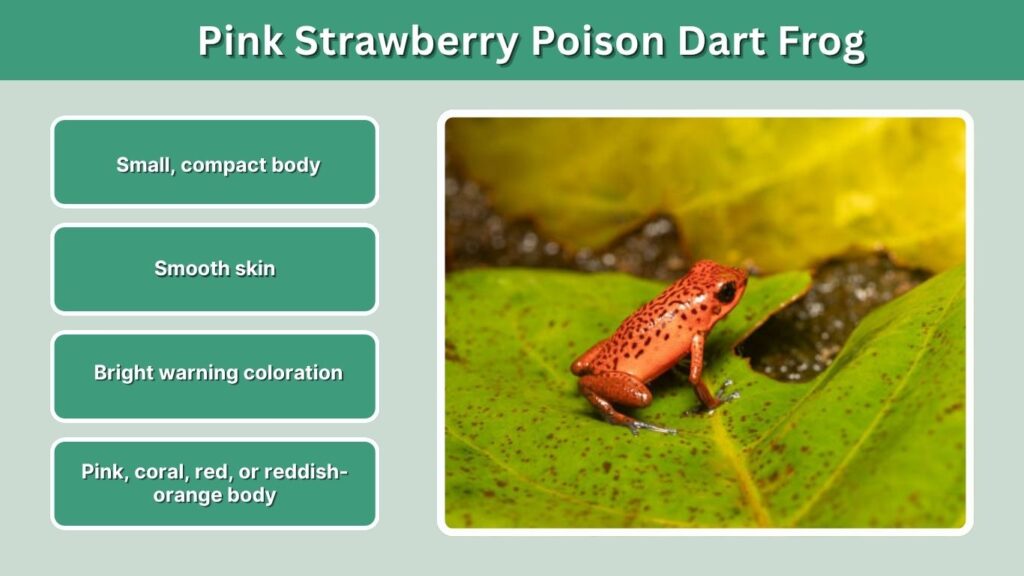
The strawberry poison dart frog is one of the species most closely associated with unusual coloration. Known scientifically as Oophaga pumilio, it is famous for having many geographically distinct color forms.
Some individuals can appear red, orange, coral, or even pinkish under certain conditions.
Appearance and Identification
A pink strawberry poison dart frog may display several recognizable characteristics:
- Small, compact body
- Smooth skin
- Bright warning coloration
- Pink, coral, red, or reddish-orange body
- Dark, blue, gray, or black legs in some populations
- Large dark eyes
- Rounded snout
- Small adhesive toe pads
The exact appearance varies tremendously between populations.
Some strawberry dart frogs have nearly solid-colored bodies, while others possess contrasting legs or dark markings.
Size
Strawberry poison dart frogs are relatively tiny amphibians.
Adults are generally around 0.7 to 1 inch long, although exact size depends on the individual and population.
Despite their small size, their brilliant coloration makes them surprisingly easy to notice against green vegetation.
Females can sometimes appear slightly larger and rounder than males.
Pink and Black Poison Dart Frog
Searches for a pink and black poison dart frog often refer to dart frogs displaying light reddish coloration combined with dark spots, bands, or legs.
Such coloration can occur in captive morphs or resemble naturally occurring patterns found among different dart frog species.
Identification Features
Look for characteristics such as:
- Pinkish, salmon, or red body coloration
- Black spots or irregular markings
- Dark-colored legs
- Smooth, moist skin
- Compact body shape
- Prominent eyes
- Small rounded toes with climbing pads
Color alone should never be used to identify a dart frog species.
Why Do They Have Bright Colors?
Bright coloration acts primarily as a warning.
This strategy is called aposematism. It signals to predators that an animal may be toxic, unpleasant tasting, or otherwise dangerous to attack.
Wild poison dart frogs often combine brilliant body colors with dark markings, making them highly visible rather than helping them hide.
Their coloration is therefore very different from the camouflage strategy used by many other frogs.
Rainbow Pink Poison Dart Frog
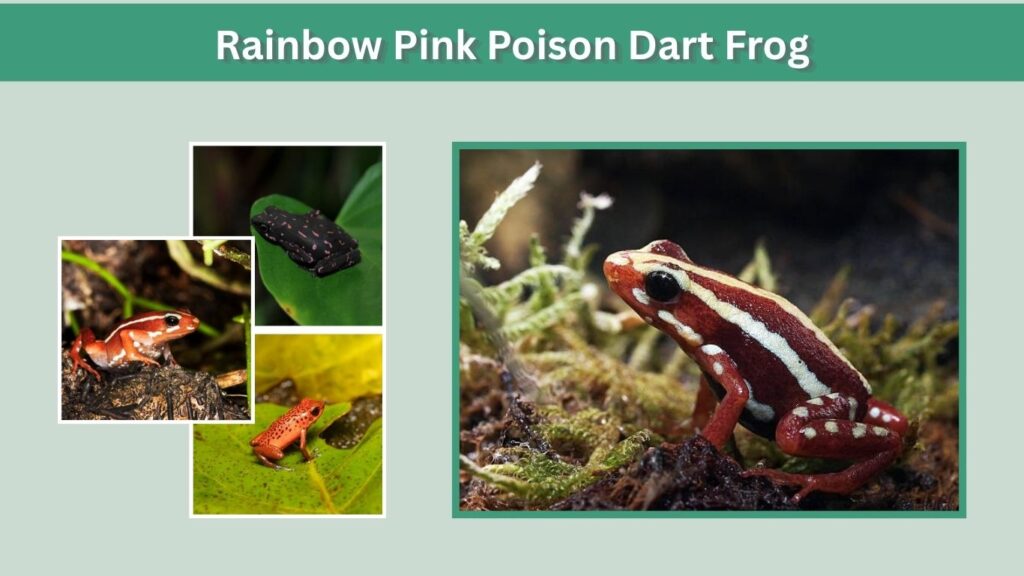
The phrase rainbow pink poison dart frog is commonly used for exceptionally colorful frogs, artwork, fictional animals, or highly saturated images online.
Real dart frogs can display remarkable combinations of colors, but photographs sometimes exaggerate how rainbow-like they actually appear.
Colors Dart Frogs Can Display
Depending on the species and population, dart frogs may show:
- Red
- Orange
- Yellow
- Gold
- Green
- Blue
- Turquoise
- Black
- White
- Cream
- Coral or pinkish-red shades
Some frogs combine several contrasting colors within a single individual.
Is a Rainbow Pink Poison Dart Frog Natural?
An individual that appears predominantly pink with several additional colors could potentially be a real color morph, but extremely vivid rainbow patterns should be viewed cautiously.
Artificial lighting, digital editing, AI-generated imagery, or fictional artwork can create appearances that do not exist naturally.
When identifying a frog from a picture, checking its scientific name and documented locality is much more reliable.
Pink Poison Dart Frog Habitat
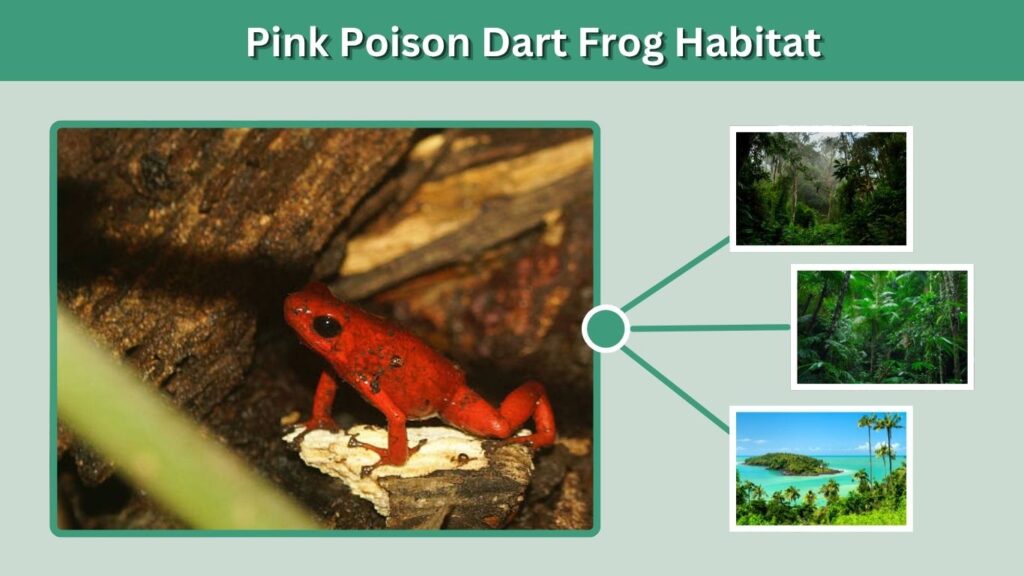
Poison dart frogs occur naturally in tropical regions of Central and South America. Their habitats generally provide warm temperatures, abundant moisture, vegetation, leaf litter, and large numbers of tiny invertebrates.
Different species occupy somewhat different environments, so habitat requirements can vary.
Tropical Forest Environment
Most dart frogs depend heavily on humid forest conditions.
They are commonly associated with areas containing leaf litter, moss, fallen branches, bromeliads, tree roots, and dense low-growing vegetation.
Some spend much of their time close to the forest floor, while others regularly climb vegetation.
Because amphibian skin loses moisture easily, maintaining access to humid microhabitats is extremely important.
Geographic Distribution
Poison dart frogs are found across portions of:
- Colombia
- Ecuador
- Peru
- Brazil
- Panama
- Costa Rica
- Nicaragua
- Guyana and nearby regions
Distribution varies by species, and many individual color forms occur only within relatively small geographic areas.
This isolation is one reason dart frogs can show such extraordinary variation.
Are Pink Poison Dart Frogs Poisonous?
Whether a pink-looking dart frog is poisonous depends on its species, origin, and diet rather than its color.
Wild poison dart frogs can accumulate defensive alkaloids from prey they consume in their natural environments.
Captive-bred dart frogs generally do not receive these same alkaloid-rich prey species.
Wild vs. Captive Toxicity
Wild dart frogs may consume certain ants, mites, and other tiny arthropods containing alkaloid compounds.
The frogs can store some of these substances in their skin and use them as chemical defenses.
Captive-bred dart frogs are normally fed foods such as fruit flies and springtails. Because these diets lack the same chemical compounds, captive frogs usually lose or never develop significant wild-type toxicity.
Can a Pink Poison Dart Frog Kill You?
A frog being pink does not tell you whether it is capable of seriously poisoning a human.
Only certain poison frog species carry exceptionally powerful toxins in nature.
The golden poison frog is the most famous example of an extremely toxic species.
Nevertheless, no unidentified wild dart frog should be handled. Even species that are considered less toxic are better observed without direct contact.
Pink Poison Dart Frog Diet
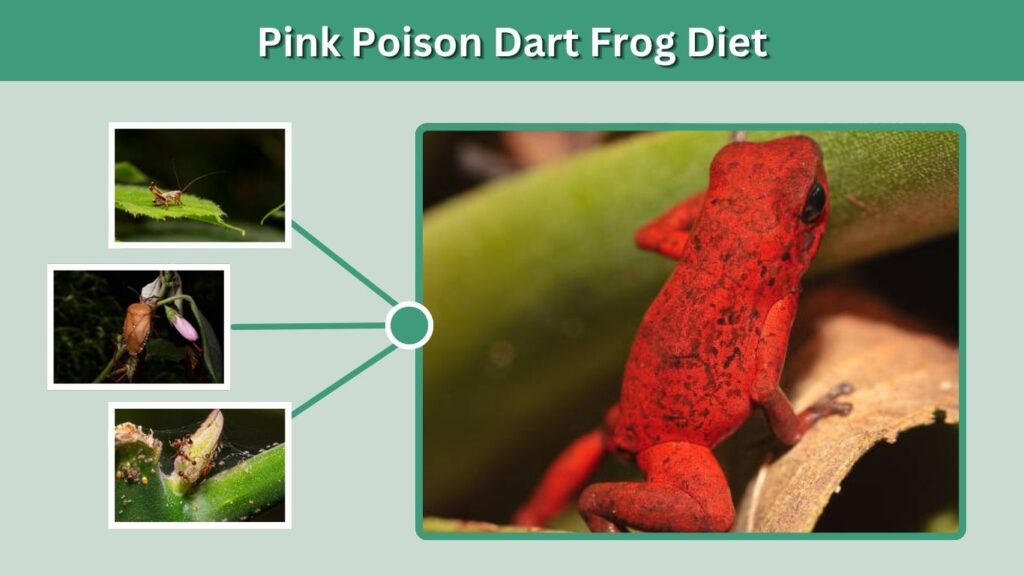
Poison dart frogs are insectivores. Their diet consists primarily of extremely small invertebrates that they locate while moving through leaf litter and vegetation.
Captive dart frogs require appropriately sized live foods because most will respond primarily to moving prey.
What They Eat
Typical foods include:
- Flightless fruit flies
- Springtails
- Tiny crickets
- Small mites
- Ants in the wild
- Beetles and tiny larvae
- Other minute arthropods
Food must be appropriately sized so the frog can swallow it easily.
Feeding in Captivity
Flightless fruit flies are among the most commonly used foods for captive dart frogs.
Keepers frequently dust feeder insects with suitable calcium and vitamin supplements.
Young frogs require especially small prey and regular feeding because their small bodies have limited energy reserves.
A varied, nutritionally appropriate feeding program supports growth, coloration, reproduction, and overall health.
Can You Keep a Pink Poison Dart Frog as a Pet?
Captive-bred poison dart frogs can make fascinating display animals for keepers prepared to maintain their specialized environment.
They are primarily pets to observe rather than animals to hold.
Their coloration, activity, feeding behavior, and interactions can make a properly planted vivarium highly interesting.
Basic Care Requirements
A suitable enclosure should provide:
- High humidity
- Stable tropical temperatures
- Good ventilation
- Moist substrate
- Leaf litter
- Live plants
- Hiding areas
- Clean water sources
- Small live prey
- Appropriate vitamin and calcium supplementation
Bioactive vivariums are particularly popular because live plants, springtails, and other microorganisms can help create a more natural environment.
Handling
Avoid routine handling.
Amphibian skin is highly permeable, meaning chemicals, oils, and salts from human hands may be absorbed by the frog.
When handling is absolutely necessary, clean powder-free gloves lightly moistened with appropriate water are generally safer than bare hands.
Moving the frog using a small container can be an even better option.
Pink Poison Dart Frog Lifespan
Dart frogs may live considerably longer than many people expect. With proper husbandry, several captive species can survive for many years.
Their exact lifespan depends on genetics, species, nutrition, enclosure conditions, disease prevention, and overall quality of care.
How Long Do They Live?
Many poison dart frogs can live approximately 5 to 15 years in captivity, with some individuals potentially living longer under excellent conditions.
Wild lifespans are more difficult to determine.
Captive frogs benefit from regular food and protection from predators but depend entirely on their keeper to provide correct humidity, temperature, nutrition, and sanitation.
FAQs
Are There Really Pink Poison Dart Frogs?
Yes, some poison dart frogs can appear pink, coral, salmon, or pale red. However, “pink poison dart frog” is generally a descriptive term rather than the official common name of a particular species. Color morphs and strawberry poison dart frogs are often responsible for pink-looking individuals.
What Is a Pink Strawberry Poison Dart Frog?
A pink strawberry poison dart frog usually refers to a pinkish or coral-colored form of Oophaga pumilio. Strawberry dart frogs are famous for having numerous color variations, including red, orange, blue, yellow, and other combinations depending on their geographic population.
Are Pink Poison Dart Frogs Dangerous?
Color does not determine toxicity. A wild dart frog may carry defensive alkaloids depending on its species and diet. Captive-bred dart frogs usually lack dangerous levels of these toxins because they are fed different prey. Wild individuals should nevertheless never be deliberately handled.
Can You Touch a Pink Poison Dart Frog?
It is best not to touch poison dart frogs unnecessarily. Captive-bred individuals generally present little poisoning risk, but handling can damage their sensitive skin or expose them to oils and chemicals from human hands. Wild dart frogs should always be observed without direct contact.
Can You Buy a Pink Poison Dart Frog?
Captive-bred poison dart frogs and various color morphs may be available through specialist amphibian breeders where ownership is legal. Buyers should verify the exact species, locality or morph, captive-bred origin, health, and care requirements rather than choosing a frog based only on pink coloration.
