
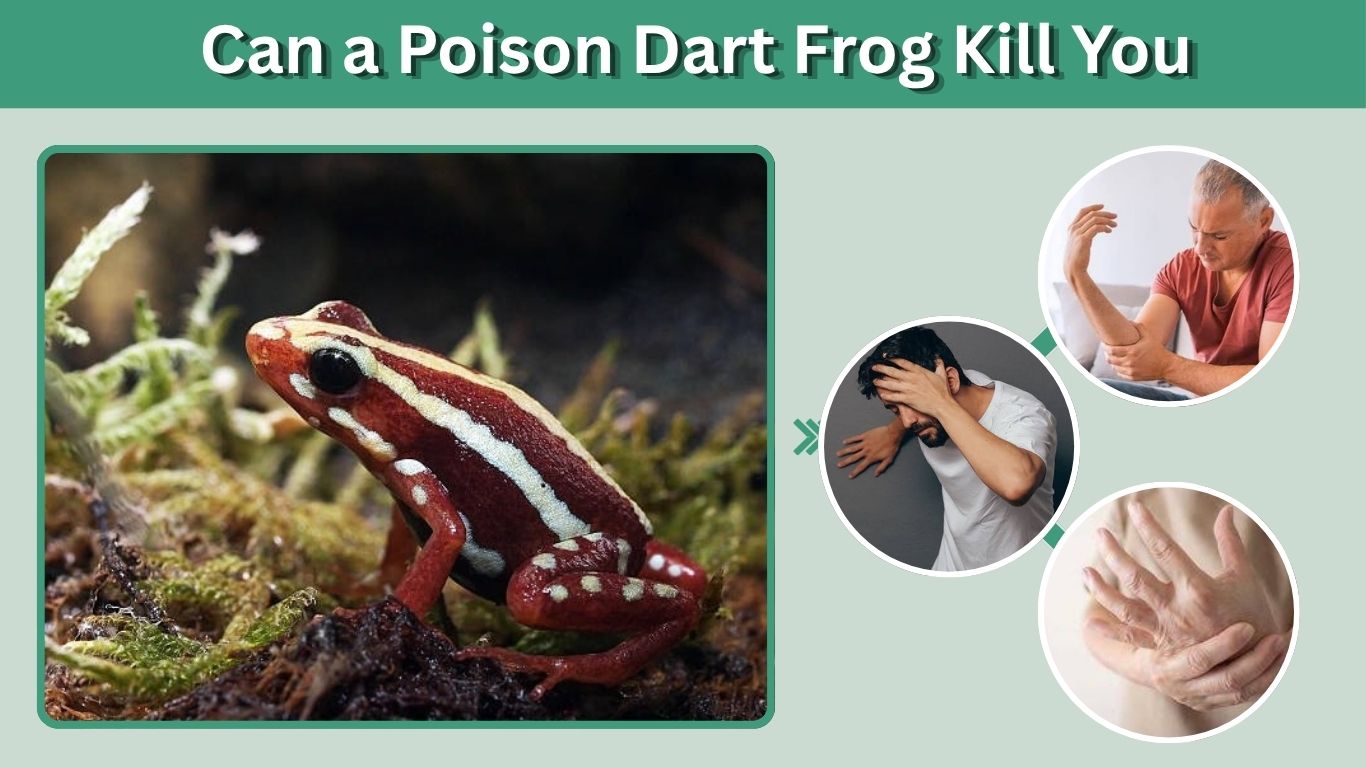
Can a poison dart frog kill you? In rare circumstances, certain wild species can carry toxins powerful enough to seriously harm or potentially kill a human. However, not every poison dart frog is deadly, and captive-bred frogs are generally far less dangerous because they do not receive the same toxin-producing diet as wild frogs. The greatest concern involves highly toxic wild species such as the golden poison frog. Understanding how their poison works helps separate real risks from common myths.
Can a Poison Dart Frog Kill You?
Yes, some wild poison dart frogs have toxins capable of causing severe poisoning in humans, but fatal encounters are extremely unusual. Toxicity varies greatly among species. The golden poison frog is considered the most dangerous, while many other poison frogs carry much weaker chemical defenses. Captive-bred dart frogs generally lack dangerous levels of these toxins.
Which Poison Dart Frogs Are Most Dangerous?
Several poison frogs are known for strong defensive toxins, particularly species within the genus Phyllobates.
Some notable examples include:
- Golden poison frog (Phyllobates terribilis) – considered the most toxic poison frog.
- Black-legged poison frog (Phyllobates bicolor) – another highly toxic wild species.
- Kokoe poison frog (Phyllobates aurotaenia) – carries batrachotoxins in the wild.
- Strawberry poison dart frog (Oophaga pumilio) – poisonous in nature but generally much less dangerous than golden poison frogs.
- Blue poison dart frog (Dendrobates tinctorius “Azureus”) – has defensive alkaloids in the wild but is not considered among the deadliest species.
A frog’s bright color alone cannot tell you exactly how toxic it is.
How Do Poison Dart Frogs Kill Humans?
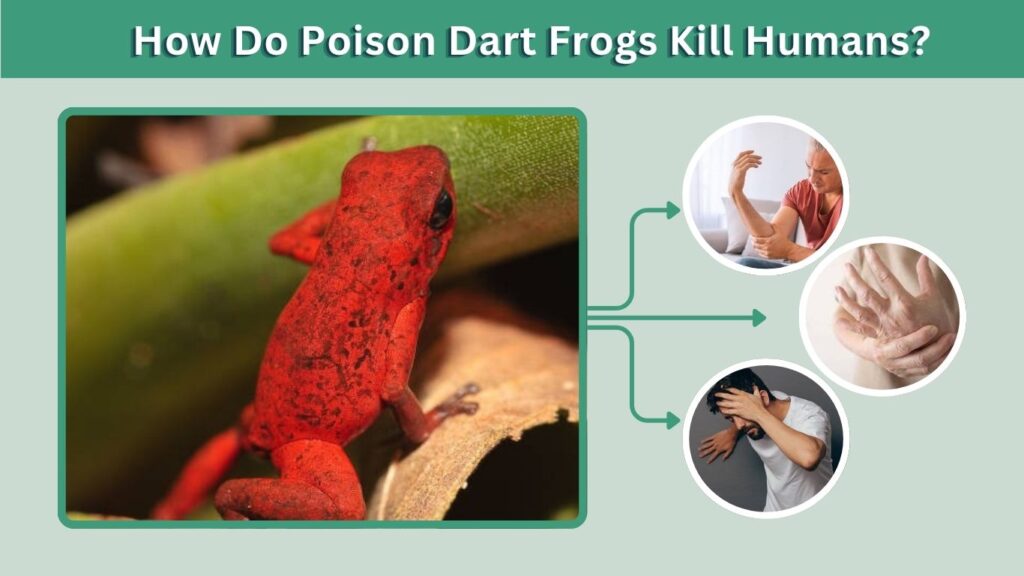
Poison dart frogs do not attack people or inject venom through fangs or stingers. Instead, certain species carry poisonous chemicals in glands within their skin. Human poisoning would occur when enough toxin enters the body, particularly through wounds or sensitive tissues. The most dangerous poison frogs carry compounds called batrachotoxins, which disrupt normal nerve and muscle function.
How Batrachotoxin Affects the Body
Batrachotoxin interferes with sodium channels that are essential for electrical signaling in nerves and muscles.
Severe exposure may potentially lead to:
- Tingling or abnormal sensations
- Muscle weakness
- Loss of coordination
- Abnormal heart rhythm
- Difficulty breathing
- Paralysis
- Serious cardiovascular problems
At a sufficiently high dose, disruption of the heart and respiratory muscles can become life-threatening.
There is no simple rule for how quickly poisoning would progress because the severity depends on the type of toxin, amount absorbed, exposure route, and individual circumstances.
Can Poison Dart Frogs Kill You If You Touch Them?
Simply touching any poison dart frog does not mean you will die. However, deliberately handling a wild poison frog is not safe. Some species can carry potent toxins on their skin, and exposure becomes more concerning if these compounds reach broken skin, eyes, the mouth, or other sensitive areas.
Can Touching a Golden Poison Frog Kill You?
The golden poison frog deserves particular caution because wild individuals can carry extremely powerful batrachotoxin.
Risk from touching one depends on several factors:
- How much toxin is present on the frog
- Whether your skin has cuts or abrasions
- How long contact lasts
- Whether you touch your eyes or mouth afterward
- How much toxin actually enters the body
Touching one is therefore unnecessary and potentially dangerous.
If you encounter a poison frog in the wild, observe it without handling it.
What If You Accidentally Touch One?
If accidental contact occurs, avoid rubbing your eyes, touching your mouth, or eating until your hands have been thoroughly cleaned.
Wash the affected skin carefully with soap and water.
If there is a possibility that toxin entered your eyes, mouth, open wounds, or you develop unusual symptoms, seek urgent medical attention.
How Fast Can a Poison Dart Frog Kill You?
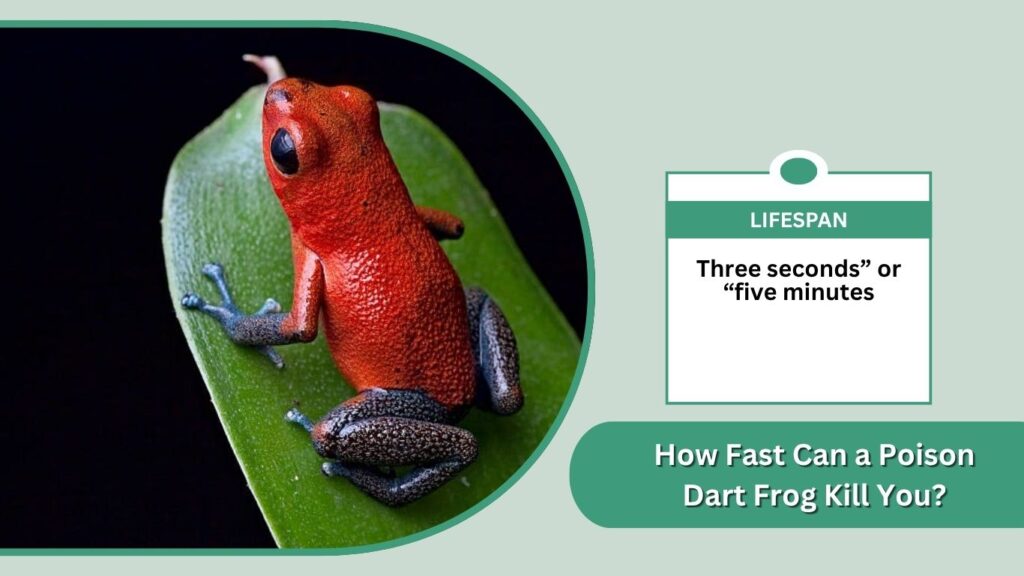
There is no scientifically meaningful fixed time such as “three seconds” or “five minutes” for a poison dart frog to kill someone. These claims are often exaggerated online. Severe poisoning would depend on how much toxin entered the body and the specific compound involved. A brief encounter with every dart frog does not automatically cause fatal poisoning.
What Determines How Serious Poisoning Is?
The outcome can depend on several variables:
- Species: Some poison frogs are much more toxic than others.
- Toxin concentration: Individual frogs may carry different amounts.
- Amount absorbed: Greater exposure can increase risk.
- Entry route: Toxins entering wounds or mucous membranes may be more dangerous than brief contact with intact skin.
- Individual health: People may respond differently to severe toxic exposure.
Because these variables differ greatly, predicting an exact timeline is impossible.
How Does the Golden Poison Dart Frog Kill?
The golden poison frog is native to Colombia and is famous for its extraordinarily potent chemical defenses. Wild individuals can carry batrachotoxin in their skin. The toxin is not used to hunt prey. Instead, it protects the frog from predators that might otherwise attempt to eat it.
What Makes the Golden Poison Frog So Toxic?
Batrachotoxin disrupts electrical activity in nerve and muscle cells by preventing sodium channels from operating normally.
When enough toxin enters another animal’s body, normal communication between nerves and muscles can fail.
Heart rhythm and breathing may eventually be affected, creating a potentially fatal situation.
The frog itself has biological adaptations that help prevent its own toxins from causing the same effects.
Do Poison Dart Frogs Kill Their Prey?
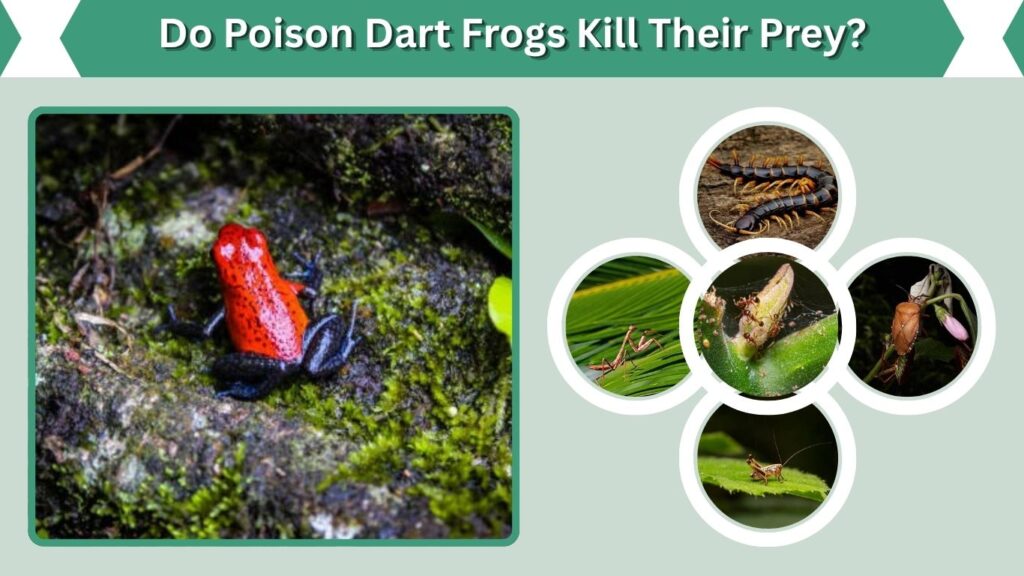
Despite their name, poison dart frogs do not normally poison their prey. They are active hunters of tiny invertebrates and capture food primarily with their sticky tongues. Their toxins serve as a defensive system against predators rather than as a weapon for hunting.
What Poison Dart Frogs Eat
Their natural diet can include:
- Ants
- Mites
- Tiny beetles
- Termites
- Small insect larvae
- Other minute arthropods
Wild poison frogs are believed to obtain many of their defensive alkaloids from these prey animals.
This relationship between diet and toxicity explains why captive dart frogs are so different from their wild relatives.
Can Captive Poison Dart Frogs Kill You?
Captive-bred poison dart frogs are generally considered far less dangerous than wild frogs. Without access to the same alkaloid-rich prey found in their natural habitat, they usually do not develop the potent chemical defenses associated with wild individuals.
Even so, they should not be handled unnecessarily.
Wild vs. Captive Poison Dart Frogs
| Feature | Wild Dart Frog | Captive-Bred Dart Frog |
| Toxicity | Can contain defensive toxins | Usually lacks dangerous toxicity |
| Diet | Wild ants, mites, arthropods | Fruit flies and cultured feeders |
| Handling | Avoid completely | Minimize handling |
| Human danger | Depends on species | Generally very low |
| Main concern | Toxin exposure | Protecting delicate frog skin |
For captive animals, direct handling is often more dangerous to the frog than to the keeper because amphibian skin can absorb salts, oils, and chemical residues from human hands.
Can a Blue Poison Dart Frog Kill a Human?
Blue poison dart frogs are certainly poisonous in their natural environment, but they are not generally regarded as being as dangerously toxic as wild golden poison frogs. Their striking blue coloration serves as a warning to predators.
Captive-bred blue dart frogs typically lack significant toxicity because of their controlled diet.
What About Strawberry Poison Dart Frogs?
Wild strawberry poison dart frogs can also carry skin alkaloids.
Their toxicity varies depending on geographic population and diet. They should not be handled in the wild, although captive-bred individuals generally lose dangerous toxicity when maintained on standard feeder insects.
Regardless of species, an unidentified wild poison frog should always be treated cautiously.
Why Are Poison Dart Frogs Poisonous?
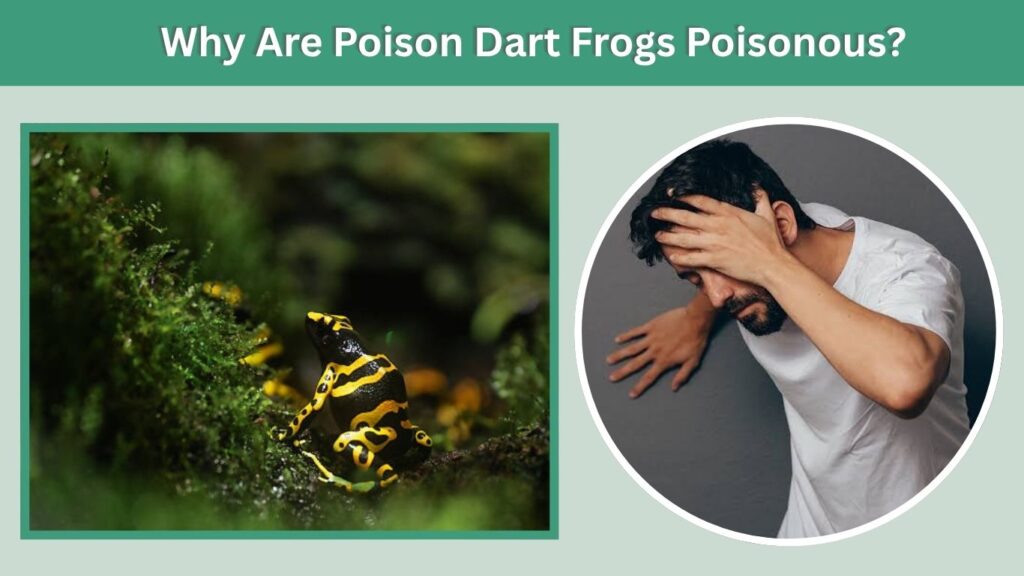
Poison dart frogs evolved chemical defenses primarily to discourage predators. Their brilliant colors act as warning signals, a strategy called aposematism. Predators that recognize these patterns may learn to avoid the frogs before attempting to eat them.
Where Their Poison Comes From
Researchers have linked much of poison frog toxicity to dietary alkaloids obtained from small arthropods.
In nature, their diet may include alkaloid-containing ants and mites. The frogs can absorb and store certain compounds in their skin.
Captive frogs normally eat cultured foods such as fruit flies and springtails that lack these compounds, causing their toxicity to disappear or never develop.
This is why wild and captive dart frogs of the same species can present very different risks.
FAQs
Can a Poison Dart Frog Kill a Human?
Certain wild species possess toxins powerful enough to potentially kill humans if a sufficient amount enters the body. The golden poison frog is the best-known example. However, fatal poison dart frog encounters are exceptionally unusual, and captive-bred frogs generally lack dangerous levels of toxin.
Can Touching a Poison Dart Frog Kill You?
Touching a poison dart frog does not automatically cause fatal poisoning. However, wild individuals should never be deliberately handled. Toxin exposure becomes more concerning when skin secretions enter cuts, the eyes, mouth, or other sensitive tissues.
How Fast Can a Golden Poison Dart Frog Kill You?
There is no fixed amount of time. The severity and speed of poisoning depend on the dose, exposure route, and individual circumstances. Claims that every golden poison frog can kill a person within a specific number of seconds are misleading.
Do Poison Dart Frogs Kill Their Prey With Poison?
No. Poison dart frogs primarily use their toxins as protection from predators rather than for hunting. They catch tiny ants, mites, beetles, and other invertebrates with their tongues and swallow their prey normally.
Will a Captive Poison Dart Frog Kill You?
Captive-bred poison dart frogs generally do not carry the potent toxins associated with wild frogs because their captive diet lacks the alkaloid-rich arthropods responsible for much of their toxicity. Even so, unnecessary handling should be avoided to protect the frog’s sensitive skin.
