
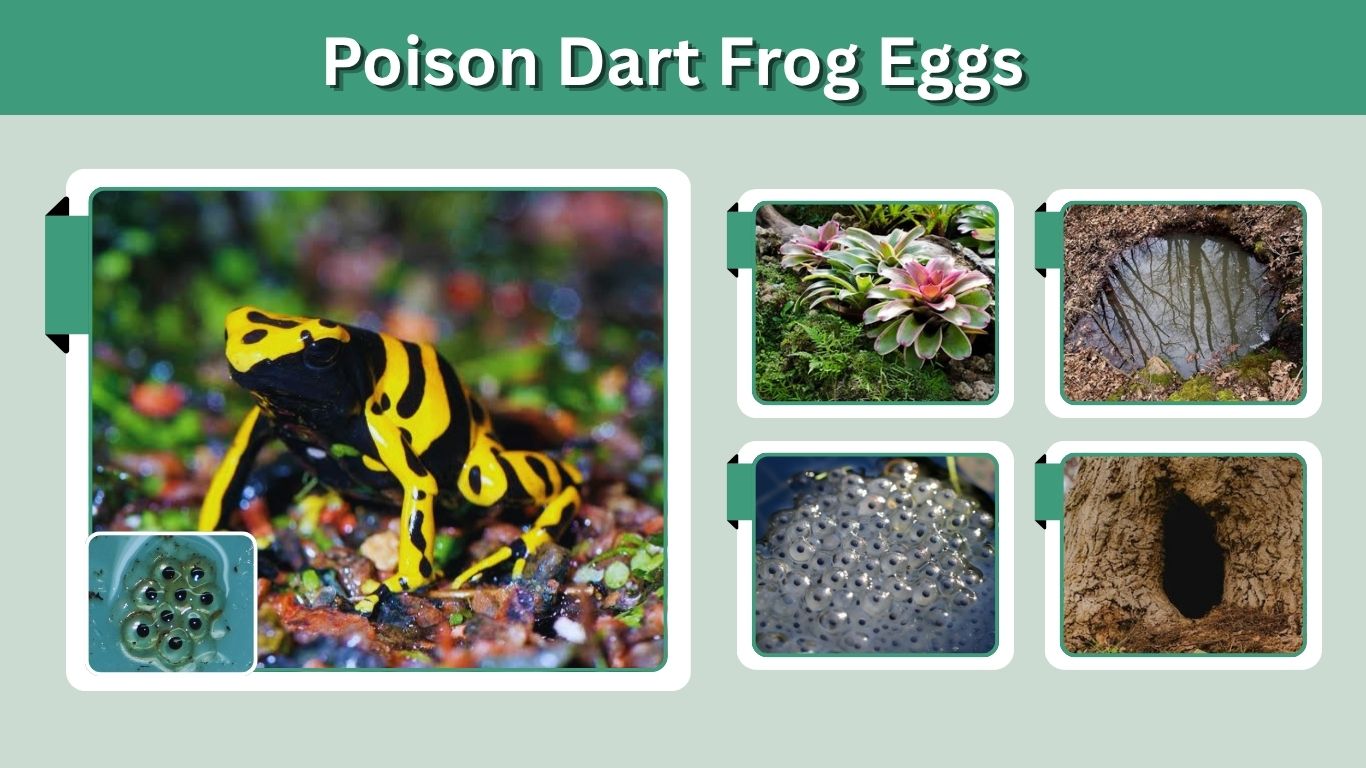
Poison dart frog eggs are a fascinating part of the species’ unusual reproductive cycle. Unlike many frogs that lay hundreds or thousands of eggs directly in ponds, poison dart frogs generally produce small clutches in moist, protected places on land. After hatching, the tadpoles are often transported to tiny pools of water by one of the parents. From egg fertilization to tadpole development, every stage involves specialized behaviors that help these tiny rainforest frogs survive.
What Do Poison Dart Frog Eggs Look Like?
Poison dart frog eggs are very small, round, and usually surrounded by a clear or jelly-like substance. The jelly helps keep the developing embryos moist and provides some protection while they grow.
Freshly laid eggs may appear pale, cream, gray, brown, or nearly transparent depending on the species and stage of development. As the embryo develops, a darker shape becomes visible inside the egg.
Poison Dart Frog Egg Size
Most poison dart frog eggs are only a few millimeters across. Because the eggs are so small, an entire clutch can fit comfortably on a leaf, inside a bromeliad, or beneath a piece of vegetation.
Why Are the Eggs Covered in Jelly?
The jelly-like coating around the eggs prevents them from drying out. This is especially important because many poison dart frogs lay their eggs above water rather than directly inside a pond.
The jelly also creates a moist environment where the embryo can continue developing until it is ready to hatch.
Do Poison Dart Frogs Lay Eggs?
Yes. Poison dart frogs reproduce by laying eggs rather than giving birth to live young. Mating usually occurs after the male establishes a territory and attracts a female through calling and courtship behavior.
The female deposits her eggs in a moist location, and the male commonly fertilizes them externally.
Poison Dart Frog Egg Fertilization
After the female lays the eggs, the male releases sperm over them. Fertilization therefore occurs outside the female’s body.
Successful fertilization is essential for embryo development. Fertile eggs gradually develop visible embryos, while infertile eggs may become cloudy, discolored, or fail to develop.
Where Do Poison Dart Frogs Lay Their Eggs?
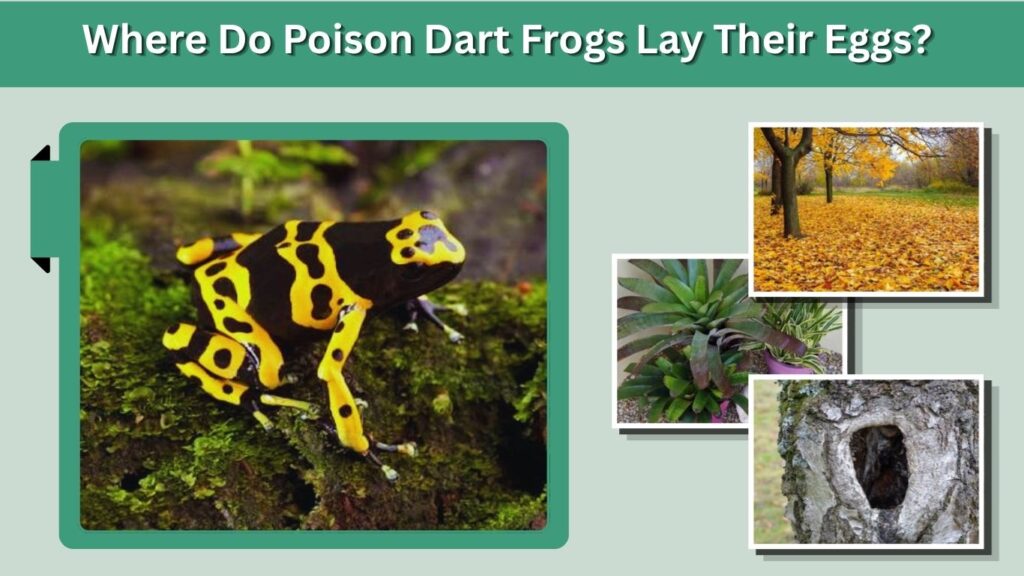
Poison dart frogs usually select damp, protected locations where their eggs will not dry out.
Common egg-laying sites include:
- Moist leaves
- Leaf litter
- Under fallen leaves
- Small plant cavities
- Bromeliad leaves
- Moss-covered surfaces
- Coconut shells or shelters in captivity
- Smooth surfaces near humid areas
Different poison dart frog species have somewhat different nesting preferences.
Poison Dart Frog Eggs in Plants
Bromeliads and other tropical plants are especially important to some species. Their leaves can collect rainwater and create humid microhabitats.
A frog may place eggs on a leaf rather than directly in the water. Once the tadpoles hatch, a parent may carry them to a water-filled plant cavity.
How Many Eggs Do Poison Dart Frogs Lay?
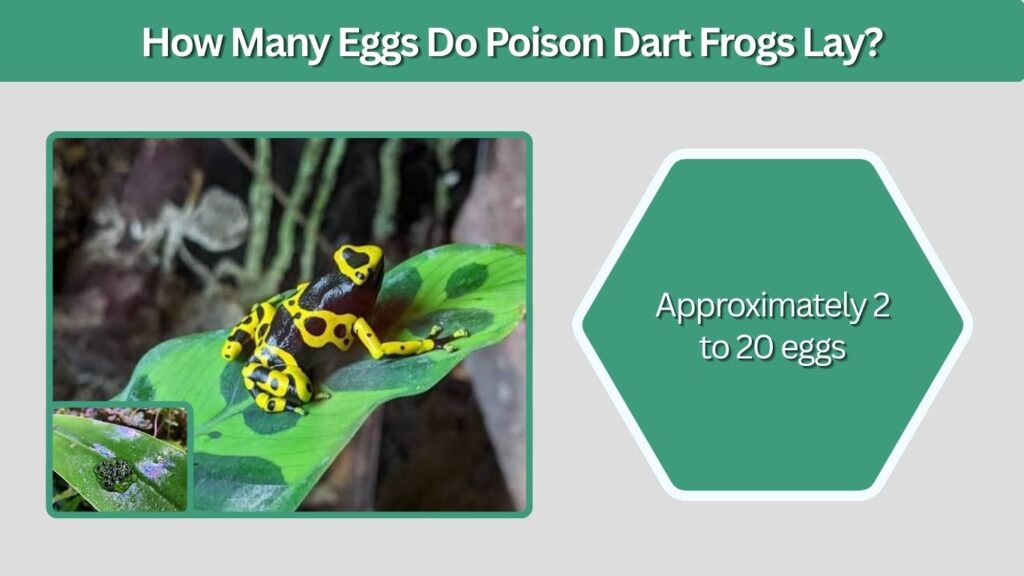
Poison dart frogs generally produce relatively small clutches compared with many other frogs.
A clutch may contain approximately 2 to 20 eggs, although the exact number varies considerably between species.
Some tiny species produce only a few eggs at a time, while larger dart frogs may produce noticeably larger clutches.
How Often Do Poison Dart Frogs Lay Eggs?
During favorable breeding conditions, healthy adult frogs may produce multiple clutches over time.
Breeding frequency depends on factors such as:
- Species
- Temperature
- Humidity
- Food availability
- Frog age
- Overall health
- Seasonal rainfall
Captive poison dart frogs kept under suitable conditions may breed regularly throughout portions of the year.
How Long Do Poison Dart Frog Eggs Take to Hatch?
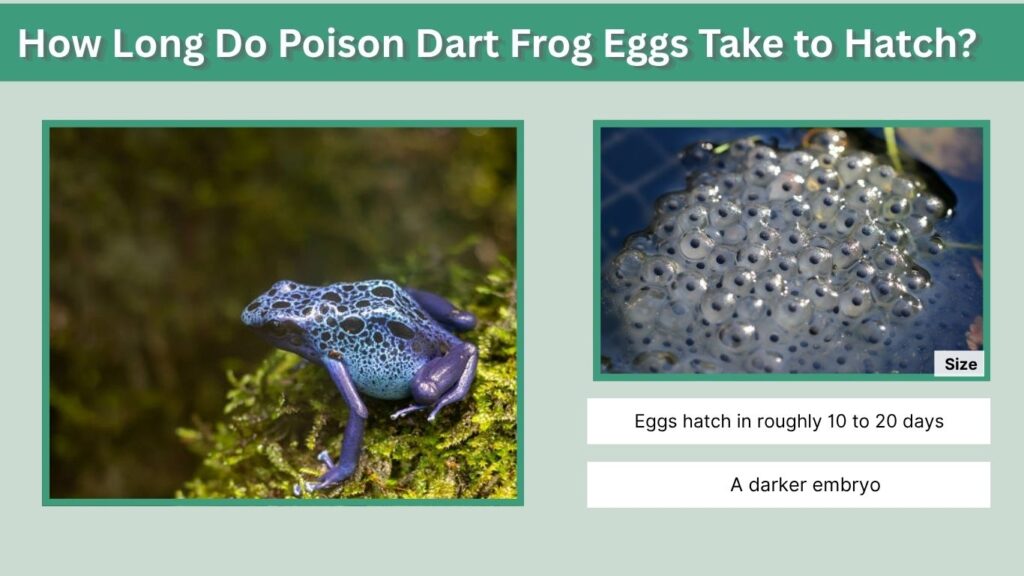
Most poison dart frog eggs hatch in roughly 10 to 20 days, although development time varies by species and environmental conditions.
Temperature and humidity strongly influence development. Eggs kept under appropriate moist conditions usually develop more successfully than eggs exposed to excessive dryness or extreme temperatures.
Poison Dart Frog Egg Development
Egg development happens gradually.
During the first few days, the egg may show little obvious movement. Soon, however, the developing embryo becomes visible.
As development progresses, observers may notice:
- A darker embryo
- Formation of the head
- Development of the tail
- Increased movement inside the egg
- A clearly recognizable tadpole shape
Near hatching time, the embryo becomes increasingly active.
What Happens After Poison Dart Frog Eggs Hatch?
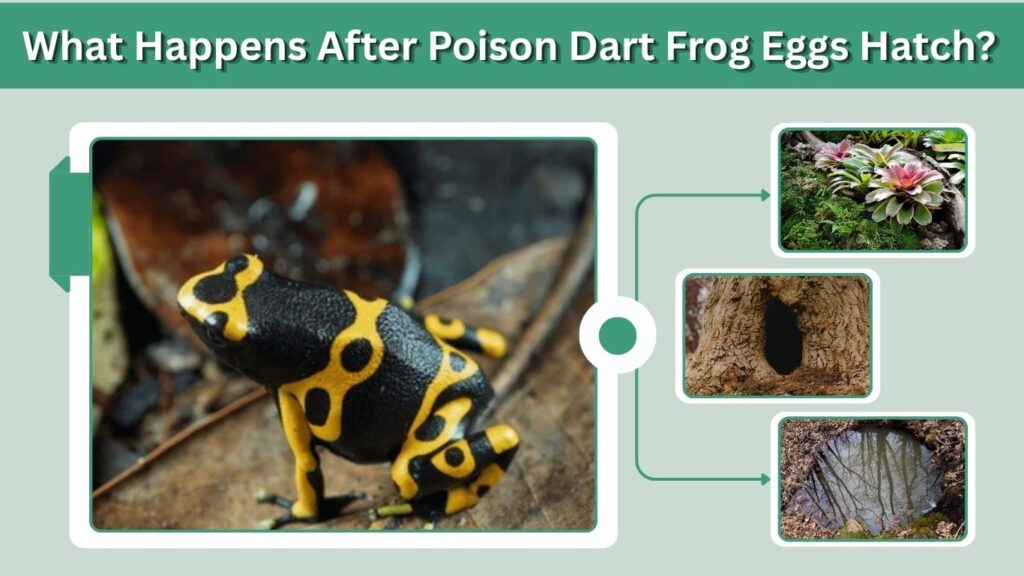
Once the eggs hatch, tiny tadpoles emerge. Their next destination depends largely on the species.
Many poison dart frog parents transport tadpoles to water rather than allowing them to remain where the eggs were deposited.
Poison Dart Frog Eggs and Tadpoles
A parent—often the male—allows newly hatched tadpoles to climb onto its back.
The frog then carries the tadpoles through the rainforest to suitable water sources such as:
- Bromeliad pools
- Tree holes
- Small puddles
- Water-filled plant cavities
The tadpoles eventually complete metamorphosis and develop into juvenile frogs.
Do Poison Dart Frogs Carry Eggs on Their Back?
Normally, poison dart frogs do not carry their eggs on their backs.
The eggs remain attached to the nesting surface while developing. What people commonly see on an adult frog’s back are newly hatched tadpoles, not eggs.
The tadpoles temporarily attach themselves to the parent’s back while being transported to water.
Strawberry Poison Dart Frog Eggs
The strawberry poison dart frog (Oophaga pumilio) has one of the most fascinating reproductive strategies among dart frogs.
The female lays only a small number of eggs in a moist terrestrial location. After they hatch, tadpoles are transported individually to small water-filled plant structures.
Female Feeds the Tadpoles
The mother periodically returns and deposits unfertilized eggs into the water.
The tadpoles eat these eggs as an important source of nutrition. This specialized parental behavior distinguishes strawberry poison dart frogs from many other frog species.
Orange and red forms of strawberry poison dart frogs follow the same general reproductive strategy because these colors represent variations within the species rather than entirely different reproductive systems.
Blue Poison Dart Frog Eggs
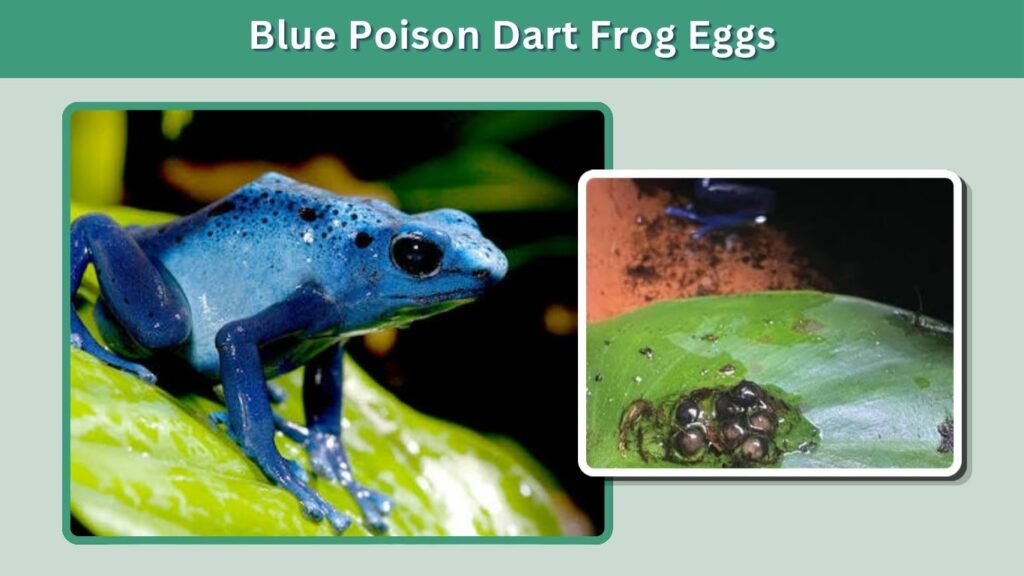
Blue poison dart frogs, commonly associated with Dendrobates tinctorius varieties, usually lay small clutches in moist, sheltered locations.
A clutch often contains several eggs rather than hundreds.
The eggs develop in their jelly coating until the tadpoles hatch. A parent then transports the tadpoles to suitable water.
How Many Eggs Does a Blue Poison Dart Frog Lay?
The exact number varies, but a female may typically lay approximately 2 to 10 eggs in one clutch.
Age, health, diet, and breeding conditions can influence clutch size.
Golden Poison Dart Frog Eggs
The golden poison frog (Phyllobates terribilis) also lays eggs in humid locations on the forest floor.
After fertilization and development, the tadpoles hatch and are transported to water.
Despite the adults’ extremely potent skin toxins in the wild, the eggs themselves are not simply miniature versions of toxic adult frogs. The chemical defenses associated with adults are closely connected with their natural diet.
Yellow-Banded Poison Dart Frog Eggs
Yellow-banded poison dart frogs typically reproduce in humid terrestrial environments. Eggs are deposited in protected locations, where they remain until development is complete.
After hatching, parental transport helps move the tadpoles to water suitable for further growth.
Like other dart frogs, they rely on a relatively small number of carefully tended offspring rather than producing enormous numbers of unattended eggs.
Poison Dart Frog Egg Care in Captivity
Captive breeders sometimes carefully monitor poison dart frog eggs to improve hatching success.
Eggs generally require consistently humid conditions without being completely submerged in deep water.
Important factors include:
- Stable humidity
- Appropriate temperature
- Clean conditions
- Protection from drying
- Protection from mold
- Minimal unnecessary handling
Avoid Excess Water
Although the eggs need moisture, flooding them can cause problems. Their natural nesting areas are humid rather than permanently underwater.
Breeders generally try to reproduce these moist conditions while maintaining good airflow.
Watch for Unhealthy Eggs
Healthy fertile eggs gradually develop visible embryos.
Eggs that turn completely opaque, begin decomposing, or develop excessive fungal growth may be infertile or unhealthy.
Because conditions differ between species, captive care should always be adapted to the particular dart frog being bred.
Poison Dart Frog Egg Facts
Poison dart frog reproduction differs dramatically from that of many familiar pond frogs.
A few interesting facts include:
- Most species produce relatively small egg clutches.
- Eggs are commonly laid outside water.
- Parents may guard or moisten the eggs.
- Tadpoles can be carried on an adult’s back.
- Bromeliads frequently provide tadpole nurseries.
- Some mothers feed tadpoles unfertilized eggs.
- Egg development often takes around two weeks.
- Parental care greatly improves survival chances.
Their reproductive behavior is one reason poison dart frogs are considered some of the most remarkable amphibians in tropical forests.
FAQs
How many eggs do poison dart frogs lay at once?
Most poison dart frogs lay relatively small clutches, commonly containing around 2 to 20 eggs. The exact number depends on the species, size, health, age, and environmental conditions. Some species consistently produce only a few eggs during each breeding event.
Where do poison dart frogs lay their eggs?
They usually lay eggs in moist locations above or near water, including leaves, leaf litter, bromeliads, moss, plant cavities, and other sheltered surfaces. The location must remain humid enough to prevent the eggs and developing embryos from drying out.
How long do poison dart frog eggs take to hatch?
Many poison dart frog eggs hatch within approximately 10 to 20 days. Development speed varies among species and is influenced by temperature, humidity, egg health, and environmental conditions. Fully developed tadpoles become increasingly visible and active shortly before hatching.
Do poison dart frogs carry their eggs on their backs?
Generally, no. Adults usually leave eggs attached to a moist nesting surface. After the eggs hatch, however, the tiny tadpoles may climb onto a parent’s back. The parent then transports them to a small pool or water-filled plant cavity.
How often do poison dart frogs lay eggs?
Breeding frequency varies by species and environmental conditions. During periods of favorable temperature, humidity, food supply, and rainfall, adults may produce multiple clutches. Captive frogs kept under stable breeding conditions can sometimes lay eggs regularly throughout their breeding season.
