
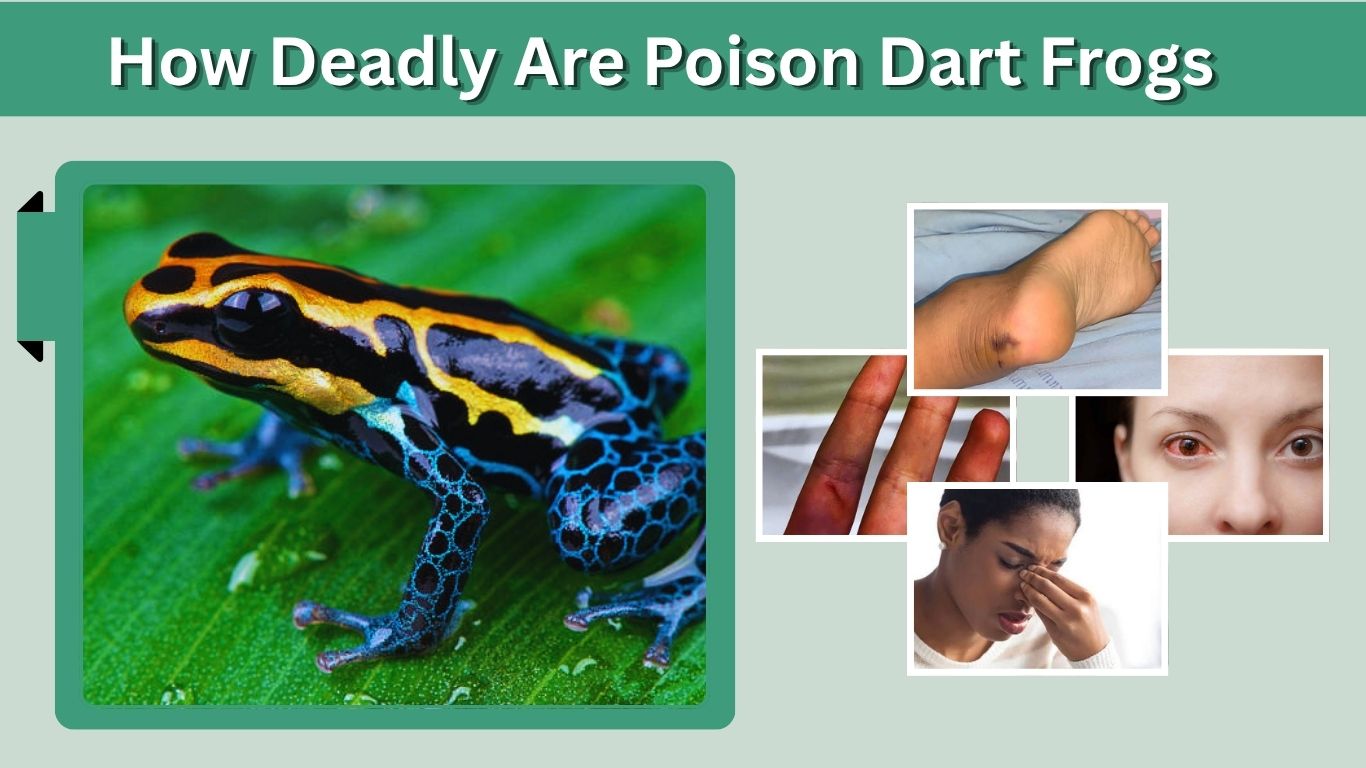
Poison dart frogs are famous for their bright colors and powerful skin toxins, but just how deadly are they? The answer depends heavily on the species. A few wild poison dart frogs, especially the golden poison frog, can carry enough toxin to be extremely dangerous to humans. However, many species are far less toxic, and captive-bred poison dart frogs usually lose most or all of their toxicity because their poison comes largely from compounds obtained through their natural diet.
Are Poison Dart Frogs Deadly?
Yes, certain poison dart frogs can potentially be deadly, but not every species poses the same level of danger.
There are more than 100 species commonly grouped as poison dart frogs, and their toxicity varies dramatically. Some produce relatively mild defensive chemicals, while others contain extremely potent toxins capable of affecting the nervous system and heart.
How Poisonous Are Poison Dart Frogs?
Poison dart frogs do not normally inject venom through bites or stings. Instead, poisonous substances are secreted through glands in their skin.
Exposure becomes most concerning if these toxins enter the body through:
- Cuts or open wounds
- The mouth
- The eyes
- Other mucous membranes
- Accidental ingestion
Simply seeing or being close to a frog does not result in poisoning.
Can Poison Dart Frogs Kill Humans?
Extremely toxic wild species could potentially cause fatal poisoning if a sufficient amount of toxin entered a person’s body.
However, documented human deaths directly caused by casually encountering poison dart frogs are exceptionally rare.
Their reputation comes mainly from the extraordinary potency of toxins found in certain species rather than frequent attacks on humans.
What Is the Most Deadly Poison Dart Frog?
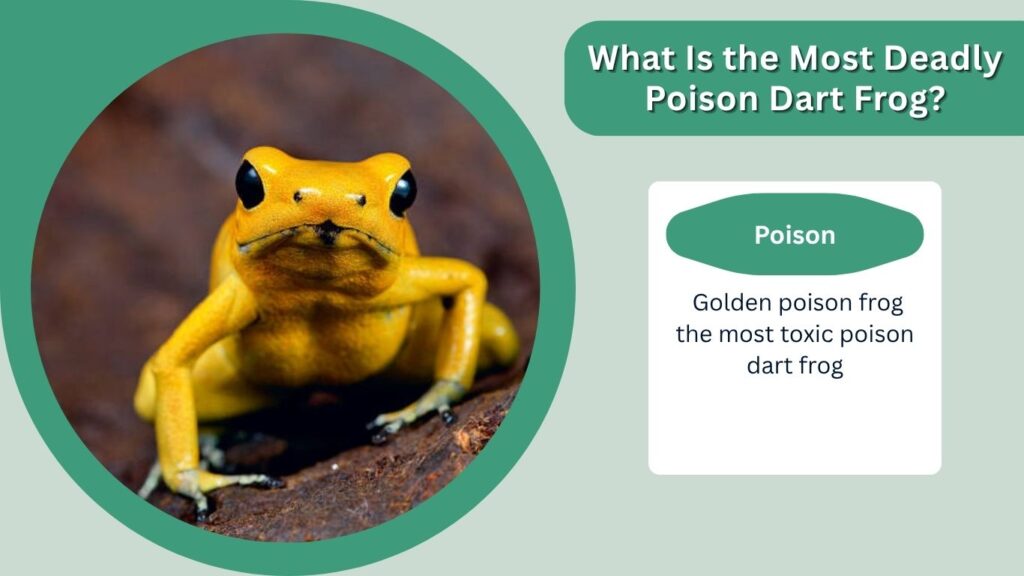
The golden poison frog (Phyllobates terribilis) is widely regarded as the most toxic poison dart frog.
It is native to Colombia’s Pacific rainforest and produces powerful alkaloid toxins in its skin.
How Deadly Is a Golden Poison Dart Frog?
Wild golden poison frogs can carry significant amounts of batrachotoxin, one of the most potent naturally occurring toxins known.
Estimates frequently suggest that the toxin present on a particularly toxic wild individual could theoretically be sufficient to kill several adult humans if an effective dose entered their bodies.
This does not mean touching one automatically causes death. The actual risk depends on the amount of toxin, the route of exposure, and whether the toxin enters the body.
Why Are Poison Dart Frogs So Deadly?
Their toxicity is primarily a defensive adaptation.
A poison dart frog is tiny and physically vulnerable to predators. Powerful skin chemicals help compensate for its small size by making it unpleasant or dangerous to eat.
Bright Colors Warn Predators
Many poison dart frogs have striking combinations of:
- Yellow
- Blue
- Red
- Orange
- Green
- Black
These bright patterns are examples of aposematic coloration, or warning coloration.
Rather than hiding from predators, highly toxic frogs can advertise that attacking them may be a bad idea.
Their Diet Helps Create Toxicity
Poison dart frogs are believed to obtain many of the chemical building blocks for their defensive toxins from small arthropods in their natural diet.
Possible dietary sources include certain:
- Ants
- Mites
- Beetles
- Other tiny invertebrates
The frogs accumulate these alkaloids and store them in specialized skin glands.
Are Captive Poison Dart Frogs Deadly?
Captive-bred poison dart frogs are generally considered far less dangerous than their wild counterparts.
Frogs raised in captivity are commonly fed fruit flies, springtails, and other cultured insects that do not contain the same alkaloids available in rainforest prey.
Do Captive Poison Dart Frogs Lose Their Poison?
Yes. Poison dart frogs kept on a captive diet generally lose much of their natural toxicity over time.
Captive-bred frogs that have never eaten wild toxin-containing prey may have little or none of the powerful toxins associated with wild populations.
This is one reason poison dart frogs can be maintained by experienced amphibian keepers.
Nevertheless, handling should still be minimized because amphibian skin is extremely delicate.
Are Poison Dart Frogs Deadly to Humans?
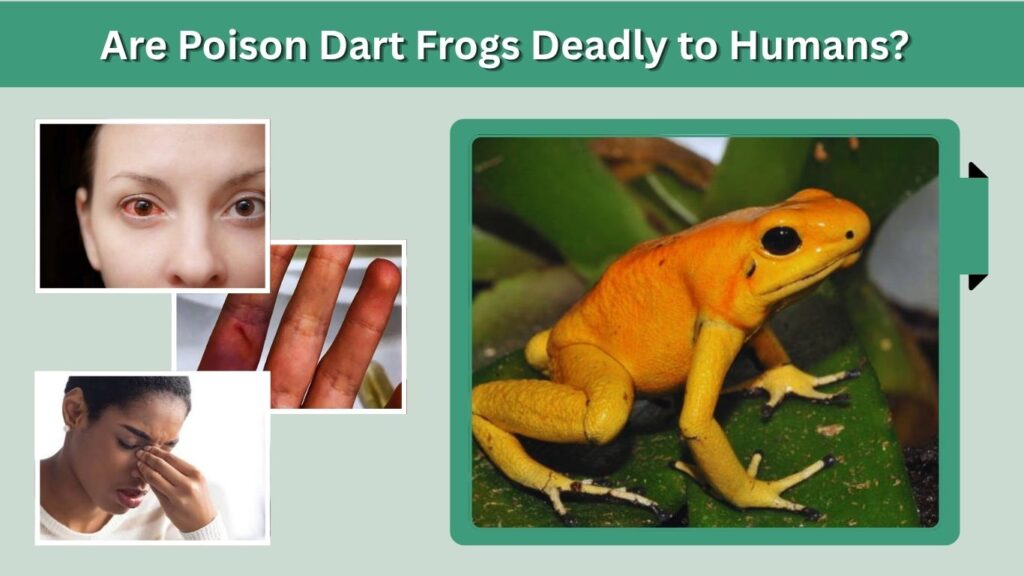
Most everyday human encounters with poison dart frogs do not result in serious poisoning.
Wild frogs should never be handled unnecessarily, particularly highly toxic species.
What Happens If You Touch a Poison Dart Frog?
Touching a highly toxic wild frog could expose your skin to defensive chemicals.
Healthy, unbroken skin provides some protection, but risk increases considerably if toxin reaches:
- An open cut
- A scratch
- The eyes
- The nose
- The mouth
It is therefore safest to observe wild poison dart frogs without touching them.
Poison Dart Frog Poisoning Symptoms
Severe toxin exposure may interfere with normal nerve and muscle function.
Depending on the toxin and dose, possible effects could include:
- Numbness
- Muscle weakness
- Abnormal heart rhythm
- Breathing difficulty
- Loss of coordination
- Severe cardiovascular complications
A significant suspected exposure should be treated as a medical emergency.
Do Poison Dart Frogs Bite?
Poison dart frogs can technically use their mouths, but they are not dangerous because of biting.
Their primary defense comes from chemicals present in their skin rather than venom delivered through teeth.
They generally prefer escaping or hiding rather than confronting humans.
Are All Poison Dart Frogs Equally Deadly
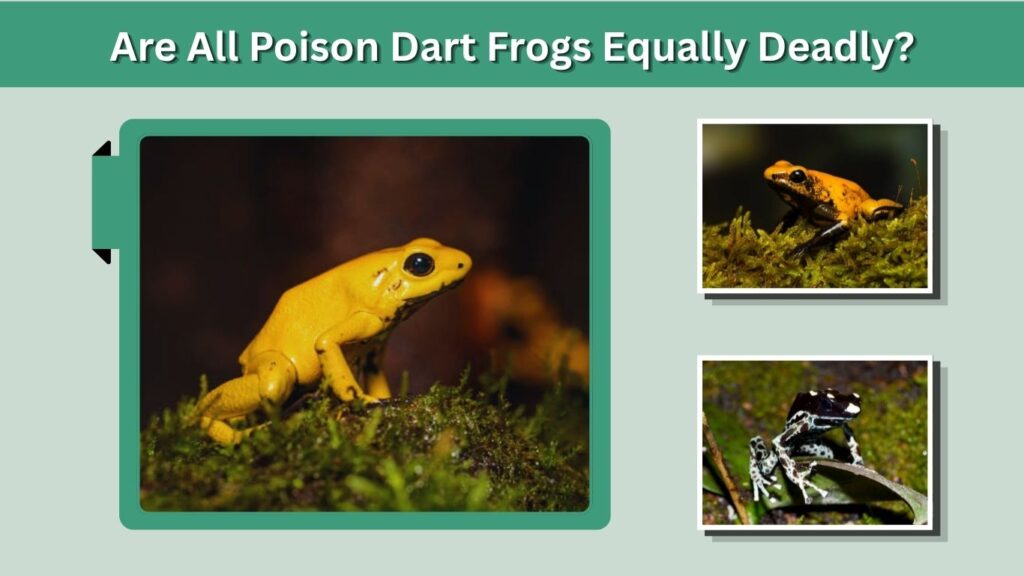
No. Toxicity differs significantly among species and even among populations of the same species.
The most dangerous frogs are generally associated with the genus Phyllobates.
Golden Poison Frog
The golden poison frog is considered the most toxic member of the group and one of the most poisonous vertebrates known.
Black-Legged Poison Frog
The black-legged poison frog (Phyllobates bicolor) can also contain powerful batrachotoxins and is considered highly toxic.
Kokoe Poison Frog
Phyllobates aurotaenia, commonly called the Kokoe poison frog, also produces potent defensive toxins, although generally at lower levels than the golden poison frog.
Blue Poison Dart Frog
Blue poison dart frogs are poisonous in the wild, but they are not considered as dangerously toxic as golden poison frogs.
Captive-bred blue poison dart frogs are generally much less toxic because of their controlled diet.
Strawberry Poison Dart Frog
The strawberry poison dart frog (Oophaga pumilio) contains defensive alkaloids in the wild.
It can discourage or harm predators, but it is not normally ranked among the most deadly poison dart frogs.
Why Are They Called Poison Dart Frogs?
The name comes from Indigenous hunting traditions in parts of Colombia.
Certain highly toxic frogs from the genus Phyllobates were historically associated with coating hunting darts with frog toxins.
Not every species commonly called a poison dart frog was used for this purpose.
The name therefore creates the impression that all dart frogs are equally lethal, which is not accurate.
Poisonous vs. Venomous: What Is the Difference?
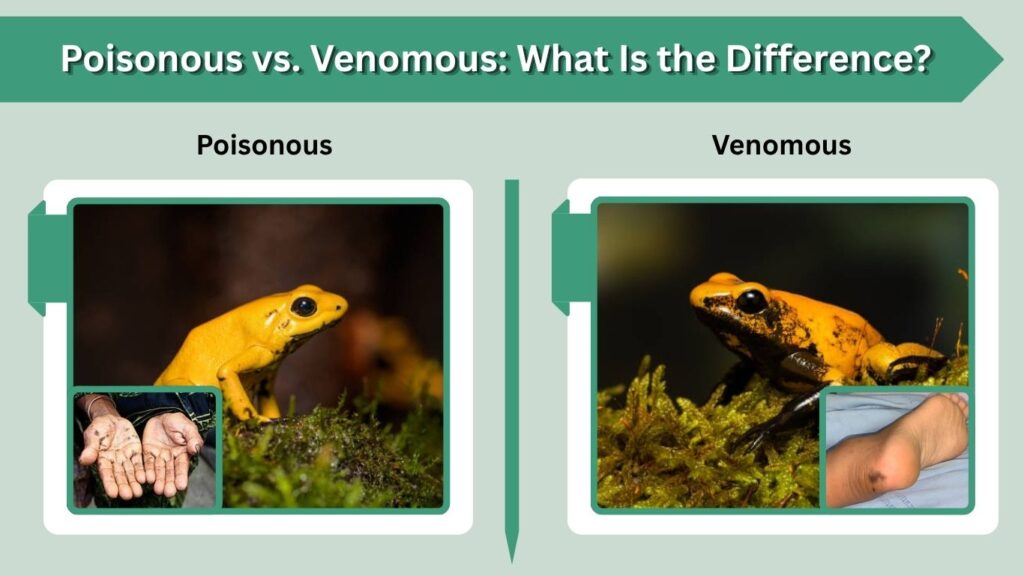
Poison dart frogs are poisonous, not venomous.
A venomous animal actively delivers toxins using specialized structures such as:
- Fangs
- Stingers
- Spines
A poisonous animal causes exposure when its toxins are touched, eaten, or otherwise absorbed.
Poison dart frogs do not inject their skin toxins into people.
Can Predators Eat Poison Dart Frogs?
Their toxins deter most potential predators, but they do not make the frogs completely immune to predation.
Some predators may tolerate chemicals better than others.
Bright coloration helps potential predators recognize toxic frogs before attempting to eat them, reducing the likelihood that the frog needs to rely entirely on its chemical defenses.
Do Poison Dart Frogs Play Dead?
Playing dead is not considered one of the primary defensive strategies of poison dart frogs.
Their major defenses include warning coloration, toxic skin secretions, hiding, and quickly escaping threats.
A frightened or stressed frog may remain unusually still, but this should not automatically be interpreted as deliberately playing dead.
How Dangerous Are Poison Dart Frogs Compared With Other Frogs?
Most frogs pose little toxic danger to humans.
Poison dart frogs stand apart because some species have evolved extremely concentrated chemical defenses.
However, the danger is easy to exaggerate. They do not chase humans, sting, spray poison, or deliberately attack people.
Their toxins primarily evolved to discourage predators from eating them.
FAQs
How deadly is a poison dart frog?
The danger depends on the species. Most poison dart frogs are not instantly lethal to humans, but several wild Phyllobates species contain extremely potent toxins. The golden poison frog is considered the most dangerous, although serious human poisoning from ordinary encounters is rare.
What is the most deadly poison dart frog?
The golden poison frog (Phyllobates terribilis) is considered the most toxic poison dart frog. Wild individuals may contain powerful batrachotoxins capable of causing severe disruption to nerve, muscle, and heart function if a sufficient dose enters the body.
Are poison dart frogs deadly to humans?
Highly toxic wild poison dart frogs can theoretically cause fatal poisoning, especially if toxins enter cuts, the eyes, mouth, or bloodstream. However, simply being near a frog is not dangerous, and captive-bred dart frogs generally lack the extreme toxicity found in wild specimens.
Why are poison dart frogs so poisonous?
Much of their toxicity comes from alkaloid compounds obtained through their natural diet, particularly certain ants, mites, beetles, and other small arthropods. The frogs store these chemicals in their skin, where they act as protection against predators.
Are captive poison dart frogs poisonous?
Captive-bred poison dart frogs usually have little or none of the potent toxicity seen in wild frogs because captive diets do not provide the same toxin-producing compounds. Even so, unnecessary handling should be avoided because their sensitive skin can easily be damaged.
