
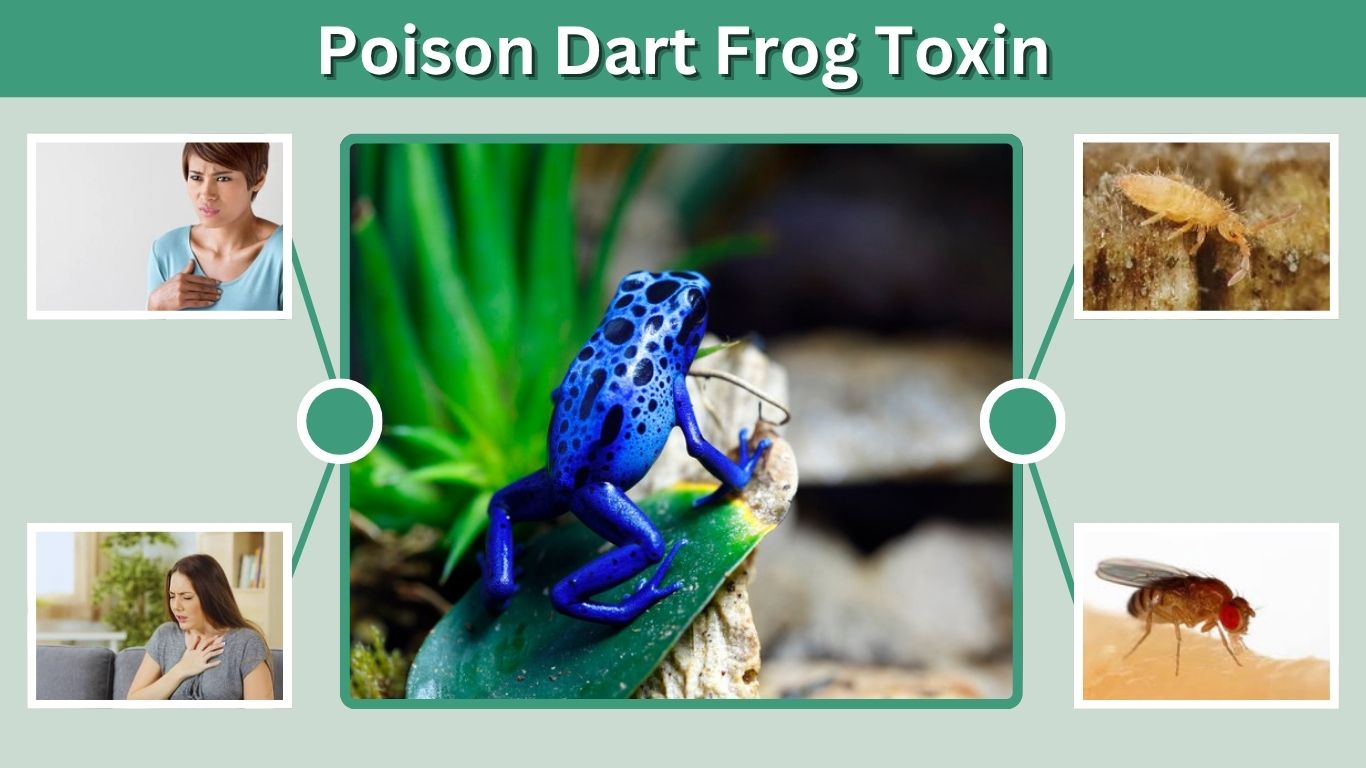
Poison dart frog toxin is one of the most fascinating chemical defenses in the animal world. These small, brightly colored frogs do not inject venom through fangs or stingers. Instead, many wild species store toxic alkaloids in glands within their skin. The strength and type of toxin vary considerably between species. Some dart frogs are only mildly toxic, while species such as the golden poison frog can carry extraordinarily powerful compounds. Interestingly, much of this toxicity comes from the frogs’ natural diet rather than being manufactured entirely by their bodies.
What Toxin Do Poison Dart Frogs Have?
Poison dart frogs can contain several different types of alkaloid toxins. There is no single toxin shared equally by every species.
Some of the best-known poison dart frog toxins include:
- Batrachotoxin
- Pumiliotoxin
- Allopumiliotoxin
- Histrionicotoxin
- Gephyrotoxin
- Decahydroquinoline alkaloids
- Indolizidine alkaloids
The exact chemical profile varies according to frog species, geographic location, and diet.
Batrachotoxin
Batrachotoxin is the toxin most strongly associated with extremely poisonous dart frogs.
It occurs particularly in several frogs belonging to the genus Phyllobates, including the golden poison frog.
Batrachotoxin interferes with electrical signaling in nerves and muscles by affecting sodium channels in cell membranes.
At sufficiently high exposure levels, this disruption can interfere with normal muscle function, nerve transmission, and heart rhythm.
Pumiliotoxin
Pumiliotoxins occur in various poison frog species, particularly members of groups such as Oophaga.
These chemicals generally differ from batrachotoxin in potency and biological effects.
The strawberry poison dart frog is one species known to possess defensive alkaloids that can include pumiliotoxin-related compounds.
How Do Poison Dart Frogs Produce Toxins?
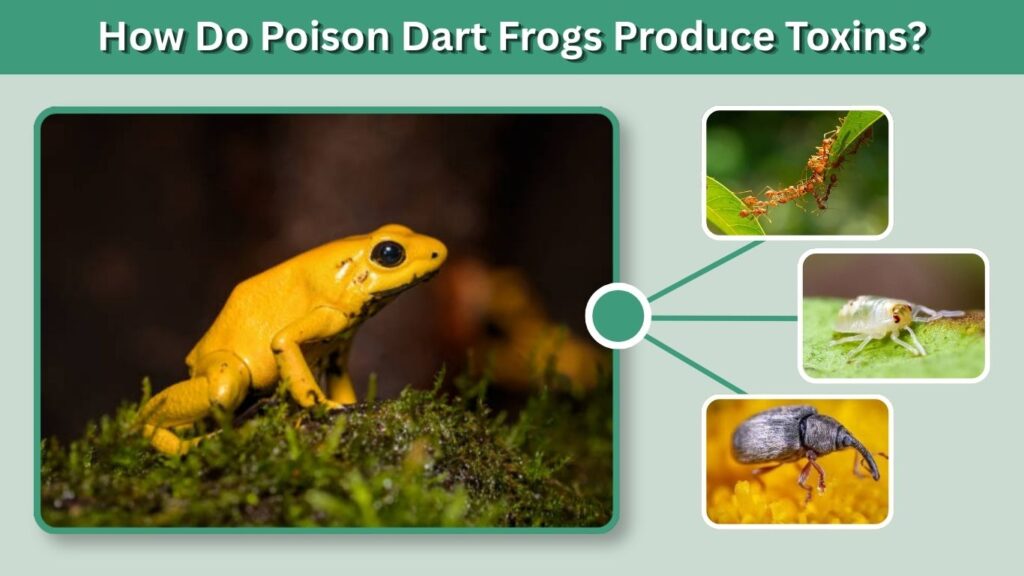
Poison dart frogs do not appear to manufacture most of their defensive alkaloids completely from basic chemicals inside their bodies.
Instead, they obtain many of these compounds from their food.
Wild dart frogs consume tiny arthropods containing alkaloids and then accumulate these substances inside specialized skin glands.
What Do They Eat to Become Toxic?
Potential dietary sources include:
- Ants
- Mites
- Small beetles
- Other tiny arthropods
Certain insects and mites themselves obtain or produce chemical compounds that eventually become part of the frog’s defense system.
This process is known as sequestration, meaning the frog absorbs particular compounds from food and stores them for later use.
Where Are Toxins Stored in Poison Dart Frogs?
Poison dart frog toxins are mainly stored in specialized glands located in the skin.
When a predator bites or handles the frog, these chemicals can come into contact with the predator’s mouth or tissues.
How Do Poison Dart Frogs Use Toxins in Their Skin?
Their toxic skin acts primarily as a defensive system.
A predator attempting to eat a toxic frog may experience an unpleasant taste or harmful physiological effects. This can teach predators to avoid similarly colored frogs in the future.
Poison dart frogs therefore combine two important defenses:
Toxic skin and bright warning coloration.
Their yellow, red, orange, blue, and black patterns often advertise that they are not safe prey.
Poison Dart Frog Toxin Effects
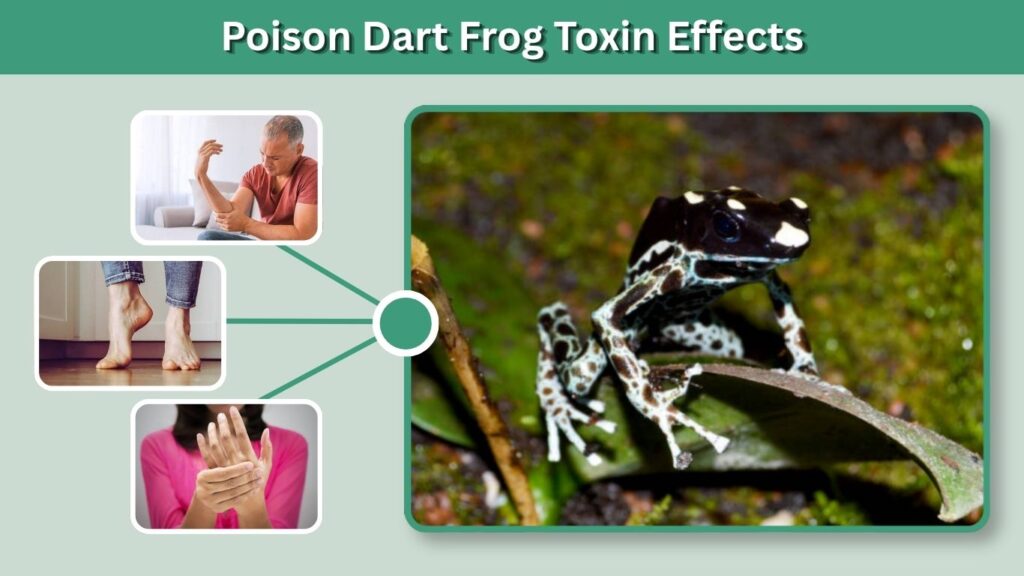
The effects depend heavily on the particular toxin and amount involved.
Powerful dart frog alkaloids may interfere with communication between nerves, muscles, and other cells.
Potential effects of severe toxin exposure can include:
- Numbness
- Tingling
- Muscle weakness
- Abnormal heart rhythm
- Difficulty breathing
- Loss of muscle control
- Cardiovascular complications
Different toxins act through different biological mechanisms, so symptoms are not identical for every species.
Golden Poison Dart Frog Toxin
The golden poison frog, Phyllobates terribilis, is famous for containing batrachotoxin and is generally considered the most toxic poison dart frog.
Wild individuals may carry very potent concentrations of these defensive alkaloids.
How Does Batrachotoxin Work?
Normal nerve and muscle cells depend on controlled movement of sodium ions through specialized channels.
Batrachotoxin binds to voltage-gated sodium channels and prevents them from functioning normally.
The channels can remain abnormally activated, disrupting the electrical signals required for proper nerve, muscle, and heart activity.
This is what makes batrachotoxin particularly dangerous.
Do Golden Poison Frogs Squirt Toxin?
No. Golden poison frogs do not shoot or deliberately squirt poison at attackers.
Their toxins are present in the skin.
Exposure occurs primarily through direct contact with skin secretions or when a predator attempts to bite or eat the frog.
Blue Poison Dart Frog Toxin
The blue poison dart frog, commonly associated with Dendrobates tinctorius forms, can also contain defensive alkaloids in the wild.
However, it is not considered as dangerously toxic as the golden poison frog.
What Toxin Do Blue Poison Dart Frogs Have?
Wild blue dart frogs may accumulate several alkaloid compounds obtained through their natural diet.
Their chemical profile can differ depending on their geographic location and available prey.
They are poisonous rather than venomous, meaning they do not inject toxins through a bite.
Why Are Captive Poison Dart Frogs Less Toxic?
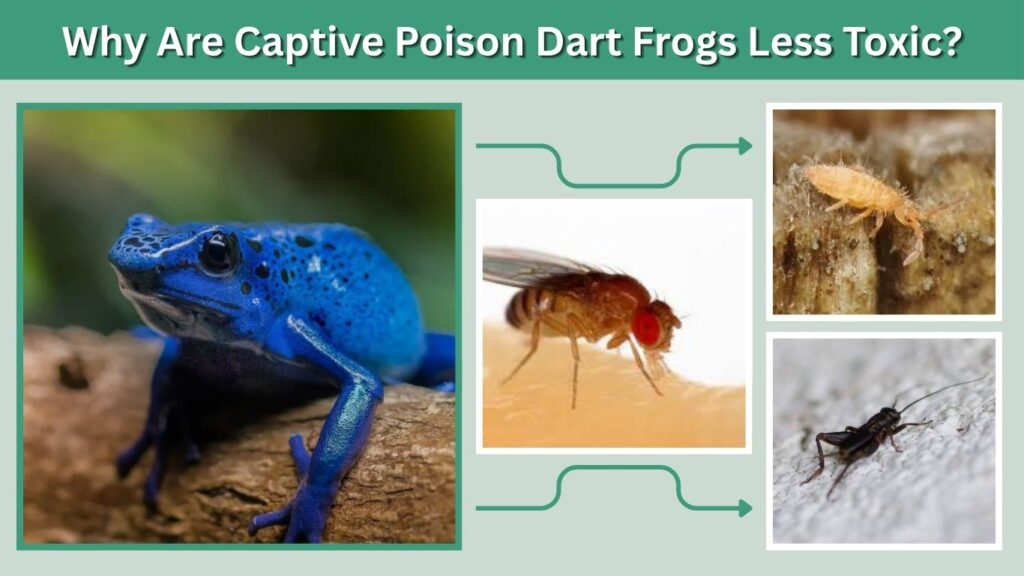
One of the most interesting facts about poison dart frog toxins is that captive-bred frogs usually have dramatically reduced toxicity.
Captive frogs are commonly fed foods such as:
- Fruit flies
- Springtails
- Small crickets
- Cultured insects
These prey animals generally lack the particular alkaloids consumed by wild dart frogs.
Without a continuous dietary supply, captive frogs cannot accumulate the same concentrations of defensive toxins.
Do Captive Poison Dart Frogs Completely Lose Their Toxin?
Captive-bred individuals raised exclusively on cultured foods often possess little or none of the powerful toxicity associated with wild frogs.
Wild-caught frogs may gradually lose some stored alkaloids after being maintained on a captive diet.
This strongly supports the connection between diet and poison dart frog toxicity.
Will Harvester Ants Make Poison Dart Frogs Toxic?
Not simply by feeding a poison dart frog ordinary harvester ants.
The relationship between diet and toxicity is highly specific.
Only certain prey species contain particular alkaloids that dart frogs can absorb and store.
It would therefore be inaccurate to assume that feeding any ant species automatically produces dangerous toxin levels.
Captive keepers should use established diets rather than attempting to make dart frogs more toxic.
Poison Dart Frog Toxin Adaptations
Chemical defense gives poison dart frogs several evolutionary advantages.
Because they are small and physically vulnerable, powerful skin chemicals discourage many larger predators from attacking them.
Warning Coloration
Bright colors work together with toxicity through a strategy called aposematism.
Predators can learn that brightly colored frogs are unpleasant or dangerous to eat.
Over time, recognizable patterns can reduce the number of attacks experienced by the frogs.
Small Size, Powerful Defense
Most dart frogs cannot physically overpower snakes, birds, mammals, or other predators.
Chemical protection allows a tiny animal to become extremely undesirable prey without relying on physical strength.
Poison Dart Frog Toxin Symptoms in Humans
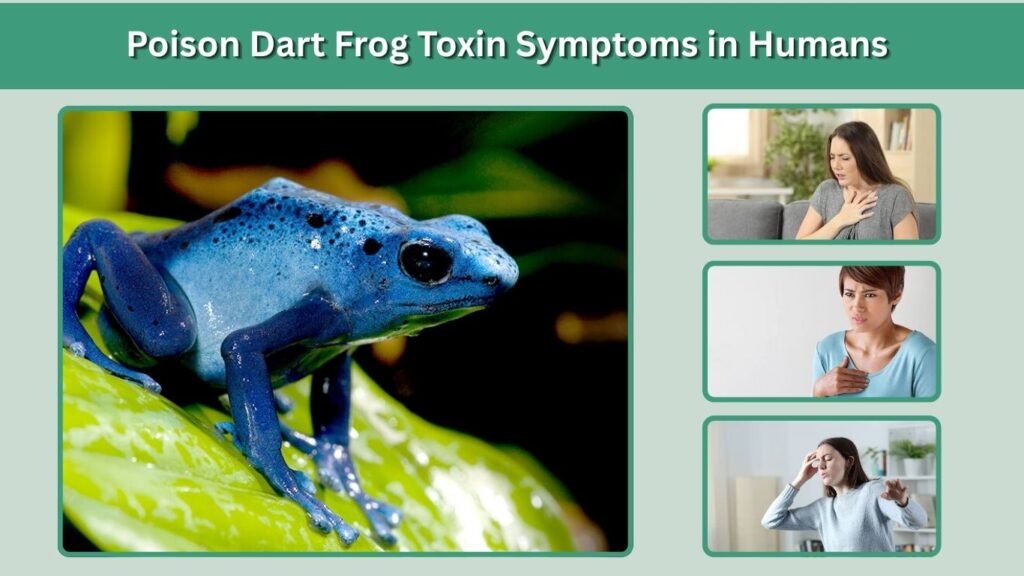
Significant exposure to highly toxic wild dart frogs could potentially produce serious symptoms.
Possible signs may include:
- Burning or tingling sensations
- Numbness
- Muscle weakness
- Breathing difficulty
- Irregular heartbeat
- Dizziness
- Loss of coordination
The severity depends on toxin type, quantity, and how it entered the body.
Intact skin provides some protection, while exposure through the eyes, mouth, wounds, or other vulnerable tissues can be more concerning.
Is There a Treatment for Poison Dart Frog Toxin?
There is no simple universal antidote for every poison dart frog toxin.
Treatment depends on the toxin involved and the symptoms produced.
Medical care primarily focuses on supporting breathing, circulation, and heart function while managing complications.
Anyone who suspects significant exposure to a highly toxic wild frog should seek urgent medical evaluation rather than attempting home treatment.
Poison Dart Frog Toxin Research
Poison dart frog alkaloids have attracted considerable scientific interest because they interact with important cellular systems.
Researchers study these chemicals to better understand:
- Sodium channels
- Nerve signaling
- Muscle contraction
- Pain pathways
- Chemical ecology
- Predator-prey relationships
Some poison frog compounds have also inspired research into molecules that affect pain signaling.
However, this does not mean natural frog toxins are safe painkillers. Many are extremely potent biological chemicals that require controlled laboratory study.
FAQs
What is the poison dart frog toxin called?
There is no single poison dart frog toxin. Different species can contain alkaloids such as batrachotoxin, pumiliotoxin, histrionicotoxin, and related compounds. Batrachotoxin is especially famous because it occurs in highly toxic Phyllobates frogs.
How do poison dart frogs make toxins?
Many poison dart frogs acquire defensive alkaloids from their diet rather than producing them entirely themselves. They eat certain ants, mites, beetles, and other small arthropods, absorb specific chemical compounds, and store them in specialized skin glands.
What does poison dart frog toxin do?
The effects depend on the chemical involved. Some toxins interfere with ion channels and electrical communication between nerve and muscle cells. Severe exposure to particularly potent toxins can potentially disrupt muscle function, breathing, and normal heart rhythm.
What toxin does the golden poison frog have?
The golden poison frog is particularly associated with batrachotoxin. This powerful alkaloid affects voltage-gated sodium channels in nerve and muscle cells, disrupting normal electrical signaling. It is one reason this species is considered among the world’s most poisonous frogs.
Why aren’t captive poison dart frogs toxic?
Captive poison dart frogs usually eat fruit flies, springtails, and other cultured foods that lack many of the alkaloids present in wild prey. Without these dietary chemicals, the frogs cannot accumulate the same powerful defensive toxins found in wild populations.
