
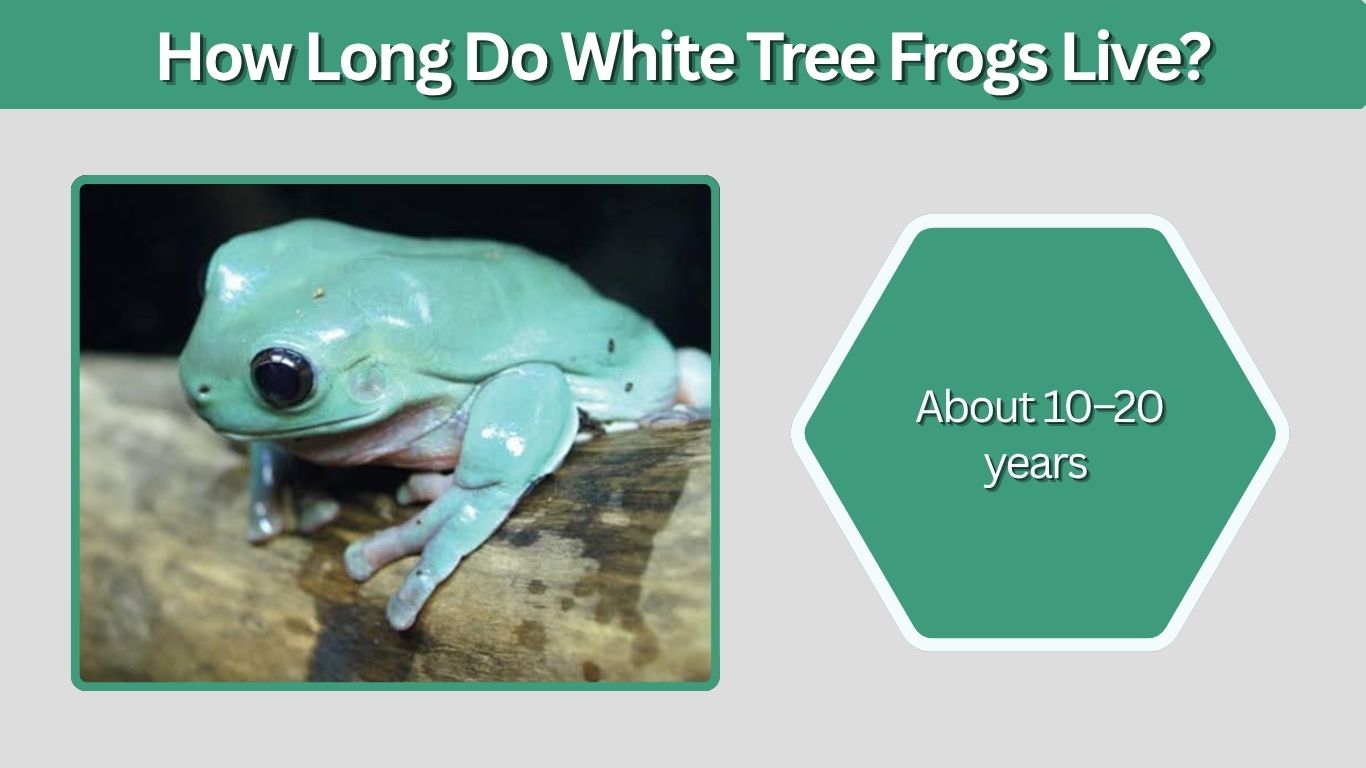
White’s tree frogs can commonly live about 10–20 years in captivity when provided with proper housing, nutrition, temperature, humidity, and veterinary care. Some well-cared-for individuals may survive even longer. Also called Australian green tree frogs or dumpy tree frogs, these hardy amphibians are considered relatively long-lived compared with many other pet frogs. Their lifespan depends heavily on husbandry, genetics, diet, and overall health. Wild White’s tree frogs generally face more predators, environmental changes, disease, and food shortages than captive frogs.
How Long Do White Tree Frogs Live?
The White’s tree frog (Ranoidea caerulea) is known for its robust body, calm behavior, and relatively long lifespan. A healthy pet can remain with its owner for many years, making the species a significant long-term commitment. Proper husbandry is particularly important because preventable issues such as obesity, nutritional deficiencies, dehydration, and poor enclosure conditions can shorten its life.
Average White’s Tree Frog Lifespan
Typical lifespan estimates include:
- Pet White’s tree frog: Around 10–20 years
- Well-maintained adults: Potentially 15 years or longer
- Exceptional individuals: May exceed 20 years
- Wild frogs: Often have shorter or less predictable lifespans
- Juveniles: More vulnerable to poor nutrition and environmental problems
Individual frogs can vary considerably, so no exact lifespan is guaranteed.
How Long Do White Tree Frogs Live in Captivity?
White’s tree frogs often live longer in captivity because they are protected from predators and have regular access to food, clean water, and controlled environmental conditions.
A properly maintained enclosure also reduces exposure to extreme temperatures and many natural hazards. However, captivity only increases lifespan when husbandry is appropriate. Poor ventilation, incorrect humidity, dirty water, overfeeding, and nutritional deficiencies can create serious health problems.
How Long Do Australian White Tree Frogs Live?
The Australian White’s tree frog, Australian green tree frog, dumpy tree frog, and White’s tree frog are common names associated with the same species.
Their potential lifespan is therefore similar. In captivity, an Australian White’s tree frog may live roughly 10–20 years, depending on genetics and quality of care.
What Affects a White Tree Frog’s Lifespan?
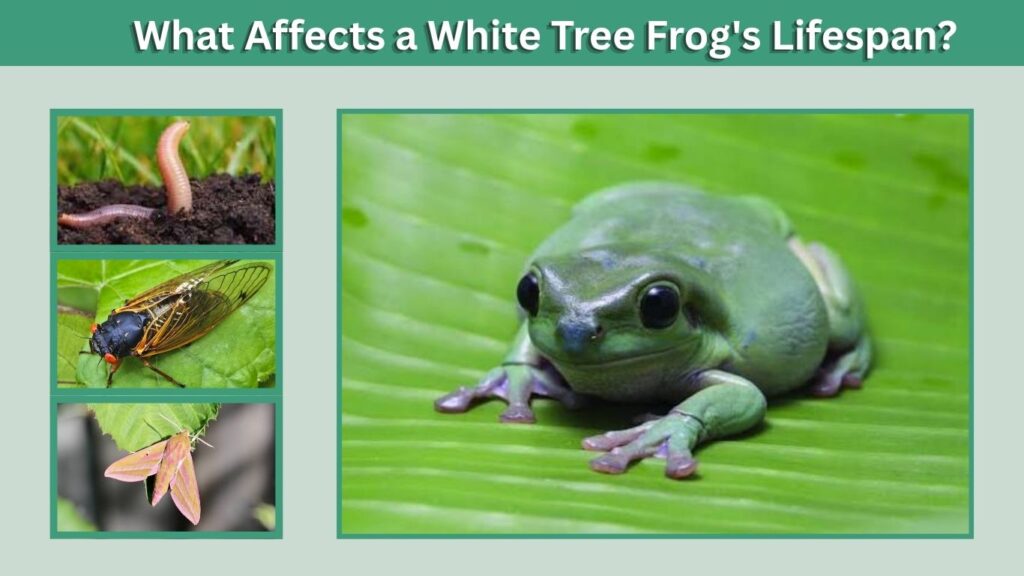
Genetics influence longevity, but daily care often has a major effect on how long a White’s tree frog lives as a pet. Maintaining a stable environment, appropriate diet, healthy body weight, and good hygiene helps reduce many common health risks.
Diet and Nutrition
White’s tree frogs mainly eat insects and other small invertebrates. Captive frogs can be offered appropriately sized foods such as:
- Crickets
- Dubia roaches
- Locusts
- Silkworms
- Hornworms
- Earthworms
- Occasional mealworms
- Occasional waxworms
Feeder insects should be nutritious and appropriately supplemented with calcium and vitamins.
Overfeeding is a particular concern because White’s tree frogs are enthusiastic eaters and can become overweight.
Temperature and Humidity
Stable environmental conditions are essential for normal digestion, activity, hydration, and immune function.
White’s tree frogs need access to suitable warmth without being exposed to excessive heat. They also require moderate humidity combined with adequate ventilation.
Keeping an enclosure constantly wet can be just as problematic as allowing it to become excessively dry.
Clean Water and Hygiene
Amphibian skin is highly permeable, making water quality especially important.
Provide clean, dechlorinated water for soaking and drinking. The water dish should be cleaned regularly because frogs frequently enter it and may defecate there.
Waste, uneaten insects, and dirty substrate should also be removed to prevent bacterial and fungal growth.
How Can You Help a White Tree Frog Live Longer?
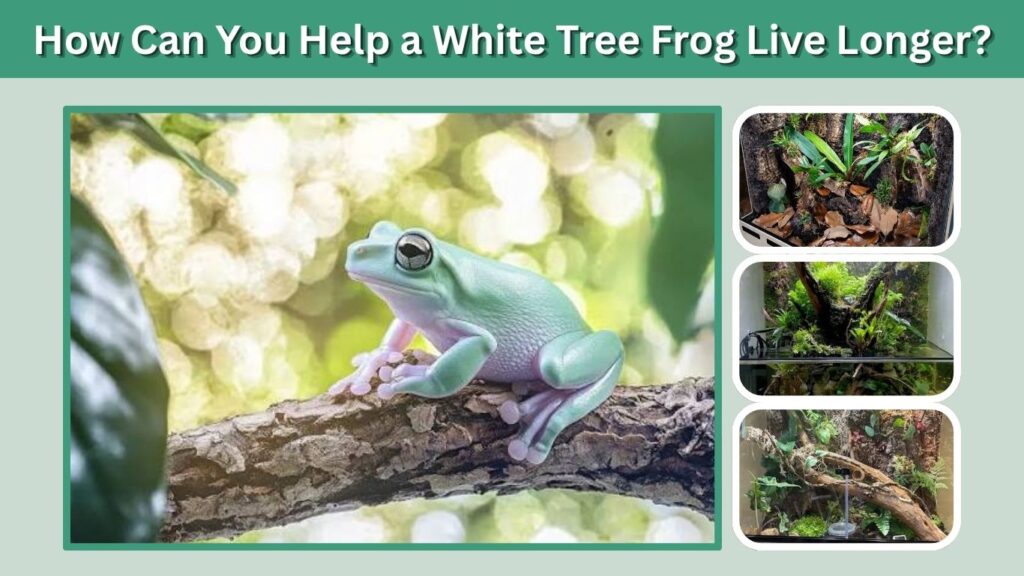
Good care is about consistency rather than complicated treatments. A suitable enclosure should allow the frog to climb, hide, rest, soak, and regulate its exposure to heat and moisture.
Tips for a Longer, Healthier Life
- Provide a tall enclosure with climbing space.
- Maintain appropriate temperature and humidity.
- Ensure good ventilation.
- Supply clean, dechlorinated water.
- Feed a varied insect diet.
- Gut-load feeder insects when appropriate.
- Use calcium and vitamin supplements correctly.
- Avoid chronic overfeeding.
- Keep the enclosure clean.
- Provide branches, foliage, and hiding areas.
- Minimize unnecessary handling.
- Seek an exotic-animal veterinarian when illness is suspected.
Regularly observing appetite, weight, skin condition, movement, and behavior can help owners notice problems early.
Can White Tree Frogs Live Alone?
White’s tree frogs do not require another frog to remain emotionally healthy in the way highly social mammals might. A single frog can live successfully by itself when provided with appropriate environmental enrichment, food, shelter, and climbing opportunities.
Do White Tree Frogs Need Companions?
No. A White’s tree frog can live alone without another frog.
Owners sometimes keep several White’s tree frogs together because individuals of similar size can often coexist under appropriate conditions. However, adding more frogs increases the amount of space, feeding supervision, cleaning, and health monitoring required.
A solitary frog is therefore perfectly acceptable.
Can White Tree Frogs Live Together?
Multiple White’s tree frogs can sometimes share an enclosure successfully, but they should be similar in size. Frogs are opportunistic feeders, and a significantly larger animal may attempt to swallow a much smaller tank mate.
Keeping Two or More White Tree Frogs
When housing White’s tree frogs together:
- Keep frogs of similar size.
- Provide a sufficiently large enclosure.
- Add multiple perches and hiding areas.
- Provide enough feeding opportunities.
- Monitor each frog’s body condition.
- Watch for bullying or competition.
- Quarantine newly acquired frogs before introduction.
- Maintain excellent enclosure hygiene.
Two male White’s tree frogs can potentially live together if they are similarly sized and have adequate space. Their sex alone does not automatically prevent cohabitation.
How Many White Tree Frogs Can Live Together?
The number depends primarily on enclosure size rather than a fixed maximum. Every additional frog increases the amount of space and resources required.
Overcrowding can lead to stress, competition, dirty conditions, and faster transmission of parasites or infections.
Is a 10-Gallon Tank Large Enough?
A 10-gallon tank is generally too small to serve as a permanent enclosure for an adult White’s tree frog.
These frogs become relatively large and are arboreal, so vertical climbing space is especially important. A larger, taller enclosure provides room for branches, foliage, hides, water, and temperature gradients.
Groups need considerably more space than a single frog.
Can White Tree Frogs Live With Other Frogs?
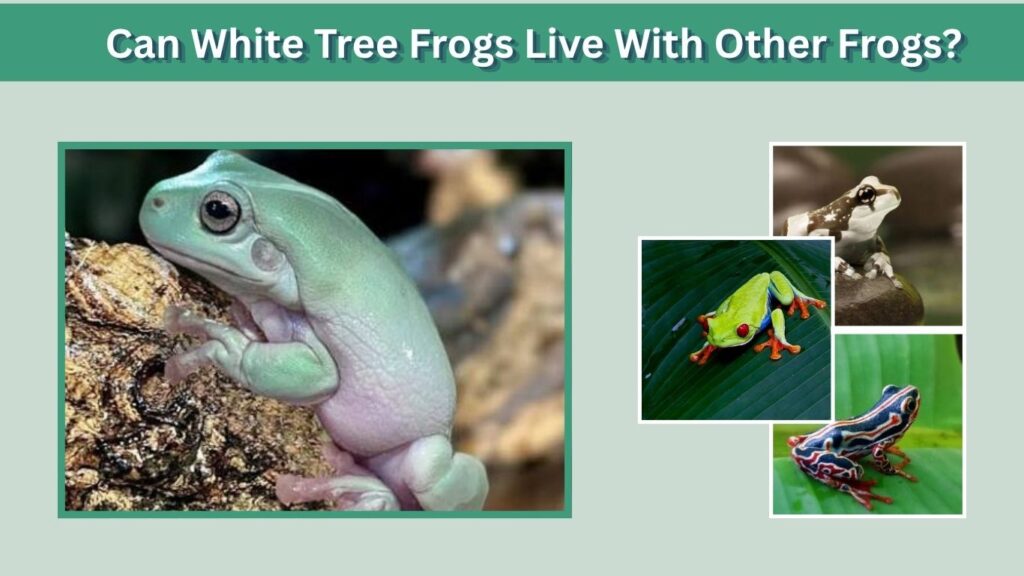
Mixing different frog species is generally not recommended. Species can have different requirements for temperature, humidity, food, enclosure design, and activity patterns.
White Tree Frogs With Other Species
Avoid casually housing White’s tree frogs with:
- Red-eyed tree frogs
- Amazon milk frogs
- Reed frogs
- Fire-bellied toads
- Smaller green tree frogs
- Other unrelated amphibian species
Even when two species appear peaceful, differences in size can create predation risks. Animals can also transmit parasites or diseases to one another.
A species-specific enclosure is usually safer and easier to manage.
Can White Tree Frogs Live With Crested Geckos?
White’s tree frogs and crested geckos should generally not be housed together.
Although both are climbing animals, they are different species with different behaviors and husbandry requirements. Cohabitation can expose either animal to stress, competition, injury, and disease.
Keeping them in separate, properly designed enclosures provides much better control over feeding, temperature, humidity, sanitation, and individual health.
Where Do White Tree Frogs Live in the Wild?
White’s tree frogs are native to Australia and New Guinea. They occupy a range of warm habitats and are famous for adapting surprisingly well to areas around people.
They may occur near forests, wetlands, vegetation, water sources, buildings, and other environments where moisture and suitable shelter are available.
Why Their Natural Habitat Matters in Captivity
Understanding where White’s tree frogs live helps explain their enclosure needs. They are climbing frogs rather than strictly terrestrial animals, so vertical structures are important.
Branches, cork bark, sturdy plants, and elevated resting areas give captive frogs opportunities to display natural climbing and resting behaviors.
Signs Your White Tree Frog May Be Unhealthy
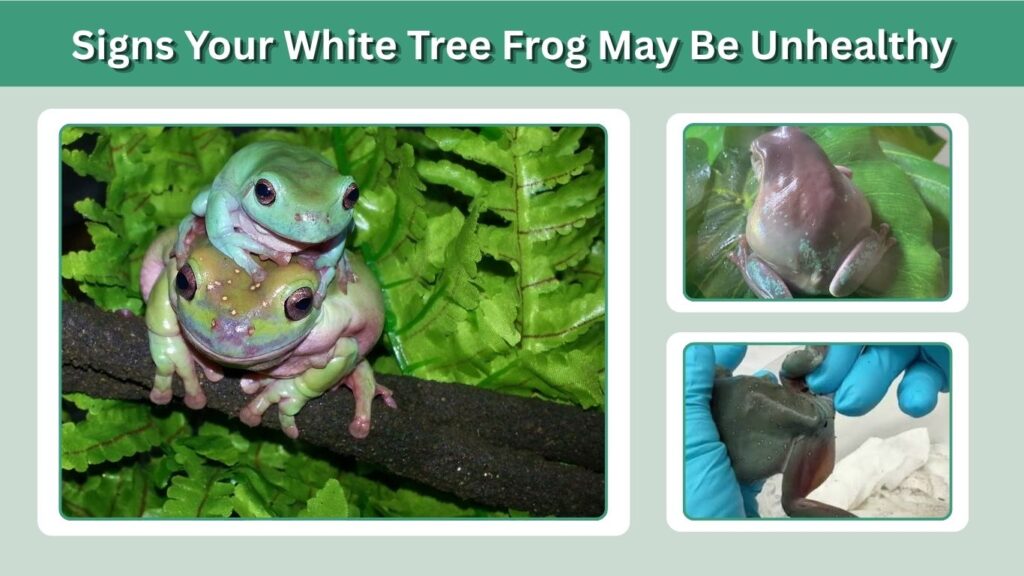
A White’s tree frog can sometimes hide illness until a problem becomes significant. Owners should therefore pay attention to changes in normal behavior.
Warning Signs
Potential concerns include:
- Persistent refusal to eat
- Unexplained weight loss
- Severe bloating
- Unusual skin discoloration or sores
- Difficulty climbing
- Extreme lethargy
- Abnormal posture
- Trouble breathing
- Persistent shedding problems
- Unusual swelling or redness
A frog showing significant or persistent symptoms should be evaluated by a veterinarian experienced with amphibians.
FAQs
1. How many years can a White’s tree frog live?
A White’s tree frog commonly lives around 10–20 years in captivity with proper husbandry. Individual longevity varies according to genetics, nutrition, enclosure conditions, body weight, disease prevention, and access to appropriate veterinary care.
2. Do White’s tree frogs live longer in captivity?
They can live longer in captivity because they receive regular food and protection from predators, drought, and other environmental threats. However, poor captive conditions can still shorten lifespan, so proper temperature, humidity, water quality, diet, and sanitation remain essential.
3. Can a White’s tree frog live alone?
Yes. White’s tree frogs can live alone successfully and do not require another frog for companionship. A solitary frog should still have a spacious enclosure with climbing branches, foliage, hiding locations, clean water, and opportunities to display natural behaviors.
4. Can two White’s tree frogs live together?
Yes, similarly sized White’s tree frogs can often be kept together when the enclosure is large enough. Owners should provide sufficient space, perches, hiding areas, and food while monitoring each frog for competition, stress, weight loss, or aggressive feeding behavior.
5. Can White’s tree frogs live with other frog species?
Keeping White’s tree frogs with different frog species is generally not recommended. Differences in size, habitat requirements, feeding behavior, parasites, and disease susceptibility can cause problems. A species-specific enclosure is usually the safest approach for long-term care.
