
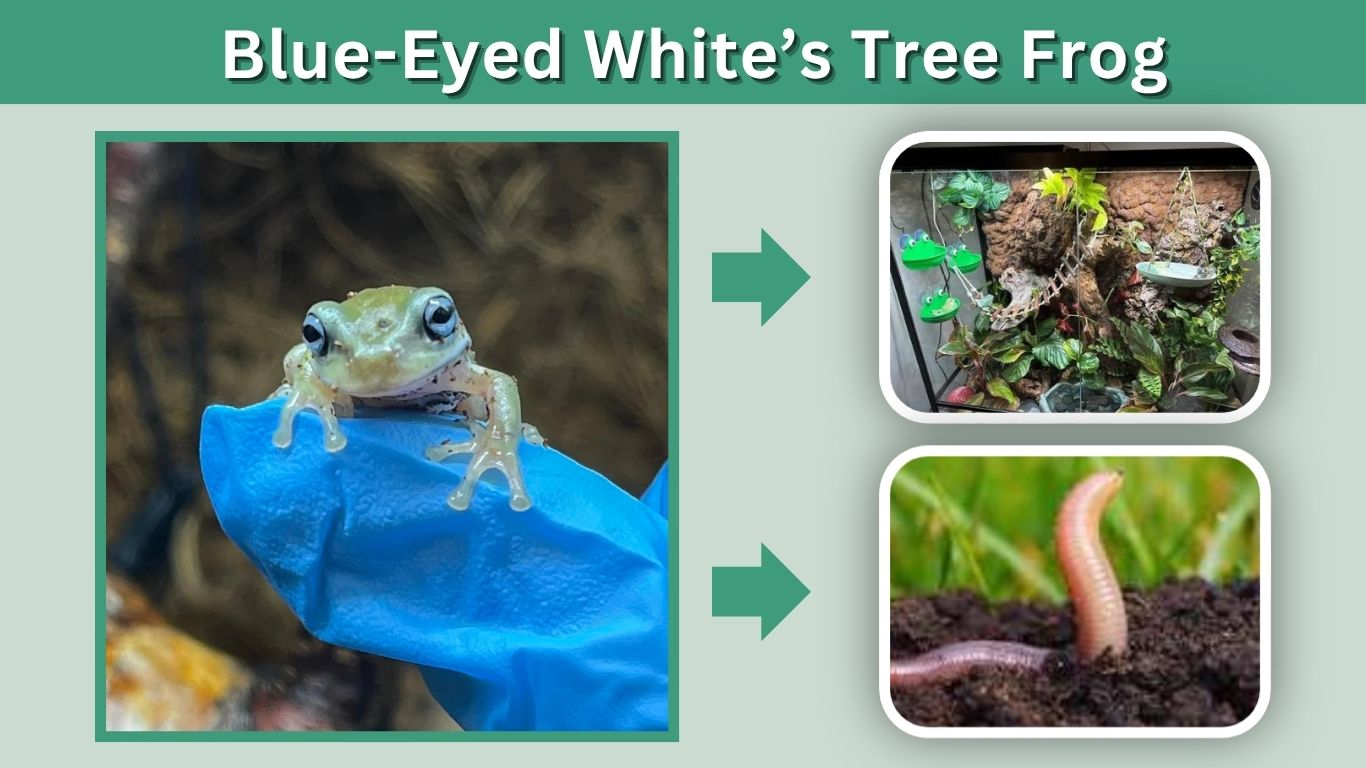
The blue-eyed White’s tree frog is a striking captive-bred form of the familiar White’s tree frog, admired for its unusual eye color and calm appearance. Depending on its breeding line, the frog may have green, teal, blue-green, honey-colored, or snowflake-patterned skin. Blue phase, honey blue-eyed, and blue-eyed snowflake White’s tree frogs are all popular names in the amphibian hobby. Although their colors differ, they belong to the same species and have essentially the same basic care requirements.
What Is a Blue-Eyed White’s Tree Frog?
A blue-eyed White’s tree frog is a color or eye-trait form of the White’s tree frog commonly kept as a pet. The species is native to Australia and New Guinea, while selective captive breeding has produced several distinctive appearances. Typical wild White’s tree frogs usually have golden irises, making the blue-eyed trait particularly noticeable.
Identification
- Large, rounded tree frog
- Broad head and chunky body
- Large adhesive toe pads
- Blue or blue-gray eyes in blue-eyed lines
- Green, teal, blue-green, or honey-colored skin
- White or cream-colored underside
- Horizontal pupils
- May have scattered white “snowflake” spots
- Adults can become substantially larger than many common pet tree frogs
Are Blue-Eyed White’s Tree Frogs a Different Species?
No. Blue-eyed frogs sold in the pet trade are White’s tree frogs rather than a separate species. “Blue-eyed,” “blue phase,” “honey,” and “snowflake” are hobby terms used to describe particular colors, patterns, or traits found in captive lines.
The ordinary White’s tree frog naturally shows some color variation as well. The Australian Museum describes the species as generally green, with some populations displaying a blue-green back.
Blue Phase White’s Tree Frog
The blue phase White’s tree frog is particularly sought after because its body may look turquoise, teal, blue-green, or muted blue rather than the more familiar bright green. “Blue phase” is widely used as a captive-hobby label, and the exact shade can vary considerably between individual frogs and under different lighting conditions.
What Makes a Blue White’s Tree Frog Look Blue?
A blue phase frog is not necessarily a vivid royal blue. Many individuals appear more like cool turquoise or blue-green. The amount and appearance of blue can vary between breeding lines and individual animals.
Environmental conditions can also affect how a White’s tree frog looks at a particular moment. Normal White’s tree frogs are capable of changing between greener and browner shades, so temporary color variation should not automatically be confused with a permanently selected blue-phase appearance.
Blue Phase vs Normal White’s Tree Frog
A normal White’s tree frog typically has a green back and golden iris. Blue phase animals generally display cooler blue-green or teal body tones.
The difference is mainly appearance. Both require the same fundamental approach to enclosure design, temperature, humidity, diet, water quality, and general husbandry.
Honey Blue-Eyed White’s Tree Frog
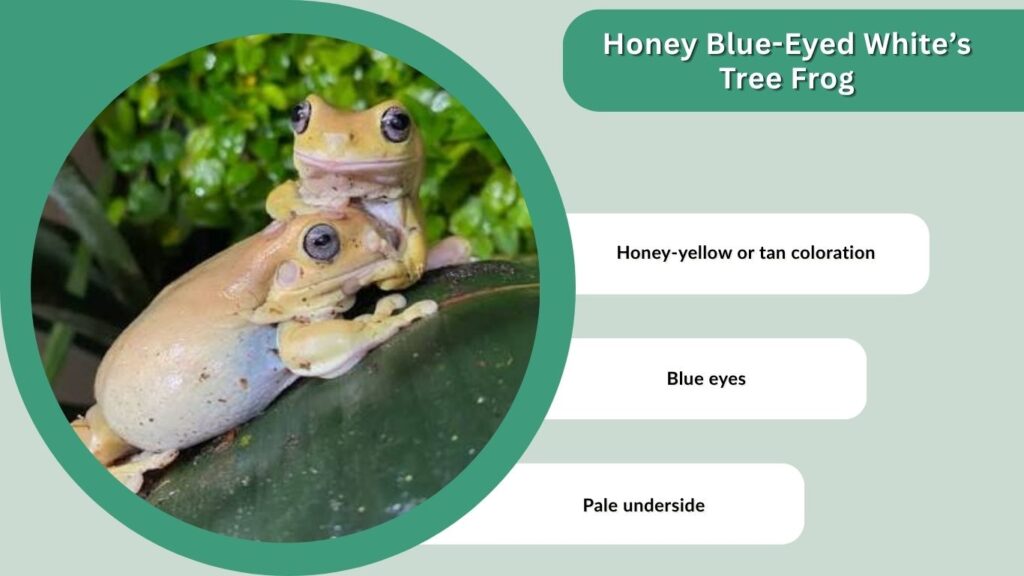
The honey blue-eyed White’s tree frog combines distinctive blue eyes with warm yellow, tan, or honey-colored skin. It is another captive-bred appearance rather than a separate frog species. The contrast between the warm body coloration and blue eyes makes these frogs particularly recognizable among White’s tree frog varieties.
What Does a Honey Blue-Eyed Frog Look Like?
Honey blue-eyed White’s tree frogs are commonly described as having:
- Honey-yellow or tan coloration
- Blue eyes
- Pale underside
- Rounded, heavy-bodied appearance
- Large toe pads
- Smooth to slightly waxy-looking skin
Their shade may not remain identical every hour of the day. Like other White’s tree frogs, an individual frog’s visible coloration can vary somewhat with its surroundings and physiological state.
Honey Blue-Eyed vs Blue Phase
A honey blue-eyed frog is characterized primarily by its warm honey or yellow-tan body color plus blue eyes. A blue phase White’s tree frog is selected mainly for cooler blue-green body coloration.
It is also possible for hobby breeding lines to combine multiple traits, so names may become longer when a frog carries or displays more than one notable feature.
Blue-Eyed Snowflake White’s Tree Frog
The blue-eyed snowflake White’s tree frog combines unusual eye coloration with conspicuous pale spots. “Snowflake” is a hobby name for White’s tree frogs that display numerous white spots over their body. Blue and snowflake traits are also seen together in captive animals.
What Is a Blue Snowflake White’s Tree Frog?
Snowflake frogs have white spots that stand out against their green, teal, or blue-toned bodies. The number and density of these markings can differ considerably between individuals.
Captive listings also use terms such as blue snowflake White’s tree frog and blue-eyed snowflake White’s tree frog when these visible traits occur together.
Blue-Eyed White’s Tree Frog Size and Lifespan
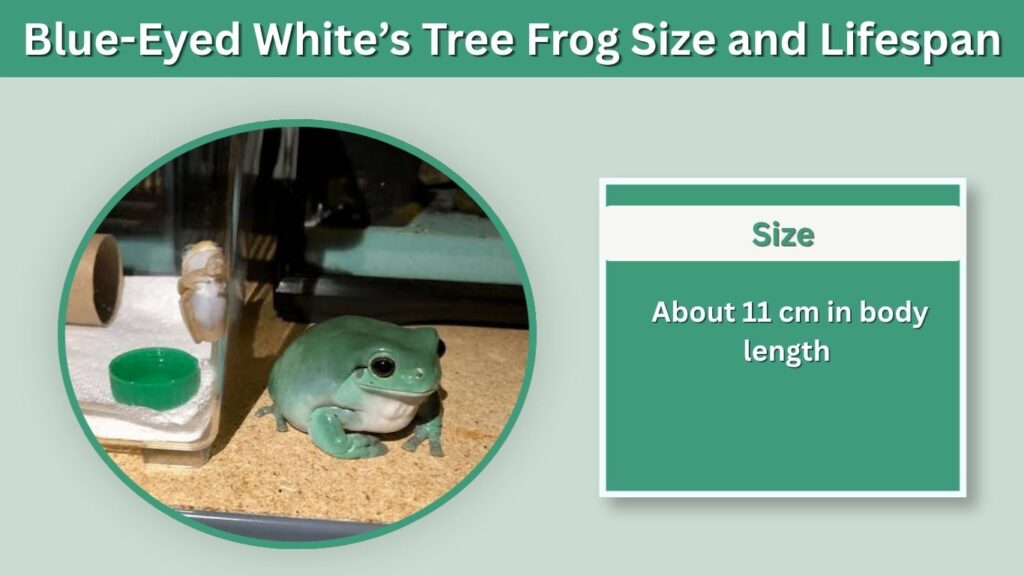
White’s tree frogs are among the larger tree frogs commonly encountered in captivity. The Australian Museum reports that the species can reach about 11 cm in body length. Their robust build, wide head, and thick body can make a full-grown blue White’s tree frog appear even larger than its length suggests.
How Big Do Blue White’s Tree Frogs Get?
Females generally become larger and heavier than males. Individual size depends on sex, genetics, nutrition, and overall health.
A healthy adult should look robust but not excessively round. White’s tree frogs can readily consume more calories than they need in captivity, so body condition should be monitored instead of feeding simply whenever the frog appears interested.
How Long Do Blue White’s Tree Frogs Live?
White’s tree frogs are considered relatively long-lived amphibians when maintained properly. Captive longevity depends on genetics, nutrition, enclosure conditions, veterinary care, and other factors.
Because blue-eyed and blue phase frogs are the same species as ordinary White’s tree frogs, their basic expected longevity is not fundamentally different solely because of their color trait.
Blue White’s Tree Frog Care
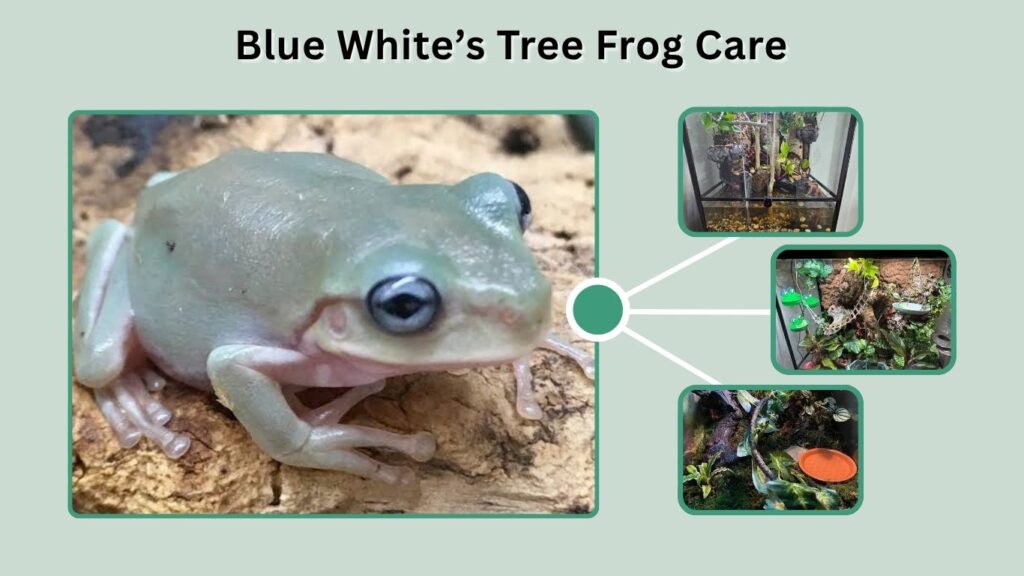
Blue White’s tree frog care is essentially the same as care for other White’s tree frogs. Their enclosure should emphasize vertical climbing room, clean water, sturdy branches, foliage, appropriate warmth, ventilation, and suitable humidity. These frogs are arboreal and naturally spend considerable time above ground rather than living permanently in water.
Basic Care Requirements
- Provide a vertically oriented enclosure
- Include strong branches and climbing surfaces
- Offer foliage and secure hiding locations
- Maintain clean, dechlorinated drinking and soaking water
- Provide appropriate temperature and humidity gradients
- Maintain adequate ventilation
- Feed appropriately sized live invertebrates
- Supplement feeder insects appropriately
- Remove waste and spoiled food regularly
- Avoid excessive handling
White’s tree frogs tolerate captive conditions well compared with many amphibians, but “hardy” does not mean they can live without proper environmental control.
What Do Blue-Eyed White’s Tree Frogs Eat?
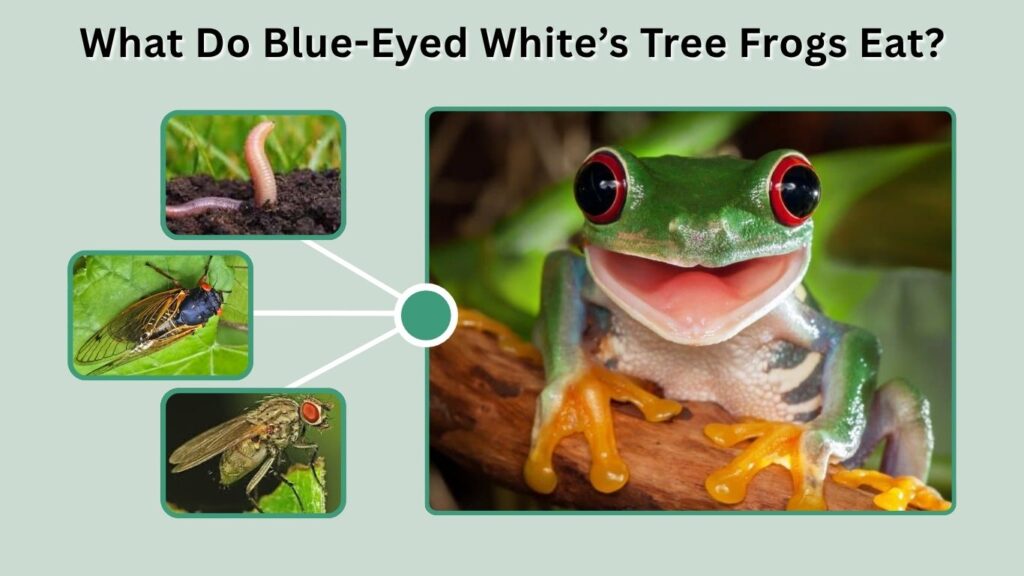
Their eye and body colors do not create a special dietary requirement. Blue-eyed White’s tree frogs remain insect-eating predators just like other members of the species.
Common Foods
Their captive diet can include crickets, roaches, locusts, moths, and other appropriately sized invertebrate feeders.
A varied feeder rotation is preferable to relying continuously on one food. Feeder size should also correspond to the frog’s size, with younger frogs receiving smaller prey.
Why Is My White’s Tree Frog Turning Blue?
A White’s tree frog appearing more blue-green does not automatically mean it has suddenly become a genetically selected blue phase White’s tree frog. This species naturally shows some variation in body color, and wild individuals can range from green to blue-green or brownish shades.
Natural Color Changes
Lighting, background, temperature, activity, and the frog’s physiological condition can influence its apparent shade. A frog may therefore look greener at one time and considerably darker or cooler-toned later.
However, a sudden abnormal color change accompanied by lethargy, skin lesions, swelling, loss of appetite, or unusual behavior should not simply be assumed to be a harmless morph-related change. An experienced exotic-animal veterinarian should evaluate concerning symptoms.
FAQs
1. Are blue-eyed White’s tree frogs rare?
Blue-eyed White’s tree frogs are less typical than standard golden-eyed animals and are selectively bred in captivity. Availability varies by breeder, location, and breeding season, which is why blue-eyed animals may be marketed as specialty White’s tree frog traits.
2. What is a blue phase White’s tree frog?
A blue phase White’s tree frog is a captive-hobby term for a White’s tree frog displaying cooler teal or blue-green coloration rather than standard bright green. It remains the same species and has the same basic husbandry requirements.
3. What is a honey blue-eyed White’s tree frog?
A honey blue-eyed White’s tree frog is a captive-bred form characterized by honey-yellow or tan body coloration combined with blue eyes. The term describes its appearance rather than a different species of tree frog.
4. What is a blue snowflake White’s tree frog?
A blue snowflake White’s tree frog combines blue or blue-green coloration with distinctive white spots known in the hobby as the snowflake pattern. Some captive animals also combine snowflake patterning with the blue-eyed trait.
5. Do blue-eyed White’s tree frogs need special care?
No special care is required simply because the frog has blue eyes or blue-phase coloration. Its fundamental needs remain those of a White’s tree frog: proper climbing space, temperature, humidity, clean water, ventilation, suitable feeder insects, and responsible handling.
