
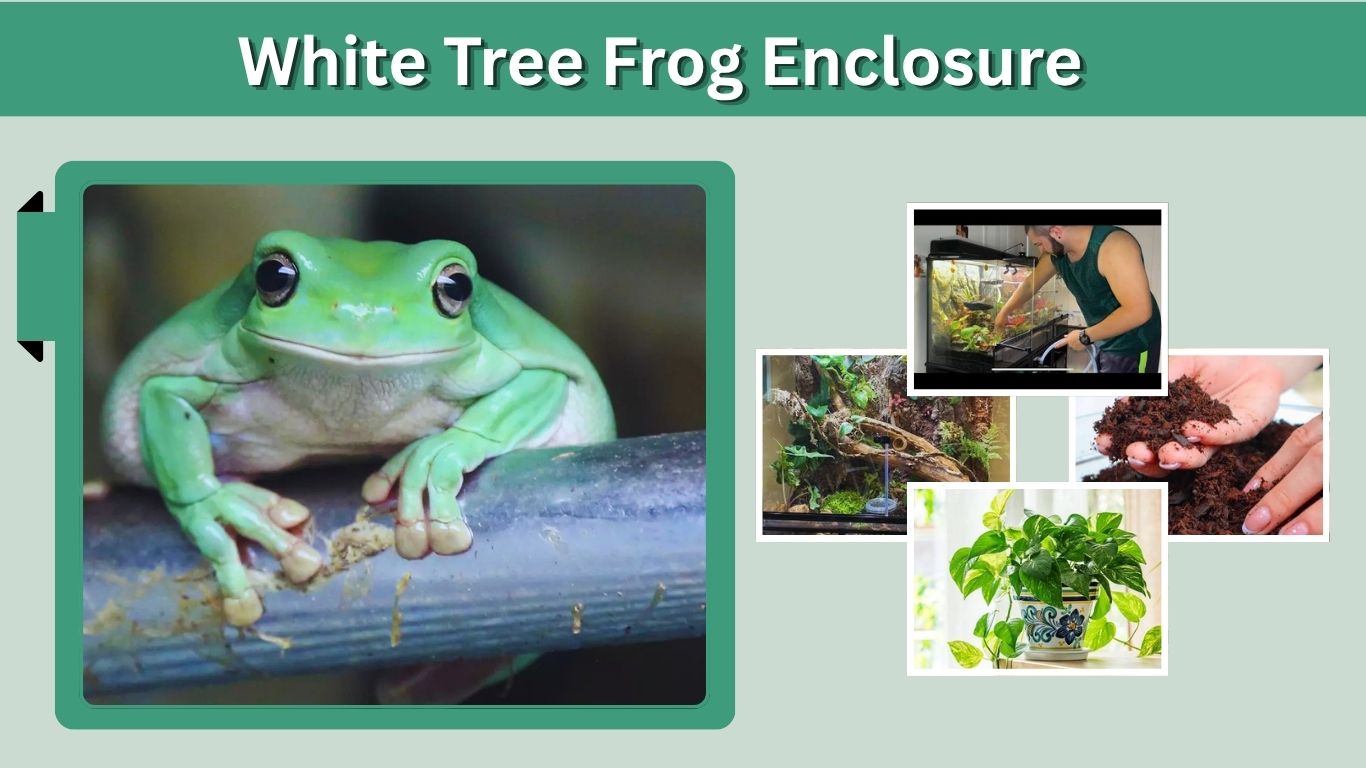
A proper White tree frog enclosure should provide plenty of vertical climbing space, stable temperatures, moderate humidity, clean water, and secure hiding areas. White’s tree frogs, also called Australian White’s tree frogs or dumpy tree frogs, are hardy amphibians, but their health still depends on a well-designed habitat. A tall enclosure with branches, broad leaves, suitable substrate, and good ventilation allows them to climb, rest, hunt, and regulate their body temperature naturally. This guide explains enclosure size, setup, temperature, humidity, substrate, lighting, and decoration.
White Tree Frog Enclosure Size
Choosing the correct White tree frog enclosure size is one of the most important parts of setup. These frogs spend much of their time above ground, so vertical height is especially valuable.
A taller enclosure is generally better than a long, low tank because it allows the frog to climb and choose different resting levels.
Recommended Enclosure Size
For one adult White’s tree frog, an enclosure around:
- 18 × 18 × 24 inches is a practical minimum target
- Larger vertical enclosures are even better
- Two adults benefit from additional floor space and height
- Groups require substantially more room
- Juveniles can begin in smaller setups but will need upgrades as they grow
The enclosure should be tall enough to accommodate sturdy climbing branches and elevated resting areas.
Is a 40-Gallon Enclosure Good?
A 40-gallon enclosure for White’s tree frogs can work very well when its dimensions provide sufficient vertical space.
A tall or front-opening 40-gallon enclosure is generally more suitable than a shallow aquarium because White’s tree frogs naturally climb trees and vegetation.
For multiple frogs, larger enclosures also reduce competition for resting spots and feeding areas.
Why Vertical Space Matters
White’s tree frogs have large adhesive toe pads that allow them to climb glass, branches, bark, and leaves.
Vertical space allows them to:
- Climb naturally
- Rest at different heights
- Choose warmer or cooler areas
- Explore during nighttime activity
- Feel more secure among elevated foliage
A spacious enclosure can also make it easier to create a proper temperature gradient.
How to Set Up a White Tree Frog Enclosure
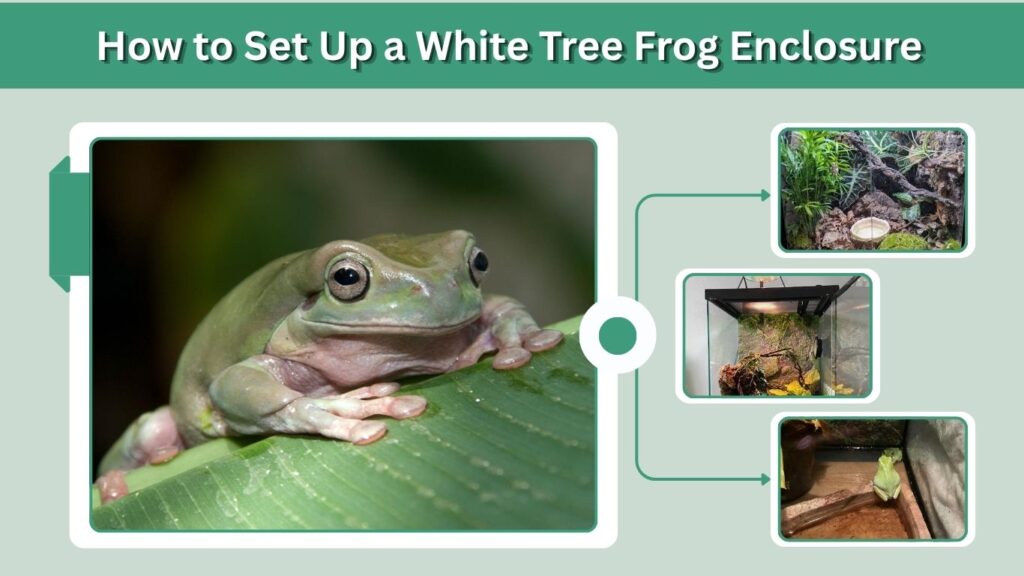
A good White tree frog enclosure setup does not need to be extremely complicated. The main goal is to create a clean, secure environment that supports climbing and allows easy maintenance.
Set up the enclosure and test its environmental conditions before introducing the frog.
Basic Setup Checklist
A White’s tree frog enclosure should include:
- Secure terrarium with ventilation
- Sturdy climbing branches
- Cork bark or similar climbing surfaces
- Broad-leaved plants
- Shallow water bowl
- Safe substrate
- Thermometer
- Hygrometer
- Regulated heat source if necessary
- Appropriate lighting
- Hiding and sleeping areas
Make sure every heavy decoration is stable so it cannot fall onto the frog.
Step 1: Choose a Tall Enclosure
Front-opening terrariums are convenient because they make feeding, cleaning, and maintenance easier.
Make sure the doors and lid close securely. White’s tree frogs are excellent climbers and can escape through surprisingly small gaps.
Ventilation is also important because stagnant, constantly damp air can contribute to unhealthy conditions.
Step 2: Add Climbing Structures
Provide branches at several heights.
Good options include:
- Cork bark
- Natural hardwood branches
- Reptile-safe vines
- Bamboo positioned securely
- Broad plant stems
- Elevated ledges
Branches should be wide and strong enough to support the frog’s relatively heavy body.
Best Substrate for a White Tree Frog Enclosure

Substrate helps maintain humidity and gives the habitat a natural appearance, but safety and cleanliness should come first.
White’s tree frogs can accidentally swallow loose substrate while striking at insects, so feeding practices should minimize that risk.
Suitable Substrate Options
Possible choices include:
- Coconut fiber
- Organic soil designed for amphibian enclosures
- Soil-and-fiber mixtures
- Moisture-retaining reptile substrate
- Paper towels for simple or quarantine setups
Avoid materials containing fertilizers, pesticides, fragrances, or sharp particles.
Simple vs. Naturalistic Setup
A simple enclosure with paper towels is easy to clean and monitor. This makes it particularly useful for newly acquired frogs, juveniles, or animals under observation.
A naturalistic enclosure can use soil, plants, bark, and leaf litter to create a more attractive habitat.
Both approaches can work if hygiene and environmental conditions are properly maintained.
Drainage Layer
In planted or bioactive setups, a drainage layer beneath the substrate can prevent excessive water accumulation.
A typical arrangement may include a drainage layer, barrier mesh, and suitable soil above it.
Even with drainage, the enclosure should not remain constantly waterlogged.
Temperature for a White Tree Frog Enclosure
White’s tree frogs tolerate moderate temperature variation, but a controlled range helps support normal digestion, activity, and metabolism.
A temperature gradient allows the frog to move between warmer and cooler locations.
Recommended Temperature Range
A useful general range is:
- Daytime: approximately 75–82°F
- Warmer area: around the low 80s°F
- Nighttime: temperatures can drop somewhat into the low 70s°F
Avoid excessive heat. Prolonged temperatures that are too high can quickly cause dehydration and stress.
Heating the Enclosure
Depending on room temperature, additional heat may be supplied using an appropriate overhead heat source.
Important precautions include:
- Use a thermostat
- Keep heat sources outside the frog’s direct reach
- Measure temperatures at multiple heights
- Avoid overheating the entire enclosure
- Provide cooler areas
White’s tree frogs frequently climb near the top of the enclosure, so overhead heat must be carefully controlled.
White Tree Frog Enclosure Humidity
Humidity is important, but White’s tree frogs do not need to live in permanently wet conditions.
A common mistake is keeping the enclosure excessively damp. Moderate humidity combined with good airflow is generally preferable.
Recommended Humidity
Humidity often works well around 40–60%, with temporary increases after misting.
Useful practices include:
- Light misting when needed
- Providing a clean water bowl
- Using moisture-retaining substrate
- Maintaining ventilation
- Monitoring conditions with a digital hygrometer
Allowing parts of the habitat to dry slightly between misting sessions can help maintain healthier conditions.
Signs the Enclosure Is Too Wet
Possible warning signs include:
- Constant condensation
- Permanently soaked substrate
- Mold growth
- Strong musty odor
- Standing water
- Poor ventilation
A humid enclosure should not feel like a swamp.
Water Bowl and Hydration
White’s tree frogs need continuous access to clean water because amphibians absorb moisture through their skin.
The bowl should be easy to enter and shallow enough that the frog can comfortably sit in it.
Water Bowl Setup
Use:
- A shallow, stable dish
- Dechlorinated water
- Enough water for soaking
- Easy entry and exit
- Regular water changes
White’s tree frogs frequently use their water dishes at night and may also defecate in them, so daily checking is important.
Can You Use Tap Water?
Untreated tap water may contain chlorine or chloramine.
Use a suitable water conditioner before placing tap water in the enclosure. Avoid distilled water as the frog’s regular soaking water because it lacks normal dissolved minerals.
Plants and White Tree Frog Enclosure Ideas
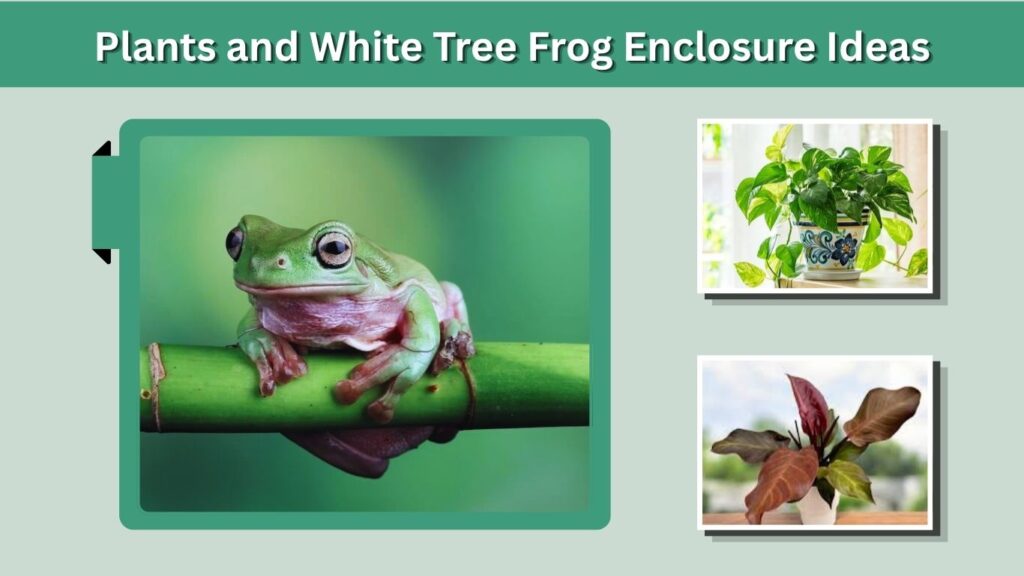
Plants make a White’s tree frog enclosure more attractive while also providing shelter, climbing opportunities, and visual barriers.
Because White’s tree frogs can become fairly heavy, delicate plants may be crushed.
Good Enclosure Plants
Common choices include:
- Pothos
- Philodendron
- Snake plant
- Bromeliads
- Other sturdy amphibian-safe plants
Artificial plants can also work and are often easier to clean.
Always make sure live plants have not been treated with harmful pesticides.
Natural Enclosure Ideas
A natural-looking setup can combine:
- Cork bark background
- Thick horizontal branches
- Pothos vines
- Leaf litter
- Elevated resting shelves
- Large climbing plants
- Natural-looking water dish
Keep enough open space for the frog to move comfortably.
Lighting for a White Tree Frog Enclosure
White’s tree frogs need a regular day-and-night cycle even though they are mainly active after dark.
Providing consistent daytime lighting helps establish normal behavior and supports live plants.
Does a White’s Tree Frog Need UVB?
Low-level UVB lighting can be beneficial when used correctly, although frogs should always have shaded areas where they can move away from the light.
A suitable enclosure should offer:
- A consistent day/night cycle
- Low-intensity UVB if used
- Shaded resting areas
- Plants or foliage for cover
Lighting should never make the enclosure dangerously hot.
Night Lighting
Avoid leaving bright lights on overnight.
White’s tree frogs are nocturnal and become more active after dark. A normal period of darkness supports their natural behavior.
Cleaning a White Tree Frog Enclosure
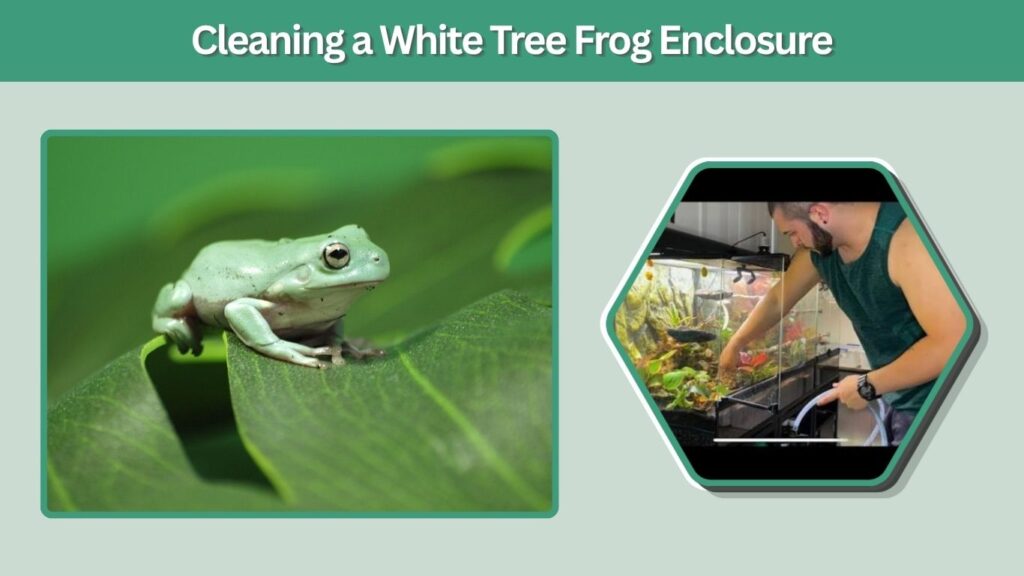
A clean enclosure helps reduce exposure to harmful bacteria, fungi, and waste.
White’s tree frogs produce relatively large amounts of waste for their size, so regular maintenance is important.
Cleaning Routine
Regular maintenance should include:
- Remove feces when noticed
- Remove dead feeder insects
- Change dirty water
- Wipe soiled surfaces
- Replace contaminated substrate
- Clean decorations when needed
More extensive cleaning can be performed periodically depending on the type of enclosure.
Avoid Harsh Cleaning Chemicals
Because frogs have highly permeable skin, chemical residues can be dangerous.
Use amphibian-safe cleaning methods and rinse surfaces thoroughly before returning the frog to the habitat.
Common White Tree Frog Enclosure Mistakes
White’s tree frogs are hardy, but poor enclosure design can still cause stress or illness.
Many problems can be avoided by monitoring conditions rather than relying on guesswork.
Mistakes to Avoid
Avoid:
- Enclosures that are too small
- Lack of vertical climbing space
- Constantly saturated substrate
- Poor ventilation
- Untreated tap water
- Unregulated heat sources
- Unstable heavy decorations
- Sharp objects
- Overcrowding
- Excessive handling
Using digital temperature and humidity gauges makes enclosure management much easier.
White’s Tree Frog Not Moving in a New Enclosure
A White’s tree frog in a new enclosure not moving is not always a sign of illness.
White’s tree frogs are nocturnal and often remain almost completely motionless during daylight hours. A newly relocated frog may also hide while adjusting to its surroundings.
When It Can Be Normal
Normal reasons include:
- Sleeping during the day
- Stress from relocation
- Resting after eating
- Hiding from bright light
- Adjusting to a new habitat
Give the frog time to settle and observe its behavior after dark.
When to Be Concerned
Pay closer attention if the frog also shows:
- Persistent refusal to eat
- Weak grip
- Difficulty climbing
- Severe discoloration
- Abnormal swelling
- Open sores
- Trouble breathing
Significant or persistent symptoms should be evaluated by a veterinarian experienced with amphibians.
FAQs
What size enclosure does a White’s tree frog need?
One adult benefits from a tall enclosure around 18 × 18 × 24 inches or larger. Multiple frogs need additional space.
Is a 40-gallon enclosure good for White’s tree frogs?
Yes, particularly if it provides good vertical height, ventilation, climbing structures, and adequate space for the number of frogs being housed.
How should I set up a White tree frog enclosure?
Use a tall secure terrarium with branches, foliage, safe substrate, a shallow water bowl, temperature and humidity monitoring, and appropriate lighting.
How humid should a White’s tree frog enclosure be?
Moderate humidity around 40–60% generally works well, with temporary increases after misting. Avoid keeping the habitat constantly soaking wet.
Do White’s tree frogs need a heat lamp?
They may need supplemental heat if room temperatures are too low. Any heat source should be regulated with a thermostat and arranged to create a temperature gradient rather than overheating the entire enclosure.
