
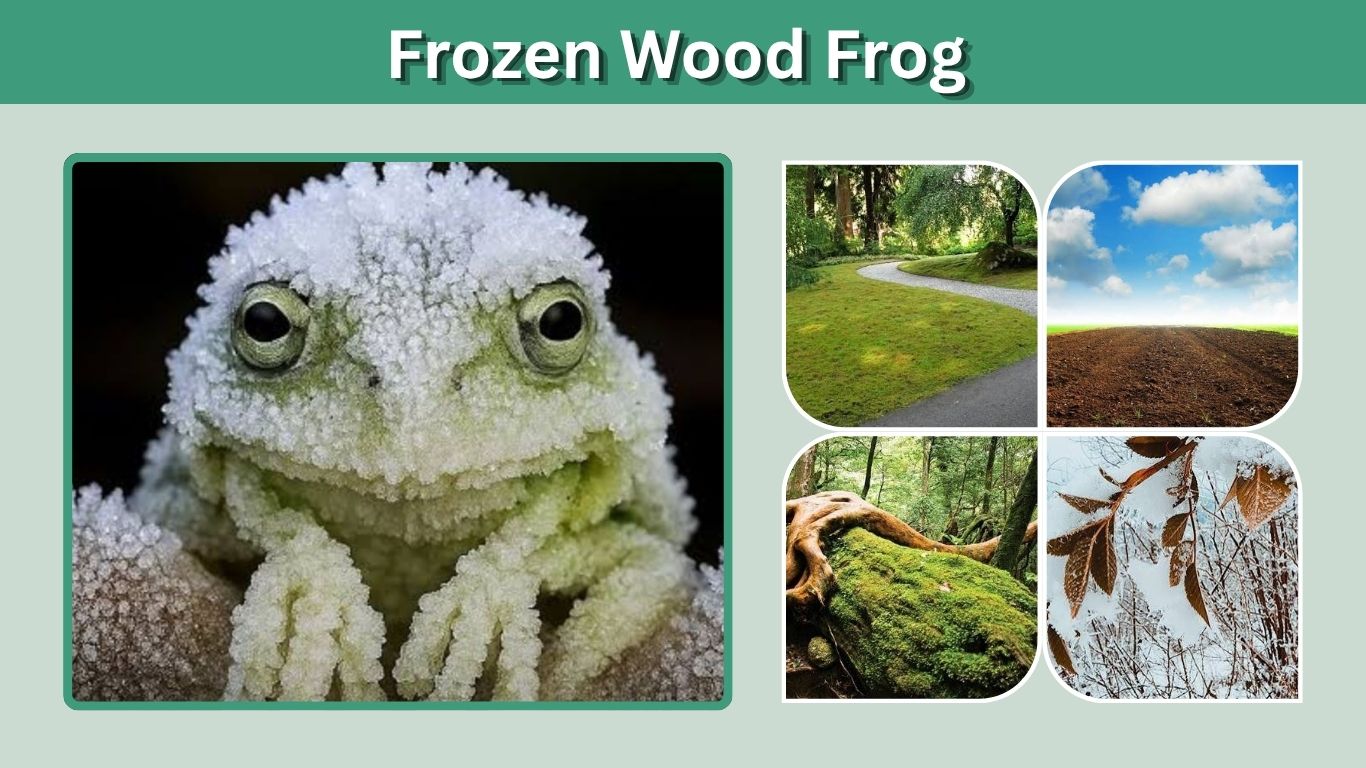
A frozen wood frog may look dead: its body becomes rigid, it stops breathing, and its heart can stop beating. Yet this remarkable North American amphibian can thaw when temperatures rise and return to normal activity. Wood frogs have evolved specialized biochemical defenses that allow much of their body water to freeze without destroying their cells. The ability is especially impressive in Alaskan wood frogs, which endure colder temperatures and much longer winters than populations farther south.
Can a Wood Frog Really Survive Being Frozen?
Yes. Wood frogs (Rana sylvatica) are among the best-known vertebrates capable of surviving whole-body freezing. During freezing, approximately 65–70% of their total body water can become ice, primarily outside their cells. They become immobile and show no normal breathing or heartbeat while deeply frozen.
This is very different from simply becoming cold or entering ordinary hibernation. Ice actually forms inside the frog’s body, including in spaces around tissues and organs.
The key is that freezing is carefully controlled. The frog has physiological mechanisms that protect its cells from dehydration, ice damage, and the lack of oxygen that occurs when circulation stops.
How Does a Wood Frog Survive Being Frozen?
The survival of a frozen wood frog depends on several adaptations working together. Instead of preventing all ice formation, the frog controls where ice forms and protects its cells while the body remains frozen.
Ice Forms Mainly Outside the Cells
Ice formation inside cells is usually extremely damaging. Wood frogs instead tolerate large amounts of extracellular ice, meaning ice develops in spaces outside the cells.
As extracellular water freezes, water is drawn out of cells. The cells shrink temporarily rather than freezing internally. This controlled dehydration helps reduce the risk of destructive intracellular ice crystals.
Glucose Acts as a Powerful Cryoprotectant
One of the wood frog’s most important defenses is glucose.
When freezing begins, the liver rapidly breaks down stored glycogen and releases large quantities of glucose into the bloodstream. This glucose is transported to tissues throughout the frog’s body.
High glucose concentrations help stabilize cells and reduce damage caused by freezing and dehydration. For this reason, glucose is often described as a natural cryoprotectant rather than simply an antifreeze.
Urea Provides Additional Protection
Wood frogs also accumulate urea before and during winter. Research on northern populations shows that urea concentrations can rise substantially as frogs prepare for hibernation.
Urea contributes to the frog’s cryoprotective system and helps its tissues tolerate the osmotic and dehydration stresses associated with freezing. Alaskan frogs can accumulate particularly high concentrations of protective compounds before severe winter conditions arrive.
Metabolism Drops Dramatically
Once freezing progresses through the body, normal physiological activity largely shuts down.
The frog does not continue functioning normally underneath the ice. Instead, its metabolic rate becomes extremely low. Heart activity, breathing, circulation, movement, digestion, and many other processes cease or become profoundly suppressed.
This state allows the frog to conserve its stored energy until temperatures increase enough for thawing.
Alaskan Wood Frog Frozen During Winter
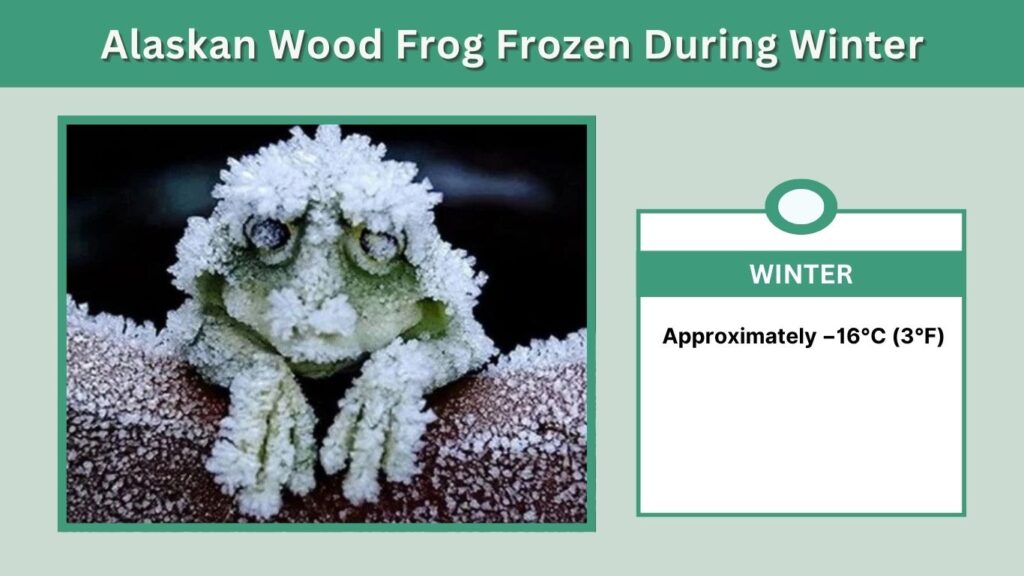
The Alaskan wood frog displays one of the most extreme examples of freeze tolerance in the species.
Wood frogs living in Interior Alaska experience far harsher winters than many populations in southern Canada and the continental United States. Research has found that Alaskan populations have enhanced cryoprotective defenses and can tolerate temperatures far below the limits commonly reported for southern wood frogs.
In controlled experiments, winter-adapted Alaskan wood frogs survived freezing down to approximately −16°C (3°F). Field research recorded naturally overwintering frogs surviving hibernaculum temperatures as low as approximately −18.1°C (−0.6°F).
The outside air can be considerably colder. Leaf litter, soil, and snow insulate the frog’s winter shelter, preventing its body from experiencing the most extreme air temperatures.
Alaskan frogs also enter winter with unusually large glycogen stores. When freezing occurs, that glycogen provides the raw material needed to produce protective glucose.
How Long Can a Wood Frog Stay Frozen?
The answer depends strongly on climate, population, temperature, and environmental conditions.
Research in Interior Alaska found naturally overwintering wood frogs remaining frozen for roughly 193 consecutive days on average. In some monitored hibernacula, temperatures remained below the frogs’ freezing point for as long as 218 days—more than seven months—with surviving frogs emerging afterward.
That does not mean every wood frog can safely remain frozen for seven months under any conditions. Laboratory experiments and studies of more southern populations have produced much shorter survival periods.
Natural winter conditions provide gradual temperature changes, moisture, leaf litter, snow insulation, and repeated environmental cues that are difficult to reproduce artificially.
Does a Frozen Wood Frog’s Heart Really Stop?
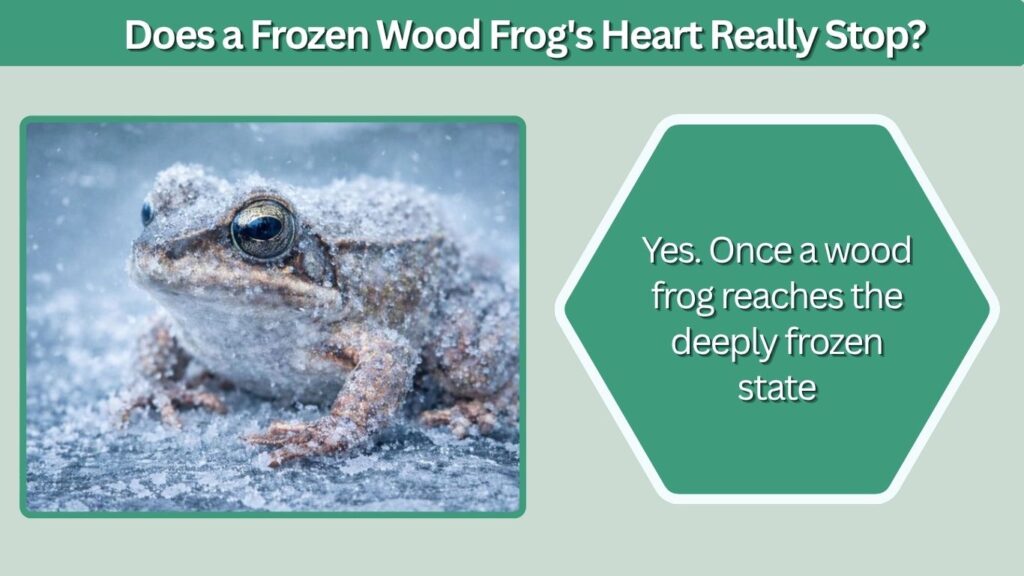
Yes. Once a wood frog reaches the deeply frozen state, normal cardiac and respiratory activity stops.
As ice spreads through the body, circulation becomes impossible. Eventually there is no detectable heartbeat, breathing, or normal physical movement. From the outside, the frog may appear lifeless.
However, its cells remain protected by cryoprotectants and specialized metabolic responses. When temperatures rise and ice begins melting, physiological functions can restart.
This temporary shutdown is one of the reasons frozen wood frogs attract so much scientific interest.
What Happens When a Frozen Wood Frog Thaws?
Thawing reverses the freezing process.
Ice gradually melts, water returns to dehydrated tissues, and circulation begins recovering. The heart resumes activity, followed by increasingly normal breathing, movement, and organ function.
Wood frogs can regain physiological and biochemical functions within hours after thawing, although recovery processes continue as tissues restore normal water balance and glucose levels.
Wood frogs are also capable of surviving repeated freeze-and-thaw events. This is useful because autumn and spring temperatures may repeatedly move above and below freezing.
Studies of winter-conditioned Alaskan frogs found that repeated freezing and thawing can increase glucose mobilization and improve delivery of cryoprotectants to peripheral tissues.
Where Do Frozen Wood Frogs Hibernate?
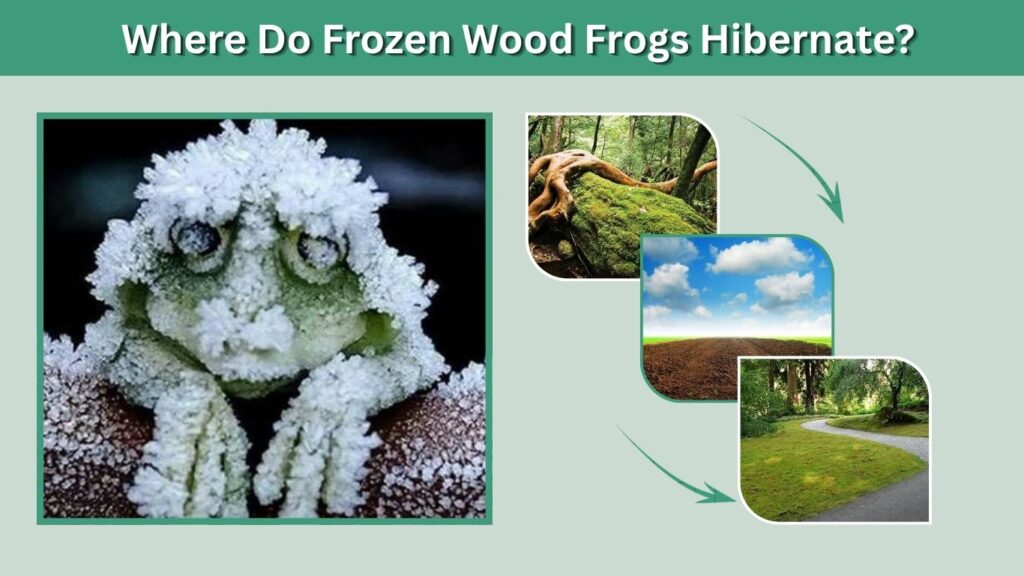
Unlike many aquatic frogs that overwinter underwater, wood frogs generally hibernate on land.
They seek shallow shelters beneath:
- Fallen leaves
- Forest-floor debris
- Moss
- Organic soil
- Logs and woody material
- Snow-covered leaf litter
They usually do not need to burrow deeply below the frost line because they are capable of surviving freezing.
For Alaskan wood frogs, leaf litter and accumulated snow are especially important because these materials create an insulated and relatively moist microenvironment. Moist conditions also help reduce excessive water loss during the long frozen period.
Are Alaskan Wood Frogs More Freeze-Tolerant?
Yes. Freeze tolerance varies geographically.
Wood frogs from Interior Alaska have demonstrated substantially greater cold tolerance than populations from milder regions. Research indicates that northern frogs prepare for winter by accumulating more glycogen and higher concentrations of cryoprotective compounds.
For comparison, some temperate populations typically tolerate freezing only to around −3°C to −6°C, while experimentally tested Alaskan frogs have survived approximately −16°C.
This makes the frozen Alaskan wood frog an exceptionally striking example of adaptation to subarctic conditions.
Can You Freeze a Wood Frog at Home?
No. A wood frog’s natural freeze tolerance should not be interpreted as meaning that a frog can safely be placed in a household freezer.
Survival depends on seasonal acclimatization, cooling rate, hydration, cryoprotectant production, the degree and location of ice formation, temperature, and duration of exposure. Experimental research uses carefully controlled conditions, and even naturally freeze-tolerant frogs can die when these limits are exceeded.
A domestic freezer can cool a frog too rapidly or expose it to temperatures and dehydration conditions that its protective mechanisms cannot tolerate.
FAQs
1. Can a wood frog survive being frozen solid?
A wood frog can survive extensive whole-body freezing. About 65–70% of its body water may freeze as extracellular ice while protective biochemical mechanisms keep its cells alive.
2. How long can a wood frog stay frozen?
Alaskan wood frogs have been documented remaining naturally frozen for around six months, with some hibernacula staying below freezing for as long as 218 days.
3. How cold can an Alaskan wood frog survive?
Laboratory research has demonstrated survival near −16°C, while naturally overwintering Alaskan frogs have survived hibernaculum temperatures reaching approximately −18.1°C.
4. Why doesn’t ice kill a frozen wood frog?
Most ice forms outside its cells. Meanwhile, glucose, urea, and other protective mechanisms reduce cellular dehydration and freezing injury, allowing tissues to survive until thawing occurs.
5. Is a wood frog the same as a tree frog?
No. Despite occasional searches for a “wood tree frog frozen,” the wood frog belongs to the true-frog family Ranidae and is primarily a terrestrial woodland species. Its name refers to its forest habitat rather than a tree-dwelling lifestyle.
