
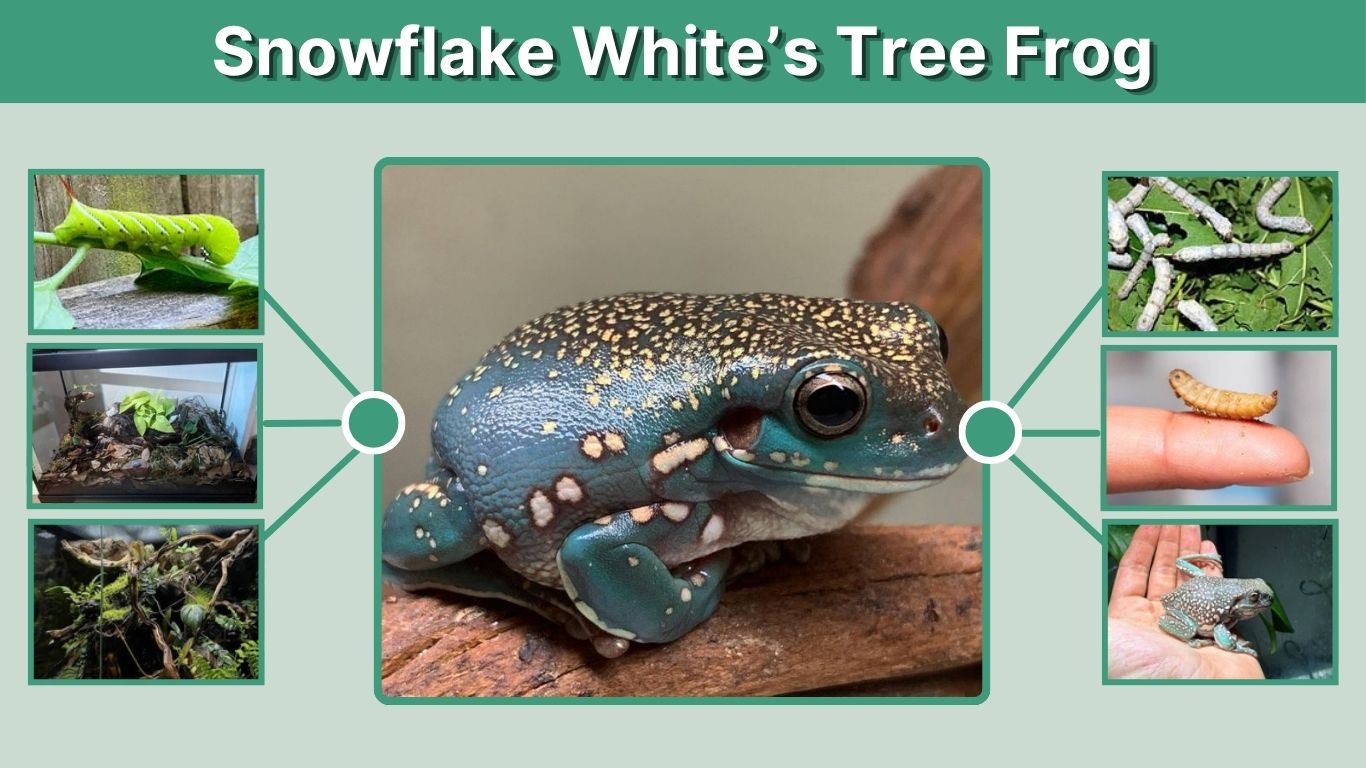
The snowflake White’s tree frog is a selectively bred form of the popular White’s tree frog, known for the scattered white spots covering its green or blue-green body. These distinctive markings resemble tiny snowflakes, giving the morph its name. Snowflake White’s tree frogs have the same generally calm temperament and manageable care requirements as standard White’s tree frogs, making them popular among amphibian keepers. With appropriate housing, humidity, temperature, diet, and hygiene, these attractive frogs can thrive for many years in captivity.
What Is a Snowflake White’s Tree Frog?
A snowflake White’s tree frog is a color and pattern variation of the Australian White’s tree frog, Ranoidea caerulea. It is not a separate species. Its most noticeable characteristic is the presence of numerous pale or white spots that contrast with the frog’s green, turquoise, or blue-green background coloration.
Snowflake White Tree Frog Identification
Typical characteristics include:
- Green to blue-green body coloration
- White or cream-colored spots
- Rounded, chunky body
- Large adhesive toe pads
- Horizontal pupils
- Smooth to slightly textured skin
- Broad head
- Strong climbing ability
- Pale underside
The number and size of white spots vary considerably between individuals.
Why Is It Called a Snowflake?
The name comes from the scattered white markings across the frog’s back and sides.
These markings often resemble falling snow or small snowflakes against a green or blue background. Some frogs develop only a modest number of spots, while others are heavily covered.
Is It a Different Species?
No. A snowflake Australian White’s tree frog belongs to the same species as an ordinary White’s tree frog.
The difference is primarily visual. Snowflake frogs generally have the same dietary, environmental, and behavioral requirements as other captive White’s tree frogs.
Snowflake vs. Super Snowflake White’s Tree Frog
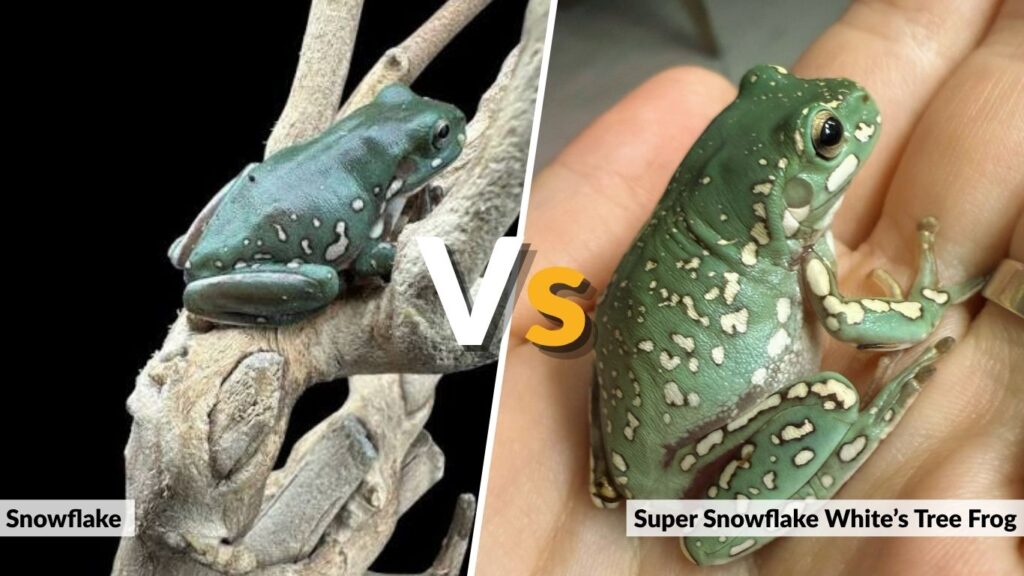
The terms snowflake and super snowflake are commonly used in the pet trade to describe the amount or intensity of spotting.
A regular snowflake may have noticeable white spots scattered across its body, while a super snowflake typically has much heavier spotting.
Super Snowflake White’s Tree Frog
A super snowflake White’s tree frog may display:
- Large numbers of white spots
- Dense spotting across the back
- Spots extending onto the sides or limbs
- Larger or more noticeable pale markings
- Strong contrast between spots and body color
Appearance can vary significantly from frog to frog.
Does “Super Snowflake” Mean a Different Species?
No. A super snowflake morph White’s tree frog is still Ranoidea caerulea.
Terms such as snowflake and super snowflake are primarily used to describe appearance within captive-bred lines. They do not mean the frogs require fundamentally different care.
Do Spots Change as the Frog Grows?
The appearance of a snowflake frog can change somewhat as it matures.
Young frogs may develop more noticeable coloration and patterning over time. Body color can also shift according to temperature, activity, lighting, stress, and surroundings, although the characteristic pale spots remain an important identifying feature.
Blue Snowflake White’s Tree Frog
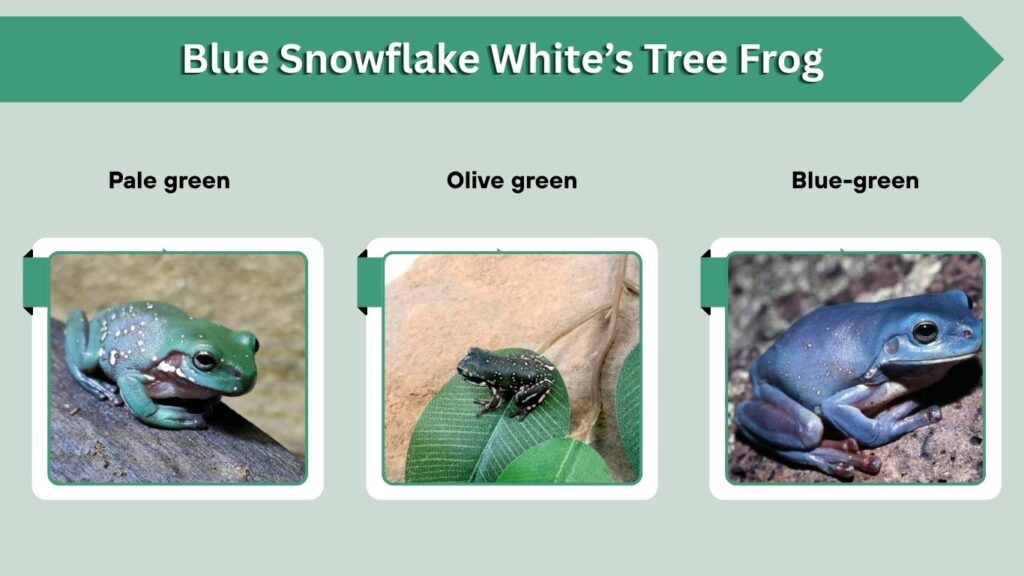
Some snowflake White’s tree frogs have a noticeably blue or turquoise appearance rather than the classic bright green associated with the species.
These frogs are particularly striking when white spotting contrasts strongly with blue-green skin.
What Causes the Blue Appearance?
White’s tree frogs naturally vary in color, and captive breeding has produced animals with especially attractive blue-green coloration.
A frog may appear:
- Pale green
- Olive green
- Turquoise
- Blue-green
- Gray-green
Color can also change temporarily depending on environmental conditions and the frog’s physiological state.
Blue-Eyed Snowflake White’s Tree Frog
The term blue-eyed snowflake White’s tree frog may be used by breeders or sellers for frogs showing both snowflake spotting and unusually pale or bluish-looking eyes.
Because descriptive morph names can vary between breeders, buyers should examine the individual frog rather than relying only on a commercial label.
Snowflake White’s Tree Frog Size
Snowflake frogs reach approximately the same adult size as standard White’s tree frogs.
Females are generally larger and heavier-bodied than males. Their chunky build is one reason the species is also commonly called the dumpy tree frog.
Adult Size
Adults commonly reach approximately:
- Males: around 2.5 to 3.5 inches
- Females: around 3 to 4.5 inches
- Large females may occasionally become somewhat bigger
Their body may look particularly broad when resting.
Baby Snowflake White’s Tree Frog
A baby snowflake White tree frog is much smaller and more delicate than an adult.
Young frogs need appropriately sized prey and should be monitored closely for growth, appetite, hydration, and body condition.
Their enclosure should also be arranged so they can easily reach water, food, resting areas, and climbing surfaces.
Snowflake White’s Tree Frog Care
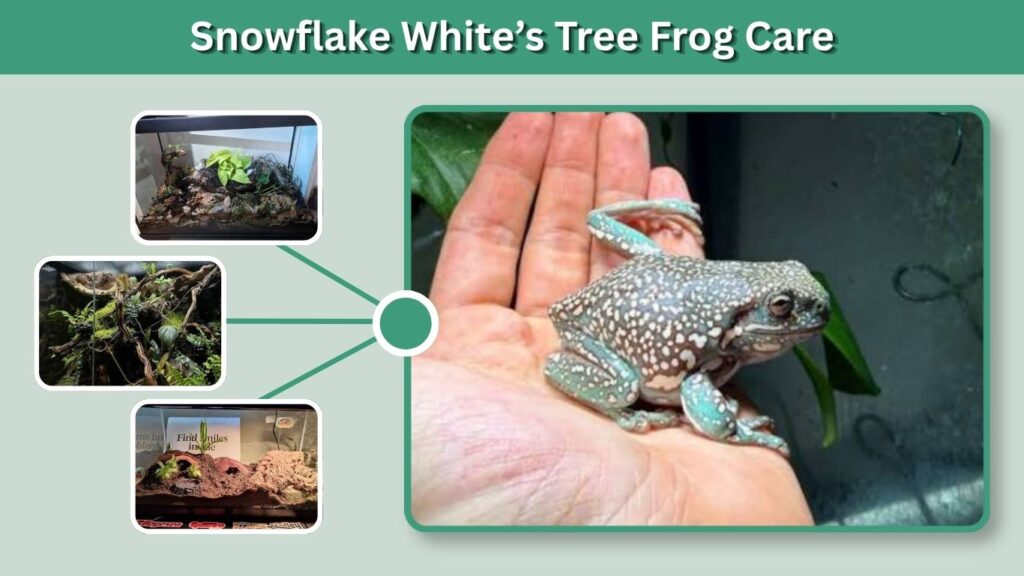
Snowflake White tree frog care is essentially the same as care for a standard White’s tree frog. They need a secure vertical enclosure with climbing structures, moderate humidity, suitable temperatures, fresh water, and a nutritionally balanced insect diet.
Consistency is more important than creating an excessively humid or complicated habitat.
Basic Care Requirements
Provide:
- Vertical enclosure
- Secure ventilated lid
- Branches and climbing surfaces
- Plants or artificial foliage
- Shallow water dish
- Moderate humidity
- Appropriate temperatures
- Live feeder insects
- Calcium and vitamin supplementation
- Regular cleaning
The enclosure should be prepared and tested before the frog is introduced.
Best Enclosure Setup
White’s tree frogs are strong climbers and benefit from vertical space.
A good habitat can include cork bark, sturdy branches, broad-leaved plants, ledges, and elevated sleeping areas.
Avoid unstable decorations because adult White’s tree frogs are relatively heavy and may knock lightweight items over.
Temperature and Humidity
Temperature and humidity directly affect appetite, activity, hydration, and overall health.
White’s tree frogs are relatively hardy, but that does not mean environmental conditions can be ignored.
Temperature
A daytime range generally around the mid-70s to low-80s °F works well, with a gentle temperature gradient allowing the frog to choose warmer or cooler areas.
Night temperatures can be somewhat cooler.
Any supplemental heat source should be controlled with an appropriate thermostat to prevent overheating.
Humidity
Moderate humidity is preferable to keeping the enclosure constantly wet.
Useful practices include:
- Light misting as needed
- Providing clean water
- Using suitable substrate
- Maintaining ventilation
- Monitoring humidity with a hygrometer
Allowing portions of the enclosure to dry between misting periods can help prevent persistently soggy conditions.
Water
Provide a shallow dish filled with clean, dechlorinated water.
The frog should be able to enter and leave easily. Change the water frequently because White’s tree frogs commonly soak in their bowls and may contaminate them with waste.
What Do Snowflake White’s Tree Frogs Eat?
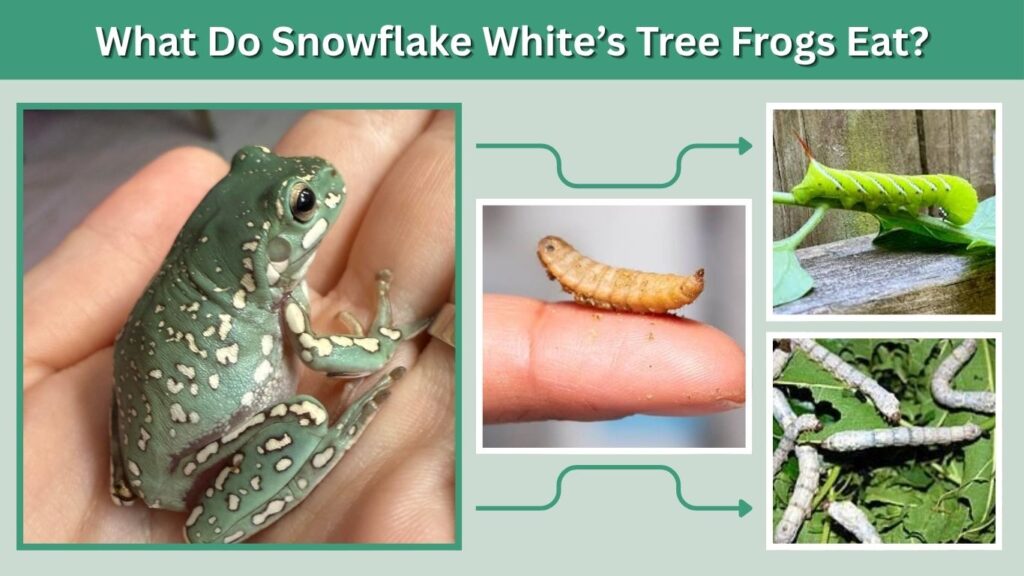
Snowflake White’s tree frogs are insectivores. Their coloration does not change their nutritional requirements.
They should receive a varied diet of appropriately sized feeder insects.
Best Foods
Suitable foods include:
- Crickets
- Dubia roaches
- Black soldier fly larvae
- Silkworms
- Hornworms
- Occasional mealworms
- Other safe feeder insects
Feeder insects should be nutritionally prepared and supplemented appropriately.
Feeding Baby Frogs
Baby snowflake White’s tree frogs usually require smaller prey and more frequent feeding than adults.
Suitable food should be small enough for the frog to swallow easily.
Juveniles should be monitored to make sure they are growing steadily without becoming excessively overweight.
Avoid Obesity
White’s tree frogs are enthusiastic eaters and can become overweight in captivity.
Adult frogs generally need less frequent feeding than rapidly growing juveniles.
A healthy frog should look rounded but should still be able to climb easily and move normally.
Snowflake White’s Tree Frog Lifespan
Snowflake White’s tree frogs can be relatively long-lived pets when their husbandry is appropriate.
Their lifespan is similar to standard White’s tree frogs because they are simply a pattern variation of the same species.
How Long Do They Live?
Many captive White’s tree frogs can live approximately 10 to 15 years, with some individuals living longer under excellent conditions.
Longevity depends on factors such as:
- Diet
- Weight management
- Water quality
- Genetics
- Enclosure cleanliness
- Temperature
- Humidity
- Veterinary care
Buying a frog should therefore be viewed as a long-term commitment.
Can You Handle a Snowflake White’s Tree Frog?
White’s tree frogs may tolerate limited handling, but they should not be treated like mammals that enjoy frequent physical interaction.
Amphibian skin is highly permeable and can absorb contaminants from human hands.
Safe Handling
When handling is necessary:
- Wash and rinse your hands thoroughly
- Keep hands slightly damp
- Avoid lotions and perfumes
- Do not use hand sanitizer immediately beforehand
- Support the frog gently
- Keep handling brief
- Never squeeze the body
Powder-free gloves can also reduce direct skin contact.
Are They Friendly?
Snowflake White’s tree frogs are often described as docile because they generally do not behave aggressively toward people.
However, calm behavior does not mean they seek human attention.
They are best considered observation pets with occasional necessary handling.
Snowflake White Tree Frog for Sale
Snowflake morphs are popular in the captive amphibian trade and may cost more than standard White’s tree frogs because of their distinctive appearance.
Price can vary depending on spotting, coloration, age, breeder reputation, and availability.
What to Look for When Buying
Choose a frog that has:
- Clear eyes
- Healthy-looking skin
- Strong grip
- Normal body weight
- Good alertness
- No open wounds
- No abnormal swelling
- No obvious difficulty moving
Captive-bred frogs are generally preferable to wild-caught animals.
Snowflake vs. Super Snowflake Price
Super snowflake frogs may be priced higher because heavily spotted individuals can be more visually distinctive and less commonly available.
Blue or unusually patterned animals may also be marketed at premium prices.
Appearance should never be prioritized over health and responsible breeding.
FAQs
What is a snowflake White’s tree frog?
It is a White’s tree frog with distinctive white or cream-colored spots across its body. It is a captive-bred pattern variation rather than a separate species.
What is a super snowflake White’s tree frog?
Super snowflake is a term commonly used for White’s tree frogs with particularly dense or prominent white spotting.
Are snowflake White’s tree frogs hard to care for?
No. Their care is generally similar to standard White’s tree frogs, which are considered relatively beginner-friendly amphibians when their enclosure is properly maintained.
How big does a snowflake White’s tree frog get?
Adults commonly measure around 2.5 to 4.5 inches depending on sex and individual variation, with females generally growing larger than males.
How long do snowflake White’s tree frogs live?
With proper captive care, many can live around 10 to 15 years, and some individuals may survive longer.
