
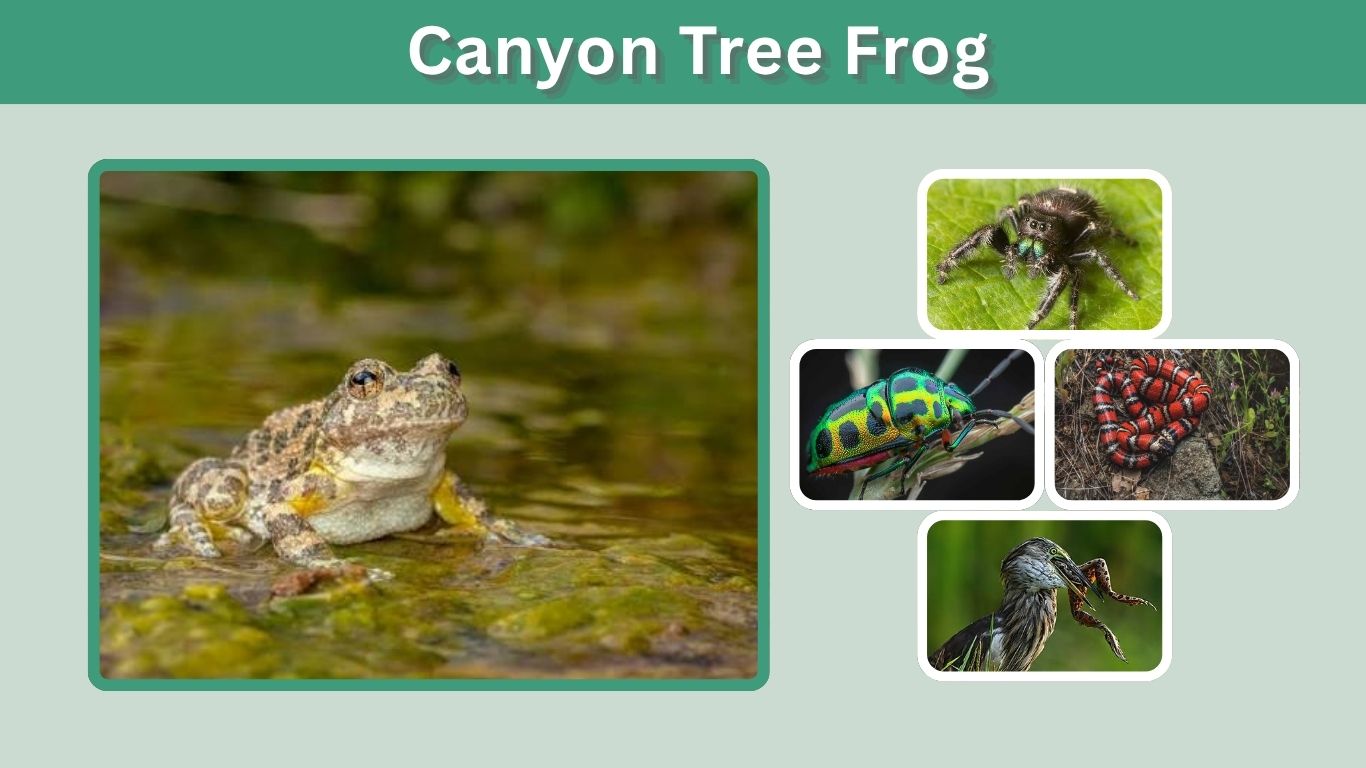
The canyon tree frog is a small, well-camouflaged amphibian of rocky streams and canyons in the southwestern United States and Mexico. Often seen resting on boulders rather than trees, this frog can almost disappear against sandstone and granite because of its mottled skin. Canyon tree frogs are especially common in Arizona and occur around places such as the Grand Canyon and Glen Canyon. Their unusual call, bright yellow inner legs, climbing toe pads, aquatic tadpoles, and remarkable desert adaptations make them fascinating inhabitants of southwestern waterways.
Canyon Tree Frog Identification
The canyon tree frog is a member of the tree frog family Hylidae. It is commonly referred to scientifically as Dryophytes arenicolor, although some authorities continue to classify it as Hyla arenicolor. Adults have a compact, somewhat flattened body that helps them hide against rocks and squeeze into narrow crevices.
Size and Appearance
Adult canyon tree frogs are generally about 1–2 inches long, although larger individuals can approach 2.25 inches. Their appearance varies considerably between individuals.
Important identification characteristics include:
- Color: Gray, tan, olive-gray, brown, cream, or occasionally greenish
- Back: Irregular dark blotches and mottled markings
- Skin: Rough and somewhat warty
- Toe pads: Enlarged adhesive pads for gripping rocks and other surfaces
- Hind legs: Bright yellow or orange-yellow coloring on the concealed inner surfaces
- Eyes: Large, prominent eyes with horizontal pupils
- Body: Broad and relatively flattened
- Feet: Partially webbed toes
The frog’s rough skin and variable colors help it blend extraordinarily well with surrounding rocks.
Canyon Tree Frog Camouflage
Camouflage is one of this species’ most noticeable adaptations. A frog sitting motionless on a granite or sandstone boulder may be extremely difficult to detect.
Its gray, brown, and olive markings resemble mineral patterns, shadows, and patches on rocks. Individuals may also appear lighter or darker depending on environmental conditions. This disguise helps the frog avoid predators while allowing it to remain exposed near pools and streams.
Canyon Tree Frog Habitat and Range
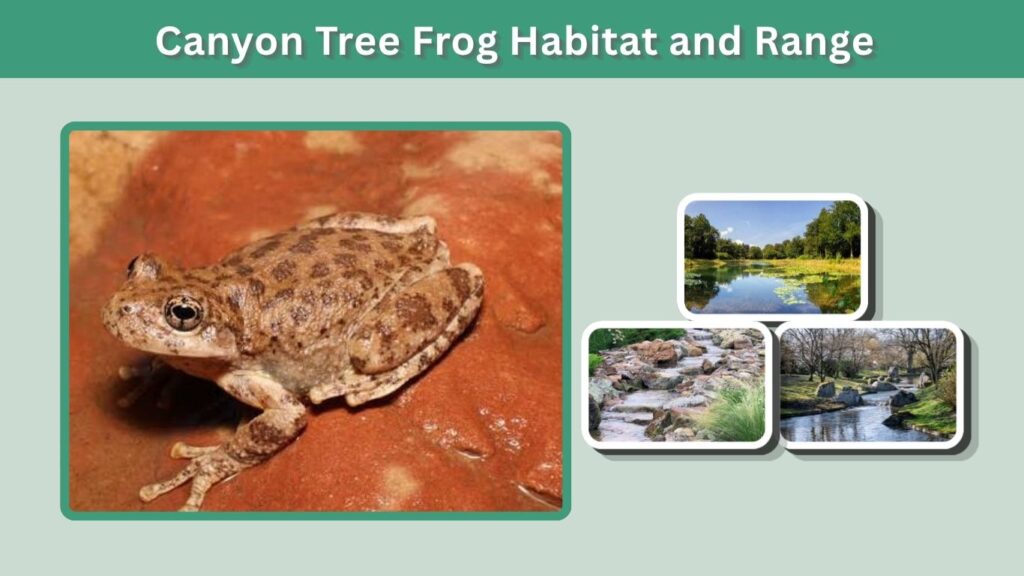
Despite living in some remarkably dry regions, canyon tree frogs depend heavily on water. They are strongly associated with riparian habitats, particularly rocky canyons containing permanent or intermittent streams and pools. During hot periods, frogs retreat into shaded cracks and rock crevices where moisture loss is reduced.
Where Do Canyon Tree Frogs Live?
Typical canyon tree frog habitats include:
- Rocky canyon streams
- Desert springs
- Permanent and seasonal pools
- Creek beds
- Rock-lined rivers
- Riparian corridors
- Boulders beside water
- Sandstone walls near streams
Unlike what their name might suggest, canyon tree frogs are often found on rocks rather than high in trees. In the Grand Canyon, they are commonly observed on boulders near streams and streambeds.
Canyon Tree Frog Range
Canyon tree frogs occur across parts of the southwestern United States and into Mexico. Their U.S. distribution includes:
- Arizona
- New Mexico
- Utah
- Colorado
- Western Texas
Their range continues southward through portions of Mexico. They are particularly characteristic of Arizona and the Colorado Plateau.
Canyon Tree Frogs in Arizona and Utah
Arizona offers extensive suitable habitat, especially where rocky canyons contain reliable water. The species is among the commonly encountered amphibians of Grand Canyon National Park.
In Utah, canyon tree frogs occur in areas including Zion National Park, Glen Canyon National Recreation Area, and Capitol Reef National Park. NPS records classify the species as native and present at Capitol Reef, while Glen Canyon describes it as common around Lake Powell’s shores and side canyons.
Canyon Tree Frog Call and Sound
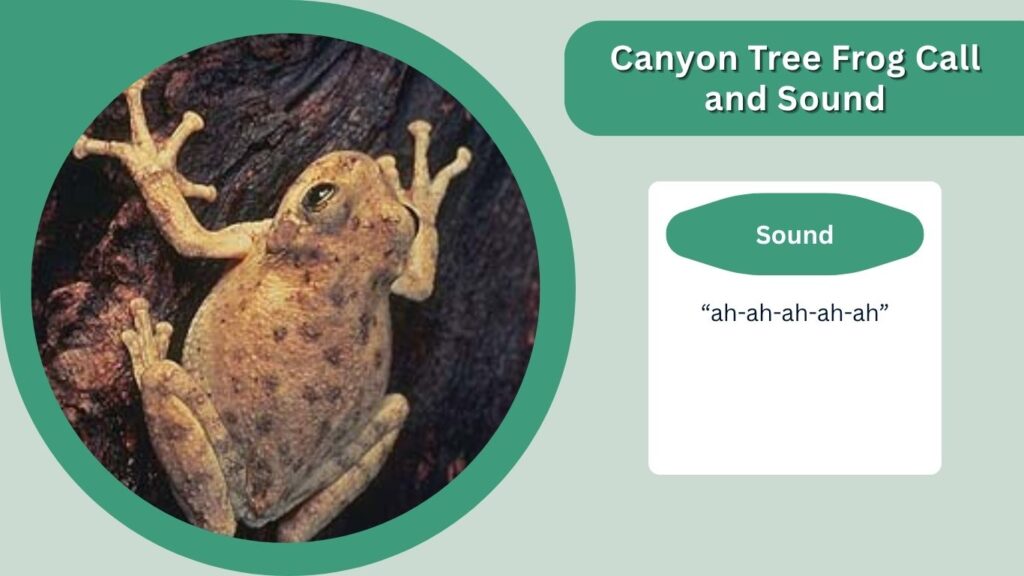
During breeding periods, males advertise their presence with loud calls that can carry surprisingly far through rocky canyons. Calling frequently increases after sunset when temperatures and moisture conditions are favorable.
What Does a Canyon Tree Frog Sound Like?
The canyon tree frog call is loud, rapid, nasal, and repetitive. It is often represented as a quick:
“ah-ah-ah-ah-ah”
The sound has been compared to an engine trying to start, rapid woodpecker drumming, or a short burst resembling a machine gun. Other listeners describe the chorus as somewhat similar to the bleating of sheep.
Males are particularly vocal during the first few hours after sunset. In Arizona, calling and reproduction can occur during spring and again around summer monsoon conditions.
Canyon Tree Frog Diet
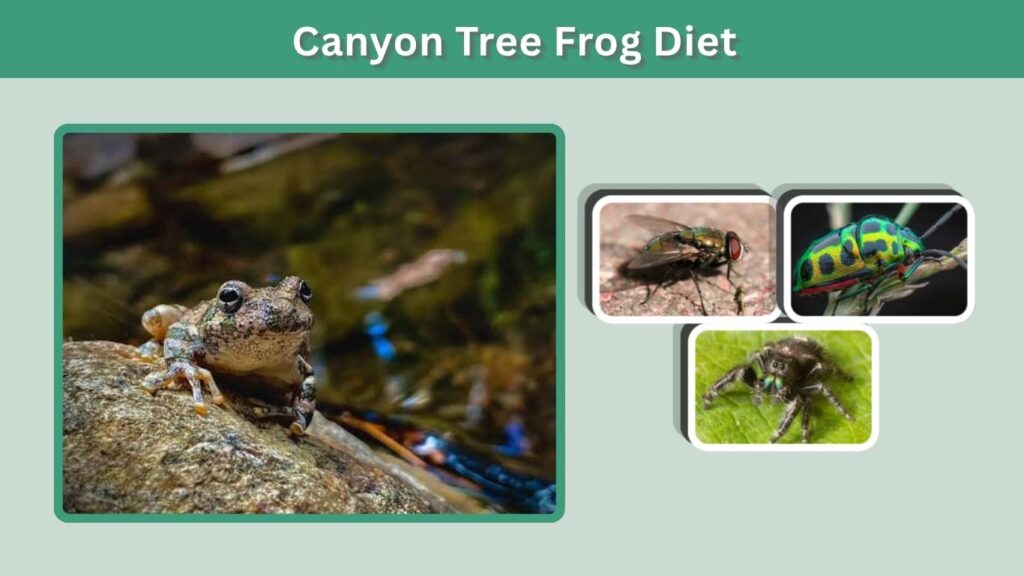
Adult canyon tree frogs are carnivorous predators that capture small animals living around streams and rocky canyon walls. They usually wait for prey to approach and then use their rapidly projecting tongue to capture it.
What Do Canyon Tree Frogs Eat?
Their diet includes various small invertebrates, such as:
- Ants
- Flies
- Beetles
- Spiders
- Small moths
- Mosquitoes
- Crickets
- Other small insects and arthropods
By feeding on abundant insects, canyon tree frogs play a useful role in riparian food webs. Tadpoles feed very differently from adults and primarily graze on algae and other plant-associated material in pools.
Breeding, Eggs, and Canyon Tree Frog Tadpoles
Breeding is closely connected to available water. Males gather around pools and streams and call to attract females. Seasonal rainfall can create or refill aquatic breeding sites, making water availability particularly important in otherwise arid landscapes.
Canyon Tree Frog Breeding Season
Breeding can occur during spring, while another period of reproductive activity may occur during summer rains. Timing varies with elevation, rainfall, temperature, and local water conditions.
Females deposit clear, jelly-like eggs in water. A female can lay 100 or more eggs at a time, and developing embryos remain dependent on suitable aquatic conditions.
Canyon Tree Frog Tadpoles
Canyon tree frog tadpoles live in pools, streams, and other suitable breeding waters.
During development they:
- Live completely in water
- Feed largely on algae
- Grow hind legs before front legs
- Gradually absorb their tails
- Develop lungs and adult feeding structures
- Leave the water as small juvenile frogs after metamorphosis
Water conditions can strongly influence whether tadpoles successfully complete development.
Canyon Tree Frog Adaptations
Living in rocky waterways surrounded by desert presents serious challenges. Canyon tree frogs must avoid dehydration, extreme daytime heat, predators, and highly variable water conditions.
Adaptations for Canyon Life
Several features help them survive:
- Camouflaged skin makes them difficult to see against rocks.
- Large toe pads provide grip on steep stone surfaces.
- Flattened bodies help them enter narrow rock cracks.
- Rough skin contributes to coping with relatively dry environments.
- Nocturnal activity reduces exposure to intense daytime heat.
- Rock-crevice sheltering provides cooler and more humid hiding places.
- Strong jumping ability allows rapid escape toward water.
During particularly hot weather, frogs commonly hide in crevices instead of remaining exposed on rocks.
Canyon Tree Frog Predators
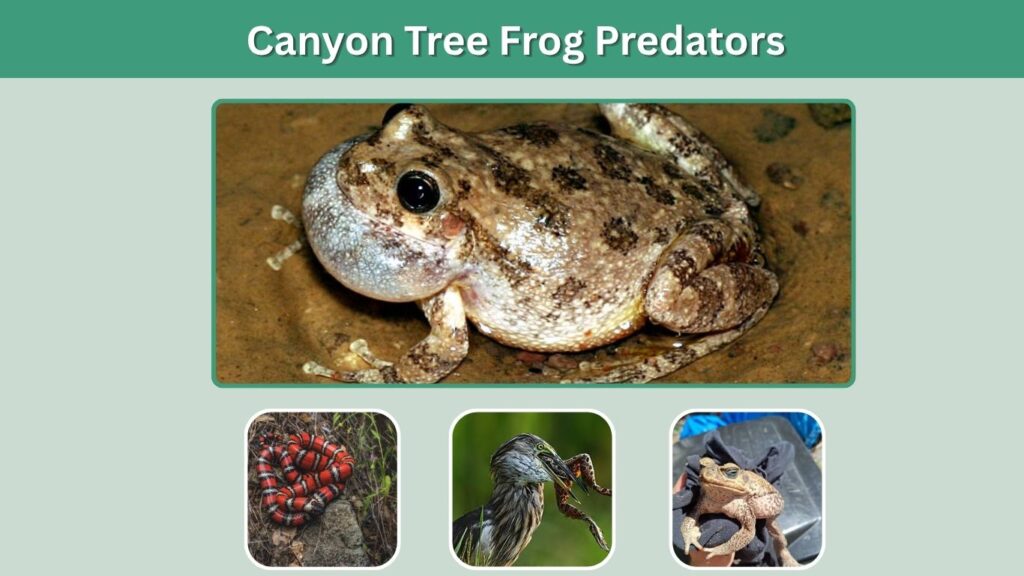
Despite their effective camouflage, canyon tree frogs occupy the middle of the food chain and can become prey for several animals.
Common Predators
Potential predators include:
- Snakes
- Aquatic birds
- Larger frogs
- Fish
- Raccoons and other small mammals
- Predatory aquatic insects that attack eggs or tadpoles
Camouflage is their primary defense. Their ability to jump quickly into water and disappear between rocks provides additional protection.
Are Canyon Tree Frogs Endangered?
The canyon tree frog is not generally considered an endangered species and has a relatively broad geographic range. It remains common in several protected areas of the Southwest; for example, the National Park Service records it as common at Capitol Reef and describes it as commonly encountered in Grand Canyon habitats.
However, individual populations still depend on healthy aquatic environments. Changes in stream flow, prolonged drought, habitat alteration, pollution, introduced predators, and loss of breeding pools can potentially affect local populations.
FAQs
1. Where does the canyon tree frog live?
Canyon tree frogs live mainly along rocky streams, pools, springs, and riparian corridors in Arizona, New Mexico, Utah, Colorado, western Texas, and parts of Mexico.
2. What does a canyon tree frog eat?
Adults eat small invertebrates such as ants, beetles, flies, and spiders. Tadpoles mainly feed on algae growing in aquatic habitats.
3. What does a canyon tree frog call sound like?
Its breeding call is a loud, nasal series of rapid notes often described as “ah-ah-ah-ah-ah.” It can resemble an engine turning over or rapid drumming.
4. Are canyon tree frogs found in the Grand Canyon?
Yes. Canyon tree frogs are native to Grand Canyon National Park and are commonly seen around rocky streams, pools, and streambeds within the canyon.
5. Can canyon tree frogs change color?
Their appearance can vary considerably, ranging from tan and brown to gray or olive-gray. Environmental conditions and exposure can affect how light or dark an individual appears, enhancing its camouflage against surrounding rocks.
