
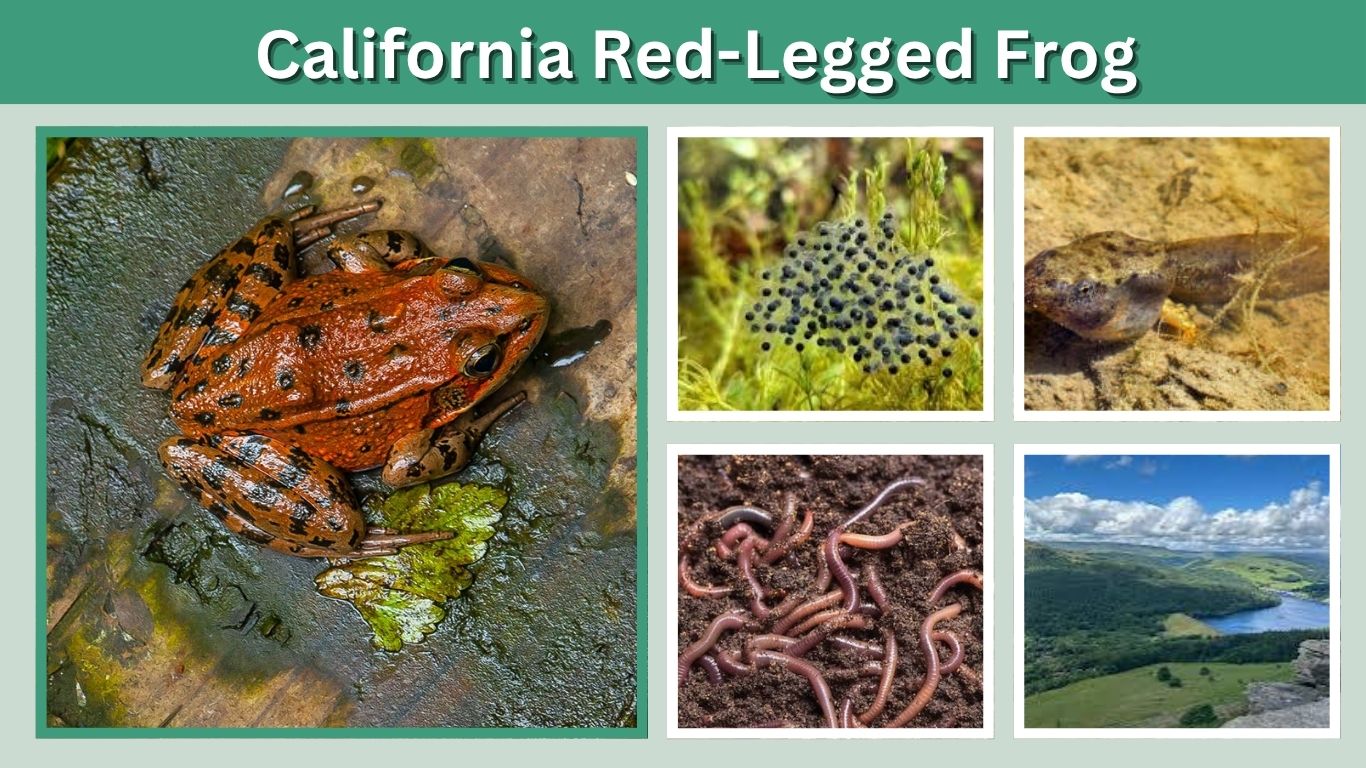
The California red-legged frog is one of the most recognizable native amphibians of California, known for the reddish coloring on its hind legs and lower body. Scientifically called Rana draytonii, this large frog lives around ponds, streams, marshes, and other freshwater habitats. Although adults spend considerable time near water, they may also travel through nearby vegetation and upland areas. This guide covers California red-legged frog identification, habitat, diet, tadpoles, life cycle, predators, behavior, conservation, and other important facts.
California Red-Legged Frog Identification
California red-legged frogs can sometimes be confused with other native frogs and introduced bullfrogs. Adults have several characteristics that help distinguish them, although color and markings can vary between individuals. Looking at body size, skin pattern, legs, and facial markings together usually provides the clearest identification.
Size and Appearance
- Scientific name: Rana draytonii
- Body length: Adults may reach approximately 2 to 5 inches
- Body color: Brown, gray, reddish-brown, or olive
- Leg coloration: Reddish or pink coloring occurs mainly on the underside of the hind legs
- Skin: Usually moderately rough with small folds or bumps
- Eyes: Large eyes positioned toward the sides and top of the head
- Dorsolateral folds: Noticeable raised folds run along the sides of the back
The frog’s red coloration is generally much easier to see when its hind legs are extended.
California Red-Legged Frog vs. Bullfrog
American bullfrogs are generally larger and may have a more uniformly green or brown appearance. Bullfrogs also lack the long dorsolateral folds extending down most of the back that are characteristic of many red-legged frogs.
California red-legged frogs are typically more secretive and may quickly enter dense vegetation or water when disturbed.
Are California Red-Legged Frogs Poisonous?
California red-legged frogs are not considered poisonous to humans. They do not possess highly toxic skin secretions comparable to poison dart frogs.
However, wild amphibians should not be handled unnecessarily. Handling can stress frogs, and substances such as sunscreen, soap, lotion, or chemicals on human hands may damage their sensitive skin.
California Red-Legged Frog Habitat and Range
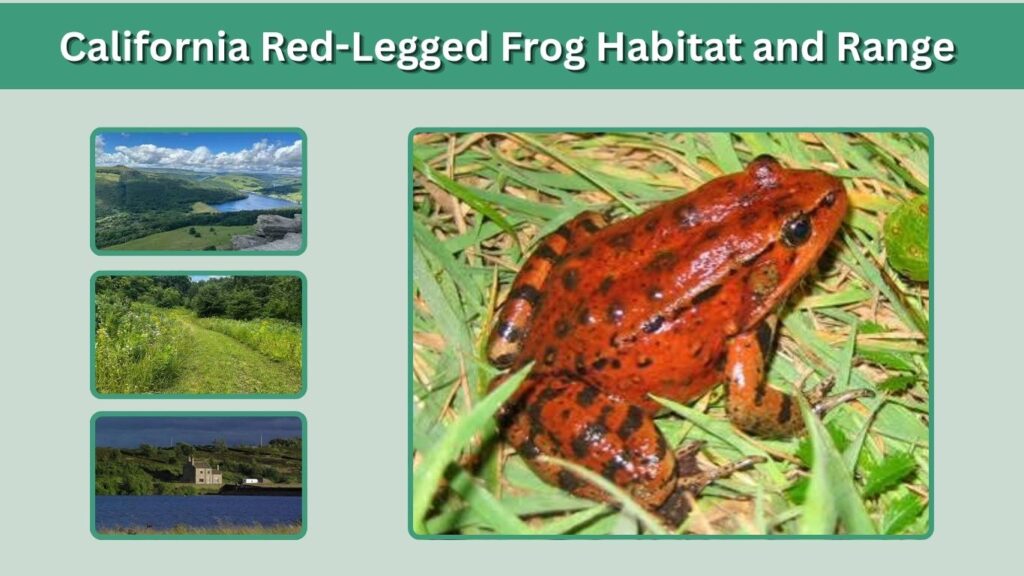
The California red-legged frog depends on aquatic environments for breeding while also using surrounding terrestrial habitats for shelter and movement. Suitable habitat generally includes water, protective vegetation, and nearby land that remains relatively cool and moist. Habitat connectivity can be especially important because frogs sometimes move between aquatic areas.
Where Do California Red-Legged Frogs Live?
California red-legged frogs occur primarily in California, particularly in coastal and central portions of the state.
Typical habitats include:
- Ponds
- Slow-moving streams
- Marshes and wetlands
- Reservoir edges
- Creek pools
- Springs
- Riparian vegetation
- Seasonal or permanent freshwater wetlands
They generally prefer areas where they can quickly escape into deep water or dense vegetation.
What Makes Good Breeding Habitat?
Breeding areas usually contain relatively calm water where eggs can develop without being washed away by strong currents. Aquatic vegetation provides attachment sites and additional protection.
Frogs may use ponds, slow pools, or wetlands that retain water long enough for eggs and tadpoles to complete development.
Upland Habitat and Movement
California red-legged frogs are not restricted completely to ponds. Adults may leave aquatic habitats and travel through grasslands, woodland edges, riparian corridors, or other nearby environments.
During moist conditions, some frogs can move considerable distances while searching for feeding sites, shelter, or additional breeding habitat.
California Red-Legged Frog Diet
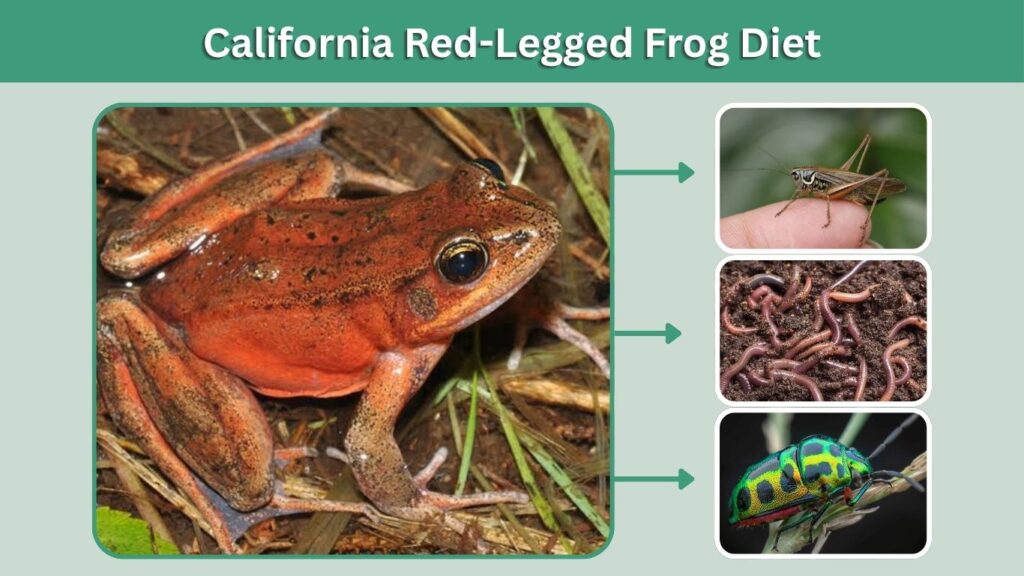
California red-legged frogs are opportunistic predators. Their diet changes with age, body size, habitat, and prey availability. Adults generally wait quietly for prey to approach before capturing it with a rapid movement of the mouth and tongue. Tadpoles follow a very different feeding strategy while developing underwater.
What Do California Red-Legged Frogs Eat?
Common foods may include:
- Beetles
- Flies
- Moths
- Crickets
- Grasshoppers
- Spiders
- Aquatic insects
- Worms
- Small crustaceans
- Other small animals
Large individuals may occasionally capture small vertebrates when suitable opportunities occur.
How Do They Catch Prey?
California red-legged frogs commonly use a sit-and-wait hunting strategy. They remain motionless until an insect or another small animal comes within striking range.
This method conserves energy while allowing the frog to take advantage of insects moving around vegetation, wetland edges, and shallow water.
What Do Tadpoles Eat?
Tadpoles generally consume algae, microorganisms, plant material, and other organic matter found in aquatic habitats.
Their feeding behavior helps them gain enough energy for growth before metamorphosis transforms them into juvenile frogs with a primarily predatory diet.
California Red-Legged Frog Tadpoles and Life Cycle
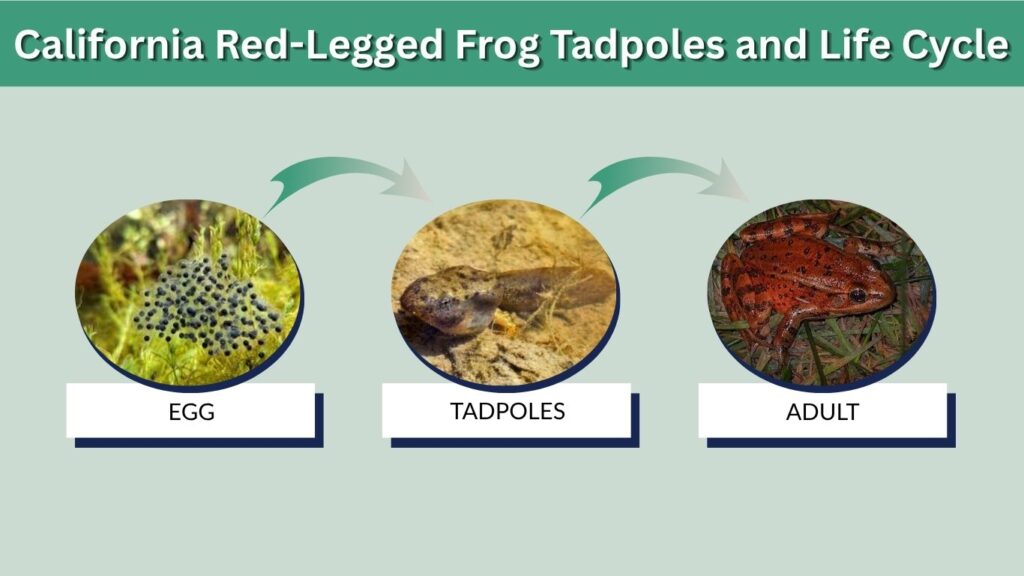
The California red-legged frog’s life cycle is closely connected to seasonal water conditions. Adults breed in aquatic environments, eggs develop into tadpoles, and the tadpoles eventually undergo metamorphosis. Because this process takes place in water, changes to ponds and wetlands can strongly influence breeding success.
Breeding Season and Eggs
Breeding generally occurs during the cooler and wetter part of the year. Males gather near suitable aquatic habitats and produce calls to attract females.
Females deposit clusters containing numerous eggs, frequently attaching them to vegetation near the water’s surface. The eggs gradually develop before hatching into aquatic larvae.
California Red-Legged Frog Tadpole Identification
Young tadpoles can be difficult to distinguish from those of other frog species without close examination.
General characteristics include:
- Rounded or oval bodies
- Long swimming tails
- Brownish or olive coloration
- Small darker markings
- Aquatic feeding behavior
- Gradual development of hind legs followed by front legs
Accurate tadpole identification may require considering habitat, geographic range, size, markings, and developmental stage.
Metamorphosis
As tadpoles mature, hind legs appear first and are followed by the front legs. The tail gradually becomes shorter as the animal develops lungs and transitions toward life as a juvenile frog.
Once metamorphosis is complete, young frogs begin feeding more heavily on terrestrial and aquatic invertebrates.
Behavior, Calls, and Ecological Niche
California red-legged frogs occupy an important position within wetland food webs. They function both as predators and prey, connecting aquatic and terrestrial ecosystems. Their behavior changes with temperature, moisture, breeding conditions, and predator activity, allowing them to use a combination of water, shoreline vegetation, and surrounding upland environments.
California Red-Legged Frog Call
Male California red-legged frogs call primarily during the breeding period. Their vocalizations help females locate potential mates and allow males to establish their presence around breeding sites.
Calling often occurs from water or protected areas near aquatic vegetation.
Ecological Niche
California red-legged frogs help regulate populations of insects and other small animals through predation. At the same time, frogs, tadpoles, and eggs provide food for numerous predators.
Their dependence on both aquatic and terrestrial habitats makes them an important component of healthy wetland ecosystems.
California Red-Legged Frog and Northern Pacific Treefrog
The California red-legged frog and Northern Pacific treefrog may occur in some of the same wetland environments, but they occupy somewhat different ecological niches.
Northern Pacific treefrogs are much smaller and are excellent climbers that frequently use vegetation. California red-legged frogs are larger, more strongly associated with aquatic edges, and capable of consuming larger prey.
Predators and Threats
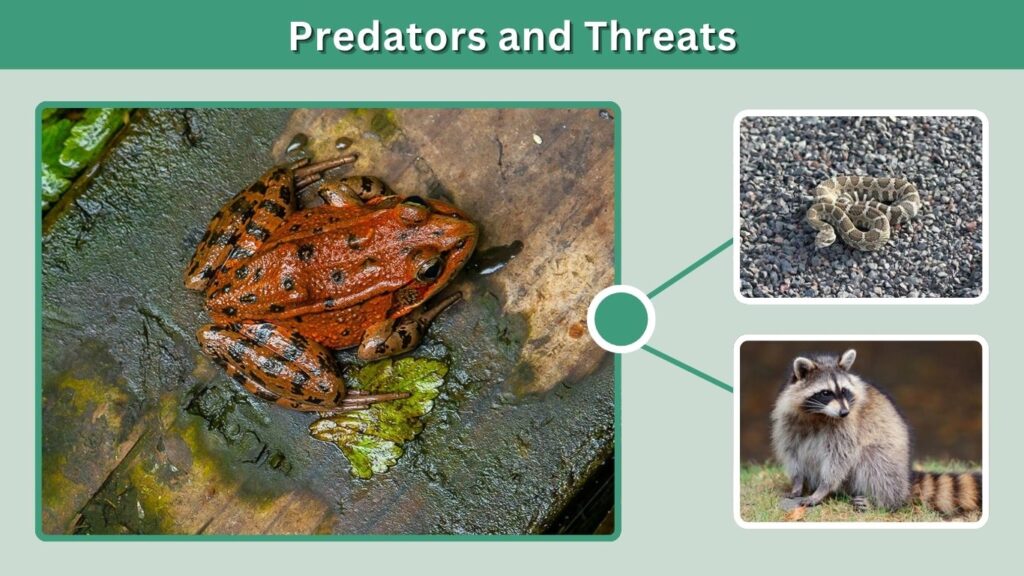
California red-legged frogs encounter both natural predators and environmental pressures. Eggs and tadpoles are particularly vulnerable because many aquatic animals can consume them. Adult frogs are larger but still face predators and habitat changes that can reduce their survival or limit successful breeding.
Common Predators
Potential predators include:
- Birds
- Snakes
- Raccoons
- Fish
- Large aquatic insects
- Mammals
- Other large frogs
Predation is a natural part of the ecosystem, but introduced predators can create additional pressure.
Do Bullfrogs Eat California Red-Legged Frogs?
Large American bullfrogs can prey on smaller frogs, including juvenile native frogs when they encounter them. Bullfrogs may also compete with native amphibians for habitat and food.
Their presence can therefore create challenges in habitats supporting California red-legged frog populations.
Major Environmental Threats
Important pressures include habitat destruction, alteration of wetlands, water diversion, drought, invasive predators, pollution, disease, and fragmentation between suitable habitats.
When ponds become isolated from one another, frogs may have greater difficulty dispersing and establishing new breeding populations.
California Red-Legged Frog Conservation Status
The California red-legged frog has experienced major reductions across portions of its historical range. Because the species requires suitable aquatic breeding locations combined with surrounding terrestrial habitat, conservation efforts often extend well beyond an individual pond. Protecting connected wetland landscapes is particularly important for maintaining populations over the long term.
Why Is the California Red-Legged Frog Threatened?
Habitat loss has played an important role in its decline. Development, agricultural changes, altered waterways, invasive species, and habitat fragmentation can reduce suitable breeding and feeding areas.
The species is federally protected in the United States, making habitat conservation and recovery programs especially important.
Critical Habitat and Recovery
Conservation programs focus on protecting important breeding areas, restoring wetlands, controlling invasive predators where appropriate, and maintaining connections between populations.
Researchers also survey populations and monitor breeding sites to better understand how environmental changes affect the species.
How Can People Help?
Protecting wetlands and avoiding the release of non-native animals are important ways to support native amphibians. Reducing pesticide and chemical pollution around waterways can also benefit frogs and their prey.
People who encounter California red-legged frogs should observe them without disturbing or collecting them.
Interesting California Red-Legged Frog Facts
This native amphibian has an unusual combination of aquatic and terrestrial behaviors. Its historical importance, large body size, and distinctive reddish legs have made it one of California’s best-known frogs. It also demonstrates how closely amphibian populations can depend on the condition of wetlands and surrounding landscapes.
Quick Facts
- It is one of the largest native frogs in the western United States.
- Its scientific name is Rana draytonii.
- The reddish coloration is most obvious on the underside of its hind legs.
- Adults eat insects and other small animals.
- Tadpoles develop entirely in aquatic environments.
- Frogs may leave ponds and travel through surrounding terrestrial habitat.
- Dense shoreline vegetation provides valuable hiding cover.
- Introduced bullfrogs can act as predators and competitors.
- Healthy wetlands are essential for successful reproduction.
- The species has become an important focus of amphibian conservation in California.
FAQs
1. Are California red-legged frogs poisonous?
No. California red-legged frogs are not considered poisonous to humans. However, wild frogs should be handled as little as possible because their skin is sensitive and handling may stress them.
2. Where does the California red-legged frog live?
It primarily inhabits parts of California, where it uses ponds, wetlands, streams, reservoirs, marshes, creek pools, and surrounding upland environments.
3. What does a California red-legged frog eat?
Adults mainly eat insects, spiders, worms, aquatic invertebrates, and other small animals. Larger individuals may occasionally consume small vertebrate prey.
4. Why is the California red-legged frog threatened?
Major pressures include habitat loss, wetland modification, invasive predators, drought, pollution, disease, and fragmentation between suitable breeding habitats.
5. How can you identify a California red-legged frog?
Look for a medium-to-large brown or olive frog with prominent dorsolateral folds, dark markings, and characteristic reddish or pink coloration on the underside of the hind legs.
