
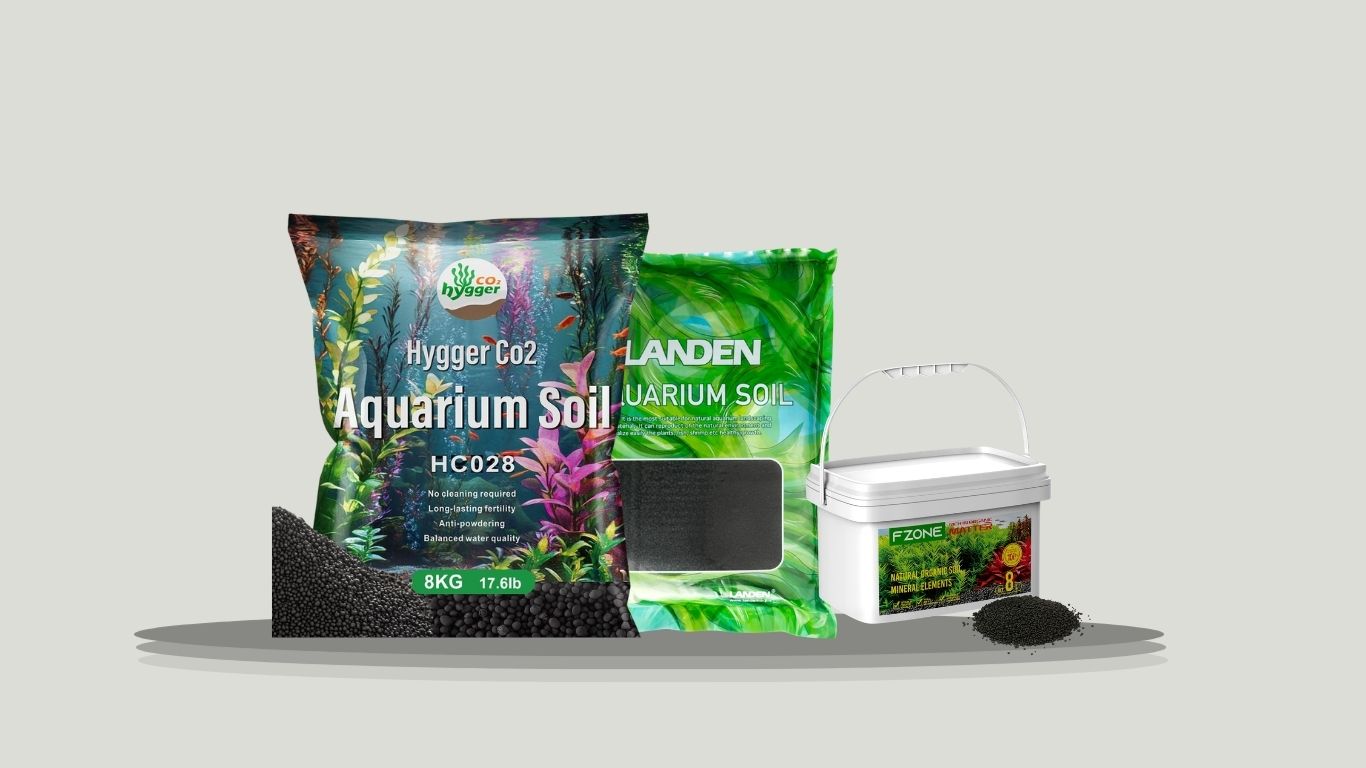
Choosing the right aquarium substrate can make a noticeable difference in plant growth, root development, and the overall appearance of a planted tank. A good substrate helps anchor plants securely while supporting healthy roots and creating a natural-looking aquascape. Some options are nutrient-rich, while others focus on water stability, easy maintenance, or shrimp-friendly conditions. In this guide, we review the 9 best aquarium substrates for planted tanks, covering options from Fluval, FZONE, Hygger, LANDEN, Aqueon, and AquaNatural to help you find a suitable choice for your setup.
1. Fluval Plant and Shrimp Stratum – 17.6 lb
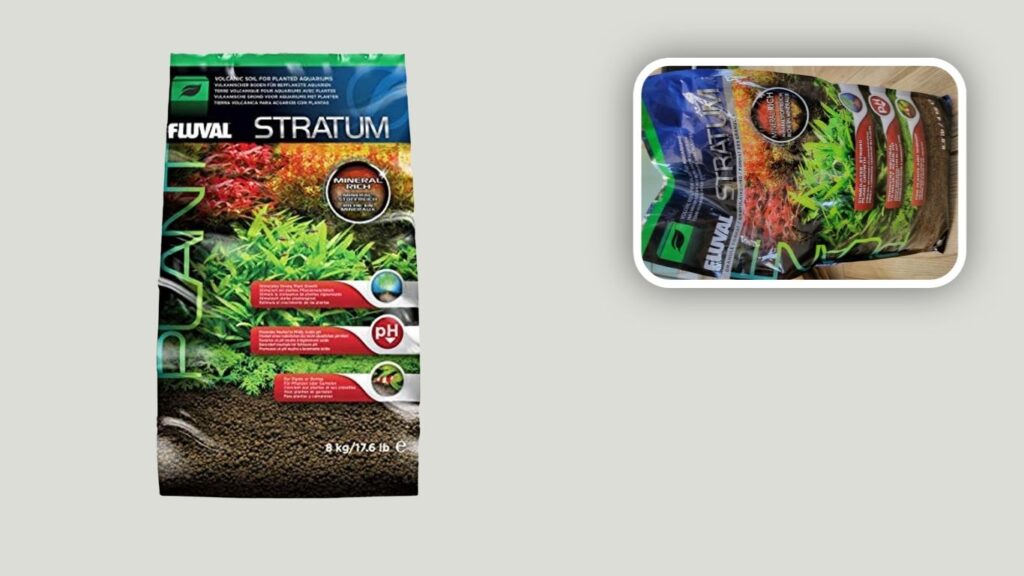
Fluval Plant and Shrimp Stratum is a well-known planted-aquarium substrate made from mineral-rich volcanic material. Its lightweight, porous granules are designed to let plant roots spread easily while also creating additional surface area for beneficial bacteria. The substrate supports neutral to mildly acidic water conditions, making it especially attractive for aquascapes containing live plants, tropical fish, and shrimp.
Key Features
- 17.6-pound bag for medium to larger planted aquariums
- Mineral-rich volcanic substrate
- Lightweight and porous granule structure
- Supports neutral to slightly acidic pH
- Promotes root penetration and nutrient absorption
- Porous surface encourages beneficial bacterial colonization
- Suitable for planted tanks and shrimp aquariums
Why It Stands Out for Planted Aquariums
The biggest attraction of Fluval Stratum is its combination of plant support and biological performance. Instead of acting simply as decorative gravel, its porous granules give roots space to penetrate and establish themselves throughout the substrate.
That structure can be particularly useful with carpeting plants, stem plants, and other species that depend on a healthy root zone. Its dark, natural appearance also provides an attractive contrast against green and red aquatic plants, giving an aquascape a more polished appearance.
Plant Growth and Water Performance
Fluval designs this substrate to encourage nutrient absorption while supporting beneficial nitrifying organisms. The porous material provides additional colonization area for bacteria involved in biological filtration, which can complement the aquarium’s main filter. It also favors neutral to slightly acidic conditions rather than pushing the aquarium toward alkaline water.
Because the granules are relatively light, care during planting and filling is worthwhile. Adding water slowly can help avoid disturbing freshly positioned plants.
Best Choice for Plant-and-Shrimp Setups
This substrate makes particular sense for aquarists building a natural freshwater aquascape where plants and shrimp are equally important. Fluval also highlights the substrate as providing small shrimp with places to shelter within the tank.
For someone who wants a proven all-around substrate rather than ordinary gravel, the combination of root support, biological surface area, and plant-friendly water conditions gives Fluval Plant and Shrimp Stratum strong practical appeal.
2. Fluval Bio-Stratum Natural Volcanic Soil – 17.6 lb
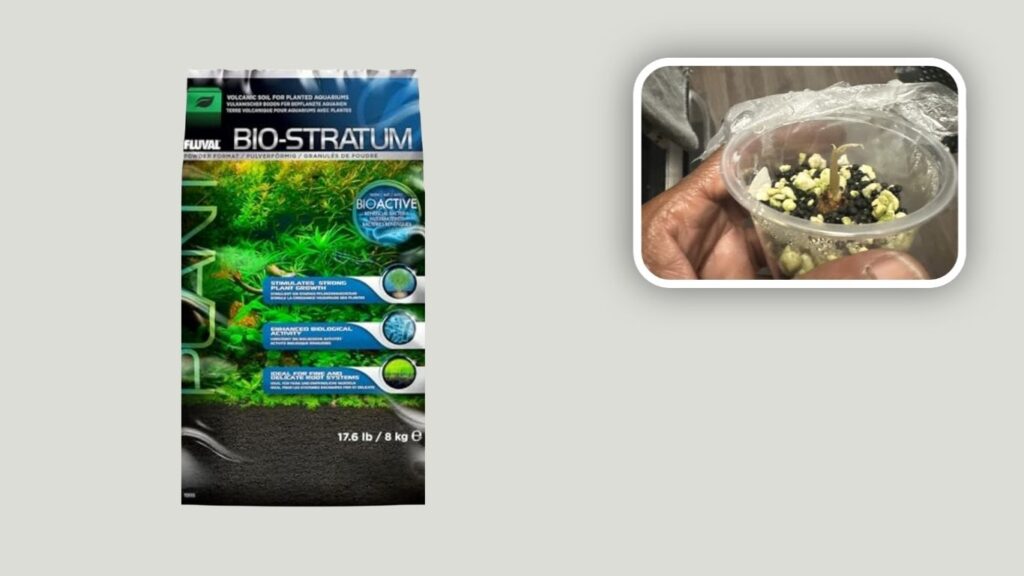
Fluval Bio-Stratum takes the planted-tank concept further by combining natural volcanic substrate with dormant beneficial nitrifying organisms. Once exposed to water, these microorganisms are designed to become active and contribute to biological processes in a newly established aquarium. Its lightweight, porous structure also allows fine aquatic roots to penetrate without dealing with a heavily compacted substrate.
Key Features
- 17.6-pound planted aquarium substrate
- Made from natural volcanic soil
- Contains dormant beneficial nitrifying bacteria
- Lightweight, porous granules
- Designed for easy root penetration
- Supports neutral to slightly acidic conditions
- Helps establish biological activity in new aquariums
Why the Bioactive Formula Matters
The feature that separates Bio-Stratum from many conventional substrates is its bioactive design. Fluval incorporates dormant nitrifying organisms that activate after the substrate comes into contact with aquarium water.
This gives the substrate a role beyond simply holding plants in position. Its porous structure provides a large colonization area while the incorporated bacteria are intended to help begin processing waste compounds as the aquarium matures.
For aquarists starting a completely new planted aquarium, that added biological element can make the substrate particularly interesting.
Root Development and Plant Performance
The small, lightweight granules are designed to remain relatively non-compacting, allowing delicate roots to penetrate and spread. That can be helpful for plants with finer root systems that may struggle in dense gravel.
Fluval also describes the volcanic substrate as containing minerals and nutrients that contribute to healthy plant development and coloration.
Its slightly acidic to neutral water influence can also complement many tropical planted-aquarium setups.
Best for New Bioactive Planted Tanks
Bio-Stratum is particularly compelling for aquarists who want the substrate to contribute to both planting and biological filtration. It works especially well conceptually in fresh setups where establishing plant roots and developing beneficial bacterial colonies are happening at the same time.
Compared with decorative gravel, the combination of volcanic structure, bioactive bacteria, and plant-focused properties creates a much more specialized foundation for a densely planted freshwater aquarium.
3. FZONE Nutrient-Rich Aquarium Soil – 8L
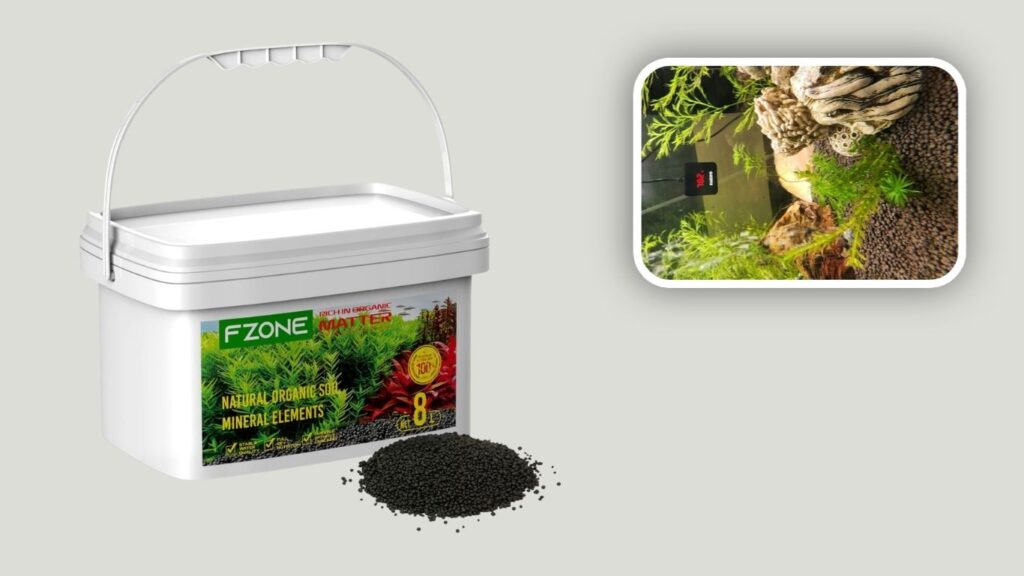
FZONE Nutrient-Rich Aquarium Soil is designed for aquarists who want an active substrate with a strong focus on plant nutrition and clean tank setup. This 8-liter version uses approximately 3 mm porous granules and combines organic matter, activated carbon, silica, soil, and minerals. It is formulated for freshwater plants while remaining suitable for fish and shrimp once the aquarium has stabilized.
Key Features
- 8-liter aquarium soil
- Approximately 3 mm porous granules
- Nutrient-rich organic formulation
- Includes soil, minerals, activated carbon, and silica
- Dust-resistant sintered construction
- No pre-rinsing required
- Designed for planted freshwater aquariums
- Suitable for shrimp and fish after stabilization
Why Its Granule Design Is Practical
A common concern with aquasoil is the amount of dust produced during setup. FZONE addresses this by using high-temperature processing intended to help the granules retain their structure underwater rather than quickly breaking apart.
That makes this substrate appealing for aquascapers who want the benefits of nutrient-rich soil without excessive cloudiness during the initial fill. Its 3 mm grain size also provides enough texture for plant roots to spread while still giving the aquascape a clean, uniform appearance.
Nutrients, Roots, and Water Conditions
FZONE’s formula contains organic material and minerals intended to support planted-tank growth. The porous granules also help create space for roots and beneficial microorganisms while capturing some suspended material.
The substrate is designed to gently influence harder alkaline water toward softer, slightly more acidic conditions. That characteristic can be advantageous for many popular tropical aquascaping plants.
FZONE recommends allowing the aquarium to stabilize before introducing livestock, including frequent water changes during the early setup period.
Best for Nutrient-Focused Aquascaping
This version is particularly attractive for someone designing a plant-heavy aquarium where substrate nutrition is a priority. The larger 8-liter volume also makes it convenient for establishing meaningful substrate depth without combining numerous small packages.
Its combination of porous granules, nutrient-rich composition, cleaner installation, and plant-oriented water conditions gives it the technical characteristics expected from a modern aquasoil.
4. FZONE Aquarium Nutrient-Rich Substrate – 4L
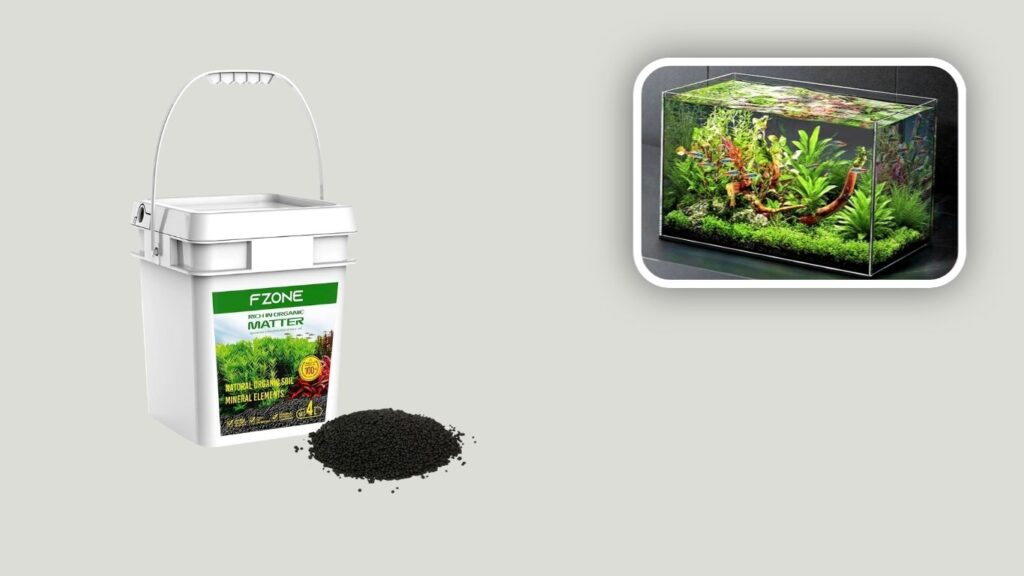
The 4-liter FZONE Aquarium Soil offers many of the plant-supporting qualities of the larger FZONE option in a more compact package. Designed specifically for freshwater planted tanks, it uses approximately 3 mm porous black granules and a nutrient-rich formulation. Its smaller volume makes it particularly practical for nano tanks, shrimp aquariums, or aquascapes where only a limited planting area needs active soil.
Key Features
- 4-liter / approximately 6.6-pound size
- Nutrient-rich aquarium soil
- Roughly 3 mm porous granules
- Black color for a natural aquascaping appearance
- Dust-resistant construction
- No rinsing required before use
- Formulated for freshwater live plants
- Fish and shrimp safe after proper tank stabilization
Why the Smaller Size Works Well
Not every planted aquarium needs a large bag of substrate. The 4-liter configuration is particularly useful for smaller aquariums, foreground planting zones, nano aquascapes, or situations where active soil is being combined with decorative sand or hardscape.
The dark appearance can also make green carpeting plants, colorful stem plants, and lighter stones stand out more clearly.
Its granule size offers a useful balance between providing root space and creating the refined appearance expected in an aquascaped aquarium.
Plant Support and Tank Stability
FZONE describes this soil as containing organic material, minerals, activated carbon, silica, and soil components intended to supply nutrients within the planted environment. Its porous granules support root development while also offering surface area where microorganisms can establish.
The substrate is also designed to gently reduce alkalinity and maintain conditions that favor many soft-water aquatic plants.
Like other active soils, it should be given time to stabilize. Early water changes are advisable before sensitive fish or shrimp are introduced.
Best for Nano and Small Planted Tanks
For a small aquascape, having the right quantity of substrate can be more practical than purchasing an oversized bag. This 4-liter option provides an active, nutrient-focused planting base without leaving a large amount unused.
It is therefore a particularly logical match for nano planted tanks, shrimp-focused displays, and carefully landscaped aquariums where a compact amount of black aquasoil is enough to create the desired substrate depth.
5. Hygger CO2 Upgraded Aquascaping Substrate – 8.8 lb
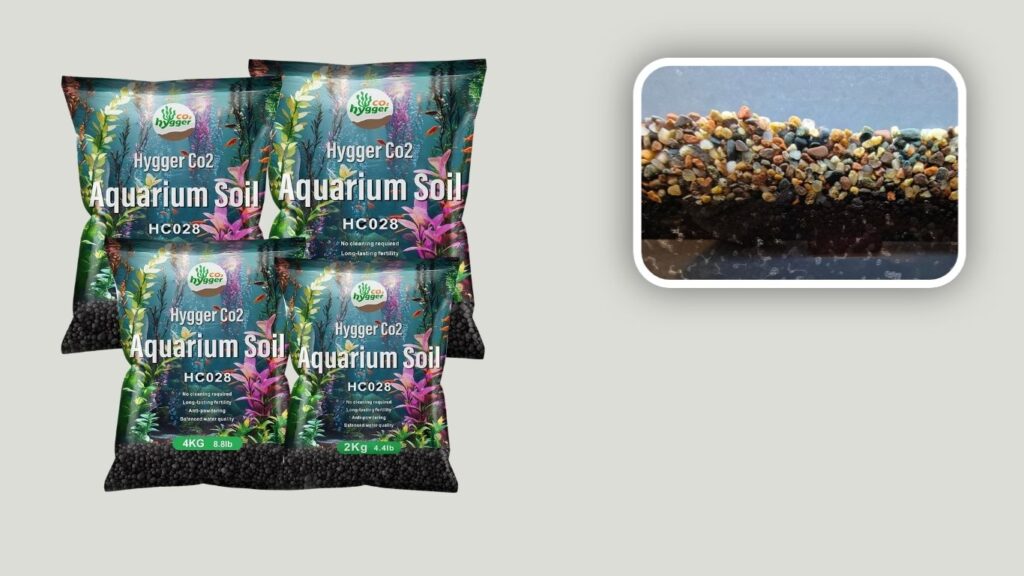
Hygger CO2 Upgraded Aquascaping Substrate is formulated as an active soil for freshwater planted tanks and shrimp setups. The 8.8-pound black substrate uses porous sintered material designed to encourage biological colonization while supporting plant roots. It also aims to buffer aquarium water toward a mildly acidic to neutral range, with the product listing specifying approximately pH 6.5–7.5.
Key Features
- Approximately 8.8-pound package
- Black planted aquarium soil
- Porous sintered substrate structure
- Designed to support aquatic plant roots
- Promotes beneficial bacterial colonization
- Buffers water toward approximately pH 6.5–7.5
- Can help soften aquarium water
- No rinsing recommended before installation
Why It Works for Aquascaping
Hygger focuses this soil on aquascaping rather than simply covering the aquarium floor. Its dark appearance creates visual depth around stones, driftwood, carpeting plants, and colorful stem plants.
The porous granules also provide a more root-friendly environment than smooth decorative gravel. Their structure creates small spaces where roots and microorganisms can develop, helping the substrate become part of the aquarium’s biological environment rather than remaining purely decorative.
Water Conditions and Plant Performance
One of the notable technical features is its buffering effect. Hygger states that the substrate is formulated to maintain a pH of approximately 6.5–7.5 while naturally softening and mildly acidifying water.
These conditions can work well for many tropical plants and freshwater shrimp. The porous sintered material is also intended to encourage colonization by beneficial bacteria.
Hygger advises against rinsing the soil, since washing can damage the granules and remove material associated with the substrate. Slow water filling is therefore the better setup approach. The manufacturer also recommends several early water changes before adding livestock.
Best for Modern Planted Aquascapes
This substrate is well suited to aquarists who want a dark aquasoil that combines plant support with water-conditioning characteristics. It can be especially useful for shrimp tanks and densely planted aquascapes that favor softer, mildly acidic water.
The blend of porous structure, controlled pH range, attractive black appearance, and no-rinse installation gives Hygger CO2 Upgraded Aquascaping Substrate a strong set of practical features for creating a polished planted-tank foundation.
6. Hygger CO2 Aquarium Substrate Soil for Plants and Shrimp
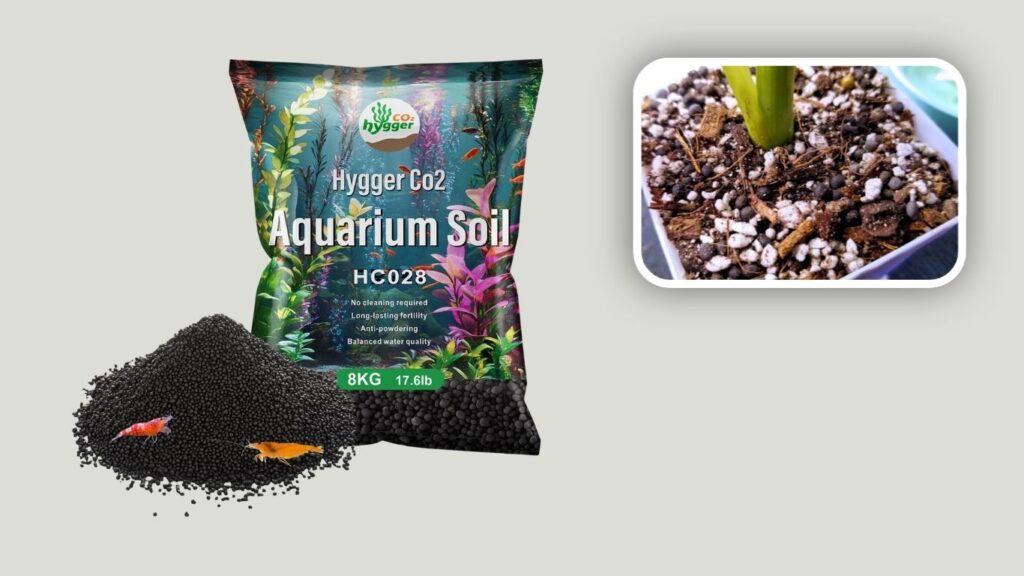
Hygger CO2 Aquarium Substrate Soil provides a natural-looking foundation for planted freshwater aquariums, aquascapes, and shrimp tanks. It is made from processed natural mountain soil with a porous structure that gives plant roots room to spread while providing surface area for beneficial microorganisms. The fine granules are designed to remain stable underwater and can be used directly without pre-rinsing.
Key Features
- Made from natural mountain soil
- Porous structure supports plant roots
- Contains trace nutrients for aquatic plants
- Designed for planted tanks and shrimp aquariums
- Helps support softer-water conditions
- Fine granules create a natural aquascaping appearance
- No rinsing required before installation
- Provides surface area for beneficial microorganisms
Why It Stands Out for Rooted Plants
The structure of this Hygger substrate is one of its most useful qualities. Rather than creating a hard, tightly packed bottom layer, the granules allow water and oxygen to move through spaces around plant roots.
That makes it easier for rooted aquarium plants to establish themselves after planting. Stem plants, carpeting varieties, and decorative rooted plants can be positioned securely while developing a stronger underground root network.
The dark soil also gives plants a more vivid appearance, especially when bright green leaves, red stems, driftwood, and lighter-colored stones are used in the same aquascape.
Nutrient and Water-Conditioning Performance
Hygger formulates this soil with organic matter and trace nutrients to support aquatic plant development. The substrate is also designed to soften water and influence pH, which can complement species that naturally prefer softer freshwater environments.
Its porous structure additionally provides colonization space for beneficial bacteria. This can make the substrate part of the aquarium’s biological ecosystem rather than simply an aesthetic bottom covering.
New setups should still be allowed to stabilize properly. Hygger recommends multiple early water changes before livestock is introduced.
Best for Plant-and-Shrimp Aquascapes
This option is particularly appealing when the goal is to combine live plants with freshwater shrimp in a natural aquascape. The fine soil provides a visually refined surface while its porous construction gives roots and microorganisms useful space.
For aquarists who prefer active soil over ordinary aquarium gravel, Hygger offers a more plant-focused foundation that combines aquascaping appearance, nutrient support, and water-conditioning characteristics.
7. LANDEN Aqua Soil Substrate for Planted Aquariums
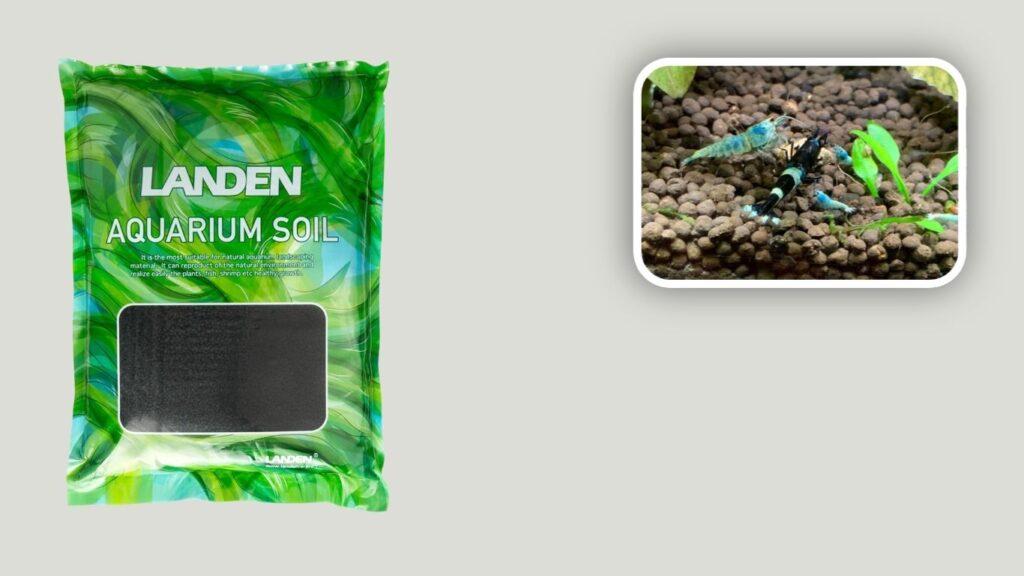
LANDEN Aqua Soil is an active planted-tank substrate made from specially processed natural material. Its dark porous granules are designed for freshwater aquatic plants and shrimp while helping reproduce the softer, mildly acidic conditions preferred by many popular aquascaping species. The substrate also contains minerals, trace elements, organic acids, and nitrogen-based nutrients that support the planted environment.
Key Features
- Natural processed aqua soil
- Dark color enhances aquascaping
- Porous clay-like granule structure
- Contains minerals and trace elements
- Supports healthy root development
- Designed to promote softer water
- Suitable for planted and shrimp aquariums
- Ready to use without rinsing
Why It Is Strong for Serious Aquascaping
LANDEN stands out because it combines attractive aquascaping texture with the functional characteristics expected from active aqua soil.
Its dark granules create a natural background that helps green and red plants become the visual focus. The soil can also be shaped into slopes and planting areas, making it useful for layouts that need depth rather than a completely flat aquarium floor.
For aquarists creating an Iwagumi-inspired layout, planted nature aquarium, or shrimp aquascape, this kind of uniform dark substrate can give the finished tank a cleaner and more intentional appearance.
Root Growth and Biological Performance
The porous structure gives plant roots spaces to penetrate while simultaneously creating additional surface area for beneficial microorganisms. LANDEN states that the soil contains nutrients and trace elements intended to promote aquatic plant growth.
It can also influence water hardness and pH, making it particularly suitable for aquariums built around plants and animals that favor softer conditions.
Because it is an active substrate, new tanks need appropriate cycling and water changes. The manufacturer recommends waiting before introducing fish or shrimp because ammonia may temporarily rise during initial setup.
Best for Nutrient-Rich Planted Tanks
LANDEN Aqua Soil is a particularly attractive option for tanks where plant performance is more important than simply covering the aquarium bottom.
Its combination of mineral content, porous granules, softer-water influence, and dark appearance makes it suitable for demanding planted layouts as well as shrimp tanks. Aquarists who want an active substrate capable of contributing directly to the planted environment may find its technical advantages more useful than conventional gravel.
8. Aqueon Plant and Shrimp Aquarium Substrate
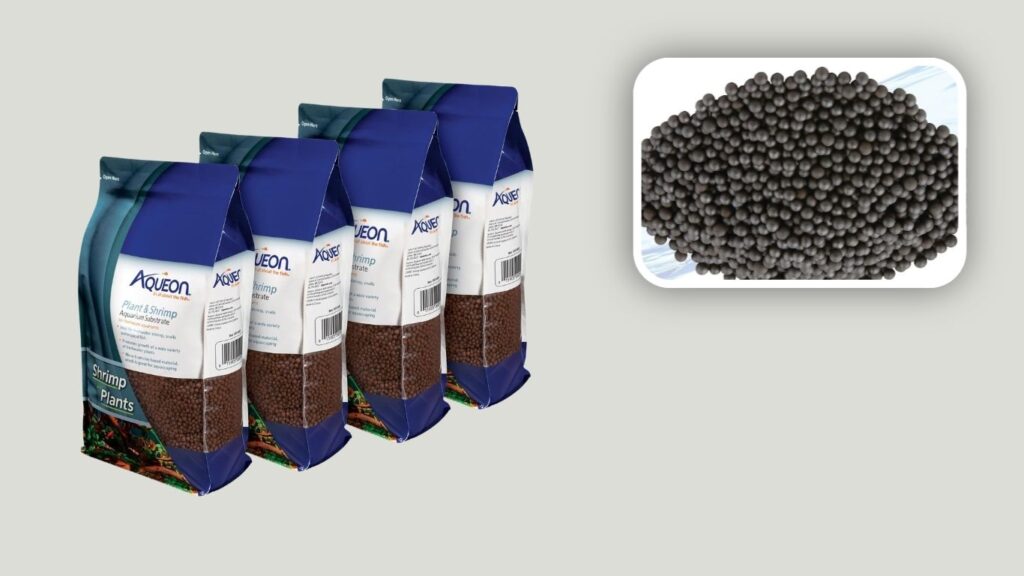
Aqueon Plant and Shrimp Aquarium Substrate takes a slightly different approach from soft aqua soils. It uses a clay-based material formed into spherical granules designed to maintain their shape instead of gradually compressing into dense soil. This structure allows roots to develop between the granules while creating an attractive base for freshwater plants, shrimp, snails, and tropical fish.
Key Features
- Clay-based aquarium substrate
- Rounded spherical granules
- Maintains its shape over time
- Supports developing plant root systems
- Suitable for freshwater aquascaping
- Works well with shrimp and snails
- Can be used with tropical freshwater fish
- Available in convenient aquarium-sized bags
Why the Clay Granules Are Different
One of this substrate’s strongest practical qualities is durability. Traditional nutrient-rich aquasoils can gradually soften and break down, particularly after repeated replanting.
Aqueon’s clay-based granules are designed to maintain their spherical form instead.
That makes the substrate appealing for aquarists who regularly move plants or redesign their aquarium. Roots can grow through spaces between the particles without the bottom layer quickly becoming a heavily compacted mass.
The rounded appearance also creates a clean and natural-looking foreground around plants, wood, rocks, and aquarium decorations.
Plant Support and Long-Term Performance
Aqueon specifically designs this substrate so both newly developing and established plant roots can grow through its structure.
Because it is clay-based, its main strength is providing a stable physical root zone rather than behaving exactly like a soft, nutrient-heavy aquasoil. For demanding root-feeding plants, aquarists may choose to supplement the substrate with root tabs or an appropriate aquarium fertilizer program.
This approach can actually provide greater control over nutrient dosing because fertilizer can be adjusted according to the plants being grown.
Best for Durable Planted Shrimp Tanks
This Aqueon substrate makes sense for aquarists who prioritize structural stability, straightforward aquascaping, and compatibility with plants and shrimp.
Its durable granules are particularly useful in tanks that may be replanted or rearranged over time. For someone who does not necessarily need aggressive water buffering from an active aqua soil, the combination of clay construction, root-friendly spacing, and long-lasting form provides a dependable planted-tank foundation.
9. Aqua Natural Galaxy Sand Black Aquarium Substrate
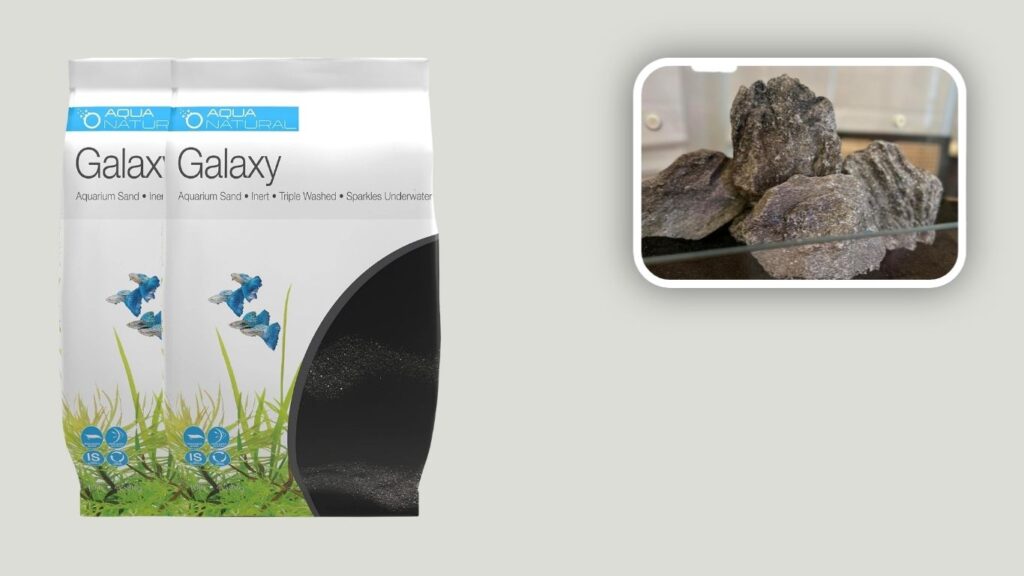
Aqua Natural Galaxy Sand is a fine black aquarium sand designed primarily for appearance and aquascaping rather than acting as a nutrient-rich active soil. Its dark, subtly sparkling surface reflects aquarium lighting while giving plants, stones, driftwood, and décor a strong contrasting background. The 20-pound bag also provides useful coverage for creating deeper or larger aquascaped areas.
Key Features
- Fine black aquarium sand
- Approximately 20-pound bag
- Creates strong contrast with aquatic plants
- Smooth, natural-looking texture
- Suitable for aquariums and aquascaping
- Can also be used in vivariums and terrariums
- Ethically and sustainably sourced in the USA
- Works well for decorative planted layouts
Why It Creates an Attractive Planted Tank
Appearance is where Galaxy Sand has its greatest advantage. The deep black surface creates dramatic contrast around bright green plants, colorful fish, pale stones, and natural driftwood.
Its fine grain also creates a smoother visual transition across the aquarium floor than coarse gravel. This makes it particularly useful for foreground areas where the substrate itself remains visible.
The subtle reflective appearance under aquarium lighting can also add depth without using artificially bright or unnatural substrate colors.
Planting Performance and Nutrient Considerations
Unlike active aqua soil, Galaxy Sand should primarily be viewed as a physical and decorative substrate. Heavy root-feeding plants may therefore perform better when root tabs or another controlled source of plant nutrition is placed beneath the sand.
That difference can actually appeal to experienced aquarists who prefer to control nutrients independently instead of allowing the substrate to alter water chemistry.
The fine texture works particularly well around decorative plants and aquascaping features, although very deep layers should be maintained properly to prevent excessive waste accumulation or compacted areas.
Best for Decorative Low-Tech Aquascapes
Aqua Natural Galaxy Sand is an excellent match when visual appearance and flexibility are the main priorities.
It works particularly well in low-tech planted tanks using plants such as Java fern, Anubias, mosses, and other species that obtain much of their nutrition from the water column rather than deep root systems.
For heavier root feeders, combining the sand with targeted root fertilization creates a more plant-friendly setup. Its striking black finish makes this option especially appealing for aquarists who want their plants and hardscape to become the visual centerpiece.
FAQs
1. What is the best substrate for a planted aquarium?
Nutrient-rich aqua soil is usually one of the most convenient choices for a heavily planted aquarium because it provides a root-friendly structure and can supply or retain nutrients around the root zone. Fluval Stratum, LANDEN Aqua Soil, FZONE Aquarium Soil, and Hygger aquarium soil are examples from this list. The right choice also depends on plant type, livestock, desired water chemistry, and maintenance preferences.
2. How deep should the substrate be in a planted tank?
A substrate depth of roughly 2–3 inches works well for many planted aquariums. A deeper layer toward the rear can provide more rooting space for taller plants while also creating visual depth. Very small foreground plants may require less depth. The substrate should be deep enough to anchor roots securely without creating unnecessarily thick areas that become difficult to maintain.
3. Is sand or aqua soil better for aquarium plants?
Aqua soil is generally more convenient for nutrient-demanding rooted plants because it provides a porous root zone and may contain plant nutrients. Sand can still support excellent planted aquariums, but root-feeding plants often benefit from root tabs or another fertilizer source. Sand is particularly attractive when appearance, stable water chemistry, and easy control of added nutrients are priorities.
4. Do planted tanks need fertilizer with nutrient-rich substrate?
Not always immediately, but many planted aquariums eventually benefit from additional fertilization. Nutrients contained in active substrates can gradually decline, and some plants absorb significant nutrients directly through their leaves. A balanced combination of substrate nutrition, root tabs, liquid fertilizer, lighting, and CO2—when appropriate—can provide more consistent long-term growth than relying on substrate alone.
5. Should aquarium substrate be rinsed before use?
It depends on the product. Many active aquasoils, including several Hygger and LANDEN products, are designed to be placed directly into the aquarium without rinsing because washing can damage granules or remove useful material. Decorative sands may require rinsing to remove fine dust. Always follow the manufacturer’s directions for the specific substrate rather than applying the same cleaning method to every product.
