The brown tree frog is a small, fascinating amphibian known for its earthy coloration, excellent climbing abilities, and distinctive nighttime calls. These frogs are commonly found in gardens, forests, wetlands, and areas surrounding freshwater. The southern brown tree frog is especially widespread in southeastern Australia, while several North American tree frog species can also appear brown. Although their appearance varies, brown-colored tree frogs share interesting behaviors and adaptations. Understanding their identification, habitat, diet, sounds, and potential dangers can help you recognize these amphibians and appreciate their ecological importance.
What Is a Brown Tree Frog?
The name brown tree frog commonly refers to the southern brown tree frog (Litoria ewingii), a small amphibian native to Australia. However, it is also used informally to describe other tree frogs with brown coloration. Because several species can appear similar, identifying the exact frog requires examining its physical characteristics, geographic location, and distinctive calls.
Southern Brown Tree Frog
The southern brown tree frog, also called Ewing’s tree frog or the whistling tree frog, is widely distributed across southeastern Australia and Tasmania.
It has smooth brown skin, prominent eyes, slender legs, and small adhesive toe pads that help it climb vegetation.
This adaptable species frequently inhabits suburban gardens, wetlands, forests, and grasslands. It is particularly active after rainfall and can produce surprisingly loud calls despite its small body.
Brown Pacific Tree Frog
The Pacific tree frog (Pseudacris regilla) is another small amphibian that frequently displays brown coloration.
Native to western North America, this species can appear green, tan, gray, reddish, or brown. It usually has a distinctive dark stripe extending from its nose through its eyes toward its shoulders.
Some Pacific tree frogs can gradually change between green and brown, helping them blend into their surroundings.
How to Identify a Brown Tree Frog
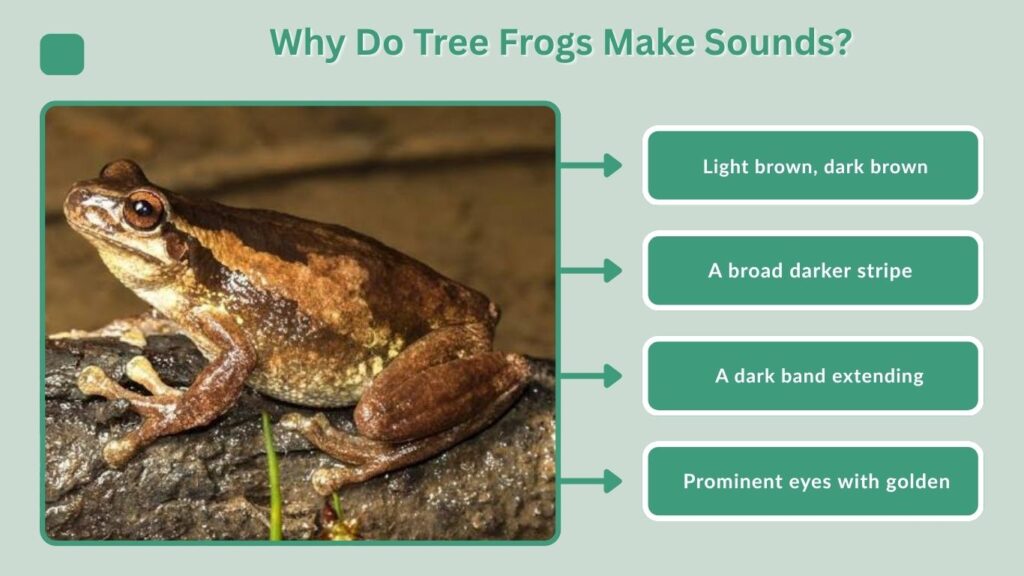
Identifying a brown tree frog involves examining its coloration, size, body markings, and climbing adaptations. Most brown-colored tree frogs have relatively smooth skin, long hind legs, and rounded toe pads. However, appearance varies between species, so coloration alone is not enough for accurate identification. Their natural habitat and geographic location provide additional clues.
Physical Characteristics
Common identification features of southern brown tree frogs include:
- Body color: Light brown, dark brown, beige, or occasionally greenish.
- Dark markings: A broad darker stripe or patch running along the back.
- Eye stripe: A dark band extending from the nose through the eye.
- Eye color: Prominent eyes with golden or copper-colored irises.
- Belly: Smooth, cream-colored or whitish underside.
- Legs: Long hind legs with yellowish or orange markings around the thighs.
- Toe pads: Slightly enlarged pads that support climbing.
Brown Tree Frog Size
Southern brown tree frogs generally reach approximately 2.5–4.5 cm in body length, although some individuals grow larger.
Females are generally bigger than males.
Pacific tree frogs typically measure around 2–5 cm long. Their compact bodies and lightweight structure allow them to move easily among leaves, grasses, and branches.
Brown Tree Frog Habitat and Distribution
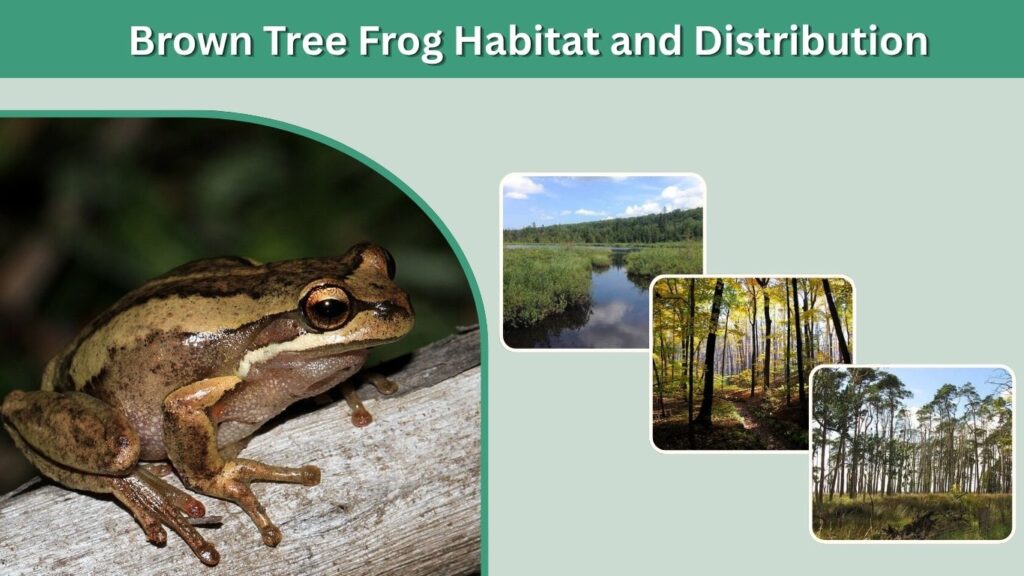
Brown tree frogs occupy various environments where moisture, shelter, and insects are available. They often live close to freshwater because aquatic habitats are essential for reproduction. Despite their name, many tree frogs spend considerable time on the ground or among low vegetation rather than high in trees.
Common habitats include forests, woodlands, marshes, grasslands, suburban gardens, and areas surrounding ponds.
The southern brown tree frog occurs naturally throughout southeastern Australia, including Victoria, Tasmania, southern New South Wales, and southeastern South Australia. It has also been introduced to New Zealand.
Brown Pacific tree frogs inhabit parts of western North America, including coastal forests, wetlands, meadows, and suburban environments.
In states such as Michigan and regions of Ontario, brown-colored tree frogs may belong to different species, including gray tree frogs.
What Do Brown Tree Frogs Eat?
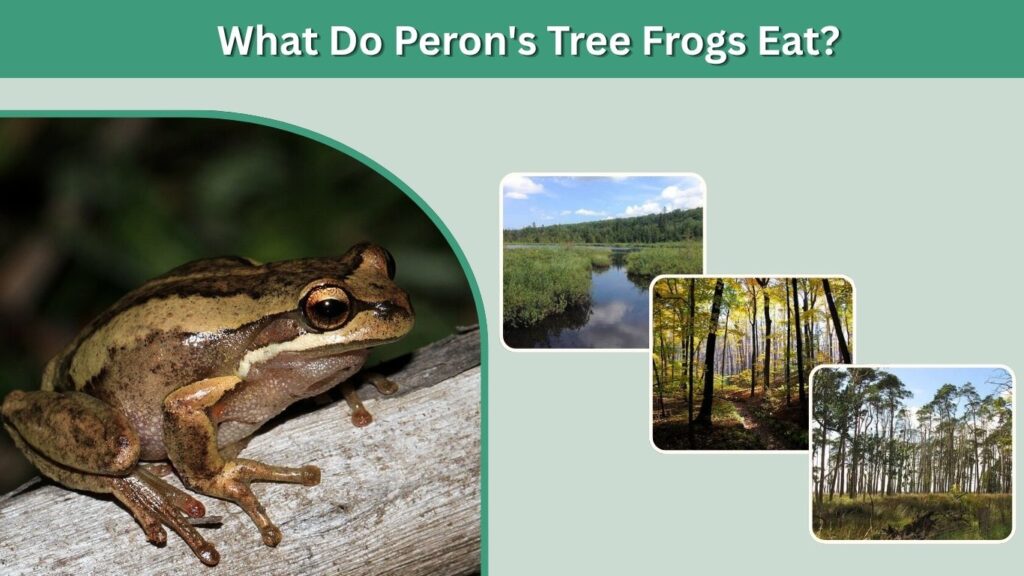
Brown tree frogs are primarily insectivorous amphibians that feed on small insects and other invertebrates. Their diet depends on body size, seasonal availability, and local habitat conditions. These frogs are opportunistic hunters, capturing moving prey using their quick reflexes and sticky tongues. Their feeding habits help maintain balanced populations of small insects in natural environments.
Common Foods of Brown Tree Frogs
Their diet may include:
- Flies: Small flying insects commonly found near vegetation.
- Mosquitoes: Adult mosquitoes encountered while hunting.
- Moths: Small moths attracted to garden lights.
- Crickets: Small crickets and other jumping insects.
- Spiders: Tiny spiders living among plants.
- Beetles: Small, soft-bodied beetles.
- Other invertebrates: Various suitably sized insects and arthropods.
How Brown Tree Frogs Hunt
Brown tree frogs frequently hunt during the evening and nighttime when humidity rises and insects become active.
They often remain motionless while watching nearby prey. Once an insect approaches, the frog quickly extends its tongue to capture it.
Their brown coloration also provides camouflage, allowing them to avoid predators while searching for food.
Brown Tree Frog Sounds and Calls
Brown tree frogs communicate through distinctive vocalizations, particularly during breeding periods. Male frogs produce calls to attract females and establish their presence near suitable breeding habitats. Their sounds vary between species and may include whistles, trills, repeated clicking notes, or rapid croaking sequences. These calls are especially noticeable after rain or during humid evenings.
Southern Brown Tree Frog Call
The southern brown tree frog produces a rapid series of high-pitched, whirring notes.
Its call is often described as a repeated creeee-cree-cree-cree sound, with the opening note generally lasting longer.
Males commonly call from shallow water, surrounding vegetation, or damp ground. Calling may occur throughout the year, particularly following rainfall.
Brown Tree Frog Sounds at Night
Nighttime calls become more noticeable because many frogs are particularly active under cool, moist conditions.
Pacific tree frogs produce a recognizable two-part ribbit or kreck-ek call.
Listening carefully to these vocal differences can help distinguish species that otherwise look remarkably similar.
Brown Tree Frog Life Cycle and Reproduction
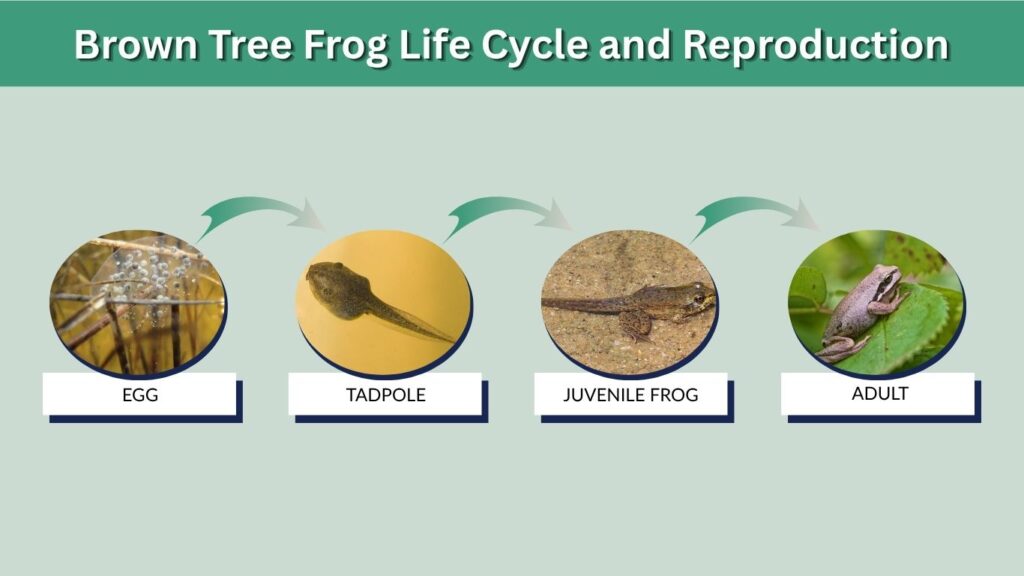
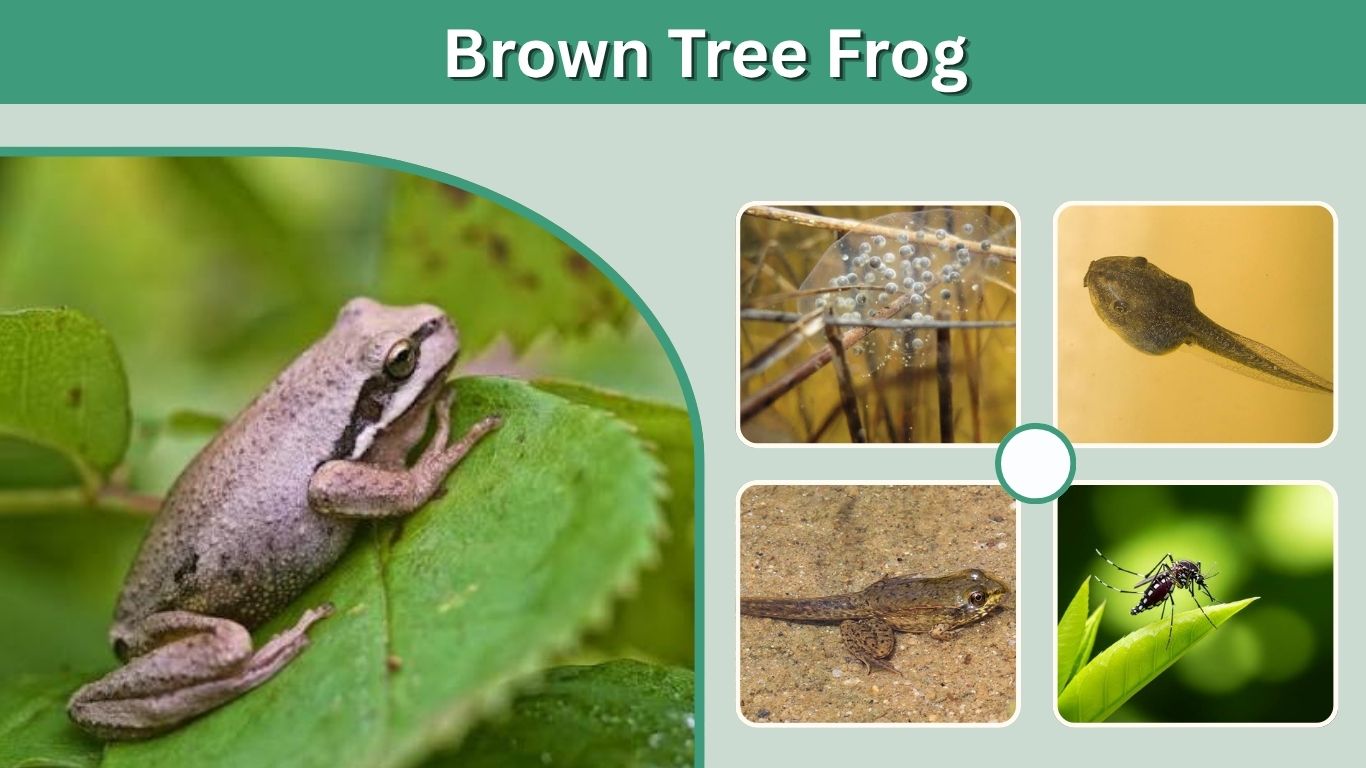
Brown tree frogs undergo complete metamorphosis, changing from aquatic tadpoles into air-breathing adults. Their breeding activities are closely connected with freshwater availability, rainfall, and suitable environmental conditions. Southern brown tree frogs may reproduce across different seasons when conditions are favorable, with breeding activity often occurring during autumn and spring.
Their life cycle includes four main stages:
- Eggs: Females deposit jelly-covered egg clusters in freshwater, often attached to submerged vegetation.
- Tadpoles: Newly hatched tadpoles live underwater and feed mainly on algae and other organic material.
- Froglets: As tadpoles develop, they grow legs, absorb their tails, and begin breathing air.
- Adult frogs: Mature frogs leave aquatic habitats regularly to hunt, seek shelter, and eventually reproduce.
Female southern brown tree frogs may lay approximately 500–700 eggs during a breeding event.
Their lifespan varies according to environmental conditions. Southern brown tree frogs have been reported to live up to about five years in captivity, while their typical wild lifespan remains less certain.
Are Brown Tree Frogs Poisonous?
Southern brown tree frogs are not generally considered dangerously poisonous to humans. Unlike certain highly toxic amphibians, they do not possess powerful defensive toxins that create a serious danger through ordinary encounters. However, frogs should not be handled unnecessarily because their delicate skin is sensitive to chemicals, oils, and contamination.
Are Southern Brown Tree Frogs Poisonous to Dogs?
Southern brown tree frogs are not generally recognized as highly toxic to dogs. Nevertheless, dogs should never be encouraged to bite, lick, or swallow wild amphibians.
Contact may cause irritation, and swallowing a frog can introduce other health risks.
If a dog develops excessive drooling, vomiting, weakness, or unusual behavior after contacting an unidentified frog, contact a veterinarian promptly.
Safety Tips When Encountering Brown Tree Frogs
- Avoid unnecessary handling or squeezing.
- Keep pets away from unidentified amphibians.
- Wash your hands after touching frogs or their habitats.
- Avoid exposing frogs to pesticides, soap, or other household chemicals.
- Observe wild frogs without removing them from their natural environment.
Frogs can also carry microorganisms such as Salmonella, making basic hygiene important.
Why Do Green Tree Frogs Turn Brown?
Some green tree frogs naturally display brown coloration, while others can change color in response to their surroundings. Environmental conditions, pigmentation, and species-specific genetics all influence frog coloration. Pacific tree frogs are particularly well known for having green and brown forms, although not every individual can switch between these colors.
Changes in temperature, lighting, seasonal vegetation, and background conditions may influence coloration in certain species.
White’s tree frogs, also called dumpy tree frogs, can display different shades of green and brown as part of their normal appearance.
However, a pet frog becoming brown does not automatically mean it is sick or stressed. Color should be evaluated alongside other signs.
Persistent lethargy, reduced appetite, skin lesions, abnormal shedding, or unusual behavior should prompt consultation with an amphibian-experienced veterinarian.
Brown Tree Frog Care and Protection
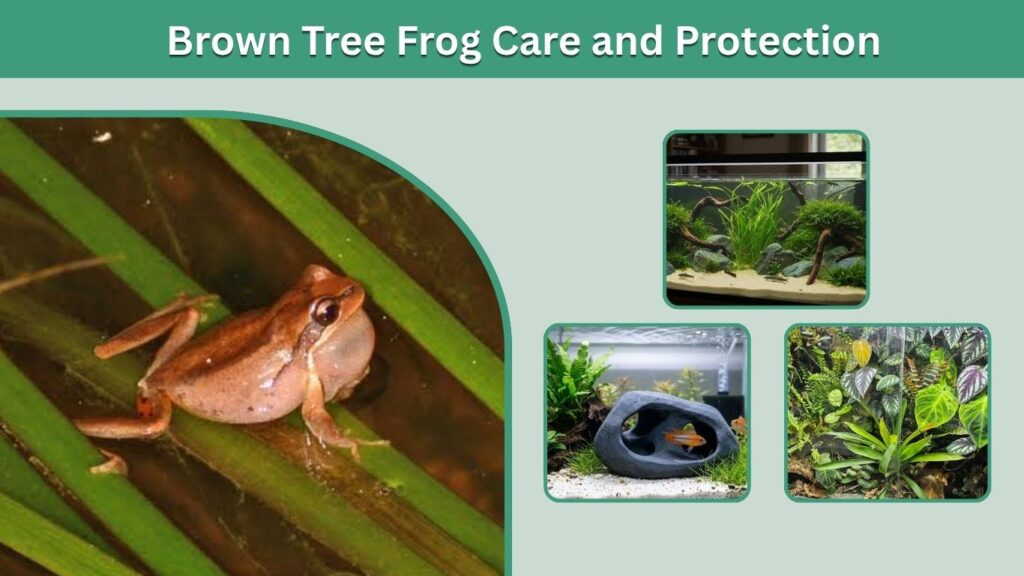
Brown tree frogs require suitable moisture, shelter, clean water, and access to appropriate food. Their sensitive skin makes them particularly vulnerable to pollution, pesticides, and unsuitable environmental conditions. Protecting wild populations is usually more beneficial than collecting frogs for captivity. Individuals interested in keeping native Australian frogs must also follow applicable wildlife laws and licensing requirements.
Creating a Frog-Friendly Garden
You can support local tree frogs by providing:
- Native plants: Dense vegetation provides shade, moisture, and shelter.
- Clean water: Shallow ponds with easy entry and exit points support amphibians.
- Natural hiding places: Logs, leaf litter, and ground cover create protective spaces.
- Chemical-free areas: Avoid unnecessary pesticides, herbicides, and harmful garden treatments.
- Safe surroundings: Limit access by pets around known frog habitats.
Keeping Brown Tree Frogs as Pets
Captive brown tree frogs need species-appropriate temperatures, humidity, ventilation, hiding places, and live food.
Always use clean, dechlorinated water and avoid excessive handling.
Wild-caught frogs should not be kept as pets. In Australia, native frog ownership is regulated, and legal captive breeding and licensing requirements must be checked before acquiring an animal.
FAQs
1. Are brown tree frogs dangerous to humans?
Brown tree frogs are generally harmless to humans and are unlikely to bite unless threatened or handled. Southern brown tree frogs are not considered highly poisonous. However, handling should be minimized, and hands should be washed afterward to prevent contamination.
2. Where do southern brown tree frogs live?
Southern brown tree frogs primarily inhabit southeastern Australia, including Victoria, Tasmania, southern New South Wales, and southeastern South Australia. They occupy forests, wetlands, grassy areas, and suburban gardens, particularly near freshwater habitats suitable for breeding and tadpole development.
3. What do brown tree frogs eat?
Brown tree frogs mainly consume small insects and other invertebrates, including flies, moths, crickets, mosquitoes, and spiders. They generally hunt moving prey during the evening or nighttime and help control insect populations in gardens and surrounding natural environments.
4. Why is my green tree frog turning brown?
Some tree frogs naturally change coloration depending on their species, genetic characteristics, and environmental conditions. Brown coloration alone does not necessarily indicate illness. However, changes accompanied by lethargy, appetite loss, unusual skin appearance, or abnormal behavior should receive veterinary attention.
5. How long do southern brown tree frogs live?
Southern brown tree frogs have been reported to survive for approximately five years in captivity. Their lifespan in the wild is less clearly established and depends on predators, disease, environmental conditions, and habitat quality. Proper protection can improve their survival opportunities.
