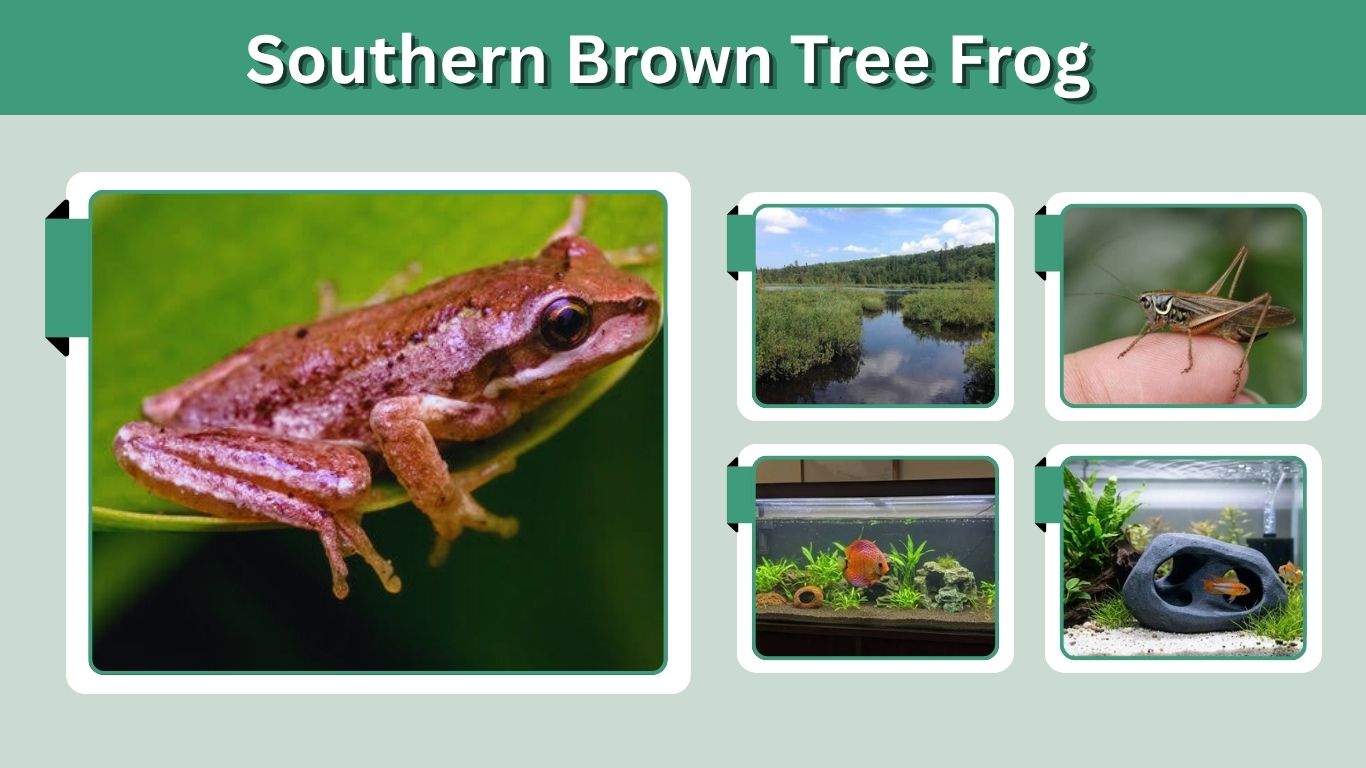
The southern brown tree frog is a small Australian amphibian recognized for its brown coloration, excellent climbing abilities, and distinctive whistling calls. Commonly found in southeastern Australia and Tasmania, this adaptable frog thrives in wetlands, forests, grasslands, and suburban gardens. Despite its small size, it plays an important ecological role by feeding on insects and supporting local food chains. Understanding the southern brown tree frog’s identification, habitat, diet, lifespan, breeding behavior, and potential toxicity can help you recognize this fascinating species and protect it in the wild.
What Is a Southern Brown Tree Frog?
The southern brown tree frog is a small, agile amphibian native to southeastern Australia. It is also commonly called Ewing’s tree frog, the brown tree frog, or the whistling tree frog. Known for its ability to climb vegetation and capture flying insects, this species is especially active during humid evenings and after rainfall.
Scientific Classification
The species has traditionally been known as Litoria ewingii. Following taxonomic revisions, some current classifications use Rawlinsonia ewingii. Both names refer to the southern brown tree frog discussed here.
- Common name: Southern Brown Tree Frog
- Scientific name: Rawlinsonia ewingii (formerly Litoria ewingii)
- Class: Amphibia
- Order: Anura
- Family: Pelodryadidae
- Native region: Southeastern Australia and Tasmania
- Diet: Insects and other small invertebrates
- Activity: Primarily nocturnal
This frog belongs to a group of Australian tree frogs known for their climbing abilities and distinctive breeding calls.
Southern Brown Tree Frog Identification and Size
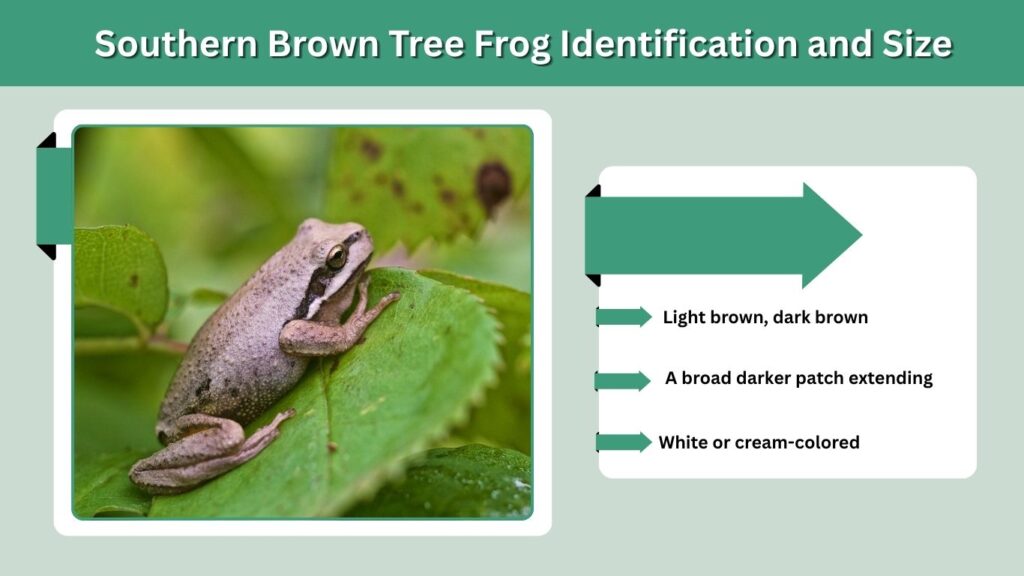
Southern brown tree frogs have slender bodies, relatively long legs, and small adhesive toe pads that allow them to climb plants and other surfaces. Their coloration provides effective camouflage against tree bark, soil, and dried vegetation. Although most individuals are brown, some display lighter, reddish, or occasionally greenish coloring.
Physical Characteristics
Important identification features include:
- Body color: Light brown, dark brown, beige, or grayish brown.
- Dark markings: A broad darker patch extending along the back.
- Eye stripe: A dark stripe running from the snout through the eye.
- Belly: White or cream-colored, usually smooth.
- Eyes: Prominent golden or copper-colored eyes.
- Hind legs: Long and muscular, sometimes showing orange or yellow markings.
- Toe pads: Small rounded pads that assist with climbing.
How Big Is a Southern Brown Tree Frog?
Adult southern brown tree frogs usually measure approximately 2.5–4.5 cm long, although some individuals reach around 5 cm.
Females are generally larger than males. Their small bodies and strong hind legs allow them to jump considerable distances relative to their size.
Young frogs are significantly smaller and develop their adult coloration as they mature.
Southern Brown Tree Frog Habitat and Range
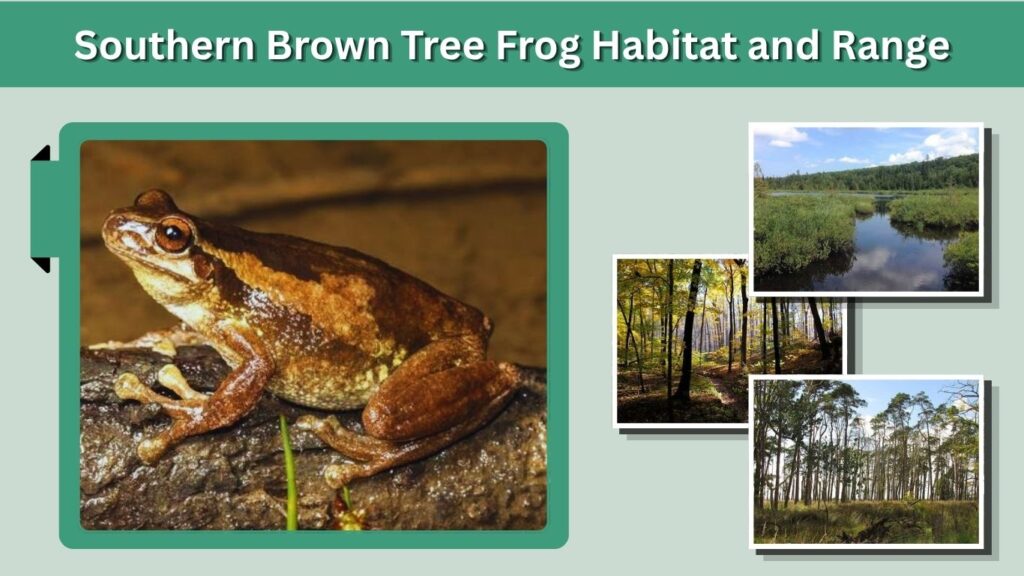
Southern brown tree frogs inhabit many environments where moisture, vegetation, and suitable breeding sites are available. Although commonly associated with wetlands, they also adapt well to gardens, farmland, and urban areas. They generally prefer sheltered locations with access to insects and freshwater, especially during reproduction.
Where Do Southern Brown Tree Frogs Live?
Common habitats include:
- Wetlands and marshes: Moist environments offering abundant insects.
- Grasslands: Areas with dense vegetation and seasonal flooding.
- Forests: Shaded environments with leaf litter and natural shelter.
- Suburban gardens: Landscaped areas containing plants, ponds, and damp hiding places.
- Farm dams: Still freshwater habitats suitable for breeding.
- Streams and ponds: Areas with vegetation and protected shorelines.
Geographic Distribution
Southern brown tree frogs are native to Victoria, Tasmania, southern New South Wales, and southeastern South Australia.
They are also established in New Zealand, where they were introduced during the nineteenth century.
In Tasmania and southern Victoria, they are among the familiar small frogs encountered around gardens, wetlands, and freshwater environments.
Their distribution may overlap with similar species, making identification through physical markings and calls important.
What Do Southern Brown Tree Frogs Eat?
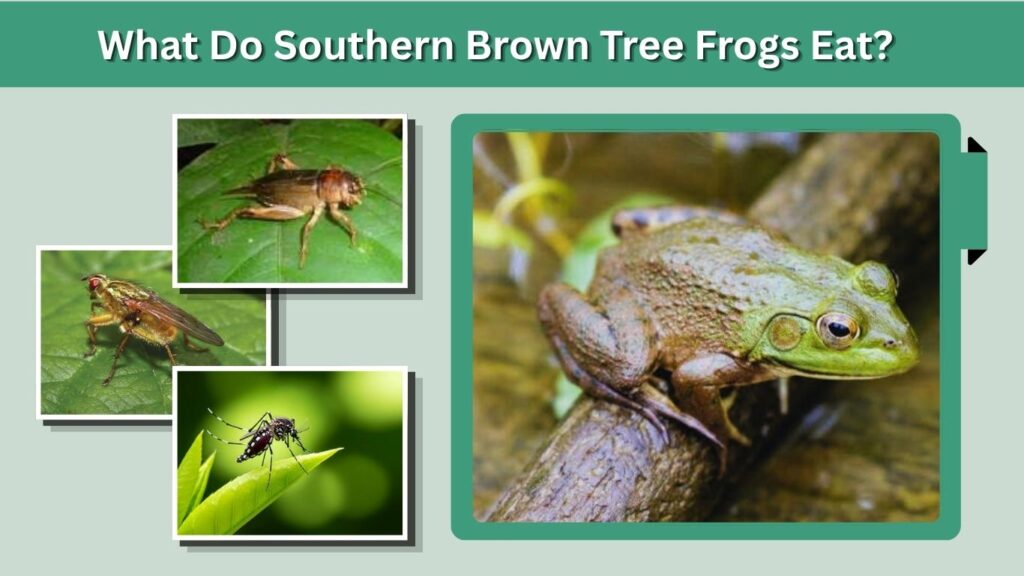
Southern brown tree frogs are carnivorous amphibians that mainly consume insects and other small invertebrates. Their feeding habits make them valuable predators in gardens and natural habitats. They hunt primarily at night, using their excellent vision, quick movements, and sticky tongues to capture prey.
Common Foods in Their Diet
Their diet includes:
- Mosquitoes: Small flying insects commonly found near water.
- Flies: Frequently captured while resting or flying nearby.
- Moths: Small nocturnal insects attracted to lights.
- Crickets: Small jumping insects living among vegetation.
- Beetles: Appropriately sized beetles encountered while hunting.
- Spiders: Small spiders found around plants and sheltered spaces.
How Do Southern Brown Tree Frogs Hunt?
These frogs often remain motionless while watching nearby insects.
When prey approaches, they quickly leap forward or extend their sticky tongues to capture it.
Southern brown tree frogs are particularly agile hunters and can sometimes catch flying insects in midair.
Their feeding activity helps regulate small insect populations.
Southern Brown Tree Frog Call and Sounds
Southern brown tree frogs are known for their distinctive high-pitched, whirring calls. Male frogs produce these sounds primarily to attract females during breeding periods. Calls are commonly heard at night, particularly following rainfall when humidity rises and breeding conditions improve.
Their calls sound like a repeated series of rapid creeee-cree-cree-cree notes.
The first note is usually longer than the following notes, and a calling sequence may contain approximately 5–15 pulses.
Males commonly call from the ground, shallow water, or low vegetation near ponds and wetlands.
Although calling can occur throughout the year, it becomes more noticeable during wetter breeding periods.
The southern brown tree frog’s call is an important identification feature because closely related species may have similar appearances but different vocal patterns.
Southern Brown Tree Frog Life Cycle and Lifespan
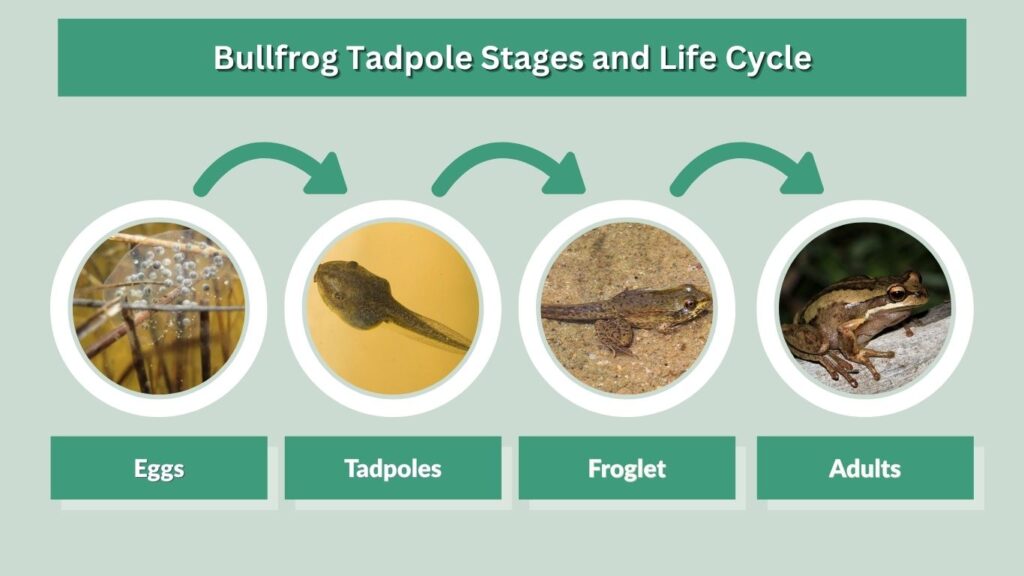
Southern brown tree frogs reproduce in freshwater environments, where females deposit clusters of jelly-covered eggs. Like other frogs, they undergo metamorphosis, transforming from aquatic tadpoles into air-breathing adults. Their breeding activity varies with temperature, rainfall, and seasonal conditions, with notable peaks during spring and autumn.
Eggs and Reproduction
Female southern brown tree frogs generally lay around 500–700 eggs during a breeding event.
The eggs are deposited in jelly-like clusters attached to submerged vegetation.
Breeding commonly occurs in ponds, dams, flooded grasslands, and other still-water environments.
Tadpole Development
After hatching, tadpoles remain underwater and gradually develop into young frogs.
Their development involves several stages:
- Egg stage: Fertilized eggs develop inside protective jelly.
- Tadpole stage: Aquatic larvae hatch and begin feeding.
- Leg development: Hind legs and eventually front legs appear.
- Metamorphosis: The tail is absorbed as the frog develops its adult body.
- Young frog: The froglet begins living outside the water.
Tadpoles typically require approximately 12–26 weeks to complete metamorphosis, depending on environmental conditions.
Southern Brown Tree Frog Lifespan
Southern brown tree frogs have been reported to live for up to approximately five years in captivity.
Their average lifespan in the wild is not firmly established.
Predation, disease, water availability, habitat quality, and environmental conditions can influence their survival.
Are Southern Brown Tree Frogs Poisonous?
Southern brown tree frogs are not generally considered dangerously poisonous to humans. Unlike highly toxic amphibians, they are not known for producing powerful defensive poisons. However, their skin is delicate and may produce secretions that should not be allowed into the eyes or mouth.
Are Southern Brown Tree Frogs Poisonous to Dogs?
Southern brown tree frogs are not generally considered highly toxic to dogs, but contact should still be prevented.
Dogs that lick, bite, or swallow frogs may experience mouth irritation, excessive salivation, or digestive problems.
The risk also depends on whether the animal has been correctly identified.
If a dog develops vomiting, excessive drooling, weakness, or unusual behavior after contacting a frog, seek veterinary advice promptly.
Are They Safe to Touch?
These frogs rarely pose a serious threat through ordinary encounters.
However, unnecessary handling should be avoided because chemicals, oils, and contaminants on human skin may harm amphibians.
Wash your hands after contact and never handle frogs with soap, sunscreen, or insect repellent on your hands.
Southern Brown Tree Frog Predators and Adaptations
Southern brown tree frogs face various natural predators, including snakes, birds, larger amphibians, and small mammals. Their eggs and tadpoles are also vulnerable to aquatic predators. To survive, these frogs rely on camouflage, agility, nighttime activity, and their ability to hide within dense vegetation.
Their most important adaptations include brown skin that blends into natural surroundings, powerful hind legs for escaping danger, and adhesive toe pads for climbing.
Their small size allows them to shelter beneath logs, leaves, and other protective structures.
Potential predators include insect-eating and frog-eating birds, snakes, introduced mammals, and aquatic animals that consume tadpoles.
Southern Brown Tree Frog Care and Keeping as Pets
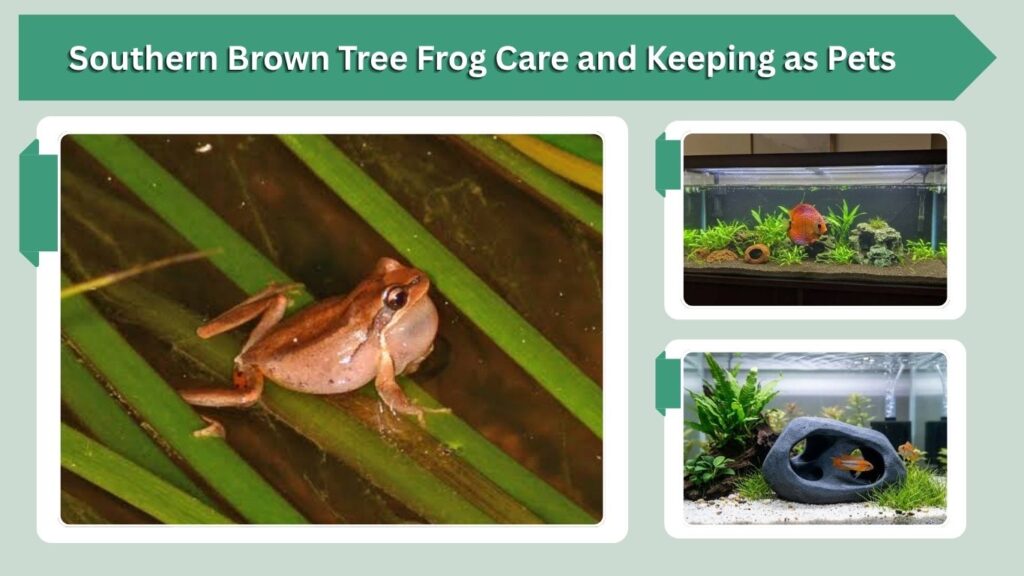
Southern brown tree frogs require appropriate environmental conditions to remain healthy in captivity. Their care involves maintaining suitable moisture, providing clean freshwater, offering live insects, and creating hiding places. Because they have sensitive skin and specific environmental needs, they are better suited to knowledgeable amphibian keepers than inexperienced pet owners.
Terrarium Setup and Care
Important care requirements include:
- Enclosure: A secure, escape-proof terrarium with adequate ventilation.
- Humidity: Moist conditions without constantly waterlogging the substrate.
- Temperature: A species-appropriate temperate environment without excessive heating.
- Substrate: Suitable moisture-retaining material that is safe for amphibians.
- Shelter: Plants, bark, and hiding places that provide security.
- Water: A shallow container containing clean, dechlorinated water.
- Food: Appropriately sized live insects with suitable nutritional supplementation.
Can You Keep Southern Brown Tree Frogs as Pets?
Southern brown tree frogs may be kept legally in certain Australian jurisdictions when obtained from lawful sources and relevant requirements are followed.
Regulations differ by state. In Victoria, for example, this species is listed among amphibians that may be privately kept without a wildlife licence when lawfully obtained. Other states may have different requirements.
Wild frogs should not be collected casually or removed from their habitats.
Anyone considering purchasing a southern brown tree frog should check the latest local wildlife regulations and obtain the animal from a lawful captive-breeding source.
FAQs
1. Are southern brown tree frogs poisonous to humans?
Southern brown tree frogs are not considered dangerously poisonous to humans. They are generally harmless when left undisturbed. However, their skin secretions can potentially cause irritation, so avoid touching your face after handling one and wash your hands thoroughly.
2. How big do southern brown tree frogs grow?
Adult southern brown tree frogs typically measure approximately 2.5–4.5 cm in body length, with some reaching around 5 cm. Females generally grow larger than males. Their lightweight bodies, slender legs, and small toe pads make them excellent climbers and jumpers.
3. What is the lifespan of a southern brown tree frog?
Southern brown tree frogs can reportedly live for up to five years in captivity. Their typical lifespan in the wild is uncertain and influenced by predators, environmental conditions, disease, and food availability. Suitable habitats improve their chances of survival.
4. What do southern brown tree frogs eat in the wild?
Southern brown tree frogs primarily consume small insects, including mosquitoes, moths, flies, and crickets. They may also eat spiders and other tiny invertebrates. They are active hunters that frequently capture moving prey during the evening and nighttime.
5. Can southern brown tree frogs be kept as pets?
Southern brown tree frogs can sometimes be kept as pets if they are legally obtained and local wildlife regulations permit ownership. They require specialized housing, appropriate humidity, clean water, live food, and careful handling to maintain their health and well-being.
