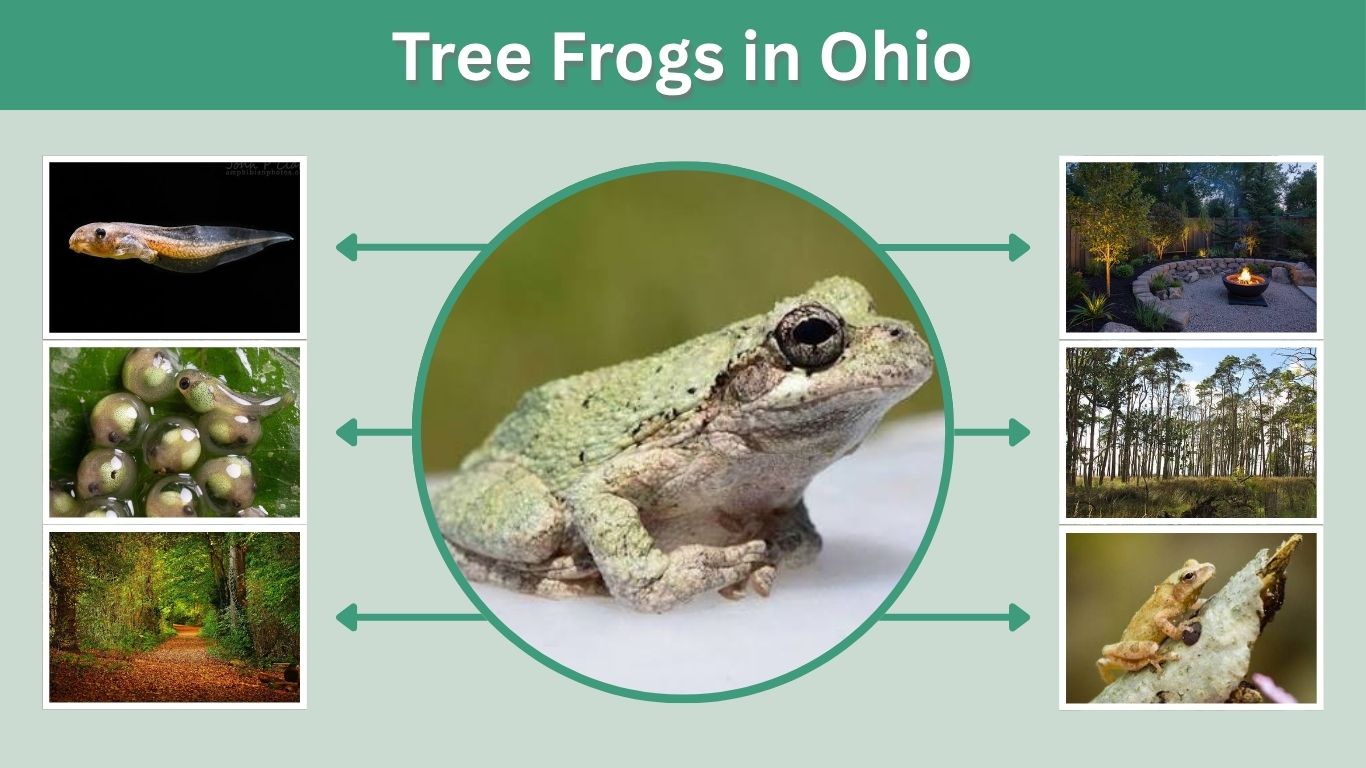
Ohio is home to several fascinating tree frogs that live in forests, wetlands, gardens, and areas near ponds. These small amphibians are known for their climbing abilities, changing colors, and distinctive calls. Some are easy to recognize, while others blend almost perfectly into tree bark and leaves. The most familiar tree frogs in Ohio include gray treefrogs, Cope’s gray treefrogs, and spring peepers. Learning about their appearance, sounds, habitats, and behavior can help you identify these native frogs and understand their important role in Ohio’s ecosystems.
Are There Tree Frogs in Ohio?
Yes, Ohio has several native treefrog species. Six species belong to the family Hylidae, which includes treefrogs, chorus frogs, and cricket frogs. However, not all of them spend their lives climbing trees.
Gray treefrogs are especially well adapted to climbing, while spring peepers and chorus frogs often stay near vegetation and wetlands. Blanchard’s cricket frogs generally remain close to the ground and water.
These amphibians help control insect populations and provide food for birds, snakes, and other wildlife.
6 Types of Tree Frogs in Ohio
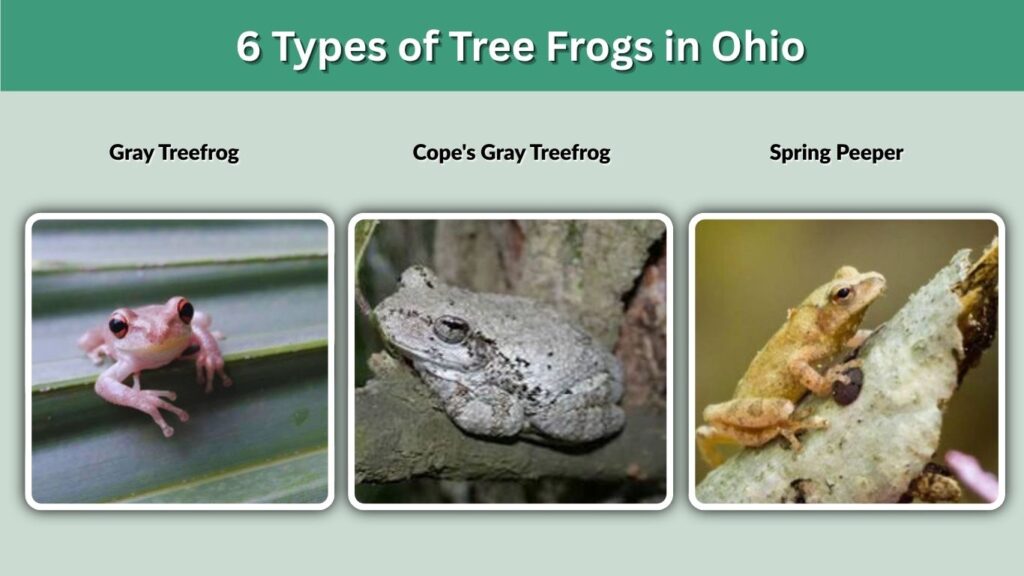
Ohio’s native treefrog family includes six species with different colors, body sizes, habitats, and calls. Identifying them becomes easier when you observe their markings and listen to their sounds.
1. Gray Treefrog (Dryophytes versicolor)
The gray treefrog is one of Ohio’s most recognizable tree frogs. Adults usually measure 1.25–2 inches long and may appear gray, green, or brown.
Their skin often resembles rough tree bark, providing excellent camouflage. They also have yellow or orange-yellow coloration on the inner hind legs.
Gray treefrogs inhabit forests, wooded neighborhoods, and gardens throughout Ohio. During warm evenings, males produce musical trilling calls from trees and shrubs.
2. Cope’s Gray Treefrog (Dryophytes chrysoscelis)
Cope’s gray treefrogs look almost identical to ordinary gray treefrogs. Both species have mottled skin, large eyes, and rounded adhesive toe pads.
However, their calls are noticeably different. Cope’s gray treefrogs produce faster, harsher trills than gray treefrogs.
In Ohio, they are mainly associated with the southern third of the state. They inhabit wooded areas near ponds and temporary wetlands where they breed during warmer months.
Their similarities make sound one of the most reliable field identification methods.
3. Spring Peeper (Pseudacris crucifer)
Spring peepers are tiny frogs, generally measuring around 0.75–1.5 inches long. They usually have tan, brown, or gray skin and a distinctive dark X-shaped marking on their backs.
These frogs are famous for their high-pitched peeping calls. Large groups can create surprisingly loud choruses during early spring.
Spring peepers live in wooded environments near ponds, marshes, and seasonal wetlands. Their calls are among the earliest signs of spring in Ohio.
4. Western Chorus Frog (Pseudacris triseriata)
Western chorus frogs are small amphibians with three dark stripes running along their backs. Their body color ranges from gray to brown, helping them blend into grasses and surrounding vegetation.
They commonly inhabit wet meadows, temporary pools, marshes, and grassy wetlands.
Their distinctive call resembles someone running a finger along the teeth of a plastic comb.
Although difficult to spot, western chorus frogs can be very vocal during early spring.
5. Mountain Chorus Frog (Pseudacris brachyphona)
Mountain chorus frogs are less frequently encountered in Ohio because their distribution is concentrated in southeastern parts of the state.
These frogs typically have brown, gray, or olive-colored bodies with curved dark markings along their backs. Some markings resemble reversed parentheses.
They prefer wooded hillsides and temporary breeding pools.
Their calls resemble those of western chorus frogs but sound somewhat raspier. Habitat loss can affect local populations, particularly where forest cover and breeding wetlands disappear.
6. Blanchard’s Cricket Frog (Acris blanchardi)
Blanchard’s cricket frogs are among the smallest members of Ohio’s treefrog family, generally measuring less than 1.5 inches long.
They have slightly bumpy skin and may appear brown, gray, or green. Unlike gray treefrogs, they have relatively small toe pads and spend most of their time along shorelines.
Their calls sound like small pebbles or marbles clicking together.
These frogs have declined across portions of their historical range, making habitat protection particularly important.
What Do Tree Frogs in Ohio Sound Like?
Tree frog calls are important for attracting mates and identifying species. Each species produces a recognizable sound, particularly during its breeding season.
| Tree frog | Typical sound |
| Gray Treefrog | Slow, musical trill |
| Cope’s Gray Treefrog | Fast, harsh trill |
| Spring Peeper | High-pitched peeping |
| Western Chorus Frog | Finger moving across a comb |
| Mountain Chorus Frog | Raspy, comb-like call |
| Blanchard’s Cricket Frog | Rapid clicking sounds |
Spring peepers and chorus frogs are often heard first, while gray treefrogs become especially noticeable during warmer spring and summer evenings.
You can compare recordings using the USGS frog and toad call library.
Where Can You Find Tree Frogs in Ohio?
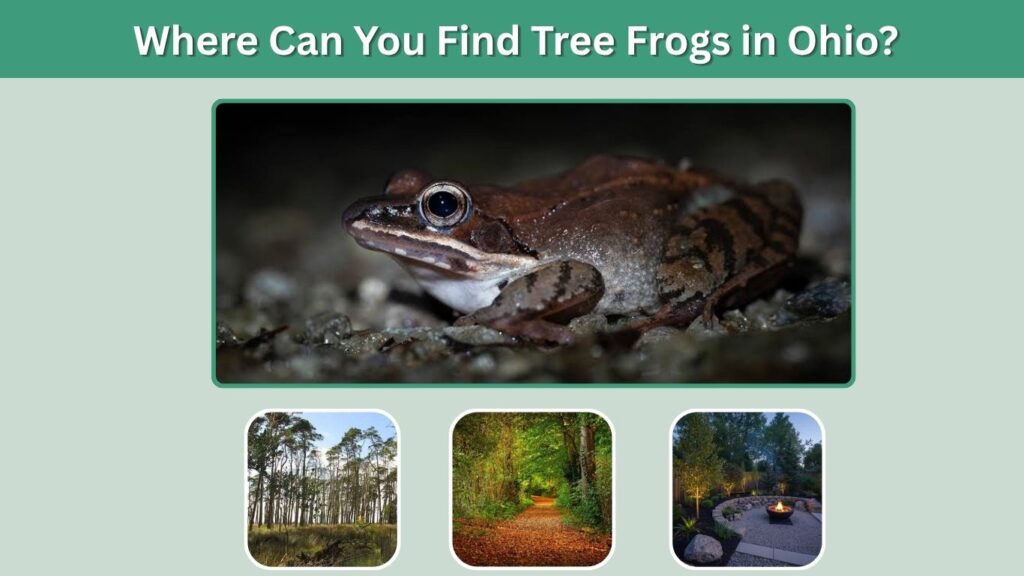
Tree frogs live throughout many of Ohio’s natural and suburban environments. Their preferred locations depend on moisture, vegetation, and the availability of suitable breeding water.
Common places to look include:
- Wooded areas: Gray treefrogs frequently climb trees and shrubs.
- Ponds and wetlands: Many species gather near shallow water to breed.
- Backyard gardens: Frogs may hunt insects around plants and outdoor lights.
- Grassy marshes: Chorus frogs hide among dense, moist vegetation.
- Temporary woodland pools: These provide important egg-laying habitats.
Warm, humid evenings following rainfall are often good times to listen for frogs. Avoid disturbing breeding pools or removing frogs from their natural surroundings.
Are Tree Frogs in Ohio Poisonous?
Ohio’s native tree frogs are not considered dangerously poisonous to humans under ordinary encounters. They also do not have venomous bites or stings.
However, amphibians can produce defensive skin secretions, and some secretions may irritate sensitive skin or eyes. Frogs can also carry bacteria such as Salmonella.
For safety, avoid unnecessary handling, keep frogs away from your face, and wash your hands after accidental contact.
Pets should not be allowed to chew or swallow wild frogs. Contact a veterinarian if your pet develops symptoms after encountering an amphibian.
Are There Green Tree Frogs in Ohio?
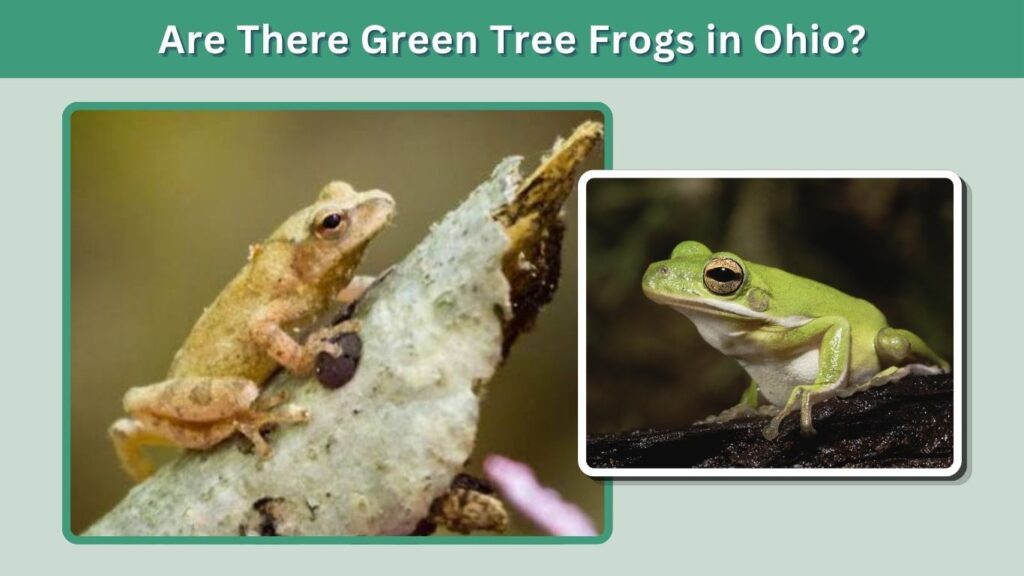
The American green treefrog (Dryophytes cinereus) is not recognized as an established native Ohio species. Its natural range lies farther south.
However, Ohio’s native gray treefrogs can sometimes appear bright green. Their coloration changes with environmental conditions and can create confusion.
Additionally, Ohio has green frogs (Lithobates clamitans), which belong to the true frog family rather than the treefrog family.
Therefore, seeing a green-colored frog in Ohio does not necessarily mean it is an American green treefrog.
What Happens to Tree Frogs in Ohio During Winter?
Ohio tree frogs survive winter by becoming dormant and seeking protected locations.
Gray treefrogs commonly shelter beneath leaf litter, logs, and other natural cover. They possess remarkable adaptations that allow them to survive some freezing conditions.
Their bodies produce substances such as glucose and glycerol that help protect tissues during cold weather.
Spring peepers and other small native frogs also use sheltered habitats to survive winter. They generally become active again as temperatures rise.
Preserving leaf litter and natural vegetation helps provide suitable winter shelter.
How Do Tree Frogs Reproduce in Ohio?
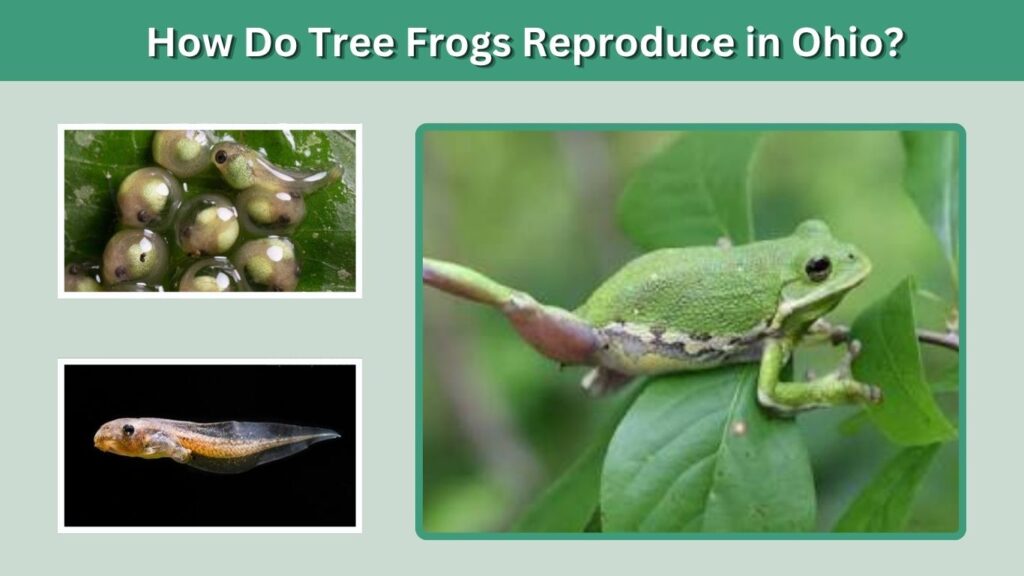
Most Ohio tree frogs reproduce during spring or early summer, although exact breeding periods vary among species.
Male frogs call near ponds or temporary wetlands to attract females. After mating, females deposit eggs in water, where they develop into tadpoles.
Tadpoles gradually grow legs, develop lungs, and absorb their tails as they transform into young frogs.
These newly developed froglets eventually leave the water and begin feeding on small insects and other invertebrates.
Clean wetlands and sufficient water levels are essential for successful reproduction.
FAQs
1. Are tree frogs common in Ohio?
Yes. Gray treefrogs, spring peepers, and western chorus frogs occur across many parts of Ohio. However, some species have more limited distributions. They are often easier to hear than see because of their small size and excellent camouflage.
2. Are there rare tree frogs in Ohio?
Some members of Ohio’s treefrog family are locally uncommon. Mountain chorus frogs have a restricted southeastern distribution, while Blanchard’s cricket frogs have experienced population declines. Protecting wetlands and surrounding vegetation can help support vulnerable populations.
3. Can baby tree frogs be found in Ohio?
Yes. Young tree frogs appear after tadpoles complete metamorphosis, usually during the warmer months. Baby gray treefrogs may look greener than adults. They are extremely small and often remain hidden among vegetation to avoid predators.
4. Do tree frogs in Ohio bite humans?
Tree frogs generally avoid humans and rarely attempt to bite. Their primary defense is escaping or hiding. Although a frightened frog may react when handled, native Ohio tree frogs are not considered a significant biting danger.
5. How can I attract tree frogs to my backyard?
Provide native plants, shrubs, natural leaf litter, and pesticide-free shelter. A clean, shallow wildlife pond can also help where appropriate. Avoid collecting wild frogs, and allow them to establish themselves naturally in a suitable habitat.
