
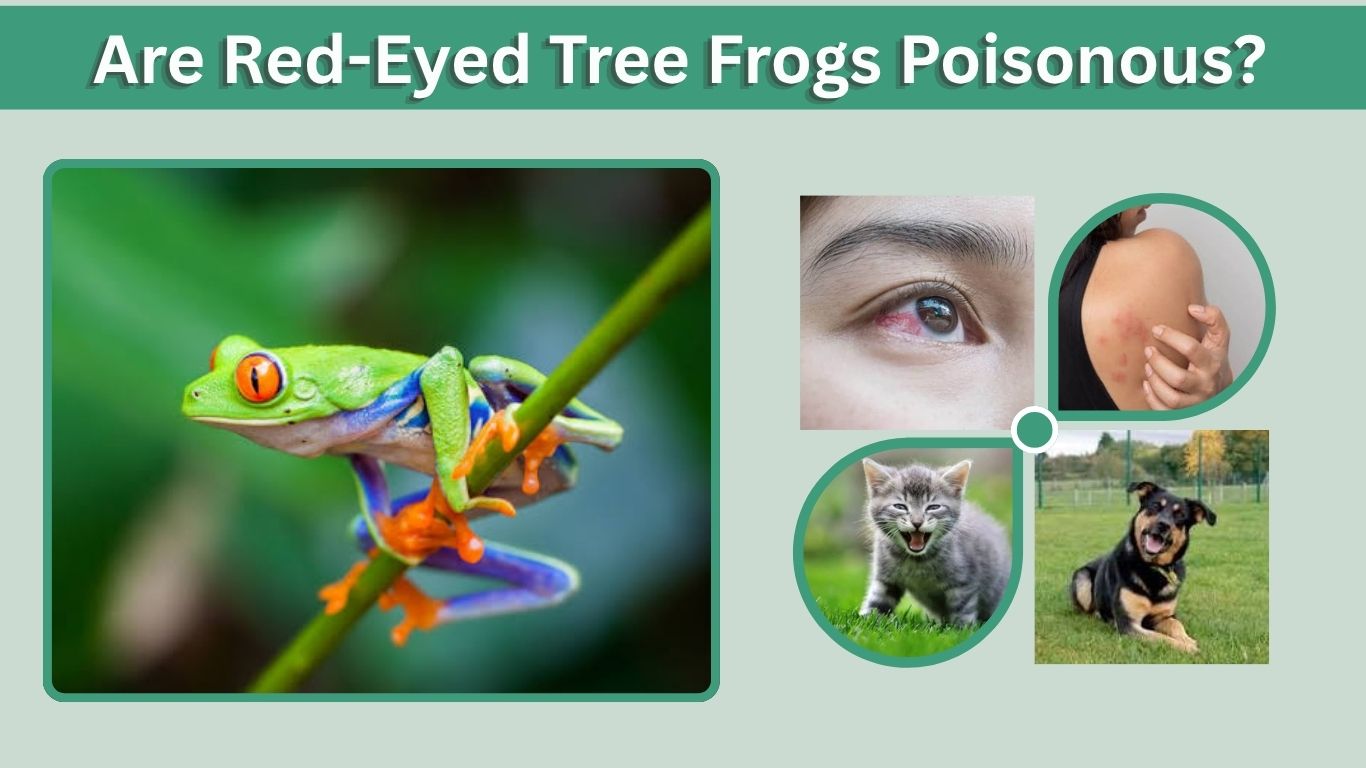
Red-eyed tree frogs are famous for their bright green bodies, striking red eyes, and colorful orange feet. Their unusual appearance often raises an important question: are red-eyed tree frogs poisonous? Despite their vivid colors, these tropical amphibians are not considered poisonous or venomous to humans. However, their skin secretions may cause mild irritation, and like other frogs, they can carry bacteria that require careful hygiene. Understanding the differences between poison, irritation, and infection helps people interact with these fascinating frogs safely while protecting their delicate skin.
Are Red-Eyed Tree Frogs Poisonous?
No, red-eyed tree frogs are not considered poisonous to humans. These amphibians, scientifically known as Agalychnis callidryas, do not possess the powerful toxins associated with certain poison dart frogs.
They are also not venomous because they lack specialized structures for injecting venom. However, their skin produces protective secretions that may irritate sensitive tissues.
Are Red-Eyed Tree Frogs Poisonous to Humans?
Red-eyed tree frogs generally do not pose a serious poisoning risk through ordinary skin contact. Their secretions are not considered dangerous under normal circumstances, although contact with the eyes, mouth, or open wounds should be avoided.
The greater concern involves bacteria that amphibians may carry, particularly Salmonella. Proper hygiene is important after any contact.
Why Do Red-Eyed Tree Frogs Look Poisonous?
Red-eyed tree frogs display brilliant colors that resemble the warning patterns of certain poisonous amphibians. However, their coloration primarily helps them avoid predators rather than advertise powerful toxins.
Their natural defense strategies include camouflage, sudden color displays, and rapid escape movements.
Bright Colors and Warning Appearance
The combination of red eyes, green skin, blue-and-yellow sides, and orange feet makes these frogs visually distinctive.
When threatened, they may suddenly reveal their colorful body parts. This unexpected display can temporarily startle predators, giving the frog an opportunity to escape.
Camouflage and Natural Protection
During daylight hours, red-eyed tree frogs often rest beneath leaves with their eyes closed and colorful limbs tucked against their bodies.
Their green skin blends with surrounding vegetation, making them difficult for predators to detect. This camouflage is especially important because these frogs lack strong chemical defenses.
Can Red-Eyed Tree Frogs Harm Humans?
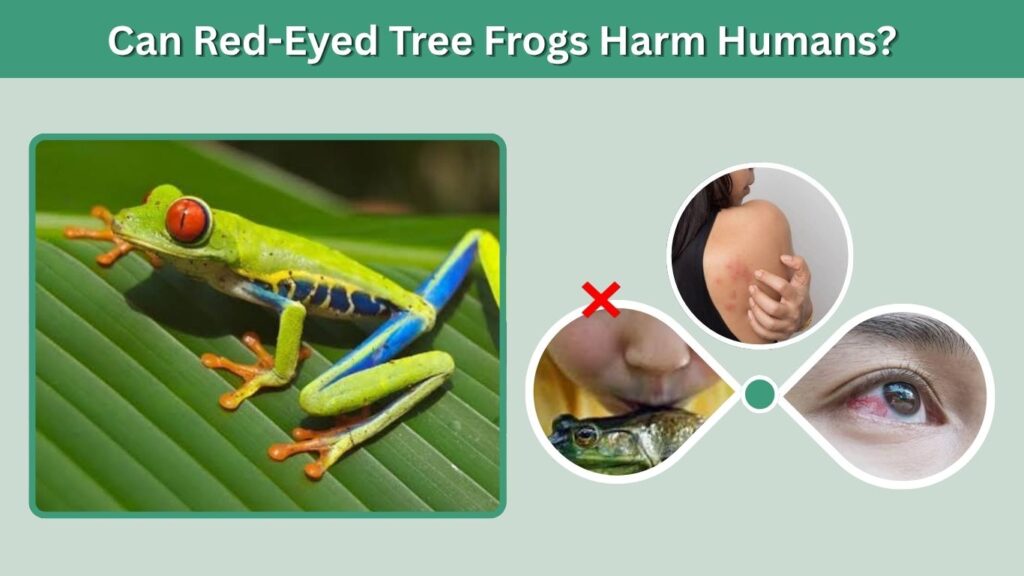
Although red-eyed tree frogs are not highly toxic, certain health risks still exist. Their protective skin secretions can cause irritation, while bacteria carried by amphibians may lead to infections.
Understanding these risks helps prevent unnecessary exposure.
Potential Health Risks
- Skin Irritation: Sensitive individuals may experience minor irritation after direct contact with frog secretions.
- Eye Irritation: Secretions entering the eyes may cause discomfort, redness, or irritation.
- Salmonella Exposure: Frogs can carry Salmonella bacteria without appearing sick.
- Cross-Contamination: Handling enclosure materials without washing your hands can transfer harmful germs.
Can Touching a Red-Eyed Tree Frog Make You Sick?
Touching a red-eyed tree frog does not automatically cause illness. However, bacteria can transfer from the frog or its environment to your hands.
Touching your mouth or preparing food without washing your hands increases the possibility of infection. Young children and people with weakened immune systems require additional precautions.
Are Red-Eyed Tree Frogs Poisonous to Dogs and Cats?
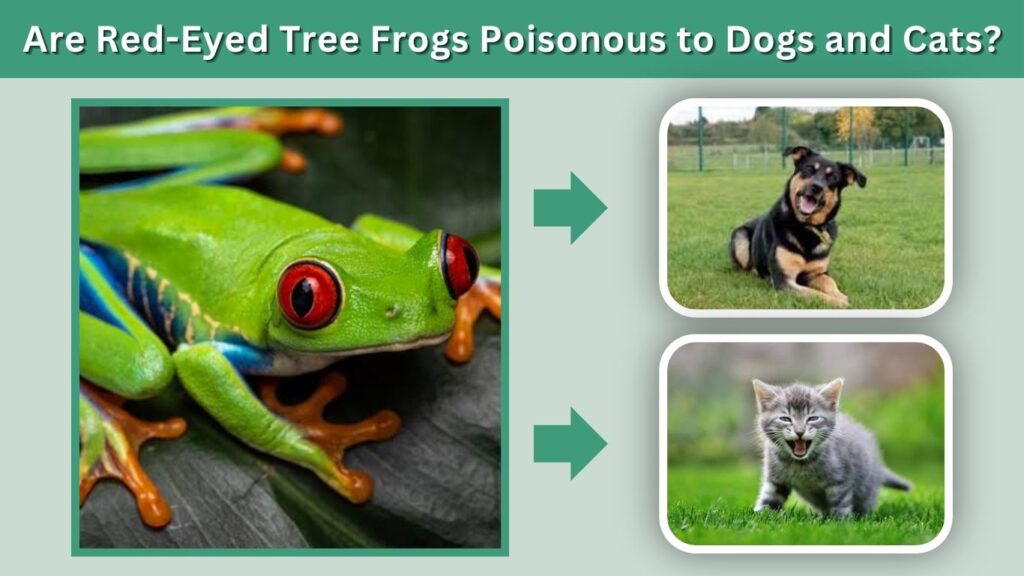
Red-eyed tree frogs are not known for producing the powerful toxins found in some dangerous amphibians. However, this does not mean dogs or cats should be allowed to bite, lick, or swallow them.
Direct contact may expose pets to irritating secretions or harmful microorganisms.
What Happens If a Dog Eats a Red-Eyed Tree Frog?
A dog that swallows a red-eyed tree frog may develop digestive irritation or other symptoms, although severe poisoning from this particular species is not expected.
The exact risk depends on the exposure and whether the frog was correctly identified. Contact a veterinarian promptly if your dog swallows a frog, especially if vomiting, excessive drooling, weakness, or unusual behavior develops.
How to Handle Red-Eyed Tree Frogs Safely
Red-eyed tree frogs have sensitive, permeable skin that absorbs moisture and can also absorb harmful chemicals.
Frequent handling may stress these amphibians and interfere with their protective skin coating. Therefore, they are better suited for observation than regular physical interaction.
Important Handling Precautions
- Limit Handling: Avoid touching frogs unless necessary for health checks or enclosure maintenance.
- Clean Your Hands: Wash hands before and after contact, thoroughly removing soap residue before handling.
- Avoid Chemicals: Keep lotions, perfumes, cleaning products, and other chemicals away from frogs.
- Use Suitable Gloves: When handling is necessary, use clean, powder-free gloves moistened with dechlorinated water.
- Support Their Bodies: Never squeeze a frog or pull it by its legs.
What Should You Do After Touching One?
Wash your hands thoroughly with soap and running water after contact. Avoid touching your eyes or mouth beforehand.
If frog secretions enter your eyes, rinse them with clean water. Seek medical advice if irritation persists or concerning symptoms develop.
Are Red-Eyed Tree Frogs Safe to Keep as Pets?
Red-eyed tree frogs can be kept in captivity, provided their environmental and dietary needs are met. They are primarily display pets because they are delicate and generally dislike frequent handling.
A clean, properly maintained terrarium helps protect both the frog and its keeper.
Basic Safety Requirements
- Secure Enclosure: Use a well-ventilated terrarium with climbing branches and suitable hiding places.
- Appropriate Humidity: Maintain species-appropriate moisture levels without allowing unhygienic conditions.
- Clean Water: Provide fresh, dechlorinated water and replace it regularly.
- Proper Feeding: Offer appropriately sized, nutritious live insects.
- Regular Cleaning: Remove waste, uneaten food, and contaminated substrate.
- Good Hygiene: Wash hands after handling enclosure equipment or feeding materials.
Are They Suitable for Children?
Red-eyed tree frogs are generally better suited to responsible adult keepers. Children may enjoy observing them, but direct handling should be discouraged.
Children younger than five are particularly vulnerable to illnesses associated with amphibian-borne germs and should not handle pet frogs or their habitats.
Red-Eyed Tree Frogs vs. Poison Dart Frogs
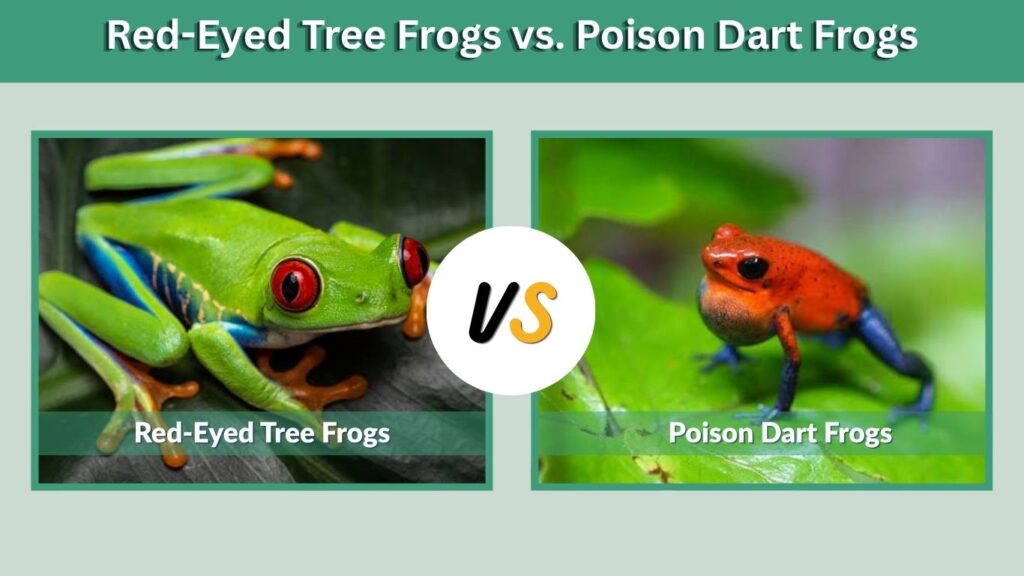
Red-eyed tree frogs and poison dart frogs both display striking colors, but their defensive abilities are significantly different.
Differences in Toxicity
Red-eyed tree frogs primarily rely on camouflage and startle displays to escape predators. Their skin secretions are not regarded as highly poisonous.
In contrast, many wild poison dart frogs possess defensive skin toxins. The potency varies greatly between species, and certain species acquire toxic compounds through their natural diets.
Therefore, bright coloration alone cannot determine whether a frog is poisonous.
FAQs
1. Are red-eyed tree frogs poisonous if you touch them?
No, red-eyed tree frogs are not considered poisonous through ordinary skin contact. However, their secretions may cause minor irritation, and they can carry bacteria. Avoid unnecessary handling and always wash your hands thoroughly after touching a frog or its habitat.
2. Can red-eyed tree frogs kill humans?
Red-eyed tree frogs are not known to possess toxins capable of killing humans through ordinary contact. Their main health risks involve mild irritation and possible bacterial exposure. Following appropriate hygiene practices significantly reduces the risks associated with these amphibians.
3. Are baby red-eyed tree frogs poisonous?
Baby red-eyed tree frogs are not considered poisonous. Like adults, they have delicate skin and may carry microorganisms. Their smaller size makes them particularly vulnerable to injury and dehydration, so unnecessary handling should be avoided to protect their health.
4. Why do red-eyed tree frogs have bright red eyes?
Their bright red eyes may help startle predators when suddenly revealed. This defensive behavior can provide a brief opportunity to escape. Their eye coloration is not evidence of poisonous skin, and their other bright colors also contribute to predator confusion.
5. Do red-eyed tree frogs bite or inject venom?
Red-eyed tree frogs do not possess venom-injecting structures. Although frogs have mouths capable of grasping prey, these amphibians are not considered dangerous biters. They rely primarily on camouflage, jumping, and startling predators rather than attacking humans or injecting venom.
