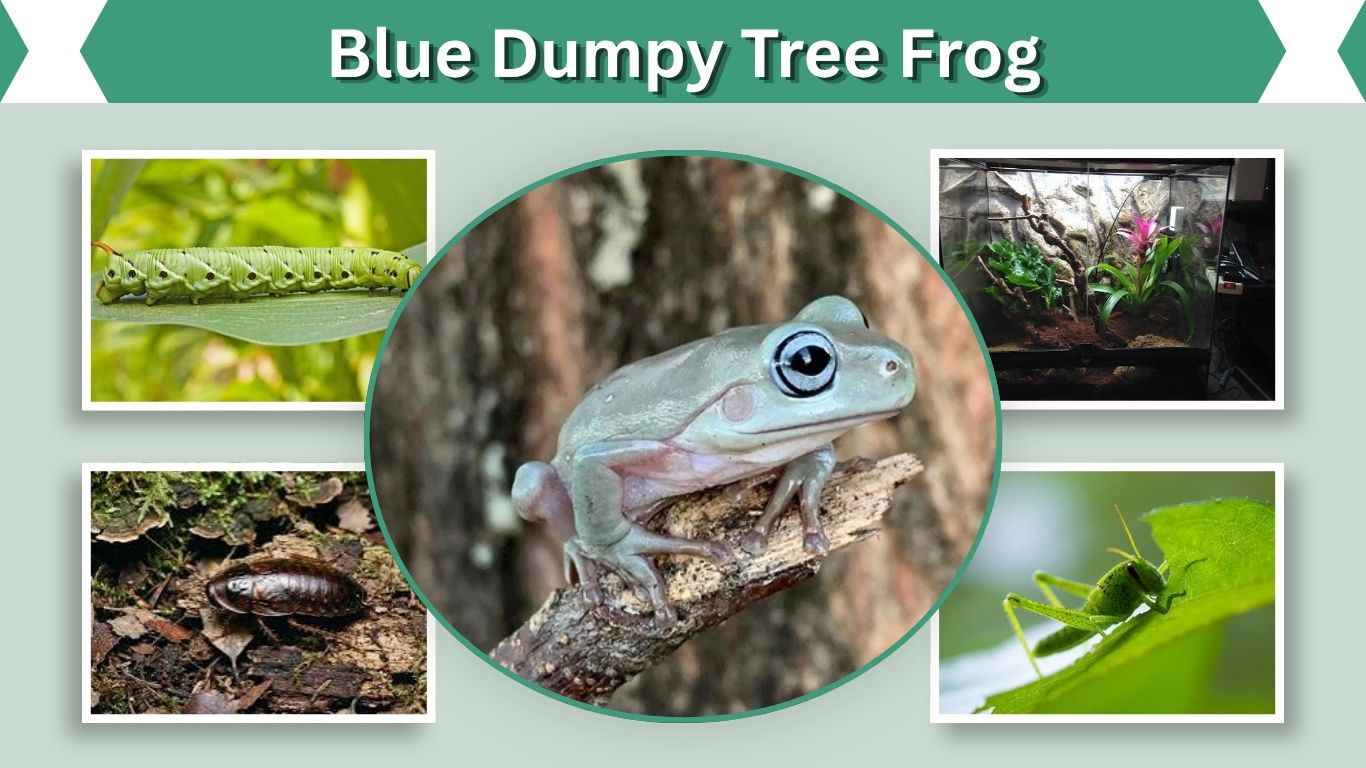
The blue dumpy tree frog is a striking color variation of White’s tree frog, admired for its turquoise skin, rounded body, and relaxed behavior. Some individuals also have blue eyes, which makes them especially appealing to amphibian enthusiasts. Although these frogs are often described as beginner-friendly pets, they still need a carefully maintained habitat, appropriate insects, and minimal handling. This guide explains how to identify blue and blue-eyed varieties, create a healthy enclosure, manage feeding, understand their lifespan, and choose a responsibly bred frog for your home.
What Is a Blue Dumpy Tree Frog?
The blue dumpy tree frog is a color variation of the Australian White’s tree frog (Ranoidea caerulea), also called the Australian green tree frog. Unlike typical green individuals, blue varieties have distinctive turquoise, blue-gray, or bluish-green skin. However, they belong to the same species and share similar care requirements, natural behaviors, and physical characteristics.
Origin and Natural Habitat
White’s tree frogs naturally inhabit Australia and New Guinea, where they live in forests, woodlands, and areas surrounding human settlements. Their climbing abilities allow them to rest on branches, leaves, and other elevated surfaces.
These amphibians are primarily nocturnal, becoming more active after sunset. During daylight hours, they usually remain hidden in sheltered locations to conserve moisture and avoid excessive heat.
Why Are Some Dumpy Tree Frogs Blue?
Blue coloration results from variations in skin pigmentation and the way skin structures reflect light. Certain individuals have reduced yellow pigmentation, allowing underlying blue coloration to become more noticeable.
Selective breeding has also increased the availability of blue-colored frogs in captivity. Their appearance may change slightly depending on lighting, temperature, and environmental conditions.
Blue Phase vs. Blue-Eyed Dumpy Tree Frog
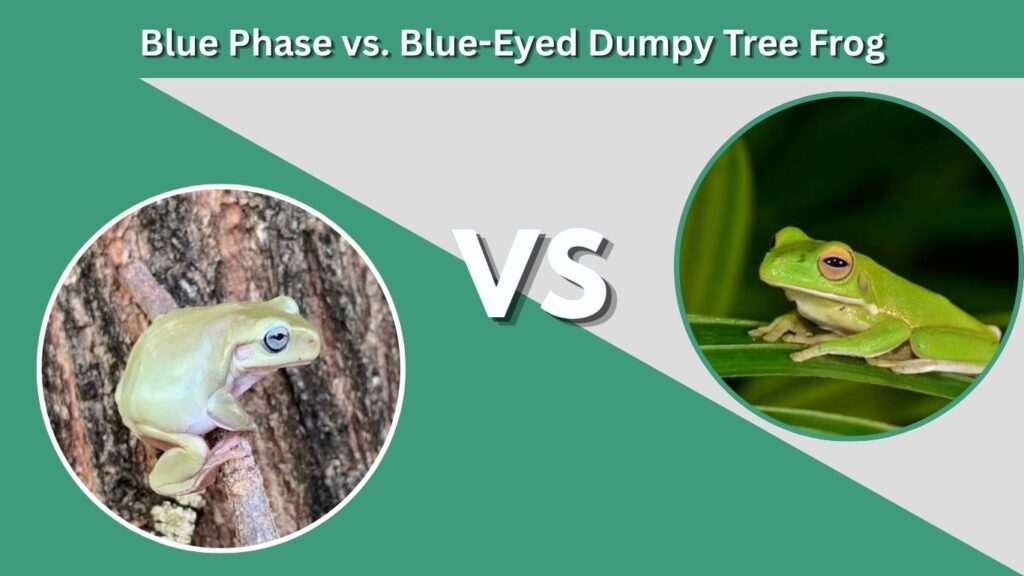
Blue phase and blue-eyed dumpy tree frogs are frequently confused because their names sound similar. However, these descriptions refer to different physical features. Blue phase frogs are distinguished by their body coloration, while blue-eyed individuals have unusual iris pigmentation. Both varieties belong to the same species and require identical basic husbandry.
Blue Phase Dumpy Tree Frog
A blue phase dumpy tree frog typically displays turquoise, blue-green, or grayish-blue skin. Some individuals have stronger blue coloration than others.
Breeders sometimes advertise particularly vibrant specimens as super blue dumpy tree frogs. These names describe appearance rather than officially recognized subspecies.
Blue coloration can vary throughout the frog’s life, and individual animals may become greener or darker under different environmental conditions.
Blue-Eyed Dumpy Tree Frog
The blue-eyed dumpy tree frog has distinctive blue-colored irises surrounding its dark pupils. Its body may be green, turquoise, or another shade.
Some selectively bred varieties combine blue eyes with unusual patterns, including snowflake markings.
A frog with blue eyes does not necessarily have blue skin. Buyers should examine photographs carefully when choosing between these varieties.
Blue Dumpy Tree Frog Identification and Appearance
Identifying a blue dumpy tree frog involves examining its coloration, body structure, eyes, and climbing adaptations. These frogs have a recognizable appearance characterized by a broad head, rounded body, and prominent toe pads. Although color intensity varies, their overall anatomy remains similar to that of standard White’s tree frogs.
Key Physical Characteristics
- Body color: Blue, turquoise, blue-green, or grayish-blue skin.
- Adult size: Usually approximately 3–4.5 inches long.
- Body shape: Rounded, sturdy body with a broad head.
- Eyes: Large, expressive eyes with horizontal pupils.
- Toe pads: Enlarged adhesive pads for climbing branches and smooth surfaces.
- Skin texture: Generally smooth skin with a slightly waxy appearance.
- Sex differences: Females often grow larger, while mature males produce breeding calls.
Healthy frogs should have clear eyes, normal movement, and skin free from persistent sores or unusual discoloration.
Blue Dumpy Tree Frog Care and Enclosure Setup
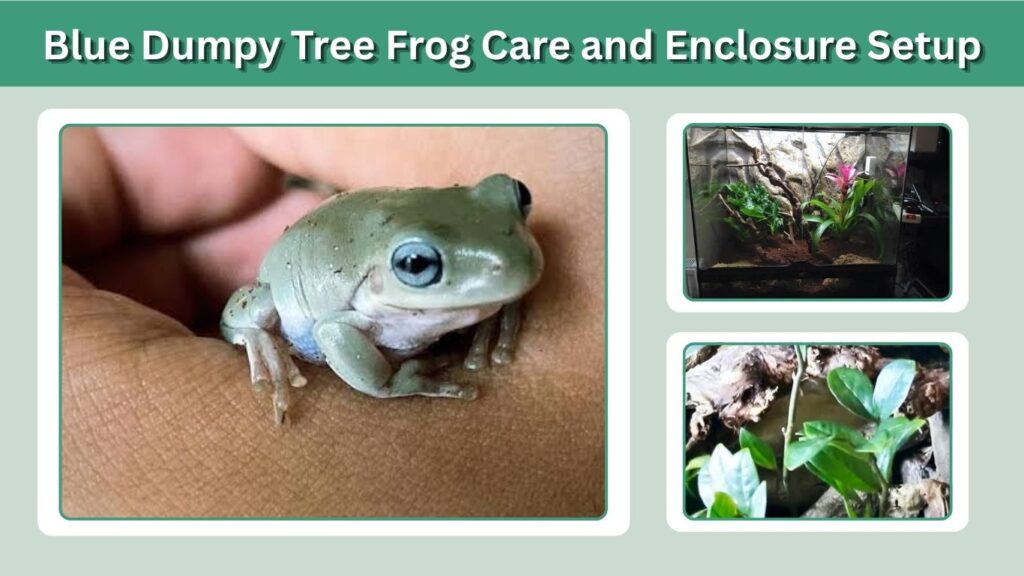
Proper enclosure design is essential for maintaining a healthy blue dumpy tree frog. Although these amphibians are relatively adaptable, they require sufficient climbing space, appropriate humidity, stable temperatures, and clean water. An enclosure that resembles their natural habitat encourages exploration, supports normal behavior, and reduces the risk of stress-related health problems.
Essential Tank Setup Requirements
- Tank size: An 18 × 18 × 24-inch vertical terrarium is a reasonable minimum starting point for one adult.
- Climbing structures: Include sturdy branches, cork bark, and elevated resting platforms.
- Hiding places: Provide artificial or live plants and sheltered areas.
- Substrate: Use suitable coconut fiber or amphibian-safe soil mixes.
- Water dish: Supply clean, dechlorinated water in a shallow, accessible container.
- Ventilation: Maintain adequate airflow to prevent constantly damp conditions.
- Monitoring equipment: Use reliable thermometers and hygrometers.
Avoid overcrowding, sharp decorations, and materials that might be swallowed accidentally.
Temperature, Humidity, and Lighting
Daytime enclosure temperatures should generally remain around 75–82°F (24–28°C), with a cooler area available. Nighttime temperatures can decrease moderately, typically into the upper 60s or low 70s Fahrenheit.
Humidity around 50–70% is often suitable, provided the enclosure has proper ventilation and opportunities for surfaces to dry.
A suitable low-output UVB light can support calcium metabolism. Maintain a consistent day-night cycle and avoid exposing frogs to excessive heat.
Cleaning and Maintenance
Remove waste and uneaten insects regularly. Replace water daily and clean the dish thoroughly using amphibian-safe methods.
Inspect the enclosure for mold, stagnant moisture, and damaged decorations. Consistent maintenance helps prevent infections and creates a healthier environment.
Blue Dumpy Tree Frog Diet and Feeding Schedule
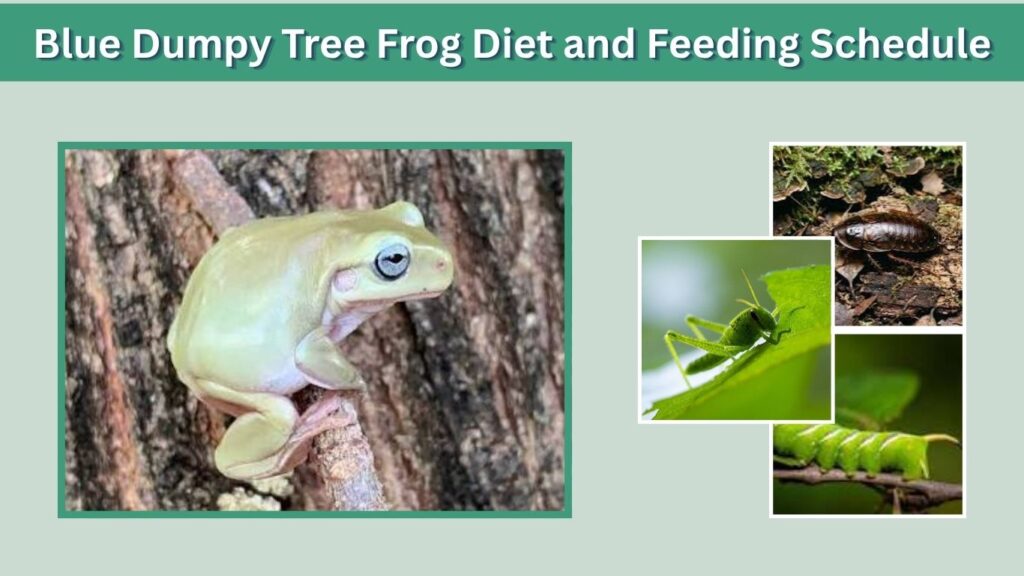
Blue dumpy tree frogs are insectivores that consume various small invertebrates. Captive frogs need appropriately sized feeder insects and balanced nutritional supplementation to remain healthy. Providing dietary variety helps prevent deficiencies, while controlling food portions reduces the risk of obesity, which can develop when adult dumpy tree frogs receive excessive food.
Best Foods for Blue Dumpy Tree Frogs
- Crickets: Commonly used staple feeders when properly gut-loaded.
- Dubia roaches: Nutritious insects suitable where legally permitted.
- Silkworms: Soft-bodied feeders that provide dietary variety.
- Black soldier fly larvae: Useful supplemental insects.
- Hornworms: Moisture-rich feeders for occasional rotation.
- Waxworms: Fatty treats that should be offered sparingly.
Avoid feeding wild-caught insects because they may contain pesticides, parasites, or other harmful substances.
How Often Should You Feed Them?
Juvenile frogs generally need feeding daily or nearly daily, depending on their growth and body condition. Healthy adults often eat two or three times weekly.
Feeder insects should be no wider than the space between the frog’s eyes. Use appropriate calcium and vitamin supplements according to expert husbandry guidance.
Monitor body condition instead of offering unlimited food.
Blue Dumpy Tree Frog Lifespan and Behavior
A well-maintained blue dumpy tree frog can live approximately 10–20 years in captivity, although individual lifespans vary. Genetics, nutrition, veterinary care, and environmental conditions all influence longevity. These frogs are known for their calm appearance, climbing behavior, and tendency to rest in unusual positions during daylight hours.
Behavior and Croaking
Blue dumpy tree frogs generally become active during the evening and nighttime. They climb enclosure decorations, search for insects, and occasionally soak in their water dishes.
Adult males produce repetitive croaking calls, particularly during breeding activity. Their vocalizations may become more noticeable during humid weather or changes in environmental conditions.
Despite their relatively calm temperament, frequent handling should be avoided because amphibian skin is sensitive to oils, chemicals, and physical irritation.
Preventing Obesity and Health Problems
Dumpy tree frogs naturally have rounded bodies, but excessive fat deposits can indicate obesity.
Maintain suitable feeding portions, encourage climbing activity, and monitor body condition. Persistent lethargy, appetite loss, abnormal swelling, or unusual skin changes require attention from an amphibian-experienced veterinarian.
Blue Dumpy Tree Frog for Sale: Buying Guide
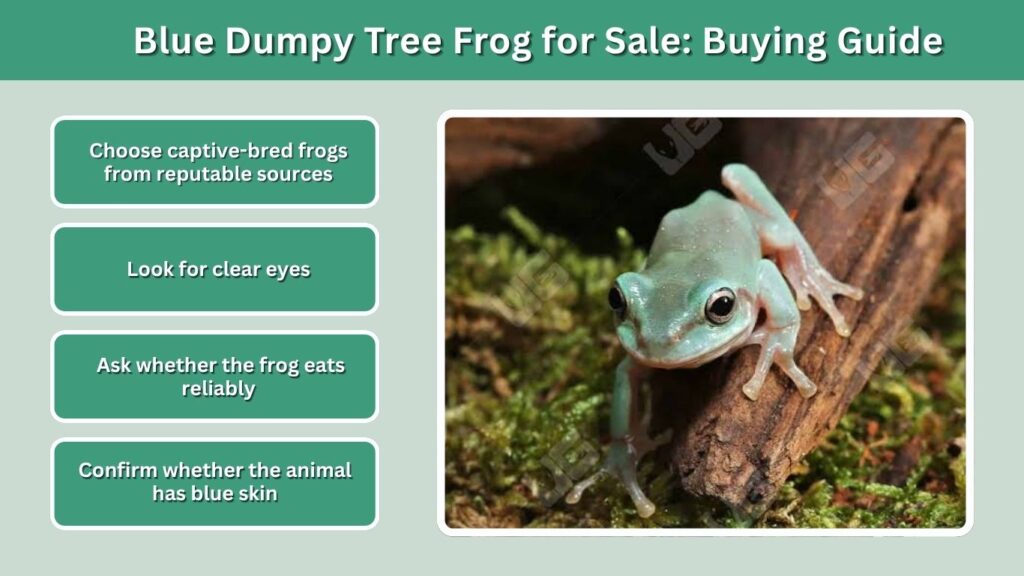
Blue dumpy tree frogs are offered by some specialty amphibian breeders and reptile retailers. Availability depends on breeding programs, geographical location, and demand for specific color variations. Blue-eyed and intensely blue individuals may be harder to find than ordinary green White’s tree frogs. Responsible purchasing begins with evaluating the animal’s health and the seller’s breeding practices.
What to Check Before Buying
- Captive breeding: Choose captive-bred frogs from reputable sources.
- Health condition: Look for clear eyes, healthy skin, and normal movement.
- Feeding history: Ask whether the frog eats reliably.
- Color variation: Confirm whether the animal has blue skin, blue eyes, or both.
- Seller reputation: Review husbandry information and animal health policies.
- Transport: Ensure shipping or collection methods protect the frog from temperature extremes.
Are Blue Dumpy Tree Frogs Available at PetSmart?
PetSmart stores may carry standard White’s tree frogs, but specialized blue-phase and blue-eyed varieties are not consistently available.
Availability differs by store and region. Dedicated amphibian breeders may offer more specific color selections.
Always prepare the enclosure before purchasing a frog, regardless of where it comes from.
FAQs
1. Are Blue Dumpy Tree Frogs Rare?
Blue dumpy tree frogs are less common in the pet trade than typical green White’s tree frogs. Particularly vivid blue coloration and blue-eyed varieties may be harder to find. Their availability depends on breeder selection, local demand, and successful captive breeding.
2. Do Blue Dumpy Tree Frogs Stay Blue?
Not always. Blue dumpy tree frogs may appear greener, darker, or more turquoise depending on lighting, temperature, and other environmental factors. Some individuals maintain prominent blue coloration throughout adulthood, while others naturally display noticeable changes in their skin color.
3. Are Blue Dumpy Tree Frogs Good Beginner Pets?
Blue dumpy tree frogs can be suitable beginner amphibians when their environmental requirements are understood. They need suitable temperatures, moderate humidity, nutritious insects, clean water, and climbing space. Regular observation and limited handling are important for maintaining their health.
4. Can Blue-Eyed and Blue-Phase Dumpy Tree Frogs Live Together?
These varieties belong to the same species and may be housed together when similarly sized and healthy. However, the enclosure must provide sufficient space, climbing structures, and hiding places. New frogs should be quarantined before introduction to reduce disease transmission.
5. How Long Can a Blue Dumpy Tree Frog Live?
Blue dumpy tree frogs can commonly live around 10–20 years in captivity with proper care. Their longevity depends on nutrition, habitat conditions, genetics, and disease prevention. Maintaining stable environmental conditions and avoiding overfeeding can help support a longer, healthier life.
